Ancient Egypt spider art archaic writing?

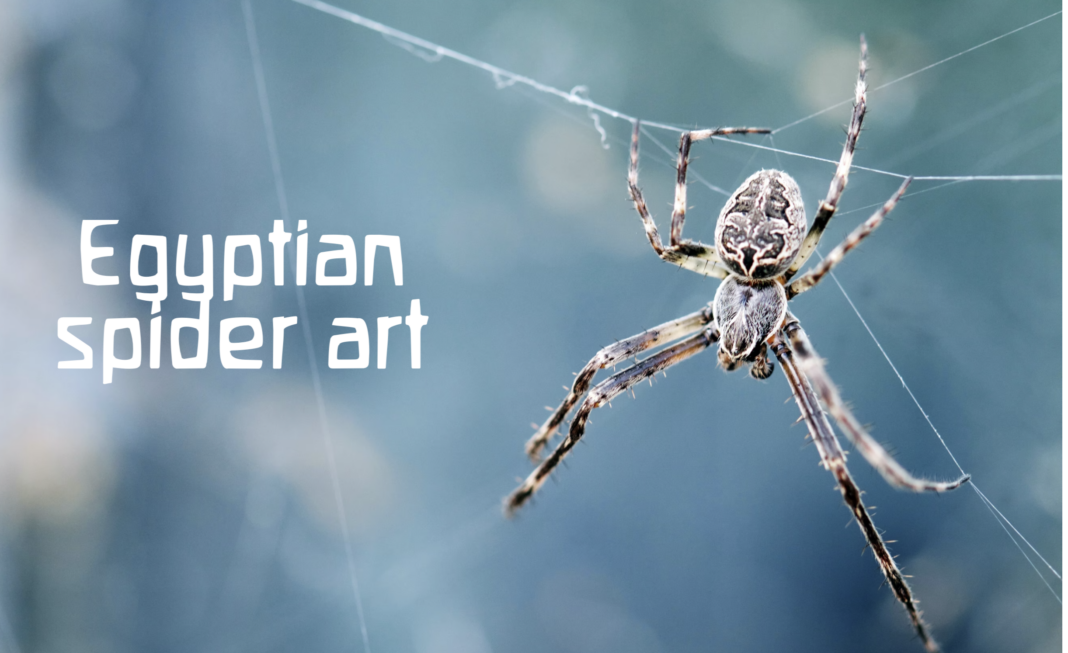
Egypt spider art

Egypt offers more to desert tourists than camels: In the ancient land of the Pharaohs, desert-dwelling invertebrates have often been part of Egyptian folklore, including scarab or dung beetles which are known to navigate by the stars. Now spiders join the story.

Desert spiders have not been a major part of Egyptian hieroglyphic art,  but a one of a kind type of “spider art” has now been discovered carved on rocks in Egypt’s western desert. The spider art, said to be around 4,000 years old, was discovered carved into a wall and found in a sandstone wadi in the Kharga Oasis, located in Egypt’s western desert almost 100 miles west of Luxor.
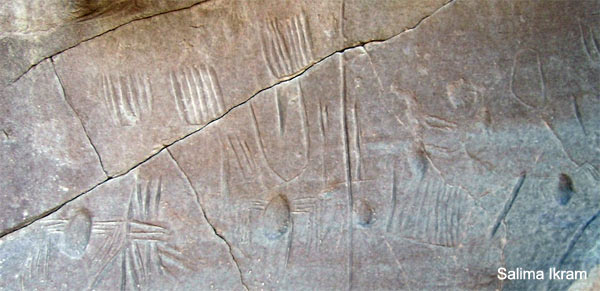
spider art egypt

One researcher postulates that the spider art is a form of archaic writing:

However, Derek Cunningham, author of The Long Journey: 400,000 Years of Stone Age Science  has his own interpretation.

Cunningham saw the panel as a chance to do an analysis on the art piece to see if the linear comb patterns matched his proposal that such patterns are in fact an archaic form of writing.

The most striking result of his analysis is that the rock panel matches exactly the proposed theory.  The angular offset of the ‘spider body’ and the many lines drawn on the panel, align as predicted astronomical values considered central to the accurate prediction of lunar and solar eclipses.

spider art archaic language

For example, the body of the proposed spiders are rotated by 13.66 degrees from vertical, a calculation which corresponds to half a sidereal month.  This appears to link to the observation that the panel faced eastwards, which is the direction astronomers face to observe lunar eclipses.

Spiders are quite numerous in Africa’s desert regions and because some of them having dangerous bites, they may have been incorporated into ancient religious beliefs.

jean-francois-champollion-the-goddess-neith-18231Worshiping spiders in ancient may also be connected to an Egyptian goddess named Nit or Neith who was said to have been the goddess of weaving, war and hunting. The weaving attribution is drawings and images of Neith often show her carrying a bow and arrows linking her to war and hunting.

The spider connection comes from Neith weaving or spinning a woven design, like a spider’s web as part of her role in Creation.

Other small invertebrate desert dwellers, particularly scorpions also have Egyptian religious connotation. Scorpions, which are related to spiders, also have eight legs as well as painful and often fatal stings.

Ancient Egyptian writings tell about an ancient Egyptian king possibly called Selk or Weha; and also known as King Scorpion. Selk was said to be the second of two kings or chieftains of that name during the pre-dynastic period of Upper Egypt, called the Protodynastic Period.
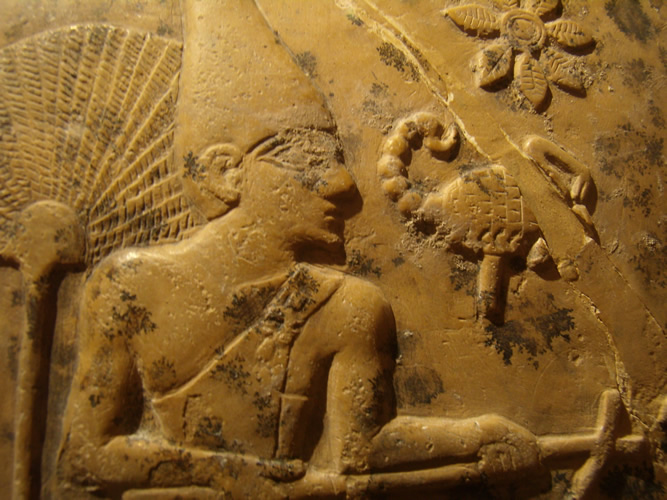
Kingscorpion II
Egyptian scorpion art carved into a wall

Egypt at that time was divided in two kingdoms; the Upper Kingdom with its capital at Thebes; and the lower kingdom, with its capital Memphis, now Cairo.

The lower kingdom included the entire Nile Delta region. The significance of the Scorpion King is that he helped to unite the two kingdoms into one major kingdom at the end of the Protodynistic Period. Ethiopia at odds with Egypt over the Nile could make use of a uniting king these days. Spider or otherwise.

As the spider art paintings are said to be very old, they represent a more ancient concept of Egyptian folklore, and may have been carved out of high respect for the desert spider species whose venomous bites were obviously feared and respected.

Michael Ledo, a Green Prophet reader says that the spider art may be an ancient Zodiac symbol: “Seems no scholar knows that the spider was a zodiac constellation and when it was the summer solstice which would relate to the myths. Also key to dating the cult.”

Read more about other desert invertebrates, including locusts and scorpions:
Scarab (Dung) Beetles Navigate by the Stars
Swarms! Algeria, Libya, Mauritania and Morocco on High Alert for Desert Locusts
What Camels and scorpions Teach “Dayma” Tourists in Egypt

Illustration of Egyptian goddess Neith

Maurice Picow
Maurice Picowhttps://www.greenprophet.com/
Maurice Picow grew up in Oklahoma City, U.S.A., where he received a B.S. Degree in Business Administration. Following graduation, Maurice embarked on a career as a real estate broker before making the decision to move to Israel. After arriving in Israel, he came involved in the insurance agency business and later in the moving and international relocation fields. Maurice became interested in writing news and commentary articles in the late 1990’s, and now writes feature articles for the The Jerusalem Post as well as being a regular contributor to Green Prophet. He has also written a non-fiction study on Islam, a two volume adventure novel, and is completing a romance novel about a forbidden love affair. Writing topics of particular interest for Green Prophet are those dealing with global warming and climate change, as well as clean technology - particularly electric cars.

TRENDING

Art from Oman at the Venice Biennale

Oman is returning to the Venice Biennale with Zīnah, an immersive installation by artist and curator Haitham Al Busafi that transforms a traditional form of horse adornment into a large-scale sensory experience.

40 more migratory animals need protecting, warns UN group

The Convention on the Conservation of Migratory Species of Wild Animals (CMS), governments agreed to extend protection to 40 more migratory species, from cheetahs and striped hyenas to snowy owls, giant otters, and great hammerhead sharks. Too many of them are slipping toward extinction .

Koh Phangan’s angels for the dogs and the cats

Koh Phangan may be known for yoga, detox retreats, and full moon parties, but beyond the curated paradise lies a different reality—one of injured stray animals and the quiet work of rescue. This story explores PACS (Phangan Animal Care for Strays), a grassroots animal shelter tackling overpopulation, disease, and neglect on the island. Through firsthand experience with teens, it reveals how meaningful travel, volunteerism, and compassion offer a deeper kind of healing—far from the Instagram version of paradise.

The Lote Tree of the Utmost Boundary, explained

Knowing about the concept of the Lote Tree of the Utmost Boundary helps explain a core idea in Islam.

Ethiopians are Looking to Somaliland for Red Sea Access as Global Powers Move In

Somaliland, for its part, has operated as a de facto independent state since 1991. It has its own government, elections, currency, and security forces. It’s often described as one of the more stable and democratic political systems in the region, despite never being formally recognized internationally. 

Nobul’s Regan McGee on Shareholder Value: “Complacency Is the Silent Killer” 

Why the governance framework designed to protect shareholders so...

Should You Invest in the Private Market?

startustartup Unlike public stock exchanges, which offer daily trading, strict...

How to build a 100-year-company

Kongō Gumi is a Japanese construction company, purportedly founded in 578 A.D., making it the world's oldest documented company. What can we learn about building sustainable businesses from them?

From Pilot Plant to Global Stage: How Aduro Clean Technologies’ 2026 Expansion Signals a Turning Point for Chemical Recycling Investors Like Yazan Al Homsi

The company's Next Generation Process (NGP) Pilot Plant in London, Ontario, has officially moved into initial operating campaigns, generating the kind of structured, repeatable data that separates laboratory promise from commercial viability.

How AI Helps SaaS Companies Reduce Repetitive Customer Support Work

SaaS products are designed for large numbers of users with different levels of experience, and also in renewable energy.

Pulling Water from the Air

Faced with water shortage in Amman, Laurie digs up...

Turning Your Energy Consultancy into an LLC: 4 Legal Steps for Founders in Texas

If you are starting a renewable energy business in Texas, learn how to start an LLC by the books.

Tracking the Impacts of a Hydroelectric Dam Along the Tigris River

For the next two months, I'll be taking a break from my usual Green Prophet posts to report on a transnational environmental issue: the Ilısu Dam currently under construction in Turkey, and the ways it will transform life along the Tigris River.

Related Articles

Popular Categories