
Israel’s Genetically Modified “Superplants” Thrive in Arid Areas

genetically modified food, Israel, Haifa Technion, global hunger, plants for arid regions, super plants, world water week, water scarcityGenetically-modified food has a bad reputation mostly because many food giants are mixing non-plant DNA to create drought and pest-resilient crops that we’ll eventually eat; manipulating plant DNA with plant components, however, is normal practice.

Professor of Biology Shimon Gepstein from Haifa Technion University in Israel forgot to water his genetically-modified “superplants” for a few weeks; instead of perishing, the plants survived the accidental neglect – giving Gepstein an inside peak at their incredible resilience.

As part of a research project recently described in the Proceedings of the National Academy of Sciences, Gepstein modified the plants for longevity by boosting levels of the zytokinin hormone, which delays the aging process.

“Let’s take a staple food, for example rice, when the photosynthesis ends, the rice stops growing, it’s a natural process with every plant,” says Prof. Simon Gepstein, who led the research. “But by extending the juvenile hormone we have managed to extend the life of the plant, therefore producing more crops.”

The research team also found that the “super plants” require less water – a boon for such a water scarce nation as Israel.

“These plants can survive droughts, they can go on for a month without water and even if you water them, they only need 30 percent the amount of liquid normal plants do,” said Geptstein.

With climate change exacerbating already extreme water scarcity throughout the Middle East and other regions, food becomes increasingly difficult to grow. Gepstein believes that his “super plants” could be a solution, particularly since they have a longer shelf life than crops with normal zytokinin levels.

The Israeli research team is not the first to proclaim that their genetically-modified foods might stave off global hunger, but critics worry about the unseen consequences of tampering with mother nature. Yet Gepstein insists his super plants pose no danger.

“Despite all the bad the word ‘genetically modified’ has, I can tell our plants are not dangerous for human health,” said Gepstein, “because we have altered them using their own components, they have nothing added to them.”

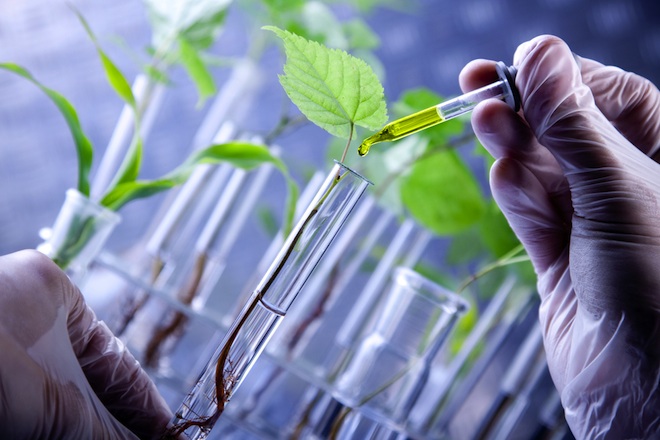
Image of lab plant, Shutterstock

Tafline Laylin
Tafline Laylinhttp://www.greenprophet.com
As a tour leader who led “eco-friendly” camping trips throughout North America, Tafline soon realized that she was instead leaving behind a trail of gas fumes, plastic bottles and Pringles. In fact, wherever she traveled – whether it was Viet Nam or South Africa or England – it became clear how inefficiently the mandate to re-think our consumer culture is reaching the general public. Born in Iran, raised in South Africa and the United States, she currently splits her time between Africa and the Middle East. Tafline can be reached at tafline (at) greenprophet (dot) com.

Read More

LEAVE A REPLY

Please enter your comment!
Please enter your name here

TRENDING

Lebanon in a time of cholera

Cholera always sounds like an epidemic of the past, but it's becoming a public health emergency in Lebanon and Syria as the bacteria spreads.

5 Ways To Use Air-Conditioner Water

Air conditioners pull water from the air, literally. It's distilled so not great to drink, but useful in other ways.

Mexico “builds a wall” against Monsanto GMO soybeans

The global resistance against genetically modified (GM) crops is...

Lab grown meat is your future food

Is test tube meat, grown in a laboratory, slated...

Fiery May heatwave is setting Israel ablaze

Israel is smoking hot when it comes to tech...

How to quiet noise from construction in your office

Streets need to be resurfaced in New York but the humming and grinding noise is unsettling. Noise is environmental pollution. 

EarthX and a blueprint for sustainable investing

Trammell S. Crow, a Dallas-based businessman and father of four, is focusing his efforts on impact investing, and media that focuses on saving the planet through EarthX.

Mining Afghanistan’s Mineral Discoveries Similar to Avatar

Now that American forces in Afghanistan are commemorating the longest period of any war that America has been involved in, including the 1965-73 Vietnam War, the recent discoveries of large and extremely valuable mineral and metal deposits may finally bring to light a reason to continue the presence of US fighting forces in this war torn and backward country.

From Pilot Plant to Global Stage: How Aduro Clean Technologies’ 2026 Expansion Signals a Turning Point for Chemical Recycling Investors Like Yazan Al Homsi

The company's Next Generation Process (NGP) Pilot Plant in London, Ontario, has officially moved into initial operating campaigns, generating the kind of structured, repeatable data that separates laboratory promise from commercial viability.

Nobul’s Regan McGee on Shareholder Value: “Complacency Is the Silent Killer” 

Why the governance framework designed to protect shareholders so...

Should You Invest in the Private Market?

startustartup Unlike public stock exchanges, which offer daily trading, strict...

How to build a 100-year-company

Kongō Gumi is a Japanese construction company, purportedly founded in 578 A.D., making it the world's oldest documented company. What can we learn about building sustainable businesses from them?

How AI Helps SaaS Companies Reduce Repetitive Customer Support Work

SaaS products are designed for large numbers of users with different levels of experience, and also in renewable energy.

Popular Categories