Don’t be Fooled by Saudi Aramco’s LEED Platinum Tower

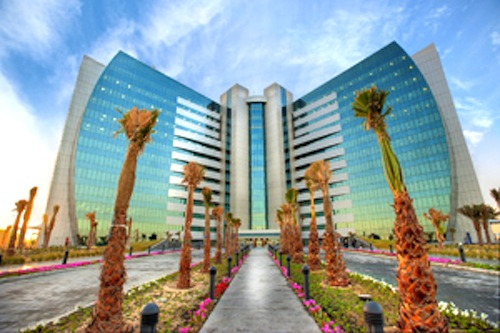
Al-Midra Tower, Saudi Aramco, LEED, USGBC, fossil fuels, climate changeOne of the world’s largest oil producers has just received LEED Platinum for its Al-Madra Tower in Saudi Arabia, highlighting the pitfalls of a system designed to recognize environmental stewardship.

Don’t get me wrong, Saudi Aramco’s Dhahran tower is more environmentally responsible than a lot of similar buildings. It is partially solar-powered and boasts a suite of smart programs that control energy performance, indoor air quality and lighting.

The United States Green Building Council (USGBC) gave the tower LEED Platinum, the highest possible award and a first for commercial buildings in the Kingdom, according to Arab News.

The government-backed company is gushing with pride.

“It is with pleasure that I recognize Saudi Aramco’s community services because of excellence in environmental stewardship and as a result achieving the highest certification as awarded by the leaders in energy and environmental design,” Saudi Aramco President and CEO Khalid A. Al-Falih told the paper.

The tower received 80 out of a possible 94 points, scoring particularly high in the energy and atmosphere category, and is now being touted as a sterling example of sustainable building. Surely we understand sustainability to be something holistic?

Overall, the oil industry has done considerable environmental harm – not only at extraction points, but because burning oil releases greenhouse gases into the atmosphere that are responsible for climate change – one of the single most pressing environmental issue of our time.

Saudi Aramco has both the largest proven crude oil reserves, at more than 260 billion barrels, and largest daily oil production, according to Wikipedia. Worth $10 trillion, it is also considered the world’s most valuable company by the Financial Times.

All of the gains achieved by a few solar panels could never undo the collective harm for which Saudi Aramco is responsible. Don’t be fooled by LEED awards – they can be deceiving.

While it is kind of cute that Saudi Aramco invested a few extra pennies to construct a building that will use up less of their export commodity, namely the fossil fuels that power conventional mechanical and lighting systems, there’s no sense in perpetuating the myth that this company is in any way a steward of the environment.

Not until they, along with Shell, Exxon and other fossil fuel giants, exchange all of their drilling equipment for solar panels and wind turbines, which is what it will take to forestall the worst that climate change has in store, will there be real cause for celebration.

:: Arab News

Tafline Laylin
Tafline Laylinhttp://www.greenprophet.com
As a tour leader who led “eco-friendly” camping trips throughout North America, Tafline soon realized that she was instead leaving behind a trail of gas fumes, plastic bottles and Pringles. In fact, wherever she traveled – whether it was Viet Nam or South Africa or England – it became clear how inefficiently the mandate to re-think our consumer culture is reaching the general public. Born in Iran, raised in South Africa and the United States, she currently splits her time between Africa and the Middle East. Tafline can be reached at tafline (at) greenprophet (dot) com.

Read More

2 COMMENTS
  1. The award is based on the building, not the occupier. By extension, you could say that the much documented Gasunie building in Groningen shouldn’t be quoted as an example of organic architecture, because it was built for an oil and gas company, and we should also exclude any buildings funded by oil related benefactors.

    I don’t think that’s a sound reason to say that the ratings systems are flawed. However, it is certainly fair game to ask about the settings in which these building are constructed. How are most of the occupants going to get to and from this building? Until more cities in the Gulf start adopting layouts similar to that used in Masdar, even the most “efficient” of them are still going to have a huge energy footprint.

TRENDING

Self-repairing contact lenses and desalination membranes that fix themselves?

Could the humble contact lens become a sustainability breakthrough? Researchers in Korea have developed a self-healing hydrogel lens that repairs scratches with just one hour of UV light exposure. Beyond reducing waste from disposable contacts, the technology could one day help extend the life of solar panels, water filtration systems, and other plastic-based products.

Collecting kinetic energy from roads; REPS turns traffic into a power plant

REPS announced a $23.6M equity financing round to scale...

Baby teeth read like tree rings paint a picture of toxins in early life

A new study from the Icahn School of Medicine at Mount Sinai in New York offers a striking insight into how the environments we are born into can quietly shape our brains years later. By analyzing naturally shed baby teeth, the ones tucked under pillows for the tooth fairy, researchers have reconstructed a detailed timeline of exposure to environmental metals during pregnancy and early infancy.

BM Studios is designing systems, not just buildings in the UAE

Balsam Madi is an architect and systems thinker whose work bridges culture, sustainability, and design intelligence across the Middle East and Europe.

Astro uses AI to help procure land for renewable energy

For oil-rich, environmentally vigilant Gulf states, Astro isn’t just another startup story. It is a blueprint for accelerating an energy transition that is now existential, not optional.

Yerukim Forms a New Green Economy Where the Money is Really Green

The Yerukim members who pick up the recyclables get to keep the monetary reward, the public earns "green" bills that can be used in shops, and business owners get to be associated with environmentalism.

Choosing Riyadh over Dubai? What Investors Should Know

Saudi Arabia is deploying capital at unmatched scale to catalyze tourism and advanced industry while rewiring its power-and-water backbone. The investable frontier is widening—especially in renewables, grid storage, water efficiency/desal retrofits, and hospitality operating platforms. Prudent investors will insist on phased delivery, enforceable KPIs (energy, water, biodiversity), and RHQ/zone compliance—while pricing political-economy and reputational risks alongside growth upside.

Sell your cooking oil for biodiesel money

Want to make money on old french fry oil? Sell it.

Qatar Alternative Energy Summit Pairs Investors And Innovators

Alternative energy investors and innovators can meet n' greet in Doha, Qatar March 16 and 17.

Here’s How To Implement The Four Pillars Of Employee Engagement

If you throw a party for your work team and they are vegans, don't make it a barbecue. Know the sustainability values of your team to boost moral and retain good people.

Locals From Rishon Fight IKEA

Big Box stores are a pretty new concept in Israel, and thank God that not every Israeli city wants them in their backyard. A word from someone who has see the beautiful farmland around her hometown Newmarket, Ontario stripped and converted into vulgar strip malls of big box shops: they have no place in a healthy and sustainable town or city.

The Jewish National Fund Meets An Inconvenient Truth

According to the JNF, it has transformed thousands of acres of barren land into green forests in Israel. They state that each person emits about 23 tons of carbon per year, estimating that each tree planted can absorb one ton of carbon in its lifetime. That's a whole lot of trees you'd need to be planting. Could so many fit in Israel?

How to quiet noise from construction in your office

Streets need to be resurfaced in New York but the humming and grinding noise is unsettling. Noise is environmental pollution. 

Popular Categories