Muslims in Myanmar Forced to Two Child Limit

myanmar children muslim
While limiting children, or not having them at all, is a good way to fight global warming and the demise of our poor planet, there is nothing more inhumane in being told how many children you can have.

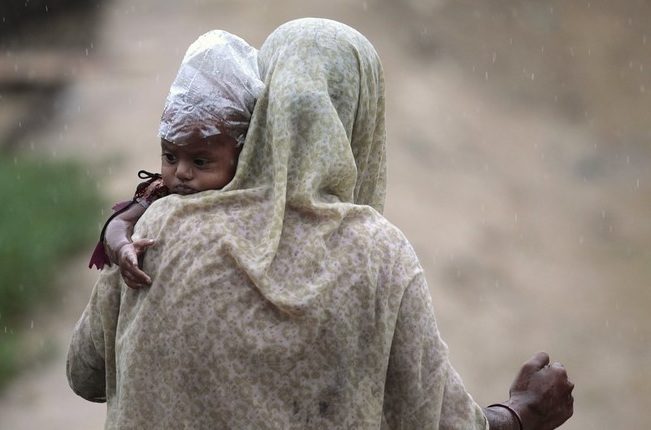
A rapid population growth of Muslims in Myanmar’s Rakhine state has caused the authorities to cap the number of children the Muslim community can bear, limiting the number to two.

State spokesman Win Myaing said that by limiting the number of children in the community, the new program can “stem rapid population growth” in the Muslim community. This rapid population growth, a government commission has found, is the leading cause of sectarian violence in the region.

A woman’s right to choose her number of offspring, especially in Muslim communities, and developing ones, is important as children often play a major role in developing the family unit, and bringing in money to these households.

The new “two-per” family limit does not apply to the minority of Buddhists living in this state.

China has a one-child limit, but this applies in reality only to poor families who cannot afford to pay the fines if they decide to have another. The new controversial ruling in Myanmar is the first in the world to limit child bearing based on religion. But it is certainly not the first country in the world to discriminate based on religion.

Family planning, and education, as these Middle East regional mayors discuss, may be better ways to deal with violence and poverty.

Large rural communities need large families to tend the farms or provide income for the household, but this is definitely not a sustainable way for the world as our population numbers climb towards 8 billion.

More environmental education, along with family planning, is key to our planet’s long-term success.

Image via cseashawaii.com

Karin Kloosterman
Karin Kloostermanhttp://www.greenprophet.com
Karin Kloosterman is an award-winning journalist, innovation strategist, and founder of Green Prophet, one of the Middle East’s pioneering sustainability platforms. She has ranked in the Top 10 of Verizon innovation competitions, participated in NASA-linked challenges, and spoken worldwide on climate, food security, and future resilience. With an IoT technology patent, features in Canada’s National Post, and leadership inside teams building next-generation agricultural and planetary systems — including Mars-farming concepts — Karin operates at the intersection of storytelling, science, and systems change. She doesn’t report on the future – she helps design it. Reach out directly to [email protected]

Read More

TRENDING

Bake a New York Cheesecake for Shavuot

This light, creamy cheesecake fits into your green Shavuot, especially if you make it with organic cheese and eggs. It's also light on sugar.

Muslim potter shapes the 99 names of God into clay

In a studio in the DC Maryland Virginia area, ceramic artist Alison Kysia is working with clay in a way that feels both grounded and personal. She makes pottery and abstract Islamic sculptures, and one of her recent works focuses on the 99 Names of God in Islam.

Understanding the Life Stages: A Broader Look at Aging

The earliest stages of life, from infancy through childhood, form the foundation for lifelong health and development. During these years, the brain develops rapidly, children learn social and emotional skills, and the body undergoes significant physical growth.

Explore Balat in Istanbul for a perfect day of coffee, cats, and second-hand clothing shops

Balat is not a neighborhood you would visit in the standard tour to Istanbul. If you want a real taste of Istanbul and the people who live there, wander around a smaller craftsman, artisan, coffee shops and second hand clothing shops on cobblestone streets in the neighborhood of Balat.

Canaan’s sacred wine and folk worship in the fields

Around the press, the team uncovered dwellings and courtyards that hint at an early village economy. The winemaking enterprise was likely community-based, tied to the cycles of agriculture and celebration. Megiddo’s residents were already part of a regional network that shipped jars of oil, grain, and perhaps even wine to Egypt and the wider Mediterranean world.

Yerukim Forms a New Green Economy Where the Money is Really Green

The Yerukim members who pick up the recyclables get to keep the monetary reward, the public earns "green" bills that can be used in shops, and business owners get to be associated with environmentalism.

Choosing Riyadh over Dubai? What Investors Should Know

Saudi Arabia is deploying capital at unmatched scale to catalyze tourism and advanced industry while rewiring its power-and-water backbone. The investable frontier is widening—especially in renewables, grid storage, water efficiency/desal retrofits, and hospitality operating platforms. Prudent investors will insist on phased delivery, enforceable KPIs (energy, water, biodiversity), and RHQ/zone compliance—while pricing political-economy and reputational risks alongside growth upside.

Sell your cooking oil for biodiesel money

Want to make money on old french fry oil? Sell it.

Qatar Alternative Energy Summit Pairs Investors And Innovators

Alternative energy investors and innovators can meet n' greet in Doha, Qatar March 16 and 17.

Here’s How To Implement The Four Pillars Of Employee Engagement

If you throw a party for your work team and they are vegans, don't make it a barbecue. Know the sustainability values of your team to boost moral and retain good people.

Locals From Rishon Fight IKEA

Big Box stores are a pretty new concept in Israel, and thank God that not every Israeli city wants them in their backyard. A word from someone who has see the beautiful farmland around her hometown Newmarket, Ontario stripped and converted into vulgar strip malls of big box shops: they have no place in a healthy and sustainable town or city.

The Jewish National Fund Meets An Inconvenient Truth

According to the JNF, it has transformed thousands of acres of barren land into green forests in Israel. They state that each person emits about 23 tons of carbon per year, estimating that each tree planted can absorb one ton of carbon in its lifetime. That's a whole lot of trees you'd need to be planting. Could so many fit in Israel?

How to quiet noise from construction in your office

Streets need to be resurfaced in New York but the humming and grinding noise is unsettling. Noise is environmental pollution. 

Popular Categories