How Traditional Arab Architecture is Greening Buildings in Israel

traditional arab building
In the unrelenting Middle East sun, one thing is very clear when you build a new home: it must work with the elements. Standing the test of time are traditional Arabic buildings that kept families and worshippers cool for centuries, long before air conditioning was invented.

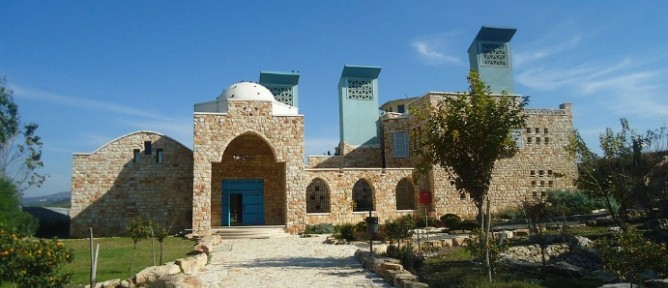
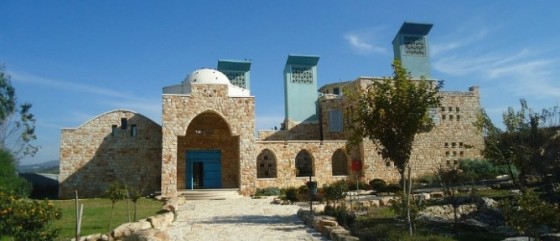
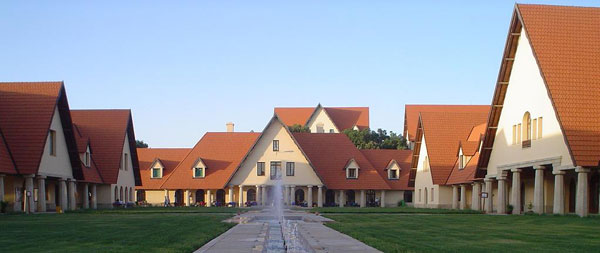
A new “green” teaching and research center in the Israeli-Arab town of Sakhnin showcases some of the best traditional approaches to construction in the hope that it will inspire modern building practices. And on a less concrete level, the building is seen as a “green bridge” between the Arab and Jewish communities. The Union of the Mediterranean recently awarded it first prize in a competition on energy conservation.

Architects anywhere can pick up on traditional Arab building techniques as a means to improve building efficiency, says Hussein Tarabeih (who we’ve filmed here), director of the Towns Association for Environmental Quality (TAEQ) for the six Arab-Israeli towns in the Beit Natufa Valley in the Lower Galilee. This is the association that commissioned the building.

“We have a lot of energy-saving elements built into the building,” Tarabeih says. “And it was important for us that we use the community. We conducted a survey asking them what they wanted and involved the older people quite a bit. The truth is that much of the knowledge on the traditional elements has been lost so we had to learn from the beginning. But this is one of the purposes for creating this building. We wanted to preserve the old traditional techniques.”

Traditional Arab building secrets

Tarabeih (pictured below) says many of the 20 features incorporated in the building could easily be applied to hot, desert climates anywhere, including California or Arizona, to keep edifices naturally cool in summer and warm in winter.
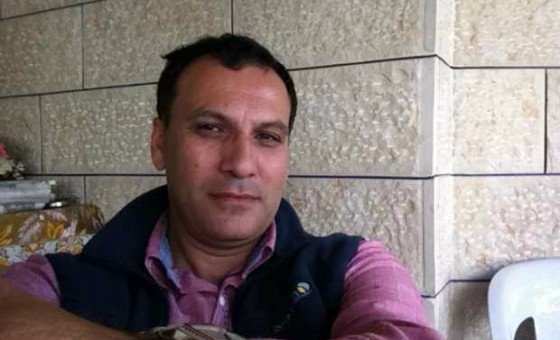
hussein tarabeih
Constructed from adobe bricks made from mud and straw, the building in Sakhnin was designed by architect Abed Elrahman Yassin, a student of the late Egyptian “architect for the people” Hassan Fathy. Typical of Arabic homes throughout the Middle East, it has a wall and window covering called a mashrabiya. This feature, usually decorated with a geometrical design, serves as a sunshade and privacy screen.

Most traditional Arabic houses have a large patio, either on the exterior of the building or in a central courtyard. When paired with long, high windows and doors, and draft windows in the right orientation, the patios cool the circulating air and offer a pleasant seating area throughout the day. If a water fountain is placed in the center of an enclosed patio, the cooling effects are even greater.

Dome-shaped roofs are a traditional symbol of Arab architecture found in mosques throughout the world. On the practical side, they maintain cool air in the building. At the base of the dome, as in the Sakhnin structure, four small windows remove the hot air while channeling the cool air into the room.

Traditional skylights called tezana are made from glass spheres and tubes that allow natural sunlight to penetrate the rooms without the need of electric power in the daytime. When the glass is colored, the amount of direct sunlight into the rooms can be controlled.

Windcatchers of Yazd
Wind catcher in Iran

Also central to traditional buildings, and seen today widely in countries like Iran, is the cooling wind tower. “Our water circulation tower, called a malkav in Arabic, is 12 meters high, and you can spray water in the top of the tower to cool down the air circulating through the building,” says Tarabeih.

 

Karin Kloosterman
Karin Kloostermanhttp://www.greenprophet.com
Karin Kloosterman is an award-winning journalist, innovation strategist, and founder of Green Prophet, one of the Middle East’s pioneering sustainability platforms. She has ranked in the Top 10 of Verizon innovation competitions, participated in NASA-linked challenges, and spoken worldwide on climate, food security, and future resilience. With an IoT technology patent, features in Canada’s National Post, and leadership inside teams building next-generation agricultural and planetary systems — including Mars-farming concepts — Karin operates at the intersection of storytelling, science, and systems change. She doesn’t report on the future – she helps design it. Reach out directly to [email protected]

Read More

TRENDING

Desalination experts debunk Aqua Solaire, the floating desalination barge

AI makes it easy to dream, develop, and create images of what could be world-changing ideas, until the reality sets in. A new project making the rounds is Aqua Solaire, an allged French concept for a solar-powered desalination vessel designed to bring drinking water to coastal communities facing drought, storms, and infrastructure failures.

Hormuz 2026 Conflict Poses an Energy and Food Security Dilemma in a Warming World

As tensions rise in one of the world’s most critical maritime chokepoints, the ripple effects go far beyond oil—touching food systems, climate pressures, and regional stability

A Fact-Based Reflection on Sustainability and Tourism in Hormuz

A Documented Response to the Article “The Aga Khan...

Dubai sets up smart feeding stations for abandoned cats

Dubai Municipality has set up 12 AI-powered "Ehsan Stations" to safely and officially feed strays. The city also officially supports Trap-Neuter-Return (TNR) programs. 

How to quiet noise from construction in your office

Streets need to be resurfaced in New York but the humming and grinding noise is unsettling. Noise is environmental pollution. 

EarthX and a blueprint for sustainable investing

Trammell S. Crow, a Dallas-based businessman and father of four, is focusing his efforts on impact investing, and media that focuses on saving the planet through EarthX.

Mining Afghanistan’s Mineral Discoveries Similar to Avatar

Now that American forces in Afghanistan are commemorating the longest period of any war that America has been involved in, including the 1965-73 Vietnam War, the recent discoveries of large and extremely valuable mineral and metal deposits may finally bring to light a reason to continue the presence of US fighting forces in this war torn and backward country.

From Pilot Plant to Global Stage: How Aduro Clean Technologies’ 2026 Expansion Signals a Turning Point for Chemical Recycling Investors Like Yazan Al Homsi

The company's Next Generation Process (NGP) Pilot Plant in London, Ontario, has officially moved into initial operating campaigns, generating the kind of structured, repeatable data that separates laboratory promise from commercial viability.

Nobul’s Regan McGee on Shareholder Value: “Complacency Is the Silent Killer” 

Why the governance framework designed to protect shareholders so...

Should You Invest in the Private Market?

startustartup Unlike public stock exchanges, which offer daily trading, strict...

How to build a 100-year-company

Kongō Gumi is a Japanese construction company, purportedly founded in 578 A.D., making it the world's oldest documented company. What can we learn about building sustainable businesses from them?

How AI Helps SaaS Companies Reduce Repetitive Customer Support Work

SaaS products are designed for large numbers of users with different levels of experience, and also in renewable energy.

Popular Categories