

Canadian Jailed in Lebanon for Selling Rotten Potatoes to Algeria

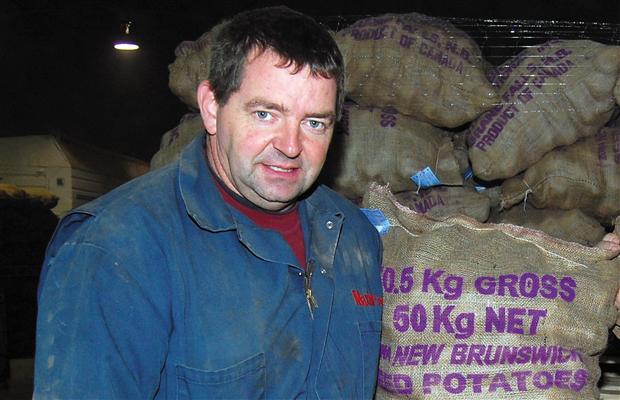
agriculture, potato farmer, Interpol, Henk Tepper, Lebanon, Algeria, Canada, FarmingA Red Notice was sent through Interpol accusing this man of selling rotten potatoes to Algeria. image via Vancouver Sun

First of all, a Canadian man named Henk Tepper was accused by Algerian officials of selling rotten potatoes. Rather than take it up with him in a civil court, they issued a “Red Notice” through Interpol – treatment usually reserved for hardened criminals on the run, not gentle farmers from New Brunswick.

Then the Canadian government failed to catch whiff of the alert, so when Tepper traveled to Beirut last March to attend an agricultural trade mission to market seed potatoes from Canada, he was promptly nabbed by local authorities and shared a 10×10 m cell with 40 other prisoners for more than one year. 

No help from Canada

Joe Karam, Tepper’s lawyer in Lebanon, claims that the Canadian government did very little to secure the farmer’s release in the early days of his detention.

“The first months, there was a vacuum, there was something not happening from the side of the executive branch of Canada,” he told Canada’s National Post.

Huffington Post reports that Karam was repeatedly denied access to documentation between the Canadian federal government and Lebanese officials, but then those same documents were released to Canadian press.

A weak case?

During his imprisonment in the basement of the Beirut Justice building, a letter from Tepper shows that Canada’s ambassador to Lebanon, Hilary Childs-Adams, sent the man some food and showed some “personal interest” in his case.

But Tepper’s family disagrees. They feel that too little was done to help him. One Canadian official told Karam, the lawyer, that there were 3,000 cases similar to Tepper’s and they were reluctant to interfere with Lebanon’s judicial system.

Christian Leuprecht is a political science professor at the Royal Military College of Canada and Queen’s University in Kingston, Ont. She told Huff Po that Algeria’s failure to either extradite Tepper or bring a civil case against him in his own country demonstrates that they probably had a very weak case.

Repeated requests have been made to the Algerian embassy in Canada to drop the charges, as has now been done in Lebanon, but nothing has materialized. Which means that technically, Tepper is still wanted by Interpol. For allegedly selling rotten potatoes?
:: Huffington Post, National Post

Tafline Laylin
Tafline Laylinhttp://www.greenprophet.com
As a tour leader who led “eco-friendly” camping trips throughout North America, Tafline soon realized that she was instead leaving behind a trail of gas fumes, plastic bottles and Pringles. In fact, wherever she traveled – whether it was Viet Nam or South Africa or England – it became clear how inefficiently the mandate to re-think our consumer culture is reaching the general public. Born in Iran, raised in South Africa and the United States, she currently splits her time between Africa and the Middle East. Tafline can be reached at tafline (at) greenprophet (dot) com.

Read More

TRENDING

How Torvinen Jaakko’s ugly wood can lay the foundations for green building

Canada's forests generate billions of dollars in economic value each year, yet vast amounts of irregular timber are downgraded to wood chips or biomass. A collaboration between researchers at Carleton University and Aalto University is challenging that model, demonstrating how "ugly wood" can be transformed into high-value architecture while reducing waste and storing more carbon in buildings.

Idols of Ganesh in Canadian lakes are causing local environmental concerns

Immersing religious idols in Canada's lakes, rivers and coastal waters remains a contentious issue. While the practice is an important tradition for many Hindu communities during festivals such as Ganesh Chaturthi, environmental regulations in many jurisdictions prohibit the disposal of foreign materials into natural waterways, even when the objects are intended as religious offerings.

Are the Great Lakes polluted?

The Great Lakes may look pristine, but a new cleanup report reveals a growing tide of plastic pollution beneath the surface. From cigarette butts and food wrappers to tiny plastic fragments and discarded nicotine pouches, researchers are finding evidence that everyday consumer waste is making its way into North America's largest freshwater ecosystem. New technologies, including Canada's first BeBot beach-cleaning robot, are helping scientists understand how plastic travels through lakes, shorelines and stormwater systems before breaking down into microplastics.

Who Owns the Farm Robot? A State of Jefferson Startup Takes on Carbon Robotics

In California's self-proclaimed State of Jefferson, a small agricultural technology company is challenging the dominant laser-weeding business model. Laudando & Associates believes farmers should own and repair their AI-powered weeding tools rather than pay ongoing subscription fees. The approach has put the company on a collision course with industry leader Carbon Robotics, sparking a patent dispute that has pushed the Jefferson startup toward overseas markets while raising broader questions about ownership, right-to-repair, and the future of farm automation.

Regenerative Wool or Greenwashing? Zentera Responds to Critics

Zentera responds to questions about ZQ wool, animal welfare, regenerative farming, ethical fashion and the fallout from PETA's New Zealand investigation.

Yerukim Forms a New Green Economy Where the Money is Really Green

The Yerukim members who pick up the recyclables get to keep the monetary reward, the public earns "green" bills that can be used in shops, and business owners get to be associated with environmentalism.

Choosing Riyadh over Dubai? What Investors Should Know

Saudi Arabia is deploying capital at unmatched scale to catalyze tourism and advanced industry while rewiring its power-and-water backbone. The investable frontier is widening—especially in renewables, grid storage, water efficiency/desal retrofits, and hospitality operating platforms. Prudent investors will insist on phased delivery, enforceable KPIs (energy, water, biodiversity), and RHQ/zone compliance—while pricing political-economy and reputational risks alongside growth upside.

Sell your cooking oil for biodiesel money

Want to make money on old french fry oil? Sell it.

Qatar Alternative Energy Summit Pairs Investors And Innovators

Alternative energy investors and innovators can meet n' greet in Doha, Qatar March 16 and 17.

Here’s How To Implement The Four Pillars Of Employee Engagement

If you throw a party for your work team and they are vegans, don't make it a barbecue. Know the sustainability values of your team to boost moral and retain good people.

Locals From Rishon Fight IKEA

Big Box stores are a pretty new concept in Israel, and thank God that not every Israeli city wants them in their backyard. A word from someone who has see the beautiful farmland around her hometown Newmarket, Ontario stripped and converted into vulgar strip malls of big box shops: they have no place in a healthy and sustainable town or city.

The Jewish National Fund Meets An Inconvenient Truth

According to the JNF, it has transformed thousands of acres of barren land into green forests in Israel. They state that each person emits about 23 tons of carbon per year, estimating that each tree planted can absorb one ton of carbon in its lifetime. That's a whole lot of trees you'd need to be planting. Could so many fit in Israel?

How to quiet noise from construction in your office

Streets need to be resurfaced in New York but the humming and grinding noise is unsettling. Noise is environmental pollution. 

Popular Categories