

Saturday’s Green News Snippets from the Middle East

syria-food-saudi-qatar-climateFrom food shortages in Syria to green energy in Jordan, this news round-up will help keep you in the know

It’s been busy here at GreenProphet HQ and the stories that have got us talking this week include the wind-powered minesweeper, shocking seal killing revelations as well the upcoming first anniversary of the Fukushima disaster.  These major stories may have stolen the limelight but I’ve scoured the internet for interesting tidbits on all the latest green news from the region. This includes a petition for Green energy in Jordan, food shortages in Syria and also the dangers of equating climate change to security- especially in the Middle East. So read on and tell us what stories have caught your eye this week.Syria faces more food shortage worries

Political conflict, price hikes and import challenges are adding up to an increasingly precarious food situation for Syrians. IRIN reports that unrest has also made it difficult for aid workers to provide support to the estimated 1.4 million who have become food insecure since March 2011.
::IRIN News

Support Green Energy in Jordan
Ayah Alfawaris has created a petition to ask the ministry of energy and mineral resource in Jordan to pursue green energy. Titled as the ‘wake up call’, it states it wants to send a loud and clear message to world leaders and decision makers to take a significant step towards clean energy. The demands are listed below- if you like what you read you can sign the petition here.

We demand the minister of energy and mineral resources to start three major renewable energy projects (solar, wind, geothermal, etc) in the south, north and the middle of Jordan and they must be nationally and independently planned, supervised and worked for.
We demand that these projects exploit Jordan’s natural renewable resources to produce a minimum of 500kWh in the south, north, and middle regions of Jordan, offsetting the demands of the less fortunate areas, towns, and villages.
:: Change.org

Dangers of Framing Climate Change as a Security in MENA
Kate Harris has an interesting piece at Alternet highlighting the dangers of linking climate change issues to security:

In many ways, framing climate change as a security issue has helped to raise awareness of its critical importance. It may even have contributed to increased policy traction.

But it is a dangerous tactic to gain popular attention. First, for those who want to identify the possible connections between a changing climate and the potential for increased violent conflict, nuance is key (as un-sexy as that may be). Second, it is unwise to promote such a narrative, given the role of perceptions in conflict. It is not, as conflict and security folk would say, “conflict sensitive”.

Take the Levant (Syria, Lebanon, Israel, Jordan and the occupied Palestinian territory) as an example. Evidence shows that perceptions matter. As an International Institute for Sustainable Development report argues, “in the context of continuing distrust and political tension it is possible to imagine that allocations of resources could become increasingly tense. Control over them may become perceived as an increasingly key dimension of national security, and resource scarcity could be a pretext for their greater militarisation”.

::Alternet

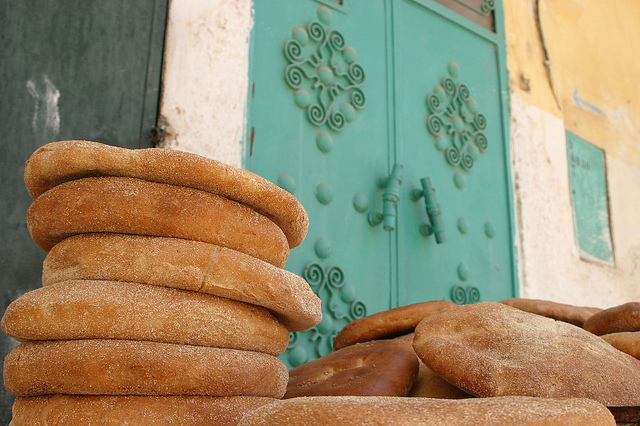
: Image via GreenProphet/flickr.

Arwa Aburawa
Arwa Aburawahttp://www.greenprophet.com
Arwa is a Muslim freelance writer who is interested in everything climate change related and how Islam can inspire more people to care for their planet and take active steps to save it while we can. She is endlessly suspicious of all politicians and their ceaseless meetings, especially as they make normal people believe that they are not part of the solution when they are the ONLY solution. Her Indian auntie is her model eco-warrier, and when Arwa is not busy helping out in the neighborhood alleyway garden, swap shopping or attempting fusion vegetarian dishes- with mixed success, she’d like to add- she can be found sipping on foraged nettle tea.

Read More

TRENDING

Is Qatar paying UNESCO to turn a blind eye on the Seychelles?

Is UNESCO being paid off by Qatar so it can own a private airstrip in a strategic location in the Seychelles?

BM Studios is designing systems, not just buildings in the UAE

Balsam Madi is an architect and systems thinker whose work bridges culture, sustainability, and design intelligence across the Middle East and Europe.

Qatar’s climate hypocrisy rides the London Underground

Qatar remains a master of doublethink—burning gas by the megaton while selling “sustainability” to a world desperate for clean air. Wake up from your slumber people.

Images of Assomption Island development show extensive beach development

Researchers who have studied the island for decades describe it as a key ecological buffer for Aldabra, helping to protect the atoll from pollution, invasive species, and light disturbance. If Assomption’s natural systems collapse, they warn, Aldabra could be next.

Seychelles activists sue government for Qatari development on turtle nesting sites

The luxury resort now under legal challenge on Assomption Island is being developed by Assets Group, a Qatar-based real estate company that advertises the project on its own website as a collection of high-end villas and spa facilities in the Seychelles. According to multiple reports, including Mongabay and The Seychelles Nation, the developer is tied to Qatari investors and has relied on the London-based PC Agency to promote the project internationally. Environmental groups allege that Assets Group’s expansion near the UNESCO-protected Aldabra Atoll risks introducing invasive species and undermining decades of conservation work.

Yerukim Forms a New Green Economy Where the Money is Really Green

The Yerukim members who pick up the recyclables get to keep the monetary reward, the public earns "green" bills that can be used in shops, and business owners get to be associated with environmentalism.

Choosing Riyadh over Dubai? What Investors Should Know

Saudi Arabia is deploying capital at unmatched scale to catalyze tourism and advanced industry while rewiring its power-and-water backbone. The investable frontier is widening—especially in renewables, grid storage, water efficiency/desal retrofits, and hospitality operating platforms. Prudent investors will insist on phased delivery, enforceable KPIs (energy, water, biodiversity), and RHQ/zone compliance—while pricing political-economy and reputational risks alongside growth upside.

Sell your cooking oil for biodiesel money

Want to make money on old french fry oil? Sell it.

Qatar Alternative Energy Summit Pairs Investors And Innovators

Alternative energy investors and innovators can meet n' greet in Doha, Qatar March 16 and 17.

Here’s How To Implement The Four Pillars Of Employee Engagement

If you throw a party for your work team and they are vegans, don't make it a barbecue. Know the sustainability values of your team to boost moral and retain good people.

Locals From Rishon Fight IKEA

Big Box stores are a pretty new concept in Israel, and thank God that not every Israeli city wants them in their backyard. A word from someone who has see the beautiful farmland around her hometown Newmarket, Ontario stripped and converted into vulgar strip malls of big box shops: they have no place in a healthy and sustainable town or city.

The Jewish National Fund Meets An Inconvenient Truth

According to the JNF, it has transformed thousands of acres of barren land into green forests in Israel. They state that each person emits about 23 tons of carbon per year, estimating that each tree planted can absorb one ton of carbon in its lifetime. That's a whole lot of trees you'd need to be planting. Could so many fit in Israel?

How to quiet noise from construction in your office

Streets need to be resurfaced in New York but the humming and grinding noise is unsettling. Noise is environmental pollution. 

Popular Categories