
Nanosolar’s Ultra Thin Solar Panels Could Go East

nanosolar thin solar panelBy being longer, Nanosolar’s solar panels are less costly to install

Advances in solar energy panel technology is reaching a stage where it is now possible to purchase DIY home kits to create solar powered electricity on the roofs of your home.  And solar array panels are even being installed on the roofs of chicken coups to provide electricity for agricultural use.  Solar energy cells are also becoming less expensive due to mass production in countries like China, and thanks to the materials in which the solar cells are being produced. Such is now the case of an American company, Nanosolar, which is producing solar energy cells using an ‘industrial’ printing process to coat CIGS (Copper, Indium, Gallium, Selenium) and nanoparticle inks on low-cost aluminum foil in order to enable the world’s thinnest solar cells and lowest-cost solar panels.
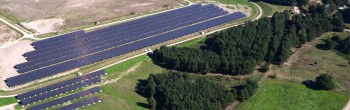
nanosolar thin solar panelA Nanosolar array farm

Nanosolar’s philosophy is to produce solar panels that are not only as thin as possible, but cost-effective too.  The company also is striving to reduce the environmental impact caused by the production of the solar cells, in order to be more friendly to the earth.

One of the ways this is done is by recycling as much of their production wastes as possible, as well as recycling their office waste such as paper and used toner cartridges.

Nanosolar’s utility panel is made to be longer than other types of solar panels, two meters instead of 1.2 meters, which reduces costs of panel cabling and assembly labor. The panel incorporation of glass and glass laminate together with steel frames make the panels more durable. And being certified for higher electrical wattage, the panels are much more efficient in solar conversion to electricity.

One of Nanosolar’s customers is the large French renewable energy company EDF Energies Nouvelles. Energies Nouvelles is involved in  solar energy and wind energy projects all over France other parts of  Western Europe, as well as in Turkey.

With the use of longer, more efficient solar panels. Nanosolar’s uniquely designed solar panels may also soon be part of solar energy projects in the Middle East as well.

::nanosolar

More on solar energy in the Middle East:
Kibbutz Recovers from Killer Forest Fires by Going Green

Home Kits to Capture the Sun From Roofs and Private Homes

Saudis to Maintain Energy Hegemony With Postage Stamp Size Solar Cells

Suntech to Sell Home Solar Panels in Israel

Maurice Picow
Maurice Picowhttps://www.greenprophet.com/
Maurice Picow grew up in Oklahoma City, U.S.A., where he received a B.S. Degree in Business Administration. Following graduation, Maurice embarked on a career as a real estate broker before making the decision to move to Israel. After arriving in Israel, he came involved in the insurance agency business and later in the moving and international relocation fields. Maurice became interested in writing news and commentary articles in the late 1990’s, and now writes feature articles for the The Jerusalem Post as well as being a regular contributor to Green Prophet. He has also written a non-fiction study on Islam, a two volume adventure novel, and is completing a romance novel about a forbidden love affair. Writing topics of particular interest for Green Prophet are those dealing with global warming and climate change, as well as clean technology - particularly electric cars.

Read More

2 COMMENTS

TRENDING

NuCicer — Chickpeas Move to the Center of the Plate

NuCicer has developed Nuchi, a new class of chickpea with 50% more protein and 25% less fat than conventional varieties. Co-founder Kathryn Cook explains how wild chickpea genetics, AI-guided breeding, and centuries-old biodiversity could transform the future of sustainable protein.

6 Ways Landlords Can Improve Cash Flow from Eco Rentals

Want your rental property to pay the mortgage? Build a sustainable home that practically advertises itself. From solar-heated hot tubs and energy-efficient appliances to pet-friendly yards and Nordic-style saunas, eco-conscious upgrades can justify higher rents, attract better tenants, and reduce costly vacancies. This guide explores practical ways landlords can improve cash flow without major renovations, including working with property managers, adjusting rental rates strategically, reducing operating expenses, and uncovering new revenue streams. Whether you're running an Airbnb, a vacation cabin, or a long-term rental, sustainability isn't just good for the planet—it can be good for your bottom line. A greener property often becomes a more profitable one.

Wave wind energy for Nvidia’s next AI energy boom?

As AI factories consume unprecedented amounts of electricity, NVIDIA is looking beyond chips and data centers to the ocean. The company recently spotlighted Israel's Eco Wave Power and its wave energy projects in Jaffa and Los Angeles, highlighting how AI, digital twins and renewable energy can work together to meet future power demands. The collaboration reflects a growing realization that the future of artificial intelligence may depend as much on clean energy infrastructure as it does on computing power.

Collecting kinetic energy from roads; REPS turns traffic into a power plant

REPS announced a $23.6M equity financing round to scale...

Desalination experts debunk Aqua Solaire, the floating desalination barge

AI makes it easy to dream, develop, and create images of what could be world-changing ideas, until the reality sets in. A new project making the rounds is Aqua Solaire, an allged French concept for a solar-powered desalination vessel designed to bring drinking water to coastal communities facing drought, storms, and infrastructure failures.

The Essential Guide To Sustainability in Project Management

Sustainability is an approach where businesses and individuals balance the environmental, social, and economic aspects of a project such that current and future stakeholders are not overburdened with the impacts of the project in future.

Yerukim Forms a New Green Economy Where the Money is Really Green

The Yerukim members who pick up the recyclables get to keep the monetary reward, the public earns "green" bills that can be used in shops, and business owners get to be associated with environmentalism.

Choosing Riyadh over Dubai? What Investors Should Know

Saudi Arabia is deploying capital at unmatched scale to catalyze tourism and advanced industry while rewiring its power-and-water backbone. The investable frontier is widening—especially in renewables, grid storage, water efficiency/desal retrofits, and hospitality operating platforms. Prudent investors will insist on phased delivery, enforceable KPIs (energy, water, biodiversity), and RHQ/zone compliance—while pricing political-economy and reputational risks alongside growth upside.

Sell your cooking oil for biodiesel money

Want to make money on old french fry oil? Sell it.

Qatar Alternative Energy Summit Pairs Investors And Innovators

Alternative energy investors and innovators can meet n' greet in Doha, Qatar March 16 and 17.

Here’s How To Implement The Four Pillars Of Employee Engagement

If you throw a party for your work team and they are vegans, don't make it a barbecue. Know the sustainability values of your team to boost moral and retain good people.

Locals From Rishon Fight IKEA

Big Box stores are a pretty new concept in Israel, and thank God that not every Israeli city wants them in their backyard. A word from someone who has see the beautiful farmland around her hometown Newmarket, Ontario stripped and converted into vulgar strip malls of big box shops: they have no place in a healthy and sustainable town or city.

The Jewish National Fund Meets An Inconvenient Truth

According to the JNF, it has transformed thousands of acres of barren land into green forests in Israel. They state that each person emits about 23 tons of carbon per year, estimating that each tree planted can absorb one ton of carbon in its lifetime. That's a whole lot of trees you'd need to be planting. Could so many fit in Israel?

Popular Categories