
Electrified Cages Revive Dead Coral Reefs

water issues, pollution, climate change, coral reef, red sea, gulf, electricity, nature conservation, coral

An ingenious technology installed in 20 countries around the world has enormous potential not only to regenerate ailing coral reefs but improve their resilience as well!

Coral reefs throughout the world are in dire straits, which bodes badly for the world’s marine ecosystems. But a proven technology that has been floating around for two decades can revive even the most bleached and poorly reefs in a matter of years.

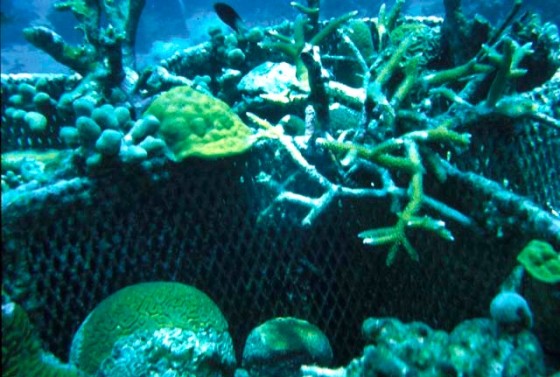
First conceived by German architect and marine scientist Wolf Hilbertz, Biorock technology delivered via a metal cage called a “crab” creates a spontaneous accumulation of limestone, which in turn encourages coral growth. A similar idea called Econcrete made in Tel Aviv creates new reef growth.
water issues, pollution, climate change, coral reef, red sea, gulf, electricity, nature conservation, coral

It only takes a tiny amount of electricity to create life-generating mineral deposits

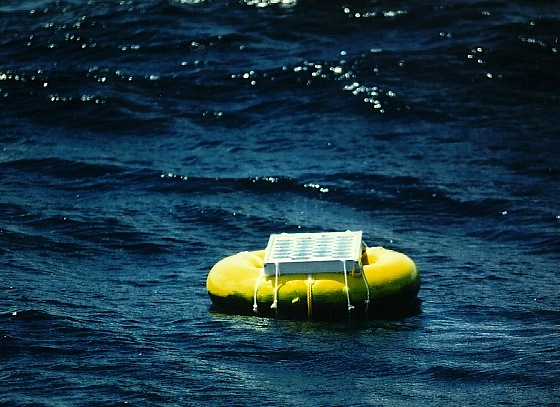
A tiny amount of electricity derived from solar panels is delivered to the metal crab cages, which then promotes an accumulation of life-sustaining limestone. Hilbertz originally tested this Biorock technology in the southern American state Louisiana in order to develop a self-sustaining building material. Not only was the experiment successful, but the inventor also discovered that oysters and corals colonized the newly formed limestone domes.

Remarkably, Discovery News reports that the electrolysis not only restores beleaguered reefs but actually improves their resistance to environmental factors that caused their demise in the first place, including bleaching that results from warmer and more acidic water.

If all of this sounds just a little bit too good to be true, we’re happy to report that for once it’s not! An Australian diver Rani Morrow-Wuigk learned about Biorock technology and decided to use her own money and support from the Taman Sari resort in Pemuteran Bay off Bali’s north coast to restore reefs that had all but disappeared. Already, after just 11 years, 60 cages spread over two marine hectares have completely regenerated the reef.
water issues, pollution, climate change, coral reef, red sea, gulf, electricity, nature conservation, coral

Coral doing better than before

“Now we’ve got a better coral garden than we used to have,” said Rani. Even the local fishermen who worried about their job security are seeing the ripple effects of a newly colorful and thriving reef system which is luring tourists back to the bay.

Efforts to improve the state of coral reefs in the Red Sea and the Gulf are commendable but probably too slow to make a difference in the face of fast-moving climate change. In Abu Dhabi, doughnut-sized disks developed by Dr. Mineo Okamoto from the Tokyo University of Marine Science and Technology (TUMAT) are being installed in the waters of Saadiyat Island and Al Dhabeiyah. They promote larvae growth but only at a rate of 1cm per year.

As development projects continue unabated, these fragile ecosystems in the Middle East will become increasingly degraded. It’s going to take a near miracle, or maybe Biorock technology, to bring them back to life.

More on coral reefs in the Middle East:

Rebuilding Abu Dhabi’s Coral Reefs One Disc at a Time

Monitoring Stations in the United Arab Emirates Show Stressed Out Coral
Coral Reefs Get Sexy To Cope With Global Warming

Will Coral Reefs At Aqaba Be Destroyed By Litter

Tafline Laylin
Tafline Laylinhttp://www.greenprophet.com
As a tour leader who led “eco-friendly” camping trips throughout North America, Tafline soon realized that she was instead leaving behind a trail of gas fumes, plastic bottles and Pringles. In fact, wherever she traveled – whether it was Viet Nam or South Africa or England – it became clear how inefficiently the mandate to re-think our consumer culture is reaching the general public. Born in Iran, raised in South Africa and the United States, she currently splits her time between Africa and the Middle East. Tafline can be reached at tafline (at) greenprophet (dot) com.

Read More

11 COMMENTS

TRENDING

Stardust’s solar geoengineered $10 billion plan to blot out the sun

Israeli-American startup Stardust Solutions has raised $75 million to develop technology that could cool the Earth by reflecting sunlight. Is solar geoengineering becoming a real industry? Or could it be a new threat?

Mongolia rangelands the center of climate change

Mongolia put the world’s overlooked rangelands on the climate agenda at UNCCD COP17, where governments and investors backed new financing for land restoration, drought resilience and pastoral communities.

Did China’s AI Boom Melt the Himalayas? Nepal’s Deadly Floods Raises Question About Data Centers and Climate

Nepal’s devastating floods reveal the growing risks of a warming Himalaya. As glaciers retreat and extreme events intensify, clean energy and climate action are increasingly urgent — and local organizations need support.

Jewish Climate Network founded so innovators don’t leave their identity at the door

Rather than retreating from climate change work, the Jewish Climate Trust organization has backed a new initiative designed to strengthen both climate action and Jewish community.

How a tick bite can lead to a life-threatening meat allergy AFG

Imagine developing a severe allergy to steak after a single tick bite. That's the reality for people with alpha-gal syndrome, a rapidly emerging condition linked to lone star ticks and other tick species. As researchers uncover how tick saliva rewires the immune system, health officials warn that hundreds of thousands of Americans may already be living with this unusual red meat allergy.

Scientists make lead-free perovskite solar cells that can weather the elements

Scientists have developed a “raincoat” for lead-free tin perovskite solar cells, helping them withstand air, moisture and heat while maintaining high efficiency.

The Essential Guide To Sustainability in Project Management

Sustainability is an approach where businesses and individuals balance the environmental, social, and economic aspects of a project such that current and future stakeholders are not overburdened with the impacts of the project in future.

Yerukim Forms a New Green Economy Where the Money is Really Green

The Yerukim members who pick up the recyclables get to keep the monetary reward, the public earns "green" bills that can be used in shops, and business owners get to be associated with environmentalism.

Choosing Riyadh over Dubai? What Investors Should Know

Saudi Arabia is deploying capital at unmatched scale to catalyze tourism and advanced industry while rewiring its power-and-water backbone. The investable frontier is widening—especially in renewables, grid storage, water efficiency/desal retrofits, and hospitality operating platforms. Prudent investors will insist on phased delivery, enforceable KPIs (energy, water, biodiversity), and RHQ/zone compliance—while pricing political-economy and reputational risks alongside growth upside.

Sell your cooking oil for biodiesel money

Want to make money on old french fry oil? Sell it.

Qatar Alternative Energy Summit Pairs Investors And Innovators

Alternative energy investors and innovators can meet n' greet in Doha, Qatar March 16 and 17.

Here’s How To Implement The Four Pillars Of Employee Engagement

If you throw a party for your work team and they are vegans, don't make it a barbecue. Know the sustainability values of your team to boost moral and retain good people.

Locals From Rishon Fight IKEA

Big Box stores are a pretty new concept in Israel, and thank God that not every Israeli city wants them in their backyard. A word from someone who has see the beautiful farmland around her hometown Newmarket, Ontario stripped and converted into vulgar strip malls of big box shops: they have no place in a healthy and sustainable town or city.

Popular Categories