
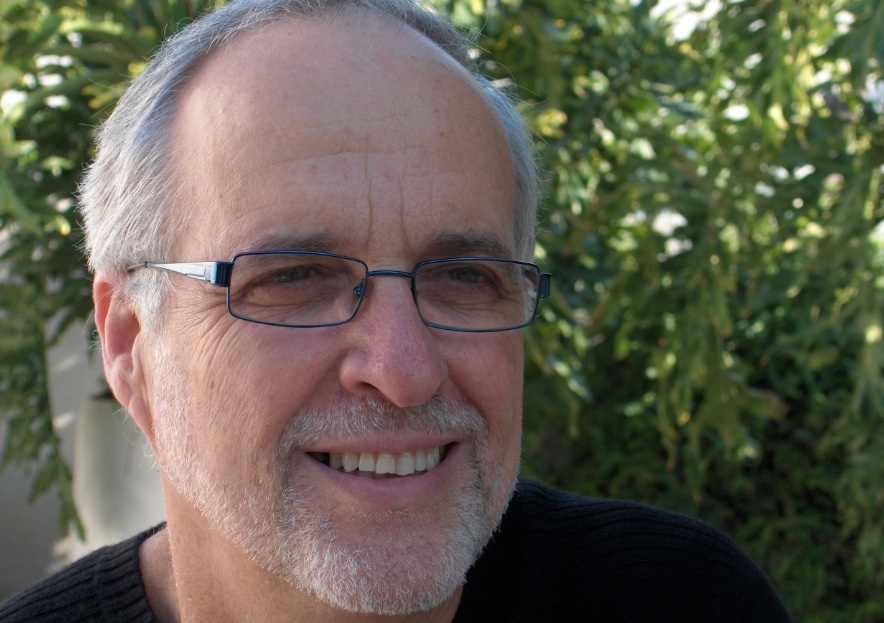


Karin speaks with HCL Clean Tech CEO Eran Baniel (above) about wood to sugar developments in Mississippi.
It’s not every day that an Israeli company based on the science of a Nazi collaborator wins a huge US contract. But HCL Clean Tech, which offers a process to turn wood chips into biofuel, just received a $100 million bond package from the Mississippi state legislature to build plants in Grenada, Booneville, Hattiesburg and Natchez for products in the cosmetics, pet food, and lubricants industries.
The plants will take wood chips from region, where there is a surplus of pine trees, and begin processing them in 2012 in Grenada. Three bigger plants will be opened in 2015, 2017 and 2019, according to the deal. Most of the funding will go toward building the facilities, while $5 million is earmarked for infrastructure and training.
The new project is expected to create about 800 new jobs, with the average salary not too shabby at $67,500 plus benefits. Backers of the bill, which was approved almost unanimously, believe these jobs — some 200 new positions in Natchez alone — will be readily filled by locals.
Behind all of this is the father-son team of 93-year-old chemist Prof. Avraham Baniel and businessman Eran Baniel. The father arrived in Israel with his family before World War II. HCL Clean Tech was founded in 2007, basing its technology on experiments by accused Nazi collaborator Friedrich Bergius, who shared the 1931 Nobel Prize in chemistry with Carl Bosch for innovating a process for producing synthetic fuel from coal. The goal was to make biofuel from wood chips for military vehicles, but the process had several flaws.
This was the starting point for Avraham, who’d heard about the problems of using food sugars as a feedstock for biofuel. Sources like corn and sugarcane are highly volatile in the market, and they also compete for food sources.
When age is an advantage
Having more than a few decades up on other entrepreneurs has its advantages, Eran tells ISRAEL21c.
“The idea came from a ‘young’ startup guy now aged 93, who happens to be my father,” says Eran. “He is one of the forefathers of Israel’s industrial chemical research. And he remembered that there was a German process [for] taking wood chips and hydrolyzing them to sugars and making ethanol from them.”
Thinking he could solve the problems of the earlier attempt, he asked his son to rent a lab so new trials could be carried out. But first he had to find a source of low-cost cellulosic sugars, the most common basis for biofuels and bio-products, says Eran. The answer was wood chips and wood waste.
Using unique extraction and separation methods aided by the powerful chemical hydrochloric acid, Avraham was indeed successful in coaxing sugars from the tough cellulose material made by trees, without breaking the chemical bonds of the sugar.
It’s pure chemistry
Eran explains that the process of extracting valuables from the wood is “pure chemistry.” The separated sugar “comes out clean from the [concentrated hydrochloric] acid. It is usable for customers at the lowest possible cost and best quality.”
The company’s leaders aim to build production facilities around the world, and while they have started with wood, they can use the same process for extracting sugar from any kind of cellulose material — even bagasse, a waste material from sugarcane stalks.
The company now has a staff of 27, with research and development mostly concentrated in Herzliya, and a pilot site demonstrating the technology in Durham, North Carolina. About to announce a fourth major investment round, bigger than the total sum of the $15.5 million raised to date, HCL has support from Khosla Ventures and a $9 million grant from the US Department of Energy on top of the Mississippi deal.
Eran explains that the Department of Energy grant is focused on the “wood basket” in the southern United States, where wood used to be processed for paper. “Paper is not so popular anymore, and so the wood and forestry industry in the States is struggling. The paper guys extracted value from wood and that’s what we are doing in another way,” Eran concludes.
This story was first printed on ISRAEL21c – www.israel21c.org



how likly will booneville realy be a site for a mfg plant?
No problem, Karin. Happy to bring a touch of veritas to the table. Additionally, you could check the HCL CleanTech company website to verify the legitimate CEO is Philippe Lavielle and contact him for comment. You could also reach out to Steve Piccot, Director at Southern Research Institute in Durham, NC, and ask him who authored a certain $9 million DOE grant proposal.
Thanks Bob. I will send it to Eran for comment.
Interesting article but, let me shed some light with a few points of fact that nobody in the company will offer. One, at the time this article was posted, Eran was no longer CEO. Eran was deposed and a new CEO was hired in June of 2011. Two, the pilot in Durham was no longer operational (they’re trying to move it elsewhere) and proved nothing along the lines of this process being commercially viable. In actuality, far more was proven to the contrary. Three, the company is woefully behind on researching and proving their proprietary solvent extraction process which is the lynchpin to their success. The reality is they haven’t proven they can reliably make ANY sugar from wood on a pilot level, much less extract the acid THEN recover the acid and solvent.
Bottom line, if you’re expecting sugars to be made from wood in Grenada in 2012, and most likely ever, don’t hold your breath. Unfortunately for Khosla, the DOE and the state of Mississippi, they will be forced to realize this in due time.