
The Horn of Africa Famine: A Cautionary Tale for MENA

climate change, desertification, global warming, drought, famine, horn of africaAid workers are battling to reach certain drought-affected people in the Horn of Africa, where tens of thousands of people have died.

Tens of thousands of people, many of them children, have already died in Somalia – the seat of what is being called the Horn of Africa famine. While many news outlets focus on Rupert Murdoch, for whom oil shale in Israel is likely a dwindling concern by now, we really ought to have our eyes on Djibouti, Eritrea, Ethiopia, Kenya,  Somalia, Sudan and South Sudan, where global warming, climate change, higher carbon concentrations, whatever you want to call one of the most serious challenges humanity has ever faced,  is presently, right now, starving millions of people to death. And we should be looking because we in the Middle East could be next.

Climate change is dramatic

I know that sounds dramatic. But climate change is dramatic  and will become even more so if our level of preparedness is not escalated. Today, the United Nations officially upgraded the drought, the second year in a row that the rains have failed in North Eastern Kenya and Southern Somalia, a famine.

NPR reports that “30 percent of children [are] acutely malnourished and 4 in every 10,000 [are] dying each day,” and Andrew Wander, writing for Al Jazeera, says that Save the Children have “treated thousands of  drought-affected children for malnutrition in Kenya alone.”

With the next rains not expected until October, the situation is bound to get much much worse.

Wander writes,

“Whether you ask about the carcasses of livestock baked white in the sun, the gaggle of people crowding around the district commissioner’s door, or the wards of malnourished children lying listlessly in hospital beds, the explanation given is always the same. “It’s because of the drought.”

The UN has called this the worst drought in sixty years but journalists on a listserv I follow wonder about this number. Is it meteorologically the worst drought on record, or is the humanitarian tragedy that is unfolding the worst in sixty years?

What makes this the worst drought in 60 years?

Patrick Luganda, Chair of the Network of Climate Journalists in the Greater Horn of Africa (NECJOGHA) wrote this in an email that was so enlightening for the lessons it carries for the Middle East that I had to share it.

Technically the worst ‘meteorological drought’ may not necessarily be the worst drought in actual impacts on communities and the public in general. For instance the driest year on record say in a ten year period may be described and the worst drought year in meteorological terms but if the affected countries or regions are adequately warned in time, these countries may prepare to counter this dry period and less human suffering is recorded. This means that the terrible drought in humanitarian terms may not be because of the worst dry year in history but rather by the lack of preparedness by the given country or community to respond to the drought conditions.

The United States Geological Survey (USGS) linked last year’s drought in the Horn of Africa to “warm sea surface temperatures (SSTs) in the Indian Ocean,” or climate change. Although prone to drought, rainfall has become increasingly scarce in the region during the last decade.

Why people in the MENA region really ought to pay attention

The World Bank calls the Middle East “particularly vulnerable to climate change.” Last year, 500,000 Syrians evacuated a drought-stricken zone long before the Arab Crisis or Spring emerged.

We have reported time and again that temperatures are rising throughout the Gulf, the Levant, the Magreb, and the Mediterranean, food prices are rising and agriculture is becoming less secure. The UAE and Saudi Arabia are buying up land while they can, but countries in the Middle East and North Africa need to stop looking beyond their borders for answers and start fortifying their own societies.

:: Al Jazeera

More on Drought and Famine in the Middle East:

500,000 Syrians Flee Drought-Stricken Zone

Drip Irrigation Gives Hope to Drought-Plagued Syrian Farmers

Yemen’s Water Crisis Could Worsen Security

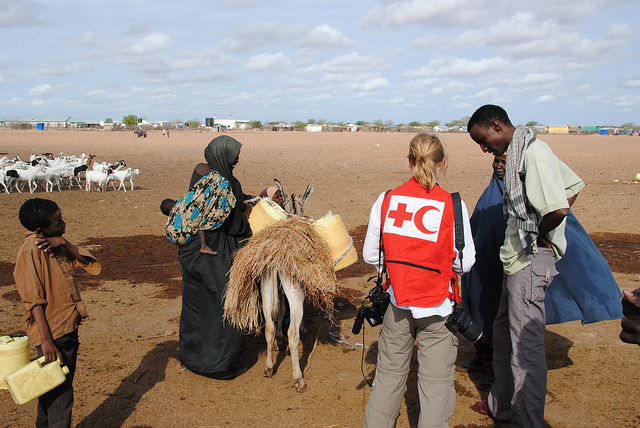
image via Canadian Red Cross
 

Tafline Laylin
Tafline Laylinhttp://www.greenprophet.com
As a tour leader who led “eco-friendly” camping trips throughout North America, Tafline soon realized that she was instead leaving behind a trail of gas fumes, plastic bottles and Pringles. In fact, wherever she traveled – whether it was Viet Nam or South Africa or England – it became clear how inefficiently the mandate to re-think our consumer culture is reaching the general public. Born in Iran, raised in South Africa and the United States, she currently splits her time between Africa and the Middle East. Tafline can be reached at tafline (at) greenprophet (dot) com.

Read More

1 COMMENT
  1. It’s hard to definitively link events such as the East Africa drought to climate change scientifically. However, it would be stupid of us not to accept that humans have changed the environment – and that has implications. We have to more actively combat climate change before droughts like these become more commonplace and even more deadly.

TRENDING

Weston Higginbotham found dead in a Kyoto forest: is climate anxiety part of the story?

In some ways, Weston has become a symbol of a generation wrestling with environmental and technological anxiety. Friends and family described him as deeply concerned about environmental issues. Reports also noted that he questioned the growing role of artificial intelligence in daily life, even reportedly disagreeing with his mother about her use of AI.

Billie Eilish’s Mom Takes the Stage at Hollywood Climate Summit — But Does Hollywood Still Care About Climate Change?

Hollywood once promised to help save the planet. Leonardo DiCaprio warned of climate catastrophe from awards stages. Celebrities flew to climate conferences. Studios pledged greener productions. Streaming platforms rushed to commission environmental documentaries. But in 2026, with the aftermath of wildfires, heatwaves and floods becoming routine, a question lingers: Does Hollywood still care about climate change?

Can Scientists Predict Coral Bleaching Before It Happens?

Now researchers at the Woods Hole Oceanographic Institution (WHOI) in the US say they have developed a way to predict coral bleaching five to six months before it occurs, potentially giving reef managers enough time to intervene and save vulnerable corals.

10 Amazing Facts About the Sidr Tree

Most people in the West have never heard of the Sidr tree. That's strange when you think about it. This tough, thorny desert tree has fed people, bees, birds, and camels for thousands of years. It appears in Islamic tradition. Its honey sells for astonishing prices.

5 projects to help kickstart your company’s sustainability journey 

True progress happens when environmental ambition meets action. Decarbonizing efficiently is possible for any business in any sector, but actually getting started can sometimes feel daunting.   The trick? It’s to start small and build momentum. Here are five potential projects to help you get started.  

Locals From Rishon Fight IKEA

Big Box stores are a pretty new concept in Israel, and thank God that not every Israeli city wants them in their backyard. A word from someone who has see the beautiful farmland around her hometown Newmarket, Ontario stripped and converted into vulgar strip malls of big box shops: they have no place in a healthy and sustainable town or city.

The Jewish National Fund Meets An Inconvenient Truth

According to the JNF, it has transformed thousands of acres of barren land into green forests in Israel. They state that each person emits about 23 tons of carbon per year, estimating that each tree planted can absorb one ton of carbon in its lifetime. That's a whole lot of trees you'd need to be planting. Could so many fit in Israel?

How to quiet noise from construction in your office

Streets need to be resurfaced in New York but the humming and grinding noise is unsettling. Noise is environmental pollution. 

EarthX and a blueprint for sustainable investing

Trammell S. Crow, a Dallas-based businessman and father of four, is focusing his efforts on impact investing, and media that focuses on saving the planet through EarthX.

Mining Afghanistan’s Mineral Discoveries Similar to Avatar

Now that American forces in Afghanistan are commemorating the longest period of any war that America has been involved in, including the 1965-73 Vietnam War, the recent discoveries of large and extremely valuable mineral and metal deposits may finally bring to light a reason to continue the presence of US fighting forces in this war torn and backward country.

From Pilot Plant to Global Stage: How Aduro Clean Technologies’ 2026 Expansion Signals a Turning Point for Chemical Recycling Investors Like Yazan Al Homsi

The company's Next Generation Process (NGP) Pilot Plant in London, Ontario, has officially moved into initial operating campaigns, generating the kind of structured, repeatable data that separates laboratory promise from commercial viability.

Nobul’s Regan McGee on Shareholder Value: “Complacency Is the Silent Killer” 

Why the governance framework designed to protect shareholders so...

Should You Invest in the Private Market?

startustartup Unlike public stock exchanges, which offer daily trading, strict...

Popular Categories