What Bolivia And The Bedouin Have In Common

planet earth, indigenous people, bedouin, bolivia, law of mother earthWhen Indigenous people rule, nature has rights.

Bolivia will soon pass a law called “The Law of Mother Earth.” Under this law, the government decrees that nature has eleven rights similar to those enjoyed by human beings. The Law of Mother Earth is fully supported by the President, Evo Morales, whose party enjoys a majority in both houses of parliament. This marks the first time in recent history that a politician has acknowledged so unequivocally that nature deserves to be respected not only for human benefit but for its own sake. There is a lesson that environmentalists and rulers in the Middle East can take from this story, and it lies in our indigenous people.

Evo Morales is Bolivia’s first indigenous president from native Aymara descent. His people subscribe to the Andean worldview that all living things have equal rights.

According to Inka Wisdom:

In Andean philosophy, Pachakamaq is the Creator and Originator of everything that exists—including time, nature, the Cosmos, and all things, whether physical or non-physical. Pachakamaq is pure, Potent Energy, unmanifested Divinity. Above all else, Andean Spirituality is UNITY and connectedness among all things. No one is excluded; everyone—and everything—has a specific function and is in a state of continuous evolution.

In accordance with this basic philosophy, an earlier, shorter version of the Law of Mother Earth guarantees nature the following rights:

– The right to life including the integrity of ecosystems and natural processes, and the necessary conditions for regeneration

– The right to biodiversity which should be preserved without genetic modification

– The right to water in sufficient quantity and quality to sustain life, protected from pollution

– The right to clean air

– The right to equilibrium through “maintain[ing] or restor[ing]] the interrelation, interdependence, complementarity, and functionality” of all parts of the Earth

– The right to restoration of ecosystems damaged by human activity

– The right to live free of pollution including toxic and radioactive waste

It is not only in Bolivia that indigenous people enjoy a closer relationship to nature and internalize the concept of interdependence. Cameron Davidson from the Arava Institute notes that contrary to popular belief, Bedouin women are very knowledgeable about water – sources of it, and its importance.

Meanwhile, the World Conservation Union (IUCN) reports on a joint initiative near Libya between the Academy of Scientific Research and Technology and the University of Cairo. With both knowledge and species of desert plants declining, the center harvests longstanding Bedouin knowledge.

Despite our sophisticated scientific gains, and the tireless work of conservation groups and environmentalists around the world, we have been unable to convince major corporations and even individuals divorced from natural cycles that it is not only wrong to destroy nature for short-term gain, but that it is stupid.

As evidenced by Bolivia’s historic ruling, ancient architectural methods, and even ancient culinary practices, indigenous people intuitively trump our shallow understanding of nature. But with people like Evo Morales, who intends to extend Bolivia’s law beyond its own borders, and Polly Higgins, who has taken important strides to realize “Ecocide” – a law that makes it illegal to destroy ecologically-sensitive places – a more respecting and ultimately smarter relationship with nature may be in sight.

More on indigenous knowledge in the Middle East:

Lamu’s Muslim and Indigenous People Demand Natural Justice

Stunning Resort in Abu Dhabi Will Celebrate Bedouin Architecture

Ethical Foraging Saves Native Flora

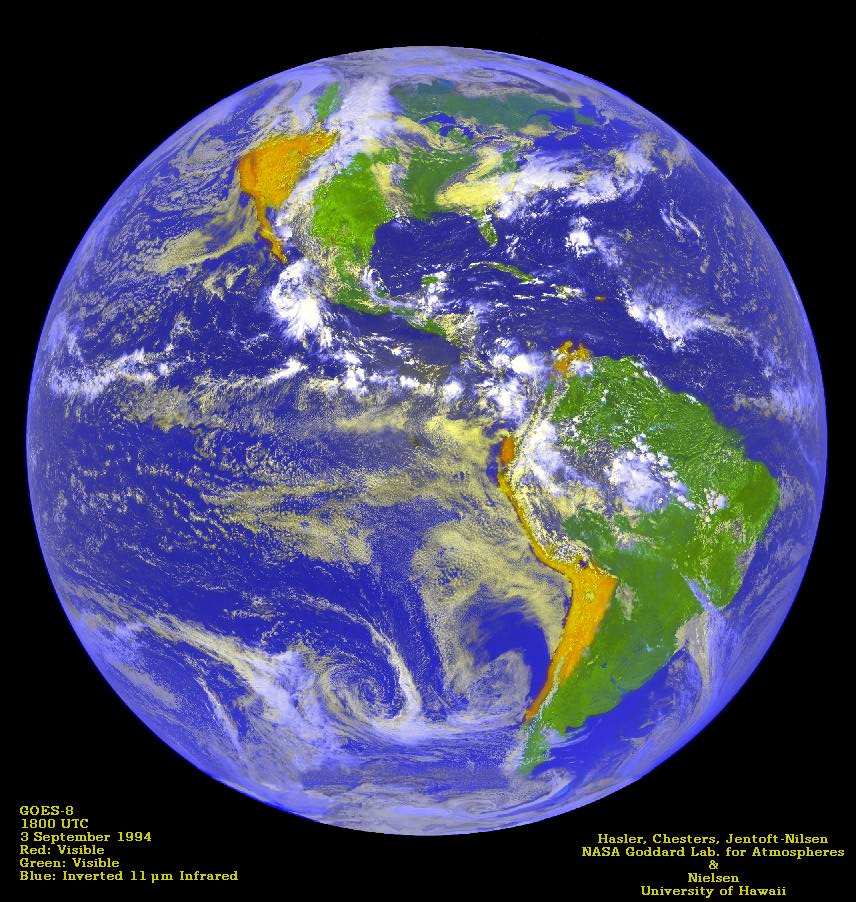
image via wikicommons
Tafline Laylin
Tafline Laylinhttp://www.greenprophet.com
As a tour leader who led “eco-friendly” camping trips throughout North America, Tafline soon realized that she was instead leaving behind a trail of gas fumes, plastic bottles and Pringles. In fact, wherever she traveled – whether it was Viet Nam or South Africa or England – it became clear how inefficiently the mandate to re-think our consumer culture is reaching the general public. Born in Iran, raised in South Africa and the United States, she currently splits her time between Africa and the Middle East. Tafline can be reached at tafline (at) greenprophet (dot) com.

Read More

TRENDING

What Happens When Hyenas Pee On Bedouins?

According to an anecdote Bedouin people believe that if a hyena urinates on them, it will proceed to drag them to a cave and feast on their body. Because of this, they won't hesitate to kill them on the spot if they come across one.

Lizard tail stew, dhub mansaf, is a favored folk dish in Saudi Arabia

By exploring forgotten folk dishes like lizard stew, Green Prophet continues to connect the dots between culture, ecology, and the future of sustainable living in the Middle East.

Saudi Arabia artist Ahmed Mater featured at Christie’s in London

Saudi artist Ahmed Mater talks about his work involving magnetism, mirage and Mecca. Ahmed Mater: Chronicles is taking place at Christie’s headquarters located in the heart of St. James’s, London, from July 17 to August 22.

Bedouin Traditions to bring back a sustainable community with Project Wadi Attir

This story is about my experience at Project Wadi Attir and background on what the project does.

Ecotourism in Egypt

In contrast to eco tourism in other countries in...

Locals From Rishon Fight IKEA

Big Box stores are a pretty new concept in Israel, and thank God that not every Israeli city wants them in their backyard. A word from someone who has see the beautiful farmland around her hometown Newmarket, Ontario stripped and converted into vulgar strip malls of big box shops: they have no place in a healthy and sustainable town or city.

The Jewish National Fund Meets An Inconvenient Truth

According to the JNF, it has transformed thousands of acres of barren land into green forests in Israel. They state that each person emits about 23 tons of carbon per year, estimating that each tree planted can absorb one ton of carbon in its lifetime. That's a whole lot of trees you'd need to be planting. Could so many fit in Israel?

How to quiet noise from construction in your office

Streets need to be resurfaced in New York but the humming and grinding noise is unsettling. Noise is environmental pollution. 

EarthX and a blueprint for sustainable investing

Trammell S. Crow, a Dallas-based businessman and father of four, is focusing his efforts on impact investing, and media that focuses on saving the planet through EarthX.

Mining Afghanistan’s Mineral Discoveries Similar to Avatar

Now that American forces in Afghanistan are commemorating the longest period of any war that America has been involved in, including the 1965-73 Vietnam War, the recent discoveries of large and extremely valuable mineral and metal deposits may finally bring to light a reason to continue the presence of US fighting forces in this war torn and backward country.

From Pilot Plant to Global Stage: How Aduro Clean Technologies’ 2026 Expansion Signals a Turning Point for Chemical Recycling Investors Like Yazan Al Homsi

The company's Next Generation Process (NGP) Pilot Plant in London, Ontario, has officially moved into initial operating campaigns, generating the kind of structured, repeatable data that separates laboratory promise from commercial viability.

Nobul’s Regan McGee on Shareholder Value: “Complacency Is the Silent Killer” 

Why the governance framework designed to protect shareholders so...

Should You Invest in the Private Market?

startustartup Unlike public stock exchanges, which offer daily trading, strict...

Popular Categories