
Soaring Food Prices Hit Lebanon

food-prices-arab-middle-east-beirut-lebanonAs the popular Tunisian revolt which ousted the President Ben Ali dies down, the continuing rise of food prices is becoming a real concern for the region’s governments

The reasons behind the downfall of the Tunisian president Ben Ali are complex but the high food prices, which brought the average person to the streets in protest, played an important part in the success of the revolt. Soaring food prices have unsettled the entire region with protesters in Algeria, Morocco, Egypt and Jordan all stating that the governments need to do more to reduce prices so that people can afford to eat. Now, Lebanon is facing that very food crisis in the midst of a political crisis which saw the collapse of its cabinet due to the withdrawal of support for the unity government.

According to a report from The Daily Star, the sharp increase of food prices worldwide and the collapse of the Cabinet are taking their toll with the price of certain food commodities climbing sharply over the past few weeks.

“Prices of some of the essential food commodities have oddly risen during the past few weeks and I am very much worried about any additional future increase because I honestly won’t be able to afford it,” Ibrahim Harb, a regular shopper told The Daily Star. The price of lentils, sugar, meat, chicken and vegetables are reported to have increased.

One mother complained that the price of powdered milk had increased more than 50% over one year. “How can we feed our children with such an increase in the prices of the most essential products?” she asked.

The economist Ghazi Wazneh acknowledged the rising prices but ruled out the possibility of revolt on the same scale as Tunisia due to more politicized trade unions in Lebanon. Even so, there have been reports of people in Lebanon stocking up on water and food staples and concerns of an impending political conflict.

It was also recently reported that Gulf States– in an attempt to stave off food riots- were engaging in ‘land grab’ in Africa to help secure food supplies. Various Arab states, led by Saudi Arabia and UAE have paid millions of dollars to the governments of Sudan and Ethiopia for the use of hundreds of thousands of acres of land.

Clearly, food is now an issue of political concern as it seems that political stability was the price paid for high prices that hit Tunisia.

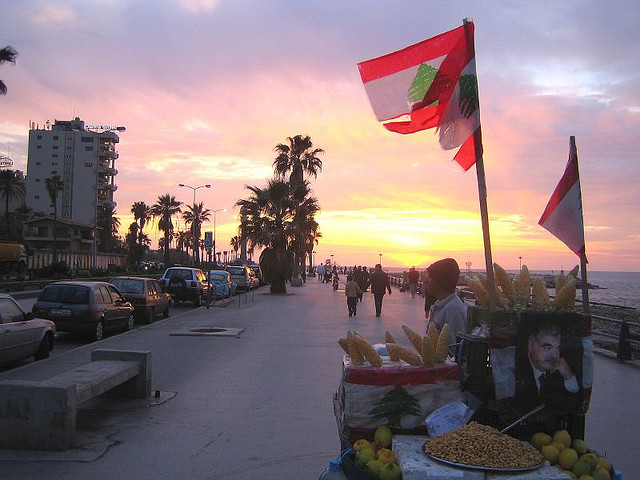
::Image via austinevan on Flickr.

For more on the food crisis in the Middle East see:

Arab States Buy Up Vast Tracts of African Farmland as Food Prices Skyrocket

Rising Food Prices Behind Riots in Algeria and Tunisia

Jordan Joins the Food Protests As Tunisian President Steps Down

Arwa Aburawa
Arwa Aburawahttp://www.greenprophet.com
Arwa is a Muslim freelance writer who is interested in everything climate change related and how Islam can inspire more people to care for their planet and take active steps to save it while we can. She is endlessly suspicious of all politicians and their ceaseless meetings, especially as they make normal people believe that they are not part of the solution when they are the ONLY solution. Her Indian auntie is her model eco-warrier, and when Arwa is not busy helping out in the neighborhood alleyway garden, swap shopping or attempting fusion vegetarian dishes- with mixed success, she’d like to add- she can be found sipping on foraged nettle tea.

Read More

1 COMMENT

TRENDING

5 Reasons Why You Should Save Seeds (and plant them)

Saving seeds from tomatoes, peppers, herbs and flowers helps preserve biodiversity, strengthen food security, and keep heirloom varieties alive. Even a small balcony garden can make a difference.

How to help Gaza fishermen

The destruction of Gaza's two main aquaculture farms, along with the hatchery facility, has also left the sector unable to produce alternative aquatic foods through aquaculture. 

Israelis want to know: Where has all the butter gone?

Butter has been missing from Israeli markets for well over a year. Why isn't supply meeting the demand?

Solving world hunger with hybrid potatoes

Can hybrid breeding effectively mitigate aspects of climate change?...

New UAE Food Bank aims for full bellies and zero waste

Green Prophet recently posted about 2017 being the Chinese...

Yerukim Forms a New Green Economy Where the Money is Really Green

The Yerukim members who pick up the recyclables get to keep the monetary reward, the public earns "green" bills that can be used in shops, and business owners get to be associated with environmentalism.

Choosing Riyadh over Dubai? What Investors Should Know

Saudi Arabia is deploying capital at unmatched scale to catalyze tourism and advanced industry while rewiring its power-and-water backbone. The investable frontier is widening—especially in renewables, grid storage, water efficiency/desal retrofits, and hospitality operating platforms. Prudent investors will insist on phased delivery, enforceable KPIs (energy, water, biodiversity), and RHQ/zone compliance—while pricing political-economy and reputational risks alongside growth upside.

Sell your cooking oil for biodiesel money

Want to make money on old french fry oil? Sell it.

Qatar Alternative Energy Summit Pairs Investors And Innovators

Alternative energy investors and innovators can meet n' greet in Doha, Qatar March 16 and 17.

Here’s How To Implement The Four Pillars Of Employee Engagement

If you throw a party for your work team and they are vegans, don't make it a barbecue. Know the sustainability values of your team to boost moral and retain good people.

Locals From Rishon Fight IKEA

Big Box stores are a pretty new concept in Israel, and thank God that not every Israeli city wants them in their backyard. A word from someone who has see the beautiful farmland around her hometown Newmarket, Ontario stripped and converted into vulgar strip malls of big box shops: they have no place in a healthy and sustainable town or city.

The Jewish National Fund Meets An Inconvenient Truth

According to the JNF, it has transformed thousands of acres of barren land into green forests in Israel. They state that each person emits about 23 tons of carbon per year, estimating that each tree planted can absorb one ton of carbon in its lifetime. That's a whole lot of trees you'd need to be planting. Could so many fit in Israel?

How to quiet noise from construction in your office

Streets need to be resurfaced in New York but the humming and grinding noise is unsettling. Noise is environmental pollution. 

Popular Categories