
Rising Food Prices Behind Riots in Algeria and Tunisia

tunisia-food-prices-riot-protestThe recent riots that have rocked North Africa are not just about unemployment and political corruption but also the rising cost of basic food

As violence spirals out of control in Tunisia and the death toll continues to rise, it’s clear that the concerns that are bringing people to the street are ones of basic need. It’s not just about political corruption which seems to riddle various Arab governments- it about the the increasing difficulty people face trying to put food on the table.

Violent clashes in Tunisia between protesters and security forces broke out over the weekend and have killed a reported 21 people so far. The protesters say they are unhappy with rising food and fuel prices, unemployment and corruption as well as the excessive violence they have faced during the unrest. A curfew has been enforced in Tunis in Tunisia to help quell the riots but as climate change disrupts food supplies, will the region see more food riots?

The recent protests in Tunisia follow hot on the heels of unrest in the region since mid-December 2010 over rising food prices and youth unemployment. In Algeria, protests also broke out this month over price hikes in sugar, milk and flour and resulted in the death of 5 people. Al Jazeera reported that youths were heard chanting ‘bring us sugar’ and demonstrators broke into warehouses to steal sacks of flour in protest against food prices, which had risen between 20 and 30 percent in the first week of January. In a bid to calm the protesters, the Algerian government imposed urgent cuts on import duties and taxes to help bring down food costs and states that it has now “turned the page” on the nationwide food riots.

Is Global Warming Causing The Hike In Food Prices?

There is no denying that the common thread between Tunisia and Algeria is the fact that they have both recently seen dramatic price hikes. Experts such as the UN Food and Agriculture Organisation (FOA) warned that a global food crisis, on the scale of the food crisis of 2007-8 which saw huge rises in the price of food, was on the way. In fact, a recent report by FOA found that the global average price of food were at their highest since 2008, when sky rocketing food prices toppled at least one government and pushed more than one billion people into hunger.

Clearly, high food prices can affect the stability of governments and the price of food is closely linked to climate change. Recent droughts, heatwaves and floods have disrupted food supplies due to poor harvests and limited supplies mean that the price of basic food goes up. As Gwynne Dyer writing for Arab News states: “The rule of thumb is that we lose about 10 percent of world food production for every rise of one degree C in average global temperature. So the shortages will grow and the price of food will rise inexorably over the years. The riots will return again and again.”

:: Arab News, Al Jazeera and BBC

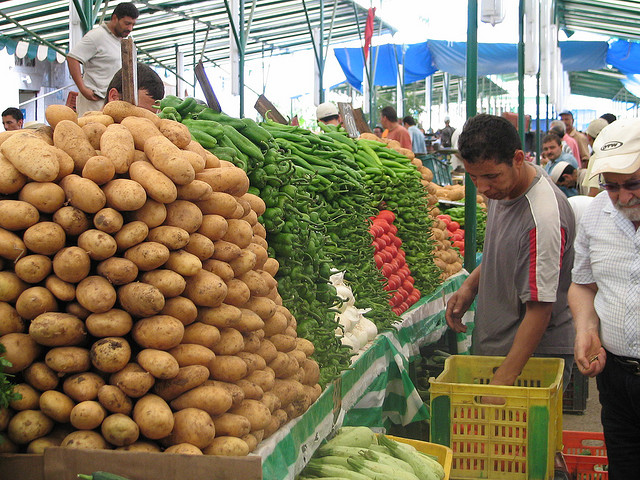
:: Image via kimi- on Flickr.

For more on food shortages see:

Jordan Tries To ‘Ketchup’ After Heat and Pests Wilt Tomatoes
UAE Plans To Improve Food Security

Egypt To Grab Sudanese Land To Meet Its Wheat Needs

Arwa Aburawa
Arwa Aburawahttp://www.greenprophet.com
Arwa is a Muslim freelance writer who is interested in everything climate change related and how Islam can inspire more people to care for their planet and take active steps to save it while we can. She is endlessly suspicious of all politicians and their ceaseless meetings, especially as they make normal people believe that they are not part of the solution when they are the ONLY solution. Her Indian auntie is her model eco-warrier, and when Arwa is not busy helping out in the neighborhood alleyway garden, swap shopping or attempting fusion vegetarian dishes- with mixed success, she’d like to add- she can be found sipping on foraged nettle tea.

Read More

2 COMMENTS
  1. Hmm, I don’t know about what Fritz wrote, but it’s easy to blame the US for the world’s ails.

    Anyhoo, there are many reasons for these problems, and I commend you for pointing out a few important ones without pointing fingers. As we all know, when you point one at someone else, three more are pointing right back …

TRENDING

Stardust’s solar geoengineered $10 billion plan to blot out the sun

Israeli-American startup Stardust Solutions has raised $75 million to develop technology that could cool the Earth by reflecting sunlight. Is solar geoengineering becoming a real industry? Or could it be a new threat?

Mongolia rangelands the center of climate change

Mongolia put the world’s overlooked rangelands on the climate agenda at UNCCD COP17, where governments and investors backed new financing for land restoration, drought resilience and pastoral communities.

Did China’s AI Boom Melt the Himalayas? Nepal’s Deadly Floods Raises Question About Data Centers and Climate

Nepal’s devastating floods reveal the growing risks of a warming Himalaya. As glaciers retreat and extreme events intensify, clean energy and climate action are increasingly urgent — and local organizations need support.

Jewish Climate Network founded so innovators don’t leave their identity at the door

Rather than retreating from climate change work, the Jewish Climate Trust organization has backed a new initiative designed to strengthen both climate action and Jewish community.

How a tick bite can lead to a life-threatening meat allergy AFG

Imagine developing a severe allergy to steak after a single tick bite. That's the reality for people with alpha-gal syndrome, a rapidly emerging condition linked to lone star ticks and other tick species. As researchers uncover how tick saliva rewires the immune system, health officials warn that hundreds of thousands of Americans may already be living with this unusual red meat allergy.

Scientists make lead-free perovskite solar cells that can weather the elements

Scientists have developed a “raincoat” for lead-free tin perovskite solar cells, helping them withstand air, moisture and heat while maintaining high efficiency.

The Essential Guide To Sustainability in Project Management

Sustainability is an approach where businesses and individuals balance the environmental, social, and economic aspects of a project such that current and future stakeholders are not overburdened with the impacts of the project in future.

Yerukim Forms a New Green Economy Where the Money is Really Green

The Yerukim members who pick up the recyclables get to keep the monetary reward, the public earns "green" bills that can be used in shops, and business owners get to be associated with environmentalism.

Choosing Riyadh over Dubai? What Investors Should Know

Saudi Arabia is deploying capital at unmatched scale to catalyze tourism and advanced industry while rewiring its power-and-water backbone. The investable frontier is widening—especially in renewables, grid storage, water efficiency/desal retrofits, and hospitality operating platforms. Prudent investors will insist on phased delivery, enforceable KPIs (energy, water, biodiversity), and RHQ/zone compliance—while pricing political-economy and reputational risks alongside growth upside.

Sell your cooking oil for biodiesel money

Want to make money on old french fry oil? Sell it.

Qatar Alternative Energy Summit Pairs Investors And Innovators

Alternative energy investors and innovators can meet n' greet in Doha, Qatar March 16 and 17.

Here’s How To Implement The Four Pillars Of Employee Engagement

If you throw a party for your work team and they are vegans, don't make it a barbecue. Know the sustainability values of your team to boost moral and retain good people.

Locals From Rishon Fight IKEA

Big Box stores are a pretty new concept in Israel, and thank God that not every Israeli city wants them in their backyard. A word from someone who has see the beautiful farmland around her hometown Newmarket, Ontario stripped and converted into vulgar strip malls of big box shops: they have no place in a healthy and sustainable town or city.

Popular Categories