Architect From Fortune 500 Company Criticizes Middle East’s “Glass Monsters”

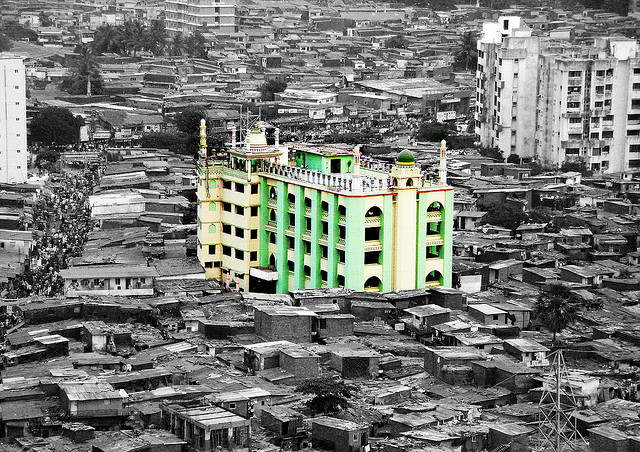
glass-skyscraper-middle-eastGlass may be beautiful, but in the Middle East, it’s far from eco-friendly

It’s one thing for environmental bloggers to criticize architects or project managers for designing buildings that do nothing to preserve natural resources or inspire beauty in moderation. Foster and Partners, prolific in the Middle East, and just about anything built in Dubai are among such companies and schemes that have elevated our (green) blood pressure in the past.

So it’s deeply refreshing to learn we’re not alone, that architects and environmental planners such as Romi Sebastian, who works in Qatar with the Fortune 500 company AECOM, are also frustrated with architectural practices that defy ecological logic.

Glass facade

Sebastian especially scorns the use of glass facades in the Middle East, where soaring temperatures should dictate a more sensible material.

He reminds us that “glass facades were initially possible only due to the development of powerful cooling systems; otherwise these buildings would have been inhabitable…”

Glass, he says, is designed to trap heat, and acts like a “solar cooker,” and expresses bewilderment that we would build with a material that has this property in a region that should instead deflect as much heat as possible.

Bending nature to (hu)man will

Sebastian claims that architects essentially ignore the environmental constraints imposed upon them, leaving human beings to bend the laws of nature to conform to the will of man. But this is no easy feat, and entails a significant expenditure of natural resources.

The architect and environmental planner also has a penchant for philosophy, and ponders the why behind certain material choices architects and designers make.

I wonder why glass is considered to be a material that symbolises ‘progress’ in the Middle East whereas traditional and practical materials like mud, clay, limestone are often related to concepts of backwardness and poverty. This impractical dissociation between materials and the environmental context of a region causes a slow degradation of the architectural expression prevalent in the Islamic world. Even the local builders often ignore simple concepts of how they can make their lives more comfortable within a living space.

Sebastian suggested to Gulf News that “governments in the region could consider new bylaws to minimise the use of glass for energy conservation purposes,” and that “using thicker stone and concrete walls, for example, and less glass can reduce the thermal signature during the day of a structure…”

Back to our roots

He does not provide exact statistics but draws attention to the idea that even keeping glass buildings and solar panels clean is water, energy, and labor intensive. Additionally, to shelter against this heat trapped by glass buildings, tenants are required to spend extra money to keep the sun out.

None of this makes a lot of sense to Sebastian, who is a fearless, outspoken proponent of more traditional building methods and materials.

“We should go back to our roots,” he says, “stick to our principles of how we used to build in this area.”

:: image via faithful chant

More Architecture News From the Middle East:
Haim Dotan’s Tao of Architecture

The Epitome Of Sustainable Architecture: 700 Year-Old Iranian Cave Homes

Architectural Design To Memorialize Assault On Free Speech In Turkey

Tafline Laylin
Tafline Laylinhttp://www.greenprophet.com
As a tour leader who led “eco-friendly” camping trips throughout North America, Tafline soon realized that she was instead leaving behind a trail of gas fumes, plastic bottles and Pringles. In fact, wherever she traveled – whether it was Viet Nam or South Africa or England – it became clear how inefficiently the mandate to re-think our consumer culture is reaching the general public. Born in Iran, raised in South Africa and the United States, she currently splits her time between Africa and the Middle East. Tafline can be reached at tafline (at) greenprophet (dot) com.

Read More

2 COMMENTS
  1. Dear laylinn,

    Thanks a lot for your support on this literature.

    Lets work hard – create good architecture that is comforting, nature respecting and a dependable shelter to our basic needs.

    All the very best.

    ROMI SEBASTIAN

TRENDING

Saving Gourmet Wild Plants For The Future

Think of truffles, a gourmet wild food. The European...

Middle-Eastern spices and natural medicine (A through C)

In the Middle East, aromatic traditional foods are regarded...

BM Studios is designing systems, not just buildings in the UAE

Balsam Madi is an architect and systems thinker whose work bridges culture, sustainability, and design intelligence across the Middle East and Europe.

How you create green steel on a blockchain

The thing about raw materials is that once they are melted down, you can't prove the source of the material. Same is true with gold, cucumbers and even forged products that look the same as the real thing. When it comes to steel, and how we produce it, it has a massive carbon problem. What's happening in Japan right now could change how we think about heavy industry and climate action.

Ancient mud buildings in the Muslim world are spectacular and sustainable

Other notable mud structures in the wider Muslim world include the Bob Dioulasso Grand Mosque in Burkina Faso, and the Khiva Wall in Uzbekistan, which is built around a collection of Islamic schools and mosques. The Siwa Oasis in Egypt (which we visited and posted about here) and the Eastern Castle in Syria have also employed mud bricks in their construction, and research shows that the famous walls of Jericho were built using sun-dried mud bricks.

Yerukim Forms a New Green Economy Where the Money is Really Green

The Yerukim members who pick up the recyclables get to keep the monetary reward, the public earns "green" bills that can be used in shops, and business owners get to be associated with environmentalism.

Choosing Riyadh over Dubai? What Investors Should Know

Saudi Arabia is deploying capital at unmatched scale to catalyze tourism and advanced industry while rewiring its power-and-water backbone. The investable frontier is widening—especially in renewables, grid storage, water efficiency/desal retrofits, and hospitality operating platforms. Prudent investors will insist on phased delivery, enforceable KPIs (energy, water, biodiversity), and RHQ/zone compliance—while pricing political-economy and reputational risks alongside growth upside.

Sell your cooking oil for biodiesel money

Want to make money on old french fry oil? Sell it.

Qatar Alternative Energy Summit Pairs Investors And Innovators

Alternative energy investors and innovators can meet n' greet in Doha, Qatar March 16 and 17.

Here’s How To Implement The Four Pillars Of Employee Engagement

If you throw a party for your work team and they are vegans, don't make it a barbecue. Know the sustainability values of your team to boost moral and retain good people.

Locals From Rishon Fight IKEA

Big Box stores are a pretty new concept in Israel, and thank God that not every Israeli city wants them in their backyard. A word from someone who has see the beautiful farmland around her hometown Newmarket, Ontario stripped and converted into vulgar strip malls of big box shops: they have no place in a healthy and sustainable town or city.

The Jewish National Fund Meets An Inconvenient Truth

According to the JNF, it has transformed thousands of acres of barren land into green forests in Israel. They state that each person emits about 23 tons of carbon per year, estimating that each tree planted can absorb one ton of carbon in its lifetime. That's a whole lot of trees you'd need to be planting. Could so many fit in Israel?

How to quiet noise from construction in your office

Streets need to be resurfaced in New York but the humming and grinding noise is unsettling. Noise is environmental pollution. 

Popular Categories