

 The Jewish holiday Tisha B’Av starts tonight. It gives one license to be sad over the state of the environment.
We know that it’s not productive to dwell on environmental doom and gloom. Green Prophet readers are modern and hip people; we are environmentally responsible, but hey, not totally perfect. Every so often, we just need to cry. We can put on a Tori Amos album, curl up in a ball in our beds and weep like there is no tomorrow. And it can feel good, because sometimes the world and what humans do to it is just plain sad.
Take today for example. Starting nightfall, starts Tisha B’Av or the Ninth of Av, the saddest day of the Jewish calendar. Major calamities happened on this day in Jewish history – such as the destruction of the Temples in Jerusalem, and the expulsion of the Jews from Spain.
To mark this day of tragedy, observant Jews fast starting nightfall today. They don’t wear leather, they don’t wash their bodies, they don’t use oil products and refrain from marital relations. Among the list of customs, one of the most pronounced is that Jews should be sad. Very sad. Playing music or participating in activities that bring joy are discouraged. Some people go to great lengths to be unhappy by reading unpleasant passages such as “Lamentations” in the Bible and by sitting on uncomfortable chairs.
To get our Jewish readers in the right Tisha B’Av spirit, we have collected a list of the 5 saddest environment stories from the last year. Get your tissues out and let the tears pour.
1. Middle East camels choking on plastic bags
One hundred years ago, there was no such thing as a plastic bag. They simply didn’t exist. The plastics revolution began slowly in 1868 but really pushed forward in the 1930s when acrylic resins were developed to create housewares, toys, and packaging. The industry exploded. The first plastic garbage bag was invented by Harry Waslyk in 1950. They weren’t supposed to be used at home since their original purpose was strictly commercial, but now they are ubiquitous. Surely Mr. Waslyk could not have predicted how much havoc his plastic child would wreck in a mere 60 years. (Click on title above to read the whole story.)
2. Bluefin tuna on the verge of extinction
Nearly 80% of the large, migratory fish, which live in the Western and Eastern Atlantic as well as the Mediterranean, have been fished out according to a Greenpeace report. This is problematic since the tuna’s high metabolic rate ensures they consume large quantities of prey, which in turn plays an important role in the Mediterranean’s ecosystem balance. (Click on title above to read the whole story.)
3. The Jordan River is nearly dead
…None of us were prepared for what we would see next, when the bus reached a spot where an earthenware dam ended the river’s natural flow. Called the Alumot Dam, water is then removed from the river in large green colored pipes to be used for agriculture and other uses.
On the other side of the dam, we saw raw sewage literally spewing into what was now going to be the Jordan River until it reaches the Dead Sea. Just a few meters away was another outward flow of what our guide said was highly saline water from saline springs pulled out of the Galilee to make it more suitable potable water, and from fish ponds. (Click on title above to read the whole story.)
It’s pretty shocking when you are out there to see for yourself how this world’s natural wonder is shrinking year by year. It makes you want to scream. From the Dead Sea Spa we took a few minutes bus ride to the Dead Sea edge. The spa, about half a kilometre away used to be on the Dead Sea’s shore. The spa didn’t move, so what does that say? (Click on title above to read the whole story.)
5. Oil sands are trying to clean up a dirty business
The Alberta oil sands, or tar sands as some people call them, are top on the list of Greenpeace’s agenda. The same people who climb trees to stop loggers from chopping down Old Growth forests, are looking to stop the oil extraction operations in the Canadian province. The oil is located under Boreal forest, and some say that the amount of greenhouse gases emitted from the extraction process, will make China’s coal factories look like child’s play. The processing will also damage water and the air, not to mention birds and waterfowl (which have been killed in the thousands) say Greenpeace activists. (Click on title above to read the whole story.)
For more serious sadness, check out the JTA story that relates the Gulf Oil spill to passages from The Book of Lamentations:
And as we watch on disaster cams the oil boiling up from deep under the sea, or witness the hopefully engineered attempts to stop the flow fail, the lament continues:
“Our steps were checked,
We could not walk in our squares.” (4:18)A Gulf Eicha proclaims: “Let us lift up our hearts with our hands.” (3:41)
As we ask, what of the animals? As of the end of June, according to the National Wildlife Federation, 1065 birds, 51 mammals and 436 sea turtles have died from the oil.
We see them, blackened; what could be sadder now than these photos? And though these words were intended for us to examine human death and suffering, they fit here well enough:
“Because of this our hearts are sick,
Because of these our eyes are dimmed.” (5:17)The oil-saturated animals call us out on our Talmudic concept of preventing the suffering of living beings, “tzar ba’alei chayim.”
Or the Washington Post blog also “lamenting” over the Gulf oil spill, where Evonne Marzouk from Canfei Nesharim writes:
The intent of removing these moments of joy is to startle us out of our complacence. Things are not all right. What must we do to change our ways? How can we improve ourselves and in so doing, bring about a better world?
We need a similar shock to our system when it comes to the environmental challenges we face. The oil spill is yet another in a series of warning signs that our planet cannot bear the pressures we’re putting upon her. How long will it take before we wake up and change our ways? …
In the face of overwhelming destruction, it is a natural human instinct to pray. Jewish prayer is intended to both reach our Creator and transform ourselves. So, if the oil spill is worrying you, pray about it. Pray that the leak is fixed, that the waters are healed, that the children get to go back to the ocean. Pray with all your heart, and take actions that will transform you. And may our prayers and actions during this time lead to the redemption of our world.
Sad enough yet?
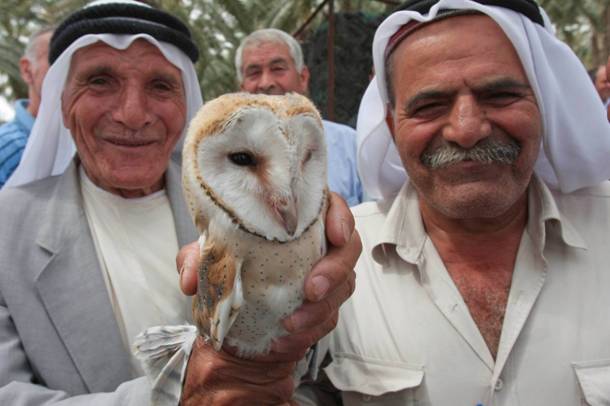
Above image via xctmx


Though I don’t love the stories behind the sadness, I do love the idea that it’s okay to cry about them. Thanks for this, and have a – sad – day?