
Seed Money Available to Protect Mediterranean Basin Birds

mediterranean birds sunsetSeed money up to $1 million to protect your local birds. Apply today.

Sick of reading about Cyprus songbirds killed and pickled for snacks?  Weary of wild killing sprees like Egypt’s sanctioned bird hunt ? Or maybe the downed flamingos in Kuwait ruffled your feathers?

BirdLife International has created a fund to underwrite environmental preservation projects in one of the world’s top biodiversity hotspots: the Mediterranean Basin. Check out their new website to learn more about the group and their work.  Especially nice is a link where you can enter your country and see which species are at risk and find resources to get involved locally.  A search on Jordan, as example, leads to The Royal Society for the Conservation of Nature, BirdLife’s partner in Jordan, which in turn will advise on in-kingdom conservation.

This five-year conservation investment aims to preserve regional biodiversity by engaging with and developing existing civil society organizations, said Ibrahim Khader, Regional Director of BirdLife International’s Middle East Division.

“The Mediterranean Basin is the world’s second largest global biodiversity hotspot, covering more than two million square kilometers spanning 34 countries and territories. It stretches from Portugal to Jordan and from northern Italy to Cape Verde,” Khader told The Jordan Times. A biodiversity hotspot is any place that boasts a large number of diverse species under threat of human interference.

“The Mediterranean Basin is one of the biological wonders of the world and is the third richest biological hotspot in the world, with more than 13,000 endemic species found nowhere else on Earth,” he added. “The primary threat is habitat loss due to increasing pressure on water resources, agricultural intensification, land abandonment, and infrastructure and residential development.”

Twice a year, BirdLife International will invite proposals for small grants worth up to $20,000 and large grants of up to $1 million, according to the Regional Director.  The money will support conservation at a local level, especially vital given economies struggling in the wake of the Arab Spring.

Their website describes the organizations as “a partnership of 117 national conservation organization and the world leader in bird conservation.”

“NGOs, community groups, universities, private enterprises and individuals may apply for funding from all countries eligible for the Critical Ecosystem Partnership Fund (CEPF) support,”  Khader added.

CEPF is a joint conservation initiative that seeks to engage civil society in biodiversity conservation. CEPF Program Leader at BirdLife International’s Middle East Division Mohammed Yousef said that the grants will work towards safeguarding globally threatened species and critical sites in Middle East and European nations surrounding the Mediterranean Basin.

Yousef said, “The investments will promote innovative partnerships… to enhance conservation and connectivity in five landscape corridors in the basin and conserve globally threatened species through systematic planning and action.”

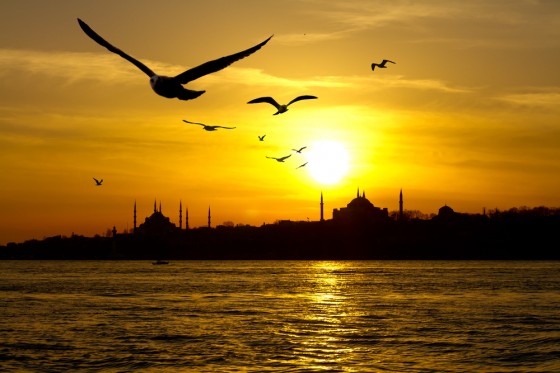
Image of birds over Istanbul by Shutterstock

Read More

TRENDING

Weston Higginbotham’s Family Declines to Release Cause of Death in Kyoto Forest

The family of Weston Higginbotham,an Auburn University student whose disappearance and death in the mountains near Kyoto, Japan, drew international attention, has declined to publicly release the cause of his death.

Hormuz 2026 Conflict Poses an Energy and Food Security Dilemma in a Warming World

As tensions rise in one of the world’s most critical maritime chokepoints, the ripple effects go far beyond oil—touching food systems, climate pressures, and regional stability

Seychelles resumes sooty tern egg collection despite population crash

Known as a biodiversity indicator species, local experts say it's too early to stop protecting these important birds in the Syechelles

Nearly the half the world’s migratory species are declining, in new UN report for COP15

With larger, land-bound animals human encroachment and Middle East warns make it more troubling for the survival of migratory animals on land, air and at sea. A new United Nations report released this week warns that the situation is getting worse, not better.

Yerukim Forms a New Green Economy Where the Money is Really Green

The Yerukim members who pick up the recyclables get to keep the monetary reward, the public earns "green" bills that can be used in shops, and business owners get to be associated with environmentalism.

Choosing Riyadh over Dubai? What Investors Should Know

Saudi Arabia is deploying capital at unmatched scale to catalyze tourism and advanced industry while rewiring its power-and-water backbone. The investable frontier is widening—especially in renewables, grid storage, water efficiency/desal retrofits, and hospitality operating platforms. Prudent investors will insist on phased delivery, enforceable KPIs (energy, water, biodiversity), and RHQ/zone compliance—while pricing political-economy and reputational risks alongside growth upside.

Sell your cooking oil for biodiesel money

Want to make money on old french fry oil? Sell it.

Qatar Alternative Energy Summit Pairs Investors And Innovators

Alternative energy investors and innovators can meet n' greet in Doha, Qatar March 16 and 17.

Here’s How To Implement The Four Pillars Of Employee Engagement

If you throw a party for your work team and they are vegans, don't make it a barbecue. Know the sustainability values of your team to boost moral and retain good people.

Locals From Rishon Fight IKEA

Big Box stores are a pretty new concept in Israel, and thank God that not every Israeli city wants them in their backyard. A word from someone who has see the beautiful farmland around her hometown Newmarket, Ontario stripped and converted into vulgar strip malls of big box shops: they have no place in a healthy and sustainable town or city.

The Jewish National Fund Meets An Inconvenient Truth

According to the JNF, it has transformed thousands of acres of barren land into green forests in Israel. They state that each person emits about 23 tons of carbon per year, estimating that each tree planted can absorb one ton of carbon in its lifetime. That's a whole lot of trees you'd need to be planting. Could so many fit in Israel?

How to quiet noise from construction in your office

Streets need to be resurfaced in New York but the humming and grinding noise is unsettling. Noise is environmental pollution. 

Popular Categories