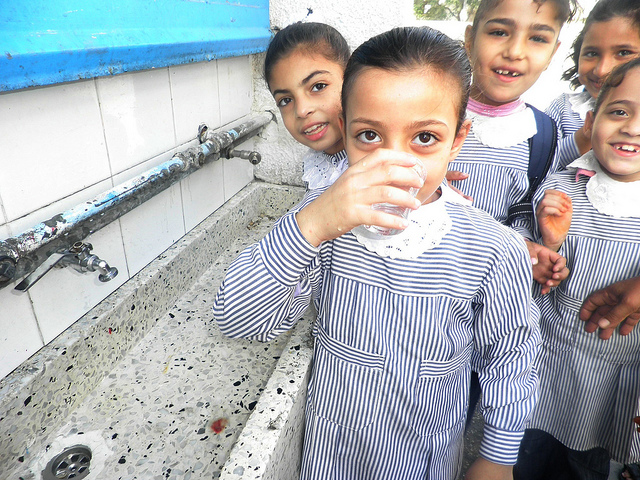

Emiratis Fear Dwindling Water Supplies Will Impact Future Generation

A rising number of Emiratis are concerned about water scarcity and what it could mean for future generations

In the United Arab Emirate the average citizen consumes 550 litres of water per capita daily, which is three times the global average and quite high for a country located in the water-scarce Middle East. Despite this water luxury, many Emiratis are increasingly aware of the scale of the problem and in a recent survey carried out by Procter & Gamble and YouGov Siraj, worries over water shortages in the region are higher than they have ever been.

The survey found that 28% of Emiratis worry that limited natural resources will be a real issue for future generations and 25% of married couples with children in the UAE are concerned that there will be not enough fresh water for their children.

An encouraging 57% of Dubai residents reported that they take an active role in monitoring their water consumption and use only what is necessary. This illustrates a rising awareness among Emiratis and follows the recent announcement that 300 mosques in Dubai have been targeted to reduce their water and electricity consumption.

The ‘Green Mosques’ project, which is being championed by the ‘Green Sheikh’,  aims to reduce consumption by 20% and save around 6 million Dh.

More worryingly, however, the survey found 24% of residents across Abu Dhabi and Dubai don’t believe their personal actions can make any difference to water consumption. This is a real issue when looking at water conservation as tackling personal behaviours is an important aspect of the saving water.

Jamie Wasky, Associate Director of YouGov Siraj, added: “Sustainability is a key issue in the region and this research shows there is an improvement in awareness but that there is still a long way to go in changing people’s perceptions on water and energy conservation.

“The survey indicated many people still do not believe their actions can make a difference. We look forward to repeating the survey next year and tracking the change in people’s attitudes.”

:: Image via  Middle East Children’s Alliance.

For more on water in the UAE see:

Project to Reduce Water and Electricity Consumption in 300 Mosques in Dubai
Abu Dhabi’s Climate Change Choice: Trees or Water?

The Water Behind Middle Eastern Woes

Arwa Aburawa
Arwa Aburawahttp://www.greenprophet.com
Arwa is a Muslim freelance writer who is interested in everything climate change related and how Islam can inspire more people to care for their planet and take active steps to save it while we can. She is endlessly suspicious of all politicians and their ceaseless meetings, especially as they make normal people believe that they are not part of the solution when they are the ONLY solution. Her Indian auntie is her model eco-warrier, and when Arwa is not busy helping out in the neighborhood alleyway garden, swap shopping or attempting fusion vegetarian dishes- with mixed success, she’d like to add- she can be found sipping on foraged nettle tea.

Read More

1 COMMENT

LEAVE A REPLY

Please enter your comment!
Please enter your name here

TRENDING

Meet Seramic Materials from Abu Dhabi

Based in Masdar City, Abu Dhabi, Seramic Materials was founded in 2019 by Dr. Nicolas Calvet and Dr. Jean-François Hoffmann, researchers working at the intersection of renewable energy and materials science. The company grew out of the Masdar Institute ecosystem and is supported by clean tech programs like The Catalyst, with early backing of around $150,000 and more than $2 million invested in research and development over time.

OPEC and energy stocks in the UAE – insight from eToro

Energy equities are responding unevenly to the evolving landscape. Companies with direct exposure to UAE production growth and infrastructure are benefiting from increased activity expectations, while global oil majors face a more mixed outlook.

Hormuz 2026 Conflict Poses an Energy and Food Security Dilemma in a Warming World

As tensions rise in one of the world’s most critical maritime chokepoints, the ripple effects go far beyond oil—touching food systems, climate pressures, and regional stability

Baby teeth read like tree rings paint a picture of toxins in early life

A new study from the Icahn School of Medicine at Mount Sinai in New York offers a striking insight into how the environments we are born into can quietly shape our brains years later. By analyzing naturally shed baby teeth, the ones tucked under pillows for the tooth fairy, researchers have reconstructed a detailed timeline of exposure to environmental metals during pregnancy and early infancy.

Poop in the East River shows the city’s rat problem and what people like to eat

New York ecology and health can be monitored by a jug of water a week.

How to quiet noise from construction in your office

Streets need to be resurfaced in New York but the humming and grinding noise is unsettling. Noise is environmental pollution. 

EarthX and a blueprint for sustainable investing

Trammell S. Crow, a Dallas-based businessman and father of four, is focusing his efforts on impact investing, and media that focuses on saving the planet through EarthX.

Mining Afghanistan’s Mineral Discoveries Similar to Avatar

Now that American forces in Afghanistan are commemorating the longest period of any war that America has been involved in, including the 1965-73 Vietnam War, the recent discoveries of large and extremely valuable mineral and metal deposits may finally bring to light a reason to continue the presence of US fighting forces in this war torn and backward country.

From Pilot Plant to Global Stage: How Aduro Clean Technologies’ 2026 Expansion Signals a Turning Point for Chemical Recycling Investors Like Yazan Al Homsi

The company's Next Generation Process (NGP) Pilot Plant in London, Ontario, has officially moved into initial operating campaigns, generating the kind of structured, repeatable data that separates laboratory promise from commercial viability.

Nobul’s Regan McGee on Shareholder Value: “Complacency Is the Silent Killer” 

Why the governance framework designed to protect shareholders so...

Should You Invest in the Private Market?

startustartup Unlike public stock exchanges, which offer daily trading, strict...

How to build a 100-year-company

Kongō Gumi is a Japanese construction company, purportedly founded in 578 A.D., making it the world's oldest documented company. What can we learn about building sustainable businesses from them?

How AI Helps SaaS Companies Reduce Repetitive Customer Support Work

SaaS products are designed for large numbers of users with different levels of experience, and also in renewable energy.

Popular Categories