Home Blog Page 399

Egypt’s Solar Decathlon Team Hits Madrid

0

Egypt, AUC, SDE 2012, Solar Decathlon, SLIDES, Arkan, Madrid, Architecture CompetitionThe news that the American University of Cairo (AUC) would be the first from North Africa or the Middle East to participate in a US Department of Energy-sponsored Solar Decathlon competition was a source of great pride for all design and environment enthusiasts in our region. Green Prophet and other news outlets even launched an international plea to support the innovative SLIDES design as the revolution had curtailed their fundraising progress.

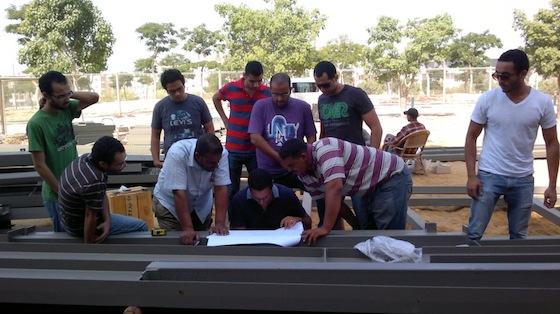
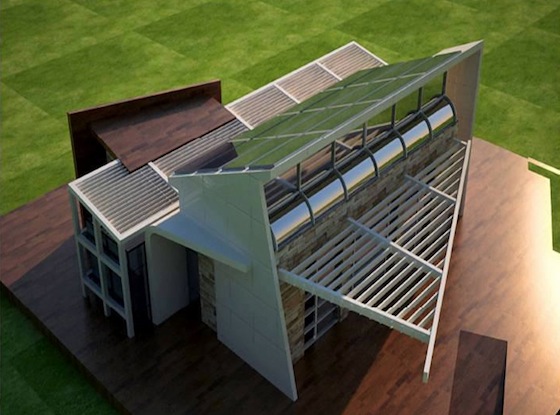
Despite numerous obstacles, including high temperatures during the holy month of Ramadan, unavailability of materials, and general inexperience with a project of this nature, the team managed to build a small prefab home that they recently shipped to Madrid. But the new design called Arkan is nothing at all like the original concept we loved so much.
Egypt, AUC, SDE 2012, Solar Decathlon, SLIDES, Arkan, Madrid, Architecture Competition

Green Prophet spoke to a member of the original team who helped to write the SLIDES proposal that was so popular around the world and which garnered Egypt’s historic entry as a SDE 2012 participant.

They asked to remain anonymous for three reasons: they spoke to us without consulting the rest of the team, it is still very uncomfortable to speak out in Egypt, where transparency is still far from the norm, and they are still affiliated with AUC.

Our source explained that during the construction process of SLIDES, the original team felt that the contractors brought in to help them were taking over and that many of the important design elements were being compromised in the process.
Egypt, AUC, SDE 2012, Solar Decathlon, SLIDES, Arkan, Madrid, Architecture Competition

“It is regular procedure to have a contractor help since the students are too inexperienced to do everything, but most of the work is done by the students,” according to the student.

“We started talking to the contractor but we felt that there was something that they left out that compromised the standards to which we were supposed to adhere. We’re supposed to produce something innovative, something new, and very high-tech, but we were feeling that this was being compromised in order to get something done so we could complete the project on time.”

The group’s original core also felt that their advisor, Dr. Lamyaa El-Gabryy, supported cutting corners in order to get the project completed in time.

“We are a team, but we had some difficulties in communication. Because usually the architects are the ones that lead and keep the standards because they have a vision… it might not necessarily be turned out, which is why we need professionals, but you can’t compromise everything just to get something done.”
Egypt, AUC, SDE 2012, Solar Decathlon, SLIDES, Arkan, Madrid, Architecture Competition

“The design that we had on paper wasn’t going to be built. We’re not going to do this structural system or this one. Why? Because it’s easier.”

“We told her [Dr. Lamyaa] that it wasn’t going to work like that, that we were upset with the performance of the contractor.”

As a result of their discontent, several members of the original team pulled out around April or May, taking their SLIDES design with them. They have since entered the Solar Decathlon in China and are in need of both administrative and financial support.
Egypt, AUC, SDE 2012, Solar Decathlon, SLIDES, Arkan, Madrid, Architecture Competition

Green Prophet contacted Dr. Lamyaa several times in the last few months to track AUC’s progress, since Green Prophet will be reporting live from Madrid, but we were never informed that a new crew had been recruited or that a new design had been submitted to officials at SDE 2012.

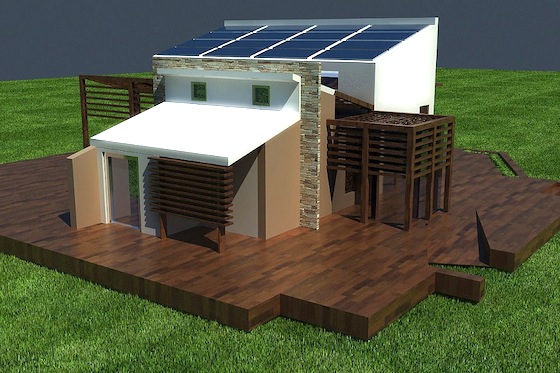
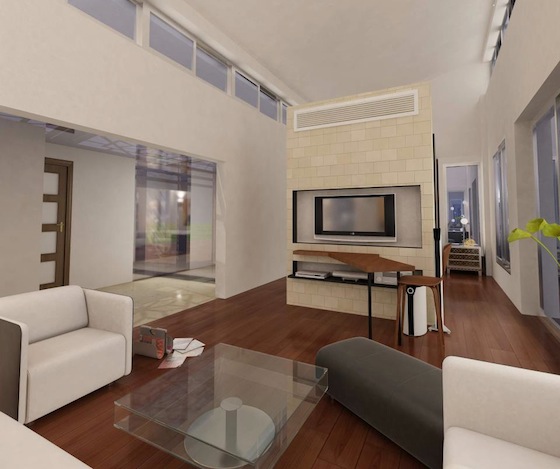
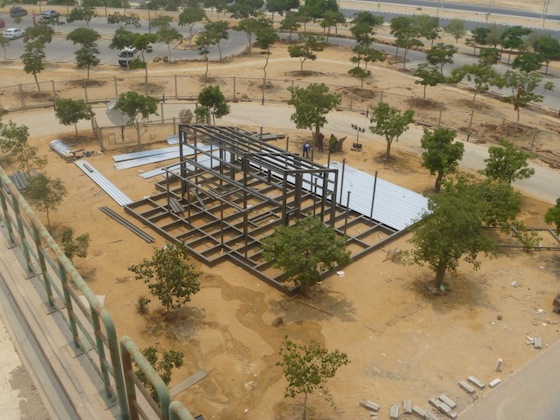
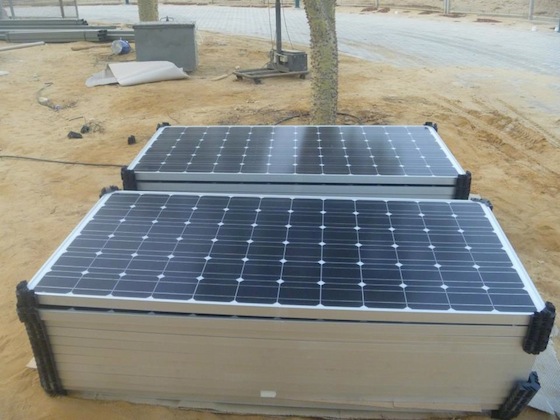
Arkan refers to pillars in classic Arabic and corners in the Egyptian dialect. Renders depict a luxurious solar-powered prefab that juxtaposes modern technology and traditional design, and the design brief calls for wood and glass, but the completed images posted on the team’s Facebook page show a rudimentary steel-framed structure that will be topped with photovoltaic panels.
Egypt, AUC, SDE 2012, Solar Decathlon, SLIDES, Arkan, Madrid, Architecture Competition

In our last communication with Dr. Lamyaa, which occurred just days before we spoke to our source, she said she was very proud of the team for slogging through despite high temperatures and empty stomachs (during Ramadan) but she said nothing about the new design. We haven’t been able to reach her for comment since.

But we’ll dig deeper next week, live from Madrid, so stay tuned for updates!

More on Egypt and the Solar Decathlon:
Don’t Let Money Rob Egypt’s Solar Decathlon Success

Egypt May Survive Climate Change Thanks to AUC Students

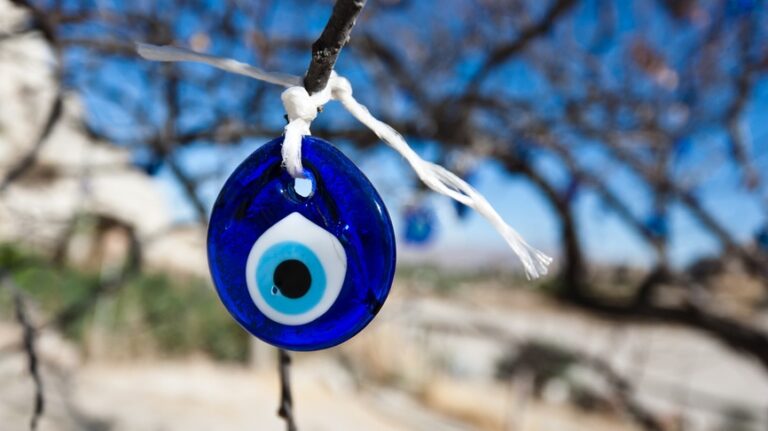
How to Ward Off the Evil Eye

Laurie attempts to explain Middle East evil eye superstition.

Can a lingering look with a penetrating gaze cause catastrophe in another’s life? If you’re Jordanian, you might think so (and your grandmother certainly does): it’s the pseudoscience of the “evil eye”. In Turkey, people with Frida Kahlo unibrows or pale color eyes are considered prime candidates to dish out disaster.  Bedouin mothers keep their children unkempt for fear that attractiveness will invite what’s also called the “eye of envy”.  I’m told this mojo’s real in the Middle East.

Camel milk and diabetes

8

image-mother-baby-camelWhat’s good for baby camels may be great for diabetic humans.

Nomads have always considered camel’s milk a medicine, but only recently has science confirmed it. We’re in agreement – see our 6 green reasons for drinking camel milk.

While folks in Dubai enjoy coffee- and chocolate-flavored camel milk drinks, researchers view the thin, bland milk in a more serious light. Improved blood sugar levels in type 2 diabetics drinking camel milk was proved by Dr. Rajendra Agrawal in the Diabetes  Care & Research Centre in Bikaner, India. This caught the attention of researchers at Cairo University, Egypt, and King Saud University, Saudi Arabia.

At Cairo University, a 4-month trial was conducted involving 54 participants receiving insulin. Of those, 27 drank 500 ml. of camel milk every day. Test results showed that those drinking camel milk had significantly reduced blood sugar and higher C-peptide levels, which indicate improved insulin function. Following this, Prof. Agrawal conducted a 2-year study which concluded with proof that three participants no longer needed insulin.

Agrawal explains that camel milk passes into the bloodstream quickly because it has low coagulum (which create curds in the stomach). With no digestive solids to impede quick assimilation, the high-insulin milk enters the bloodstream immediately, benefiting those whose own insulin secretions are inadequate. He also claims that camel milk benefits cell function of the pancreas, another important benefit to diabetics.

The National Nutrition Institute in Cairo’s analysis of camel milk showed high levels of iron, zinc and copper in camel milk, but especially high levels of Vitamin C.

Will these discoveries make an impact on Western medicine? It may, albeit slowly. While vast camel herds roam the deserts of Sudan and Somalia, there are relatively few in the First World. And camels give comparatively little milk: 13 pints to a cow’s 50.

Still, there’s hope for diabetics in the USA: the American Camel Coalition, a group of camel dairies, has recently obtained permission to sell camel milk from the FDA. And in Britain, powdered camel milk should be available soon, pending approval from the European Commission . Vitamol Camel Dairy and Products has been set up by Germans Malik Dakdaki and Martin Wilke and Moroccan Abdelkader Saoudi. The three partners plan to invest US$40m in the project.

Find consuming camel strange? Get over that hump. More on the incredible, edible camel:

Lebanon: Greenpeace Investigation Reveals Toxic Coast Pollution

3

greenpeace-lebanon-toxic-water-pollutionAn investigation by Greenpeace has found hormone-disrupting chemicals and a range of phthalates which are classified as toxic to reproduction in Lebanese waters

Ranking a lowly 114 in the Global Health Index, Lebanon was under no illusion that its waters were the cleanest or most biodiverse. However, a recent report by Greenpeace Lebanon has revealed some rather shocking finds about the toxic nature of the country’s coast. From November 2011 to February 2012, the Greenpeace Lebanon team collected a total of 30 samples from various locations along the Lebanese coast. These were then sent to to the Greenpeace International Science Unit in the UK for assessment. The results showed a “a plethora of dangerous and toxic compounds present in the waters [which] represent a serious risk hazard, both to human and environmental health.” 

Jerusalem Gets New Environment Science Study Center

Jerusalem, Sustainability, Science, Environmental Studies, Education, Beautiful Israel, Hebrew UniversityA new 2,000-square-meter facility in Jerusalem will be devoted to the study of sustainability.

It will be an academic institution from the Council for a Beautiful Israel, located by the Hebrew University’s Givat Ram campus, which caters to the study of the sciences, and some of the Holy City’s most important institutions, including the Knesset and the Israel Museum.

Egypt Makes Recycling A Priority

Egypt, Cairo, Recycle, Waste Management, Crisis, Government, New, Environment, GreenDr. Mamdouh Khalil, a professor of environmental sciences at Cairo University, told Al-Shorfa there is currently a waste disposal crisis in Egypt, because of the lack of waste recycling plants.

Gaza Unliveable by 2020 and Its Water Undrinkable by 2016

4

gaza-un-unliveble-2020-water-undrinkable-2016-israelIt’s all bad news for Gazans – a UN report reveals that that region is under immense environmental stress which looks set to worsen unless dramatic action is taken

A comprehensive report released by the UN this week has warned that Gaza will no longer be ‘liveable’ by 2020 unless dramatic action is taken to improve its water supply, power, health and schooling. It adds that Gaza’s rapidly rising population of about 1.64 million could also lose its main source of fresh water by 2016. Clean water is limited for most Gazans to an average of 70-90 litres per person per day – the minimum global World Health Organization standard is 100 litres a day. “Damage to the coastal aquifer will be irreversible without immediate remedial action,” says the UN report.

UN Launches Climate Change Resilience Project In Western Balkans, Turkey

1

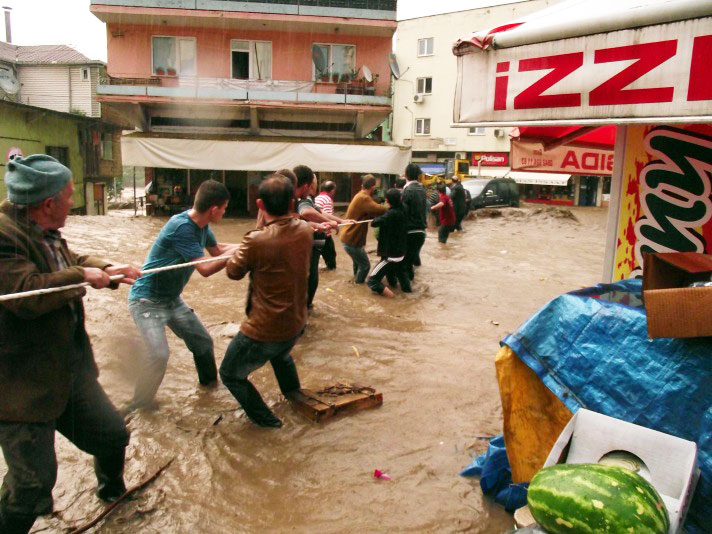
The incidence and intensity of natural disasters, such as the flash floods last month that killed 12 people in Samsun, Turkey, are expected to increase as climate change intensifies.

A two-year project to improve the disaster response capacities of Turkey and the Western Balkans has just been launched, reports the United Nations Office for Disaster Risk Reduction (UNISDR). Co-sponsored by UNISDR and the World Meteorological Organization, the project will receive 2.2 million Euros ($2.8 million) from the European Commission.

Diwan Baladna Books Are Arab-Jordanian Culture for Dummies

2

arab jordan culture books Diwan Baladna BooksLearn about Arab greetings, the evil eye, funeral traditions and the habit of pigeon-keeping in these colorful books from Jordan.

On my first free Friday in Amman, I walked to the downtown end of Rainbow Street and turned left to find the merchants of Souk Jara just beginning to set up shop.  Souk Jara is Amman’s tidy Friday Market, and walking casually down the wide grassy lane, with abundant kiosks on either side – not to mention sampling watermelon slushes and other fresh fruit smoothies from the food stands down a perpendicular path – is a pleasant way to start the weekend.

While most vendors sell handmade jewelry or hand-painted kitchenware, Ahmad Kamal Azban sells copies of the books from the program he and his friend Tony Michael Anqoud created.  When I encountered Azban that Friday, he gave me a winning sales pitch about his products.

Diwan Baladna, or “Our Country’s Meeting Place,” is a set of two informative books on Arab-Jordanian life.  The first is on culture, the second on language.  The books were published in January 2010 and May 2011, respectively.

You’d be hard-pressed to find a source for learning about Arab culture as light and humorous as the first book.  Chapters are divided according to major aspects of life in the Arab world, including greeting behavior, the influence of the evil eye, wedding and funeral traditions, and even the practice of pigeon-keeping!  An impending second edition boasts fifteen new topics.

How Much Gold Goes into a White Gold Mercedes Sports Coupe?

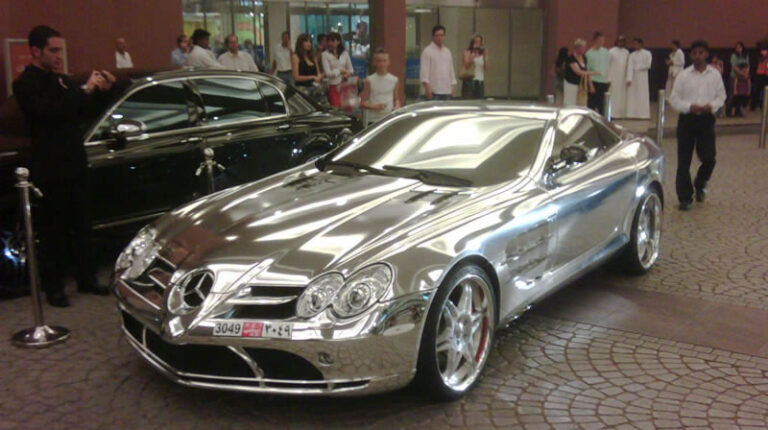
Mclaren white goldMercedesIs this McLaren SLR Mercedes Sports Coupe Really White Gold? It Must be at US$ 2.5 Million

Super luxury sport cars such as solid gold Mercedes sport coupes , gold plated Porche 997 GT-2 coupes; and especially a gold trimmed armored plated Rolls Royce are not what one might call environmentally friendly vehicles. Even if the white gold Mercedes does run on biofuel, its no more green than scores of super luxury cars tooling around desert highways in the UAE, Saudi Arabia, and other similar locales. 

Will Qatar Oust Israel At Climate Change Event?

5

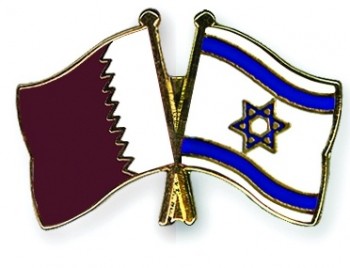
israel qatar flag pin flags climate change summit doha
Despite having to invite and welcome all members of the United Nations at the Qatar Climate Summit, Qatar is not being so friendly to welcoming Israel at the upcoming climate change event this fall. So goes speculation.

Qatar says Israel’s environment minister Gilad Erdan can come with his security detail. But Israel doesn’t believe Qatar. For an Israeli politician in an Arab land going it alone could mean suicide, opening him up to a range of possibilities including assassination and kidnapping.

Share Beirut is TED-style Creativity Conference for Lebanon

0

Lebanese illustartor and webcomic Maya ZankoulLebanese illustartor Maya Zankoul “draws” against issues that range from pollution, electricity cuts, real estate pricing, to politics in Lebanon. She will be one of the guest speakers at SHARE Beirut.

In October there will be a free three day conference in Beirut which will look at “digital” rights in the MENA and promote creativity. Similar to the concept of TEDx (see the TEDx Jaffa conference), a platform where people can share innovative knowledge or “ideas worth spreading,” SHARE Beirut is a hybrid event that brings together hundreds of passionate people, forward-thinkers, cultural creatives, activists and artists from the Middle East and around the world to share ideas on how to levarege on the digital media.

For three days starting on October 5, SHARE Beirut will become a huge opportunity for the Middle East North Africa (MENA) region to promote an understanding of open, decentralized and accessible forms of communication, exchange and creation. The event is coordinated by the Share Foundation, a nonprofit organization dedicated to protecting the rights of Internet citizens and promoting free access and exchange of knowledge and information.

My guess is that this will be a very successful event.

Human Anti-Bacterial Drug to Help Coral Fight the White Plague

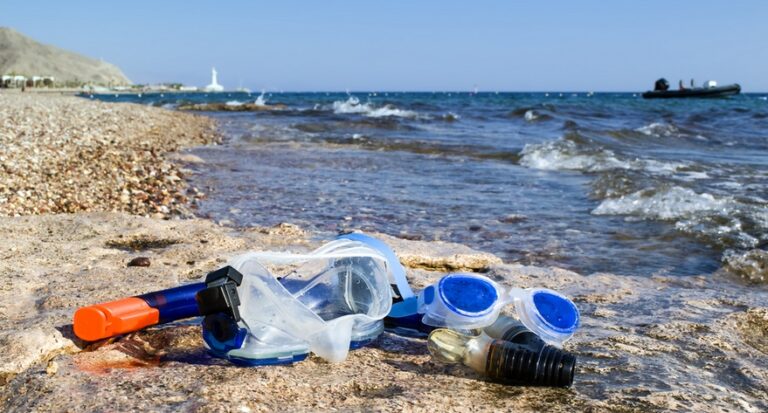
coral reef eilat There is a losing battle in saving coral reefs worldwide, but a drug made for humans might be able to help corals fight the White Plague.

Corals reefs are an invaluable part of the marine ecosystem, fostering biodiversity and protecting coastlines. But coral reefs are increasingly endangered. Pathogenic bacteria, along with pollution, global warming and harmful fishing practices, are one of the biggest threats to the world’s coral populations today.

One of the solutions to the crisis may lie in human medicine. Prof. Eugene Rosenberg of Tel Aviv University has developed a treatment for coral infected by Thalassomonas loyana, otherwise known as White Plague disease. This deadly bacterium infects 9 percent of Favia favus corals on the Eilat coral reef in the Red Sea and readily transmits the disease to nearby healthy corals.

Arab Israeli Yafa Energy Plans to Solar Power Traditional Industry

salih manasra solar energy, yafa
Yafa Energy could be a bridge over which Arab-Israeli technology finds its way to industries in the Arab world seeking renewable energy solutions.

Eureka! Yafa Energy has become the first Arab-Israeli company to win a prestigious European Union EUREKA (Exceptional, Unconventional Research Enabling Knowledge Acceleration) grant. Awarded through Israel’s Prime Minister’s office, Yafa was named as the best technological initiative from an Israeli minority community. Created as an intergovernmental initiative in 1985, EUREKA aims to enhance industrial competitiveness by supporting businesses, research centers and universities that carry out pan-European projects to develop innovative products, processes and services.

We’d Need Five Worlds to Live Like the United Arab Emirates

2

uae-footprint-infographic-unsustainableIf we all lived like the citizens of the UAE, we would need 5.4 planet earths to sustain us…

Sometimes the best way to say something is not with words but images. And there is truly no better wake up call to the UAE than this amazing infographic designed by Tim De Chant. It shows that if the world’s 7 billion people all lived like Emiratis, we would need 5.4 planet earths in terms of land to sustain us. That’s pretty scary – especially when you consider that the much-bemoaned lifestyle of the Chinese is, in contrast, pretty sustainable and would require only an extra 10% of planet earth. It’s also scary as the UAE doesn’t have the world’s largest carbon footprint, that particular privilege goes to Qatar.

::Thanks to Tim for granting us permission to use the infographic. See his website per square mile for more.

For more on the UAE and the environment see:
UAE Stands By Its Nuclear Plans
Qatar (Still) Has The World’s Largest Carbon Footprint
World Population Hits 7 Billion Today