Home Blog Page 398

It Took 15 Years to Build This and That’s a Good Thing

0

Ne'ot Semadar, Kibbutz, green building, Negev Desert, Israel, Organic Agriculture, green architecture

Remember the good old days when it took decades to build major monuments? Historians estimate that 30 years passed before the back-breaking pyramids of Giza came to glory, for example, and more than a century after construction began in 1882, La Sagrada Familia in Barcelona is still not finished.

Although laborers might disagree, there’s something honest about the kind of construction that requires slow extraction, transportation and re-assembly of the earth’s materials – especially compared to our current obsession with erecting buildings as fast as possible. In China, a 15-story building was supposedly built in a record-breaking six days.

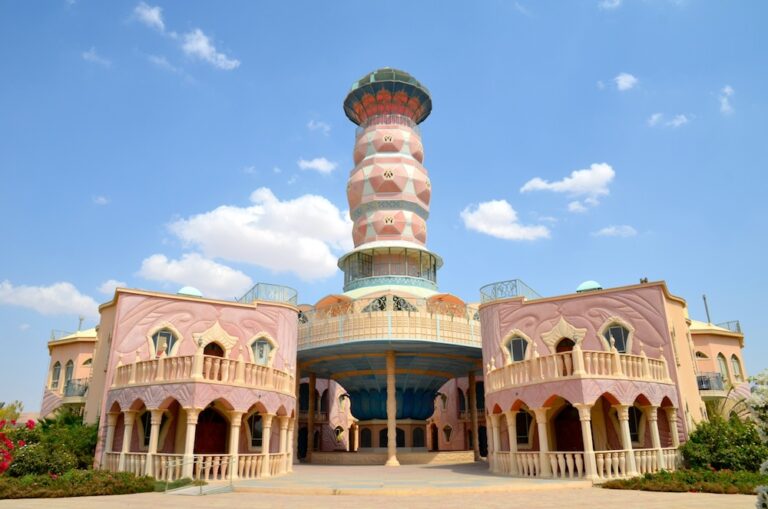
Fortunately, not all people are beguiled by speed. We recently visited the renowned Kibbutz Ne’ot Semadar and talked to one of its founders about their iconic, passively-cooled community arts center that took 15 long years to build. Step-by-step, a group of like-minded nature-lovers learned the skills necessary to construct a landmark, structurally-sound earth building in the heart of Israel’s Negev desert.

Australia Kills Nearly 400 Camels From the Sky

1

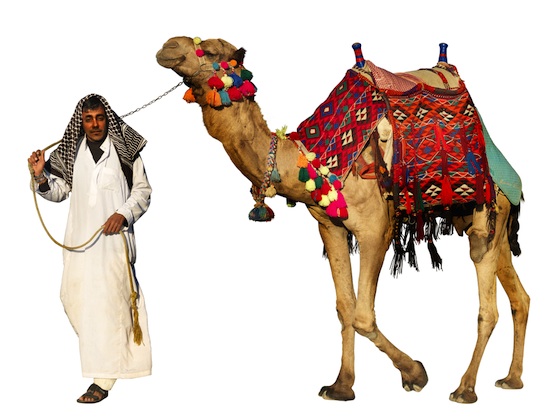
Australia, camels, culling, feral camels, camel milk, genetically-modified camelsCamels are a nomad’s best friend but a serious nuisance in Australia, where the environmental ministry recently culled nearly 400 of them en masse. Despite efforts from locals to raise awareness of the numerous benefits of camels, the government has long waged a campaign against feral camels that roam the country’s desert region.

The South Australian Environment Department killed the camels after a truck collided with seven animals on the Eyre highway linking southern and western Australia. The truck driver wasn’t injured in the crash, but Nick Secomb, Project manager of the South Australian Feral Camel Management Project, told local press that “the camels weren’t so lucky.”

Meanwhile in Dubai, camels are being genetically engineered to produce pharmaceutical proteins through their milk. This is the first time, according to our sources, that drugs produced by transgenic animals will be approved for use in humans.


Bureaucracy Slows Israel’s Solar Energy Progress

0

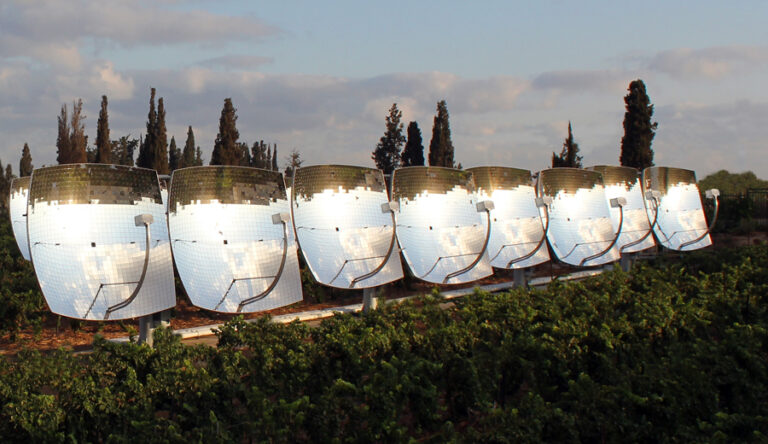
israel solar panel mirrors

Israel’s research labs such as National Solar Energy Center,  Grand Technion Energy Program (GTEP) and companies such as Zenith Solar and Arava Power Systems are developing advanced solar energy technology which is nearly cost-competitive with fossil fuels.  Israel’s solar technology has been used in places as far away as Australia and China.   Combine this with the fact that about 60 percent of Israel is a desert averaging more than 9 hours of sunshine per day and Israel’s solar energy industry should have a bright future.  But as of 2011 Israel had only installed 190 Megawatts of peak photovoltaic power generation capacity.  This is about 3 photovoltaic watts per person.  This places Israel at the top of the MENA countries, well ahead of Turkey which only has 0.1 peak photovoltaic watts installed per capita.  But outside of MENA, 19 countries exceed Israel’s photovoltaic generating capacity.  This surprising list includes such cloudy northern places as Canada with twice and Germany with 60 times Israel’s per capita photovoltaic capacity.

Tea Extract from Pakistan May Help Treat Breast Cancer

1

cleavage tea pakistanA tea made from a plant found in Pakistan, India, Africa and parts of Europe may help treat breast cancer, study suggests.

Following our report on turmeric‘s benefits for natural breast health, science is finding more evidence for Mother Nature’s healing possibilities. According to ScienceDaily.com, “scientists at Aston University and Russells Hall Hospital have discovered that an extract from a common plant in Pakistan may help treat breast cancer.”

While more research is needed, according to the report, the results were free from the side effects such as hair loss associate with modern cancer treatments. The plant, called Fagonia cretica, is part of a family of plants that grow in arid, desert regions including Africa, the Mediterranean and Middle East regions.

World’s First Genetically-Modified Camels in Dubai to Produce Medicine

5

Dubai, Camel Reproduction Center, science, health, FDA, genetically-modified animals, camelsThe same research laboratory behind the world’s first cloned camel and a hybrid llama and camel called Cama has recently announced that they are genetically modifying camels in order to produce pharmaceutical proteins through their milk.

Dr. Nisar Wani from the Reproductive Biology Laboratory at the Camel Reproduction Center outside of Dubai says the project is designed to decrease the cost of life-saving medicines such as insulin, but the words genetically modified are likely to sound off an alarm – especially since no other first world country has approved drugs produced from transgenic animals.

Bahrain’s Artifical Reef a Success After 16 Weeks

0

artificial reef bahrain

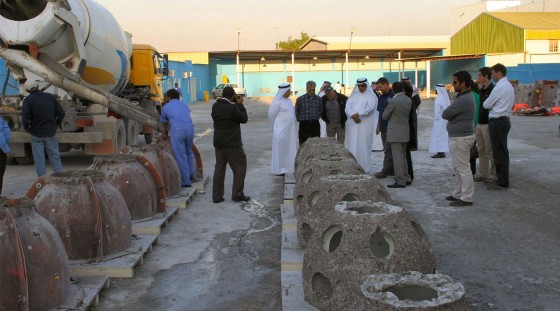
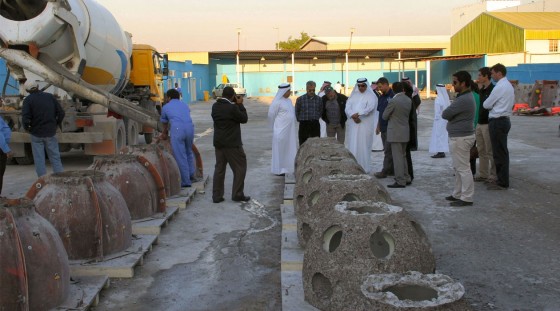
Only eight percent of our oceans are “shallow seas” (shallower than 100 feet), but these wildly diverse ecosystems harbor most of the world’s marine life.  Egypt, Israel, and Jordan (all connected to the Red Sea) and the Gulf states stand to lose enormous tourism revenue if their natural reefs continue to be destroyed by coastal development. Last year, the Bahraini government commissioned ten artificial reefs to be built in their coastal waters using perforated reef balls and tall structures designed to look like Arab wind towers.  Slap on your virtual scuba gear and see what’s happening four months after the first reef was placed.

Saphonian Blade-less Wind Turbines Save Birds and Energy

cleantech, green design, Saphonian, Saphon Energy, wind energy, sail, TunisiaWhile solar advancements continue apace, wind energy technology has remained fairly stagnant over the years, making it in most cases less viable than fossil fuels or nuclear energy. It’s expensive, harmful to birds and bats, deeply inefficient and comes with a host of annoyances such as noise and vibration.

Responding to what they perceive as a massive gap in innovation, Saphon Energy from Tunisia has designed blade-less turbines that mimic the shape and function of sails. Because they don’t rotate, Saphonian turbines are harmless to wildlife, and completely eliminate aerodynamic and mechanical losses associated with conventional turbines. And they cost nearly half as much to produce!

Travelling Without Money to Istanbul’s Travel House

12

istanbul travel houseA place where you can stay for free in Istanbul, meet other travellers and exchange travel experiences?

The Serbia Travel Club made their crazy idea reality, and Istanbul’s Travel House was open for everyone.  I paid them an overnight visit in Istanbul and rediscovered how enriching travelling can be. This summer, Serbia Travel Club established a temporary base in Istanbul, called the Travel House. It is a rented apartment in the center of Istanbul, whose doors are open to all travellers, from July 1 to September 1st. Staying in the Travel House was free for everyone. The goal of the Travel House is to provide a global meeting point for travellers, and thus be a small step towards building a global travel culture.

Souk Jara is Amman’s Favorite Flea Market

0

souk jara flea market amman

People usually associate a flea market with old, dusty clothes and other “junk,” consider it a sort of yard sale collision.  In Amman, however, Souk Jara is deemed a flea market and is a far better cry than that notion. A sort of upscale summer flea market, Souk Jara lets guests feast their eyes on a plethora of new, unique, handmade items on display by local artists – but that is not to say that antiques are not sold, too.

There is no rummaging through piles to find what lies underneath, as in typical flea markets.  But it’s a give and take: tediously combing through the crowd is always necessary, as the wide outdoor aisle that splits the merchant kiosks into two rows is packed with people.

A Sustainable Postcard from Turkey: You’ll Wish You Were Here

0

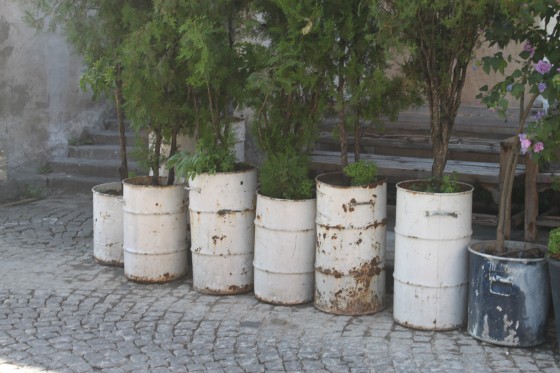
turkey plantersThis Green Prophet tours Turkey and sees a mosaic of eco-sensibility.

Little Eid, a Muslim holiday, is a great time for a getaway. So I reeled in my family from disparate zip codes for a week spent touring someplace new.  Years back, plump thighs on my enormous babies tagged the kids as “turkey legs”.  It feels right that we meet up in Istanbul. Turkey seems so sustainable. Look past the blinding kaleidoscope of colors and textures, tiled surfaces, carpets, spices and foods and spot clever detailing that tips off intrinsic enviro-awareness.

Atatürk International Airport has quiet little features that scream sensitivity to energy consumption. Overhead lighting throughout the main terminal is operated only when natural daylight is insufficient.

Why white colored cars are a better investment

2

It keeps the blazing heat back, and white is the best car color for holding value, according to the UK Daily Mail

In the market for buying a new car? Believe it or not, white colors help hold a car’s value.  Although white is usually considered more plain and certainly not as attractive as various metallic colors, and especially the white gold sheet metal on the Mercedes McLaren super sports coupe, there is a certain amount of logic behind choosing the color white for your next set of wheels. The reasons are both green and economical, especially when you go to sell your car online.

In a recent car news article the UK’s Daily Mail newspaper, white colored cars “typically hold about five per cent more of their value than the market average for a typical used car while blue cars still languish below market average values,” the article concluded.

The Mail went ever further and said that other colors, like green, orange, red, and especially purple were “under-performers” in used car markets; causing a price decline of anywhere between 4 and 8 per cent, depending on the model and of course the color.

While this information relates to cars being sold in the UK, the main reason for white’s newfound popularity  appears to be a more conservative taste in car colors among families. Although not specifically mentioned in the article, choosing a white color in either a new or pre-driven car can be a very logical choice, especially for car buyers living in hot climates like the Middle East.

For one thing, white color is easier to deal with when repairing a car after a minor traffic mishap. From a green standpoint, the components of white paint do not contain metals such as lead and other metallic pigments, titanium dioxide, (also used in cosmetics)  and barium sulphate which are  often found in metallic paints. These paint additives are not exactly environmentally friendly. Even though white paint does use substances like plastic acrylics, these are still better than the above mentioned additives.

Another factor involving the use of white paint is that white cars reflect sunlight better than other colors, making them less hot on the inside. This big heat reduction creates less poisonous gasses from plastics and other synthetic materials that form inside cars on hot days which in locations like Saudi Arabia and United Arab Emirates can reach more than 45 degrees Celsius during mid-Summer.

Some car colors,  including pink, yellow and indigo did perform well; although these colors are better suited for certain trendy sports models. Although gold and silver colors were noted, they did not perform that well for holding a car’s value. No mention of white gold was made however.

More articles on cars and car colors in the Middle East:

How Much Gold Goes Into a White Gold Mercedes Sports Coupe?

Abu Dhabi’s Solid Gold ” Biofuel” Mercedes Another Dubious “Green” Development

Abandoned Jag, BMWS and Mercedes Gather Dust at Abu Dhabi Airport

Dubai Porsche Owner Walks Pet Cheetah on a Leash

Blücher’s Wallpaper Cleans Sick Buildings

0

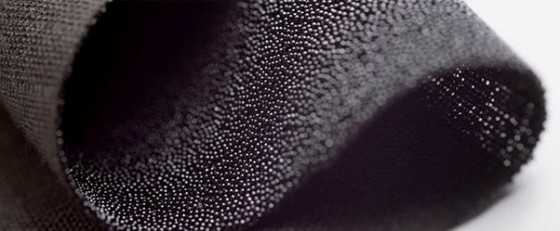
blucher self cleaning wall paper sick building syndromeThough wallpaper is not popular in the Middle East, this wallpaper can help repair sick building syndrome.

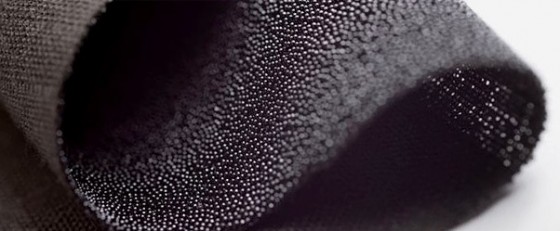
I grew up in a duplex, my mom warned us that the walls have ears.  Now the walls can have lungs too. Germany-based Blücher Technologies has created a material called Saratech Permasorb Wallpaper that removes toxins embedded in wall surfaces, improving the air inside the room. This breathable “paper” is actually a non-woven glass fiber/polyester covering that’s applied to interior surfaces like traditional wallpaper. The wallpaper houses thousands of tiny spherical “absorbers” that look just like the poppy seed mess from my morning bagel.

Smoking Ban Fires Up Lebanon Businesses

2

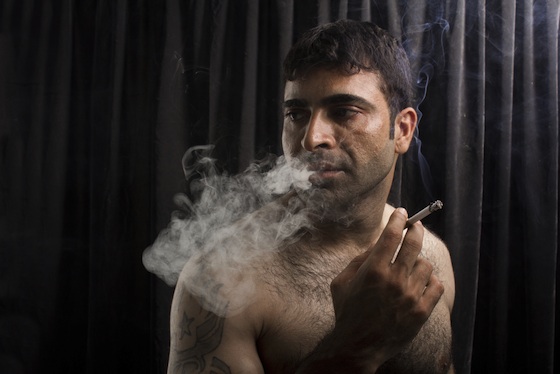
smoking ban, Lebanon, man smoking, Law 174, anti-tobacco legislation, hospitality industryHotel and restaurant owners in Lebanon are all fired up after Law 174 went into effect today, banning all smoking within closed environments throughout the country. The law’s year-long implementation process began by gradually ending smoking in educational buildings, hospitals, offices and other public buildings, and culminated today in the official end of smoking in bars, nightclubs and even Nargileh/Shisha cafes.

Dror Benshetrit’s VIP Hub for Exclusive Cross-over Designers

0

Dror Benshetrit design studioDeveloping a new ecosystem for multi-disciplinary design? Will this need high-end design hub earmark space for sustainable design?

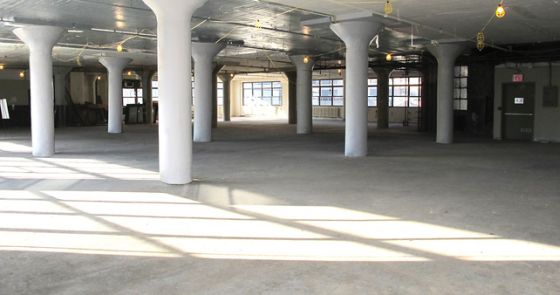
If you think Ikea has got the top modern décor, you should check out some of Dror Benshetrit’s designs for products, interiors, architecture, art installations.  The studio named after the innovator will be relocated to SoHo this month, spreading out in a 13,000-square-foot top-floor space intuitively named “WeCross.”

“We love to think at the intersection where art, design, and architecture meet,” they say. And what a crossroads it will be:  The Studio Dror team is intimate, with only about 10 people, but WeCross will bring 200 friends, clients, collaborators, and even competitors together to work side by side, under one roof.  Benshetrit has designed the studio himself.

White House Honey Beer Recipes

0

obama honey brew beer recipeDrinking beer is definitely more of a Western tradition than one of the East where wine is preferred, but beer has its place where tradition allows. Miriam has covered beer expos in Israel where there is a rise in boutique breweries like the Dancing Camel and a demand for organic beers. My mom always said that a good malt gives a pregnant woman much-needed iron.

Whatever your reason, or taste, the White House has caught the home brew fever and has just released a couple of recipes for its White House Honey Porter, and the White House Honey Ale. Both use honey which is appropriate for the upcoming Jewish holiday of Rosh Hashanah. Below we give you the recipes, and a downloadable printable recipe pack you can tape to your fridge. Use organic ingredients where possible for an organic brew.

According to the White House this is the first time beer has been brewed on the grounds: “As far as we know the White House Honey Brown Ale is the first alcohol brewed or distilled on the White House grounds. George Washington brewed beer and distilled whiskey at Mount Vernon and Thomas Jefferson made wine but there’s no evidence that any beer has been brewed in the White House. (Although we do know there was some drinking during prohibition…)”

WHITE HOUSE HONEY PORTER
Ingredients

2 (3.3 lb) cans light unhopped malt extract
3/4 lb Munich Malt (cracked)
1 lb crystal 20 malt (cracked)
6 oz black malt (cracked)
3 oz chocolate malt (cracked)
1 lb White House Honey
10 HBUs bittering hops
1/2 oz Hallertaur Aroma hops
1 pkg Nottingham dry yeast
3/4 cup corn sugar for bottling

Directions

1. In a 6 qt pot, add grains to 2.25 qts of 168˚ water. Mix well to bring temp down to 155˚. Steep on stovetop at 155˚ for 45 minutes. Meanwhile, bring 2 gallons of water to 165˚ in a 12 qt pot. Place strainer over, then pour and spoon all the grains and liquid in. Rinse with 2 gallons of 165˚ water. Let liquid drain through. Discard the grains and bring the liquid to a boil. Set aside.

2. Add the 2 cans of malt extract and honey into the pot. Stir well.

3. Boil for an hour. Add half of the bittering hops at the 15 minute mark, the other half at 30 minute mark, then the aroma hops at the 60 minute mark.

4. Set aside and let stand for 15 minutes.

5. Place 2 gallons of chilled water into the primary fermenter and add the hot wort into it. Top with more water to total 5 gallons if necessary. Place into an ice bath to cool down to 70-80˚.
Activate dry yeast in 1 cup of sterilized water at 75-90˚ for fifteen minutes. Pitch yeast into the fermenter. Fill airlock halfway with water. Ferment at room temp (64-68˚) for 3-4 days.
Siphon over to a secondary glass fermenter for another 4-7 days.

6. To bottle, make a priming syrup on the stove with 1 cup sterile water and 3/4 cup priming sugar, bring to a boil for five minutes. Pour the mixture into an empty bottling bucket. Siphon the beer from the fermenter over it. Distribute priming sugar evenly. Siphon into bottles and cap. Let sit for 1-2 weeks at 75˚.

man drinking beer balcony

WHITE HOUSE HONEY ALE
Ingredients

2 (3.3 lb) cans light malt extract
1 lb light dried malt extract
12 oz crushed amber crystal malt
8 oz Biscuit Malt
1 lb White House Honey
1 1/2 oz Kent Goldings Hop Pellets
1 1/2 oz Fuggles Hop pellets
2 tsp gypsum
1 pkg Windsor dry ale yeast
3/4 cup corn sugar for priming

Directions

1. In an 12 qt pot, steep the grains in a hop bag in 1 1/2 gallons of sterile water at 155 degrees for half an hour. Remove the grains.

2. Add the 2 cans of the malt extract and the dried extract and bring to a boil.

3. For the first flavoring, add the 1 1/2 oz Kent Goldings and 2 tsp of gypsum. Boil for 45 minutes.

4. For the second flavoring, add the 1/2 oz Fuggles hop pellets at the last minute of the boil.

5. Add the honey and boil for 5 more minutes.

6. Add 2 gallons chilled sterile water into the primary fermenter and add the hot wort into it. Top with more water to total 5 gallons. There is no need to strain.

7. Pitch yeast when wort temperature is between 70-80˚. Fill airlock halfway with water.

8. Ferment at 68-72˚ for about seven days.

9. Rack to a secondary fermenter after five days and ferment for 14 more days.

10. To bottle, dissolve the corn sugar into 2 pints of boiling water for 15 minutes. Pour the mixture into an empty bottling bucket. Siphon the beer from the fermenter over it. Distribute priming sugar evenly. Siphon into bottles and cap. Let sit for 2 to 3 weeks at 75˚.

The ingredients might be hard to place but do look online for beer kits and supply companies if you can’t find the right supplies near you.

Enjoy!

Print a PDF of the above beer recipes here.