Home Blog Page 400

Will Your City Survive A Nuclear Bomb? This App Gives The Answer

nuclear bomb tel aviv israel
A nuclear bomb wipes out all of Tel Aviv and central Israel, using the Ground Zero app.

There was much disagreement around the dinner table the other night about whether or not Israel will be obliterated if Iran drops a nuclear bomb. Will there be something to spare? Should Israelis expect a bomb to melt the entire country or would a bomb just wipe out a small square kilometer of land? My husband says the actual direct impact of a nuclear bomb is not that severe.

Raised in Canada during the cold war between the USA and Russia I faced many a sleepless nights wondering if there was a Russian bomb targeting my parent’s home in suburbia. According to my Grade 4 teacher, Mr. Brich, there was. This trauma has left me with the notion that nuclear bombs melt everything within 50 miles of their wake. Who was right? Me or my sometimes more logical better half? I turned to the internet to see if I could find out. Turns out there is an app which lets you nuclear bomb your city. The results are grim. Below I bomb a few Middle Eastern cities to document the extent of the damage.

It makes mutant butterflies look like child’s play.

Since it’s not really known what kind of bombs either Israel or Russia possess, I chose a 50 mt Russian bomb, the Tsra Bomba (for the memories) and the results don’t look great.

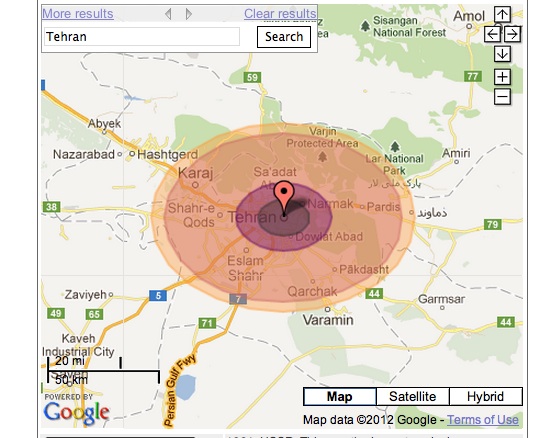
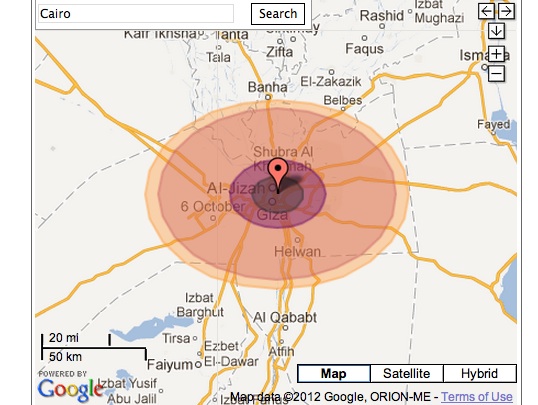
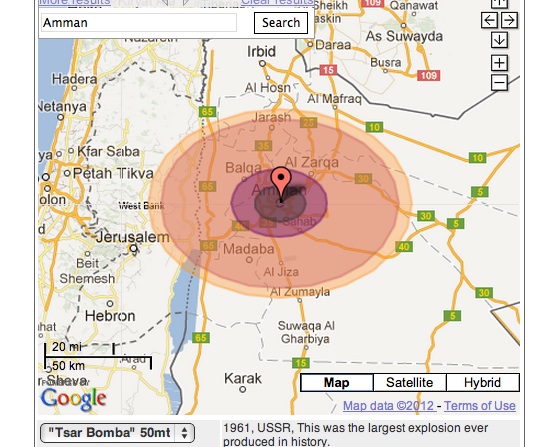
The inner circle is complete annihilation, and the outer rings represent instant fire, persistant fires, and radiation overload. See below in the maps for what happens to Beirut, Jeddah, Tehran, Amman, Cairo, and Istanbul. Will you survive the blast?

Below is the Tsar Bomba bomb dropped on Tehran. Say bye, bye to the city center, and the cities of Karaj, Eslam Shahr, and Shahr-e-Qods.
tehran nuclear bomb

If you live in Beirut, say bye, bye to the city and the Sidon District. The bomb will even impact nearby Syria.

Now for the Turks. If you live in Istanbul, say goodbye forever to your beautiful city. It will be gone, as well as the cities of Sisli, Esenyurt, and Gebze.

istanbul nuclear bomb

What happens to Cairo makes us especially sad because of the Giza pyramids.

cairo nuclear bomb

If you live in Damascus your lovely city will be gone.

beirut lebanon nuclear bomb

Effects of a nuclear bomb dropped on Amman will be felt directly in Madaba, and Jarash, and the top of the Dead Sea. Triggering devastating earthquakes?

amman jordan nuclear bomb

We have gone through this exercise in tongue and cheek. We wish for no nuclear weapons to be dropped on any city, people, environment or animals.

Update Aug 10, 2020- the app is no longer online. Given the horrible humanitarian disaster in Beirut, we hope no one will need to play around with bombing games. 

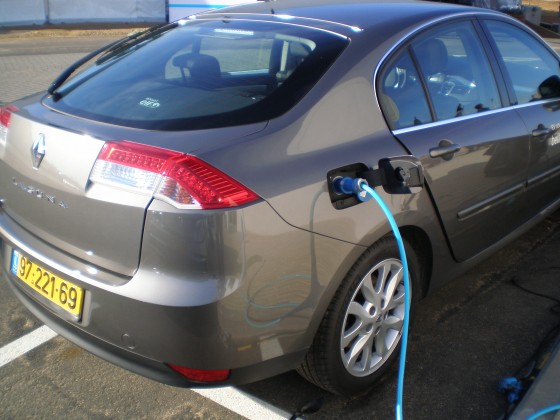
Israel’s Better Place Electric Car Network Bleeds Capital

better place electric car israel

Last month Israel’s Better Place rolled out their all-electric vehicle network to the Israeli public with much fanfare. Of the hundreds of civilians that bought the cars, warm reviews of excitement ensued. Pictures and photo ops were maximized. Since opening the car sales channel to the public the number of Better Place cars on the road now exceeds the number of Better Place cars being driven by company employees. The company also released news that it had set an electric car distance world record, garnering some fresh enthusiasm for the business.

But a new report warns that the company is seriously bleeding cash, suggesting it’s light years away from putting 10,000 cars on the road – its break even point.

Green Miner Pulls Minerals from Desalination’s Seawater Brine

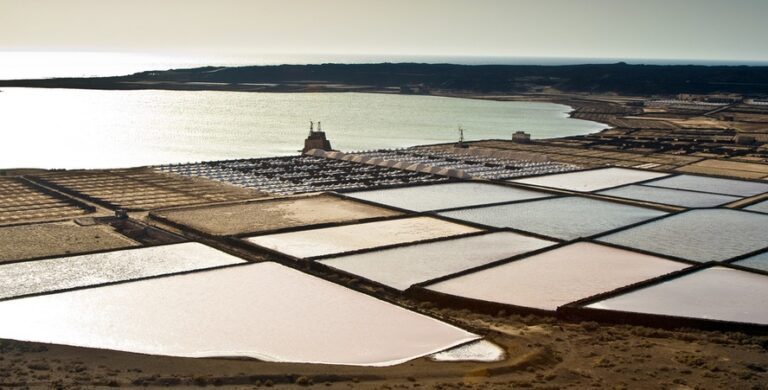
desalination brine mining minerals This new approach uses bacteria to mine sulphur and magnesium from desalination’s polluting brine. 

Desalination’s no golden ticket to creating water for the Middle East but it’s an approach that more and more countries are turning to as a last resort.  Desalination is energy intensive, and what to do with the toxic waste byproducts? Biomineralogist Damian Palin is turning to biology to mine valuable minerals from desalination brine.  “I collaborate with bacteria,” deadpans the young Irishman. Watch him turn desalination on its head.

Palin teams up with metal-munching bacteria to biologically “mine” minerals from seawater: the byproduct of his process is pure, potable water.  In this short talk, the TED Fellow describes his idea.

[youtube]http://youtu.be/9Q2hew8759w[/youtube]

Using bacteria to dissolve minerals, releasing the metals locked inside, is called bioleaching. Palin’s developing something different: a biological mining (not melting) process.  Because seawater metals are already dissolved, his bacteria simply collect them. “A mining industry that’s in balance with nature,” he says.

damian palin biological miner desalinationMicroorganisms are everywhere, the oldest living things on the planet.  As they evolved, they developed numerous adaptations. Think of Napolean Dynamite: each bacterium has its own “skills“.

Bacteria can form minerals from their surrounding environment as a defense mechanism; it’s one of their skills.

Introducing specific bacteria to ocean water can attract particular elements, effectively pulling them out of the water mix. The segregated elements have commercial value, which can be sold to finance the “mining” process. The freshwater that results is just gravy. For resource-poor, water-parched Middle East nations like Jordan, the prospect of mining the seas for high-value minerals – and – producing clean water as a by-product is like winning the Irish Sweepstakes.

“The thought that we take energy to remove the brine and then do nothing productive with that material reminded me of the issue of waste materials factories started to deal with decades ago. Now, I’d be hard pressed to find a company who doesn’t try to make money on intermediate products from their manufacturing processes”, Palin said in a TED interview.

Every megaliter of seawater contains about 1300 kg of magnesium, 900 kg of sulfur, 400 kg each of potassium and calcium, and smaller amounts of virtually every metal on the periodic table of elements. World demand for magnesium (Mg) is growing exponentially: the automotive and construction industries are increasingly Mg dependent.

The car industry is moving towards magnesium/aluminum alloys to make stronger, lighter vehicles: now using these alloys in engine blocks, but looking to expand application if magnesium supplies can be made scalable. In construction, magnesium gypsum board (MGO) is strong, mold and mildew-resistant, durable and non-flammable, all characteristics of a superior building product. Cement containing Mg holds potential to lock up small amounts of atmospheric CO2; new products such as Novacem explore these technologies.  The bottom line is that we will probably never have enough Mg.

This technology could also be used to mine land-leached phosphate from the oceans; short-circuiting the predicted “peak phosphorus”crisis, with its devastating implications to world food production. Brine mining also allows nations with no natural resources to enact a lucrative mineral recovery industry.

Palin doesn’t condone massive desalination projects, he stresses that conservation and frugality must be on the agenda before production.  The drive behind his work is environmental protection.  “Until we’re able to stop polluting our water systems, desalination may provide a stopgap solution. Mining products from brine effluent should reduce the environmental impact of the technology, while also indirectly reducing the cost of the fresh water produced”, he said.

In the future, we may couple traditional filtration processes with biological processes to produce effluent that is essentially fresh drinking water.  This would be a boon to water-starved Middle East nations.

Does water chemistry float your boat?  Then check out NASA’s site  to learn the basics of ocean salinity: a quick read in layman’s terms.

Image of desalination brine from Shutterstock

The State of The Middle East’s Oceans – A Report

1

middle-east-north-africa-ocean-sea-healthFind out how Middle Eastern and North African nations fared in the recent global Ocean Health Index (I’ll give you a clue – not very well)

With a recent Greenpeace report urging action to tackle the toxicity of Lebanon’s waters due to trash, now seems the perfect time to look into the health of the region’s oceans. The Ocean Health Index is the first comprehensive global measurement of ocean health that includes people as part of the ocean ecosystem. The 2012 global index had been released and I’ve gone through the stats to dish the dirt on the MENA region’s oceans.

Food Shortages Could Force World To Go Veggie

1

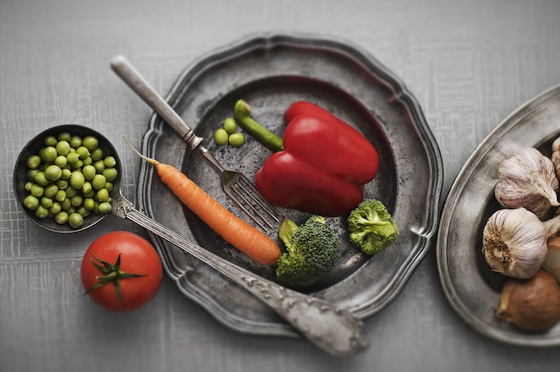
vegetarian-food-shortages-middle-east-land-grabIranians may have turned to aubergines due to chicken shortages – but the world over may be forced to go vegetarian due to food shortages in the next 40 years

According to the latest findings, the world’s population may have to switch almost completely to a vegetarian diet over the next 40 years to avoid catastrophic food shortages. Water scientists are concerned that as the global population increases by another two billion by 2050, there simply won’t be enough water to support cattle and so a bigger portion of our diet will have to come directly from crops. Animal protein-rich food consumes five to 10 times more water than a vegetarian diet. As it stands, 20% of the average human’s diet is animal based and this will have to drop to just 5% to feed the world’s growing population. Could you live on one quarter of the meat you are currently enjoying?

Why Dolphins Have Disappeared from Israel’s Shores

2

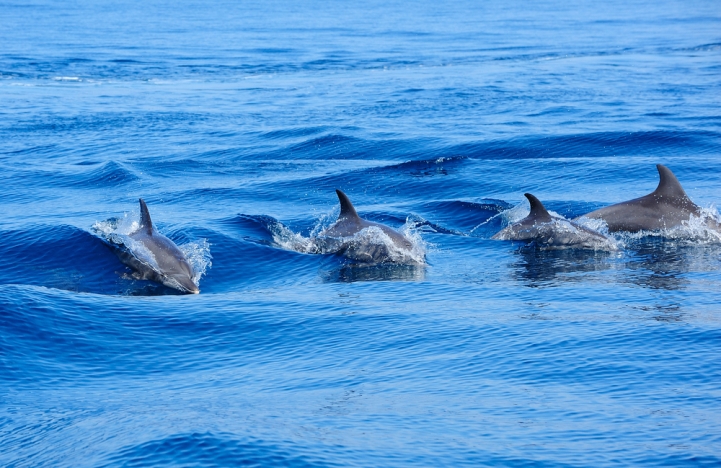
dolphins swimming in the sea israelDolphin families like this one are now less common in the eastern Mediterranean

Although grey whales have occasionally been spotted in the Mediterranean and bottle nose dolphins are often seen following commercial fishing trawlers, neither of these marine mammals are now commonplace in the Mediterranean; especially along Israel’s shoreline.

The Mediterranean Sea is feared by oceanographers and marine life ecologists as becoming increasingly more polluted and less able to support such creatures as whales and dolphins which depend on an ample amount of fish and crustaceans to feed on.

It’s even thought by some marine biologists that the Mediterranean may be harboring a giant plastic garbage patch similar to the one present in what is known as the Great Pacific Garbage Patch which is said to compose nearly 10% of  the world’s waste items.

A recent Jerusalem Post article reported on the rare sighting of a baby dolphin swimming alongside its mother of Israel’s Mediterranean shoreline. While this sighting was good news for marine biologists, it was also noted in the article that an unusually large number of  carcases of dolphins and whales have washed ashore, with a total of 16 already found by mid August. This is a much larger number than the annual average of 15 that usually come ashore.

With around 300 to 400 dolphins being in permanent residence in the eastern Mediterranean, losing a larger number of these creatures could be an ominous indication that the waters of the Med, which are also becoming warmer and more saline, may be less able to support such creatures.

This is especially so for occasional whales that wander into this sea via the Straits of Gibraltar.

Commercial fishing often involves boats using large “drift nets” that float near the surface and are supported by buoys. Fish and sometimes dolphins get caught up in  these nets. In the case of dolphins, the poor creatures wind up suffocating.

According to Dr. Aviad Scheinin, chairman of the Israel Marine Mammal Research & Assistance Center, “fishing boats are the most dangerous cause of death for the local dolphin population.”

This danger is in addition to the sea’s increasing state of pollution and salinity. The salinity increase could be partially attributed to the growing number of desalination plants along the  shorelines of Israel.

Dr. Scheinin and his Center are now working of trying to find the main cause of the increase in  dolphin deaths, especially among the common dolphin species. The common dolphin used to inhabit an area off the Sinai coast  that had been formerly declared as a nature reserve. They have been venturing north along Israel’s coast in search of food. Dr. Scheinin is very interested in finding out why “so many Israeli common dolphins are dying along Israel’s coasts.”

More articles on Mediterranean environmental issues affecting dolphins:

Commercial Fishing in Mediterranean Endangering Dolphins

Is Willie the Grey Whale Lost or Looking for Club Med?

June 8 is World Oceans Day – Be a Changemaker!

Is Mediterranean Sea Harboring a Giant Plastic Garbage Patch?

Are Women The Globe’s Green Giants?

7

green woman green paint environment leaders
A growing body of research shows a split down gender lines when we make environmental choices.

Men may be from Mars, but women are the greener creatures, according to the Organization for Economic Cooperation and Development (OECD). Women in industrialized countries buy most of the eco-friendly household products.  Women also load up on organic foods. They recycle more and have greater interest in energy-efficient appliances, according to OECD surveys. Israel and Turkey are the only Middle East members of the OECD. The Institute for Women’s Policy Research Press indicates women are more willing than men to pay higher income taxes and gasoline prices when the funds are used to support environmental protection.

New Stone Age Figurines For the Hunt Discovered in Jerusalem

3

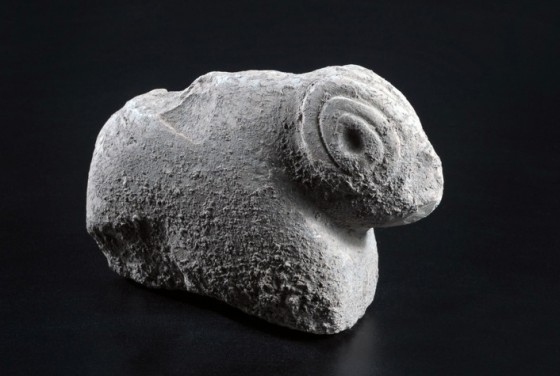
stone age figure israel bovine ram hunt
Israel is part of the Levant region believed to be the cradle of civilization. New 9,500 year-old carvings found in Jerusalem reveal humanity’s Stone Age past and our reverence for the hunt.

Two figurines found recently in Jerusalem are about 9,500 year old. One is the image of a ram and the second of a wild bovine, and they point to the existence of a cultic belief in the region in the New Stone Age. They might have been used good-luck statues to ensure a successful hunt, archeologists say. The two figurines from the New Stone Age were discovered in excavations the Israel Antiquities Authority is currently conducting at the Tel Moza archaeological site, prior to work being carried out on the new Highway 1 from Sha’ar HaGai to Jerusalem by the National Roads Company.

Abu Dhabi Flushes Out Inefficient Plumbing

2

Abu Dhabi gives seal of approval to products with high environmental performance.

Abu Dhabi Quality and Conformity Council (QCC) launched a Water Efficient Fixtures Conformity Scheme to help consumers make better use of water in public and private plumbing applications. It certifies six categories of water fixtures based on highly efficient water flow rates: bathroom taps, shower heads, kitchen faucets, bidets, urinals, and toilets.

QCC is responsible for improving the infrastructure quality, establishing uniform performance measures and raising public awareness on environmental aspects of building components.

Did your grandma read Good Housekeeping?  A century ago, that magazine kicked off a brilliant marketing strategy; the “Good Housekeeping (GH) Seal of Approval” was its emblem.  Their seal was awarded to goods that passed muster by the magazine’s special “domestic science” research institute. Products bearing the GH seal were backed by special warranty, enjoying an instant boost in sales.

Buildings-in-a-Bag Can Instantly Aid Middle East Refugees

1

concrete in a bag saudi arabia

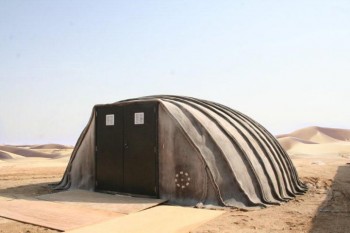
Groundbreaking “Concrete Cloth” allows ancient building material to be used in a totally new way.

Concrete Cloth is a pioneering “building-in-a-bag” that requires only water and air for construction: it was named material of the year in the 2011 Material ConneXions MEDIUM Awards.

Concrete is one of the world’s most popular building materials.

It follows a simple, ancient recipe: build a mold to form a desired shape; drop in some reinforcing (steel bars as example); mix cement, water, and rock aggregates; pour the mix in the mold and let it set up. It’s a great idea for housing refugees in Syria.

Libya’s Post-Revolution Trash and Traffic Problems

1

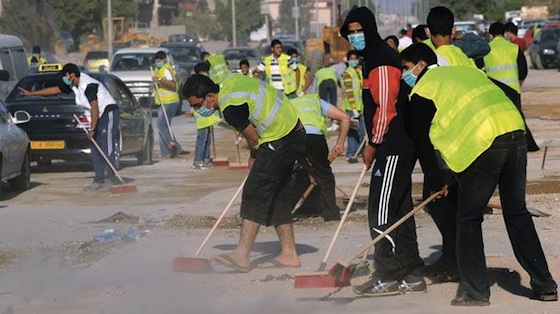
traffic-trash-libya-democracy-revolution-futureClear Libyan streets of trash and traffic for a brighter and more democratic future says expert

Security concerns in Libya may be top of the political agenda, but more goodwill could be earned if socio-economic problems such as traffic and trash are tackled says Rhiannon Smith, who is an economic development expert in Libya. Post-revolution, Libya is struggling with pressing security concerns, disunity and division along religious and ethnic lines. As such, political progress away from a long authoritarian past to a more democratic future has been painfully slow. The solution is tackling problems that all Libyans face and there isn’t more that unites Libyans in despair than the traffic and trash problem.

New Israeli Cemeteries Focus on Dense Burial…and Adding Charm

2

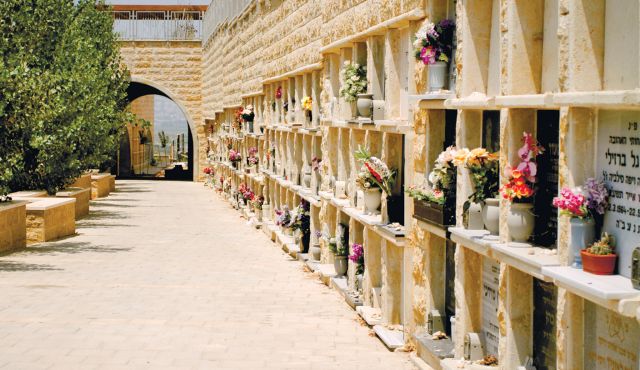
dense burial niche israel flowersHigh-rise necropolises offer a greener way of dense burial and a dignified appearance to comfort mourners.

Having buried two loved ones in Israel myself, I know how wearisome field cemeteries are. Arriving on foot, I trudge along winding interior roads for long minutes, sweating and squinting against the glare in summer or huddling under a dripping umbrella in winter. No matter how often I’ve visited the graves, unfamiliar new roads built to accommodate fresh burial grounds disorientate me and I lose my way. According to Israel’s Central Bureau of Statistics, the current yearly death rate stands at 5.3 per 1000 people, so new roads and burial grounds must be expected.

Camel Meat Catching on in Canada

0

camel meat dried canada torontoToronto eateries now offer camel burgers and kangaroo kebabs.

Emiratis are addicted to Canada’s premier doughnut chain, Tim Horton’s.  So it makes for kharmic culinary balance that Torontonians chomp a North American staple with a crazy MidEast twist: camel burgers. Casbah, a food kiosk in downtown Toronto, serves up camel burgers. “It’s very healthy, and it has no fat,” Casbah owner Dali Chehimi told CBC news.

He sources his camel meat from Whitehouse Meats in St. Lawrence Market, who ship it up from Australia (where camel culling is helping to reduce feral camel populations in the Aussie outback). Whitehouse Meats also offers camel for home consumption. It’s a staple in North Africa, the Middle East and, increasingly, parts of Europe.  But in North America, camel meat has a bit of a hump to get over before going mainstream. The butchers also sell emu, musk ox, caribou and ostrich.

What Can Islam Do For The Environment?

5

islam-environment-climate-change

What can Islam do for the environment? That’s a question I have been asking myself for some years now and, in all honestly, I am nowhere near answering it fully. I have definitely enjoyed looking into the green ethics of Islam in a bid to help Muslims worldwide take up the environmentally-friendly path, but I still have lots of questions.

Like how can we get Muslims to embrace the greener side of Islam?
How do we translate belief into action? How do green Muslims, who are coming at the climate change issue from a different perspective, link up with more mainstream and non-faith green organisations?

Embracing geo-engineering as ‘Plan B’ is not only dangerous as the outcomes of planetary-scale experiments are highly uncertain; it is undemocratic, irresponsible and ignores the fact that we have a perfectly good ‘Plan A’ – to cut our emissions.

We just need better ways of convincing people to do that. One area that is commonly overlooked when exploring ways to encourage greater climate awareness and action is faith and religion. Islam, in particularly, which is perceived as the faith of oil-rich sheikhs is sidelined with sparse academic research highlighting the insights Islam has to offer an environmentally vulnerable planet.

The primary source of all Islamic thought and practice, the Holy Qur’an, is full of exhalation of nature, its beauty and the need to protect it. Nature is portrayed as God’s glory, a gift of sustenance and humanity is divinely ordained responsibilities to care for the natural world and keep the harmony and balance placed within it.[1]

In the Qur’an there are “ample instructions as well as warnings to the faithful not to abuse their power in dealing with the environment. Distortion of the natural order and ill-treatment of God’s creatures, whatever they are, are considered as sins that lead to punishment.”[2] Wastefulness is discouraged and excessive consumption or greed is actively prohibited. Indeed, the Prophet Muhammed warned his followers to not waste precious resources such as water and encouraged them to protect land and improve its fertility.

With this in mind, it is not hard to make the link between Islamic ethics and the need to curb our excessive use of non-renewable resources such as fossil fuels which are poisoning the air and land. As such, Islam has “the capability of helping to solve one of the greatest problems of our time, namely that of ‘the environment’.

Islam need not be a hindrance, but could be a great help, in educating the faithful about good environmental conduct.”[3] Cairo, the Islamic capital with one thousand minarets, is one of the most polluted cities in the world and Bangladesh and the Maldives – which are both Muslim nations – will be the worst affected countries when climate change hits due to flooding and droughts. [4] Indeed, environmental problems plague many Muslims countries whether it be deforestation in Indonesia, desertification and over-development in the Middle East or drought in North Africa.

These nations and many others have everything to gain by tackling climate change and environmental pollution by embracing the green ethics of Islam. Today, the Muslim faith commands influence (to varying degrees) of 18% of the world’s population and covers a very large area where some of the greatest environmental problems exist. [5] As such, highlighting the green tenants of the Islamic faith is hugely beneficial to tackling climate change and may become increasing useful with the predicted doubling of the Muslim population by 2030 to 26.4%.[6]

If Muslims across the world garner greater awareness of their Islamic duties to the environment, it also perceivable that they would be able to pressure their governments into making the right ‘green’ decisions when it comes to water, food, recycling and energy use. It would also mean that rich Gulf Muslim nations such as Saudi Arabia, Kuwait and Bahrain wouldn’t be as obstructive at important climate summits if their populations could rally for the environment based on Islamic tenants. [7]

[1]   Murad M. Islamic Environmental Stewardship: Nature and Science in the Light of Islamic Philosophy in Union Seminary Quarterly Review, (2011) Vol. 63: pg147-8
[2]   Kula, E. (March 2001) Islam and environmental conservation. Environmental Conservation: Vol. 28 (Issue 1), p4.
[3] Kula, E. (March 2001) Islam and environmental conservation. Environmental Conservation: Vol. 28 (Issue 1), p7.
[4] N. Ammar, Islam and Deep Ecology, in D. Landis and R. Gottlieb, Eds., Deep Ecology and World Religions: New Essays on Sacred Grounds (State University of New York Press, 2001), p193.
[5] Ibid, p2.
[6] Jones, H. (January 27 2011) 2.2 Billion: World’s Muslim Population Doubles. TIME. http://newsfeed.time.com/2011/01/27/2-2-billion-worlds-muslim-population-doubles/
[7] Sanchez, R. (November 11 2011) US ‘blocking’ climate change fund ahead of Durban conference. The Telegraph. http://www.telegraph.co.uk/earth/environment/climatechange/8914511/US-blocking-climate-change-fund-ahead-of-Durban-conference.html

Image of sitting bedouin and donkey from Shutterstock.com

For more on Islam and climate change:

Green Iftar Guide – Breaking the Ramadan Fast Sustainably

How Islam Could Help Fight Water Scarcity

Islam’s Environmentally Friendly Architecture – Where Did It Go?

Jordan Puts Gender At Heart of Climate Change Policies

1

gender-climate-change-women-jordanJordan has become the first Arab country to ensure national climate change efforts include gender considerations

Jordan’s environmental record may be patchy but as one of the most climate change-vulnerable nations in the Middle East, it is taking climate change seriously. It has now also become the first Arab nation to include gender considerations as one of the adaptation priorities in the National communication on climate change, which will be submitted to the UNFCC. The significance of this is hard to gauge as it’s all just reports and writings right now, but it does entail the acknowledgment of “women’s effective role and allowing women’s empowerment to provide a vital springboard for addressing climate resilience.”

According to Ahmad Qatarneh, the secretary general of the Ministry of Environment, the department has also engaged the Jordanian National Commission for Women to integrate the environmental sector, with a focus on climate change, in the next Strategic Plan of Jordanian Women for 2011-2015. See the list of proposed actions and also our very own list of female eco-warriors from Jordan after the jump.