
Birds Help Israel, Jordan And Palestine Flock Together

After fifteen years of cooperation between the three countries, birds continue to help break down borders.

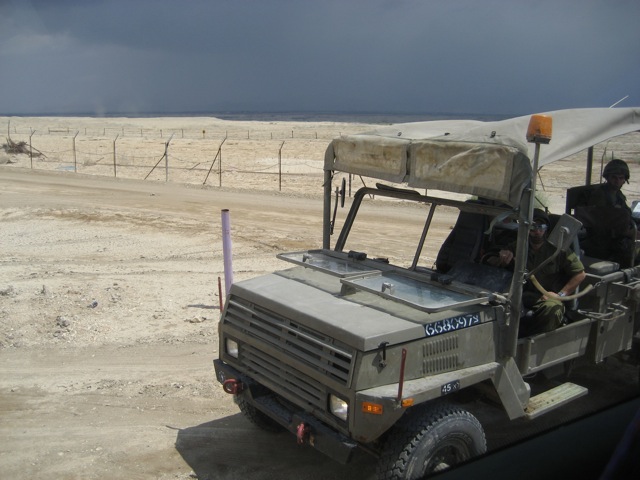
The migration corridor that fosters the ambitious biannual itinerary of half a billion birds has long been an incentive for Israel, Jordan, and Palestine to get along. Faced with cross-border concerns that threatened both migratory and local species – roughly 500 species in total – Dr. Yossi Leshem from Israel and Mr. Imad Atrash from Palestine made a joint commitment in 1995 to foster civil solutions.

That partnership, which has grown to include Jordan and various  organizations, started with a project to track 120 German White Storks. It became enormously popular, with students from all three nations eager to track the storks as they progressed across the long sky.

And it continues today. Various conservation, research, education, agriculture, and flight safety initiatives have been implemented with financial support from the European Union, US Aid and others.

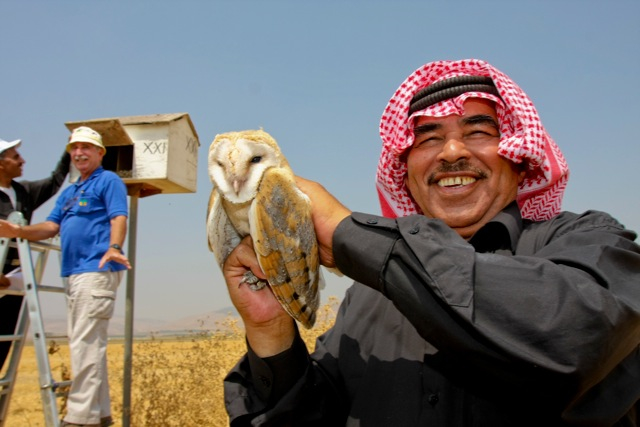
The plan to encourage Barn Owls and Kestrels as natural pest control agents was initiated with cooperation from the International Center for the study of Bird Migration at Latrun, the Palestinian Wildlife Society, and Jordan’s Royal Society for the Conservation of Nature. A healthier approach to pest control than harmful chemicals, thousands of nesting boxes have been erected throughout the region.

The relationship has not always been easy to maintain. During the 1999-2000 period, representatives from the various countries hoped to establish better guidelines to reduce aircraft collisions with birds, but then the second intifada broke out and those discussions came to a quick halt. Despite interruptions, most of the projects that had already been established pushed on.

Another factor: among the Arab community, birds like owls are considered bad luck, so helping them change age-old beliefs probably hasn’t been easy. Obviously Dr. Leshem has found ways to show the owl is a sign of good luck. Maybe he’s used an amulet against the evil eye?

Whatever charm he’s been using today Israel, Jordan, and Palestine are still pursuing efforts to deepen research, spread knowledge, enhance agricultural practices, and ensure birds’ safe passage during the spring and autumn migrations. Theirs is an example that the even pursuit of civic commitment can overcome even the most formidable obstacles.

More on Birds in the Middle East:
Dubai Is For The Birds (And The People Who Love Them)

An Unwelcome Colony? Ring-necked Parakeets Threaten Biodiversity

Israeli Air Force Fighter Pilots Dodge Migrating Storks

Tafline Laylin
Tafline Laylinhttp://www.greenprophet.com
As a tour leader who led “eco-friendly” camping trips throughout North America, Tafline soon realized that she was instead leaving behind a trail of gas fumes, plastic bottles and Pringles. In fact, wherever she traveled – whether it was Viet Nam or South Africa or England – it became clear how inefficiently the mandate to re-think our consumer culture is reaching the general public. Born in Iran, raised in South Africa and the United States, she currently splits her time between Africa and the Middle East. Tafline can be reached at tafline (at) greenprophet (dot) com.

Read More

1 COMMENT
  1. I live under their sky, and am always amazed by the beautiful forms the birds make, the cooperation that they have as they fly above; changing leaders as they migrate as to save their strength.

    Thank you for reporting on this beautiful and amazing project!

TRENDING

Saving Gourmet Wild Plants For The Future

Think of truffles, a gourmet wild food. The European...

Middle-Eastern spices and natural medicine (A through C)

In the Middle East, aromatic traditional foods are regarded...

What Happens When Hyenas Pee On Bedouins?

According to an anecdote Bedouin people believe that if a hyena urinates on them, it will proceed to drag them to a cave and feast on their body. Because of this, they won't hesitate to kill them on the spot if they come across one.

Iran’s water mafia and thirst for war leaves the country on brink of being dry

Iran’s Lake Urmia, once the Middle East’s largest saltwater lake, has shrunk by 90 percent due to mismanagement, dams, and drought. As Tehran pours billions into foreign conflicts, water activists face repression at home. The crisis mirrors Syria’s drought-driven unrest, showing how water scarcity can destabilize entire regions.

Creamy Eggplant Soup Recipe

Eggplant seems an unlikely soup ingredient. But blended with vegetable stock, herbs, and cream, the shiny purple vegetable makes a creamy soup full of Middle-Eastern flavors.

Yerukim Forms a New Green Economy Where the Money is Really Green

The Yerukim members who pick up the recyclables get to keep the monetary reward, the public earns "green" bills that can be used in shops, and business owners get to be associated with environmentalism.

Choosing Riyadh over Dubai? What Investors Should Know

Saudi Arabia is deploying capital at unmatched scale to catalyze tourism and advanced industry while rewiring its power-and-water backbone. The investable frontier is widening—especially in renewables, grid storage, water efficiency/desal retrofits, and hospitality operating platforms. Prudent investors will insist on phased delivery, enforceable KPIs (energy, water, biodiversity), and RHQ/zone compliance—while pricing political-economy and reputational risks alongside growth upside.

Sell your cooking oil for biodiesel money

Want to make money on old french fry oil? Sell it.

Qatar Alternative Energy Summit Pairs Investors And Innovators

Alternative energy investors and innovators can meet n' greet in Doha, Qatar March 16 and 17.

Here’s How To Implement The Four Pillars Of Employee Engagement

If you throw a party for your work team and they are vegans, don't make it a barbecue. Know the sustainability values of your team to boost moral and retain good people.

Locals From Rishon Fight IKEA

Big Box stores are a pretty new concept in Israel, and thank God that not every Israeli city wants them in their backyard. A word from someone who has see the beautiful farmland around her hometown Newmarket, Ontario stripped and converted into vulgar strip malls of big box shops: they have no place in a healthy and sustainable town or city.

The Jewish National Fund Meets An Inconvenient Truth

According to the JNF, it has transformed thousands of acres of barren land into green forests in Israel. They state that each person emits about 23 tons of carbon per year, estimating that each tree planted can absorb one ton of carbon in its lifetime. That's a whole lot of trees you'd need to be planting. Could so many fit in Israel?

How to quiet noise from construction in your office

Streets need to be resurfaced in New York but the humming and grinding noise is unsettling. Noise is environmental pollution. 

Popular Categories