Health insurance is a regulated financial product. Insurers operate under binding contracts, overseen by state insurance commissioners, that legally obligate them to pay claims meeting policy terms. Policyholders who believe a covered claim was wrongfully denied have legal recourse through state regulatory channels.
The New Zealand Merino Company, now rebranded as Zentera, has quietly removed the phrase “world’s leading ethical wool brand” from its website, a notable change that comes after a disturbing investigation by PETA Asia-Pacific into the company’s ZQ-certified wool supply chain, PETA reports to Green Prophet.
Somehow vegetables with short seasons excite the imagination and appetite more sharply than produce that’s available all year around. Good Middle Eastern cooks have many recipes for delicate fava beans, and this turmeric-fragrant soup is one.
Health insurance is a regulated financial product. Insurers operate under binding contracts, overseen by state insurance commissioners, that legally obligate them to pay claims meeting policy terms. Policyholders who believe a covered claim was wrongfully denied have legal recourse through state regulatory channels.
The New Zealand Merino Company, now rebranded as Zentera, has quietly removed the phrase “world’s leading ethical wool brand” from its website, a notable change that comes after a disturbing investigation by PETA Asia-Pacific into the company’s ZQ-certified wool supply chain, PETA reports to Green Prophet.
Somehow vegetables with short seasons excite the imagination and appetite more sharply than produce that’s available all year around. Good Middle Eastern cooks have many recipes for delicate fava beans, and this turmeric-fragrant soup is one.
Health insurance is a regulated financial product. Insurers operate under binding contracts, overseen by state insurance commissioners, that legally obligate them to pay claims meeting policy terms. Policyholders who believe a covered claim was wrongfully denied have legal recourse through state regulatory channels.
The New Zealand Merino Company, now rebranded as Zentera, has quietly removed the phrase “world’s leading ethical wool brand” from its website, a notable change that comes after a disturbing investigation by PETA Asia-Pacific into the company’s ZQ-certified wool supply chain, PETA reports to Green Prophet.
Somehow vegetables with short seasons excite the imagination and appetite more sharply than produce that’s available all year around. Good Middle Eastern cooks have many recipes for delicate fava beans, and this turmeric-fragrant soup is one.
Health insurance is a regulated financial product. Insurers operate under binding contracts, overseen by state insurance commissioners, that legally obligate them to pay claims meeting policy terms. Policyholders who believe a covered claim was wrongfully denied have legal recourse through state regulatory channels.
The New Zealand Merino Company, now rebranded as Zentera, has quietly removed the phrase “world’s leading ethical wool brand” from its website, a notable change that comes after a disturbing investigation by PETA Asia-Pacific into the company’s ZQ-certified wool supply chain, PETA reports to Green Prophet.
Somehow vegetables with short seasons excite the imagination and appetite more sharply than produce that’s available all year around. Good Middle Eastern cooks have many recipes for delicate fava beans, and this turmeric-fragrant soup is one.
Health insurance is a regulated financial product. Insurers operate under binding contracts, overseen by state insurance commissioners, that legally obligate them to pay claims meeting policy terms. Policyholders who believe a covered claim was wrongfully denied have legal recourse through state regulatory channels.
The New Zealand Merino Company, now rebranded as Zentera, has quietly removed the phrase “world’s leading ethical wool brand” from its website, a notable change that comes after a disturbing investigation by PETA Asia-Pacific into the company’s ZQ-certified wool supply chain, PETA reports to Green Prophet.
Somehow vegetables with short seasons excite the imagination and appetite more sharply than produce that’s available all year around. Good Middle Eastern cooks have many recipes for delicate fava beans, and this turmeric-fragrant soup is one.
Health insurance is a regulated financial product. Insurers operate under binding contracts, overseen by state insurance commissioners, that legally obligate them to pay claims meeting policy terms. Policyholders who believe a covered claim was wrongfully denied have legal recourse through state regulatory channels.
The New Zealand Merino Company, now rebranded as Zentera, has quietly removed the phrase “world’s leading ethical wool brand” from its website, a notable change that comes after a disturbing investigation by PETA Asia-Pacific into the company’s ZQ-certified wool supply chain, PETA reports to Green Prophet.
Somehow vegetables with short seasons excite the imagination and appetite more sharply than produce that’s available all year around. Good Middle Eastern cooks have many recipes for delicate fava beans, and this turmeric-fragrant soup is one.
Health insurance is a regulated financial product. Insurers operate under binding contracts, overseen by state insurance commissioners, that legally obligate them to pay claims meeting policy terms. Policyholders who believe a covered claim was wrongfully denied have legal recourse through state regulatory channels.
The New Zealand Merino Company, now rebranded as Zentera, has quietly removed the phrase “world’s leading ethical wool brand” from its website, a notable change that comes after a disturbing investigation by PETA Asia-Pacific into the company’s ZQ-certified wool supply chain, PETA reports to Green Prophet.
Somehow vegetables with short seasons excite the imagination and appetite more sharply than produce that’s available all year around. Good Middle Eastern cooks have many recipes for delicate fava beans, and this turmeric-fragrant soup is one.
Health insurance is a regulated financial product. Insurers operate under binding contracts, overseen by state insurance commissioners, that legally obligate them to pay claims meeting policy terms. Policyholders who believe a covered claim was wrongfully denied have legal recourse through state regulatory channels.
The New Zealand Merino Company, now rebranded as Zentera, has quietly removed the phrase “world’s leading ethical wool brand” from its website, a notable change that comes after a disturbing investigation by PETA Asia-Pacific into the company’s ZQ-certified wool supply chain, PETA reports to Green Prophet.
Somehow vegetables with short seasons excite the imagination and appetite more sharply than produce that’s available all year around. Good Middle Eastern cooks have many recipes for delicate fava beans, and this turmeric-fragrant soup is one.
Color Health, is an Israeli-founded startup democratizing healthcare
Who doesn’t want to improve human health? Whether it’s reducing pain and inflammation from medical cannabis innovations or targeting cancer cells through personalized mRNA immunotherapy drugs, or novel insights into gut bacterial systems that increase our longevity. If you have a company or biomedical startup in this field, MIT and Harvard want you!
These universities are hosting a new prize, called the Richard N. Merkin Prize in Biomedical Technology and the winners will share $400,000 for their work.
The prize recognises novel technologies that have improved human health.
About the Merkin Family Foundation
The Merkin Family Foundation was founded by health care executive Dr. Richard Merkin, MD. Dr Merkin is the founder and chief executive officer of Heritage Provider Network and focuses his work and the bulk of his philanthropy on new paths to cures and to affordable, high-quality health care.
The prize will celebrate a novel technology and recognize up to four key contributors to the development of the technology, with a cash award of $400,000 to be shared among each year’s recipients. The winning technology must have made a demonstrable real-world impact on human health by improving the treatment, diagnosis, or prevention of disease.
The Merkin Prize is administered by the Broad Institute of MIT and Harvard, one of the world’s leading biomedical research institutes.
“The Merkin Prize will highlight the inventors of an important medical technology and will demonstrate how their work is transforming healthcare,” said Harold Varmus, a Nobel Prize winner for his work on the origins of cancer.
Eligibility for receipt of the Merkin Prize extends to all living investigators from anywhere in the world, using any discipline in academia, the commercial sector, or government. Anyone may submit a nomination, but self-nominations are not permitted.
Online platforms like Etsy make it easy to sell handcrafts and jewellery online. Here’s a guide to getting started
Have you already chosen to turn your jewelry-making talent into a business? Starting a jewelry business might provide you with additional cash or a full-time job.
Jewelry is a popular item that people wear for personal enjoyment or gifting a loved one. If you have a natural talent for crafting jewelry, you might experiment with different materials to produce unique designs. This industry is extremely competitive. So if you want to get your jewelry design business noticed, you’ll have to work hard.
But don’t be intimidated by the prospect of competition or launching a business. This guide shares tips that will help you start a successful jewelry business.
Choose your Niche
Deflect energy and bad forces with amulets you can buy online
To guarantee that your jewelry stands out from the crowd, you should create it with a distinct brand. However, your jewelry should also fit into a specific category since choosing a niche will assist your buyers quickly recognizing your work. There are several standard jewelry style categories to pick from.
Fashion or costume jewelry is manufactured from low-cost materials and metals and is marketed to stylish, everyday buyers.
Fine jewelry is created for upmarket consumers and special events and is fashioned with precious or semi-precious gems and stones. Click here to see examples of crystal jewelry.
Mid-priced jewelry focuses on individuality and style that makes a statement.
Sourcing materials and supplies
Now that you have established the jewelry niche you want for your business, you need to know where you will be sourcing your materials from. Purchasing wholesale supplies helps enhance your earnings on jewelry sales. A fast web search reveals several possibilities for purchasing bulk supplies. Order more supplies than you think you’ll need to accommodate for mistakes and to inspire new ideas and projects. Consult your designs for the particular quantity of materials required for a project.
Many wholesale jewelry vendors supply raw metals, gemstones, semi-precious stones, beads, pearls, and metalworking equipment. Consider contacting other jewelry designers for recommendations on wholesale suppliers, and visit as many trade fairs as possible to broaden your supplier relationships.
Plan how you’ll generate your artistic designs for product development. Some choices include handwork, at home, in a factory, or through outsourcing. The intricacy of your ideas, the materials utilized, the pricing point, and skill level will all influence your decision.
Some fine art jewelry production techniques, such as weaving, soldering, or goldsmithing and silver, need specialized qualifications or training. If you’re starting out, try taking an online course to help you figure out your artistic path.
Budget
Starting a jewelry company can be quite expensive, but may be even less if you already have the necessary supplies. Most of the expenditures are for materials and tools, including pencils, drawing boards, design templates, and 2D, 3D, and jewelry-specific design software.
As your company expands, you’ll need to budget for increasing manufacturing and material prices, which will rise as more items are sold. If you intend to open a physical business, include the cost of rent and utilities in your budget.
Register a creative name for your jewelry business
Do you want a business name that is memorable enough to express your style and creativity while also attracting the attention of potential customers?
It may take time and effort to pick a name for your business since you’ll need to choose a name that’s catchy, innovative, and successfully represents your company’s purpose and objective. Check to see whether the name is accessible as a domain name on the Internet so you may create a website to display or perhaps sell your jewelry. Consider trademarking your company name if you want exclusive control of it.
Create a logo for your jewelry business
For your jewelry business, you must have a memorable personalized logo. In a competitive market, the logo will represent your jewelry firm and its distinctive merchandise. Customers will recognize your brand by its logo. Jewelry logo designs aid in the development of a jewelry company’s brand identity.
You should know who your target audience is so that your logo will appeal to that group of people. This means that a logo for a costume jewelry company aimed at teenagers would look very different from a design for high-end or pricey jewelry.
Identify your target audience.
Perhaps you make beautiful jewelry for special events like weddings, anniversaries, or engagements. Maybe you want to appeal to the younger generation with more geometric, minimalist works. Alternatively, you may have stuff that many people find fascinating and appealing. Whichever niche you choose, you must decide who is most likely to purchase your designs.
This allows you to tailor your marketing strategy to that specific target audience. Not sure about your target audience? Set up social media profiles on Facebook, Instagram, or Pinterest to gain insights and information about your client base.
Have a marketing strategy
Because the jewelry industry is competitive, you need to employ a multifaceted marketing plan to make your product stand out to potential clients. Create marketing items such as business cards that include your website URL and email address. Consider creating an e-commerce site using a low-cost hosting platform like Shopify.
Consider employing a public relations agency to promote your designs if your budget allows it. Social media is a simple method to sell your products and reach a large audience. A simple photo of your jewelry with an encouraging message on Facebook or Instagram may create fantastic results.
Diversify the places where you sell your jewelry
One of the simplest ways to sell jewelry is through your website or a proxy. However, selling your works at pop-up shops and artisan fairs may help your boost sales.
Moreover, it will help spread the word about your company, and get the opportunity to meet and engage with your consumer base while sharing your love for designing jewelry. You should also approach local stores about wholesale and consignment sales of your designs, this may help boost your sales to an even larger audience.
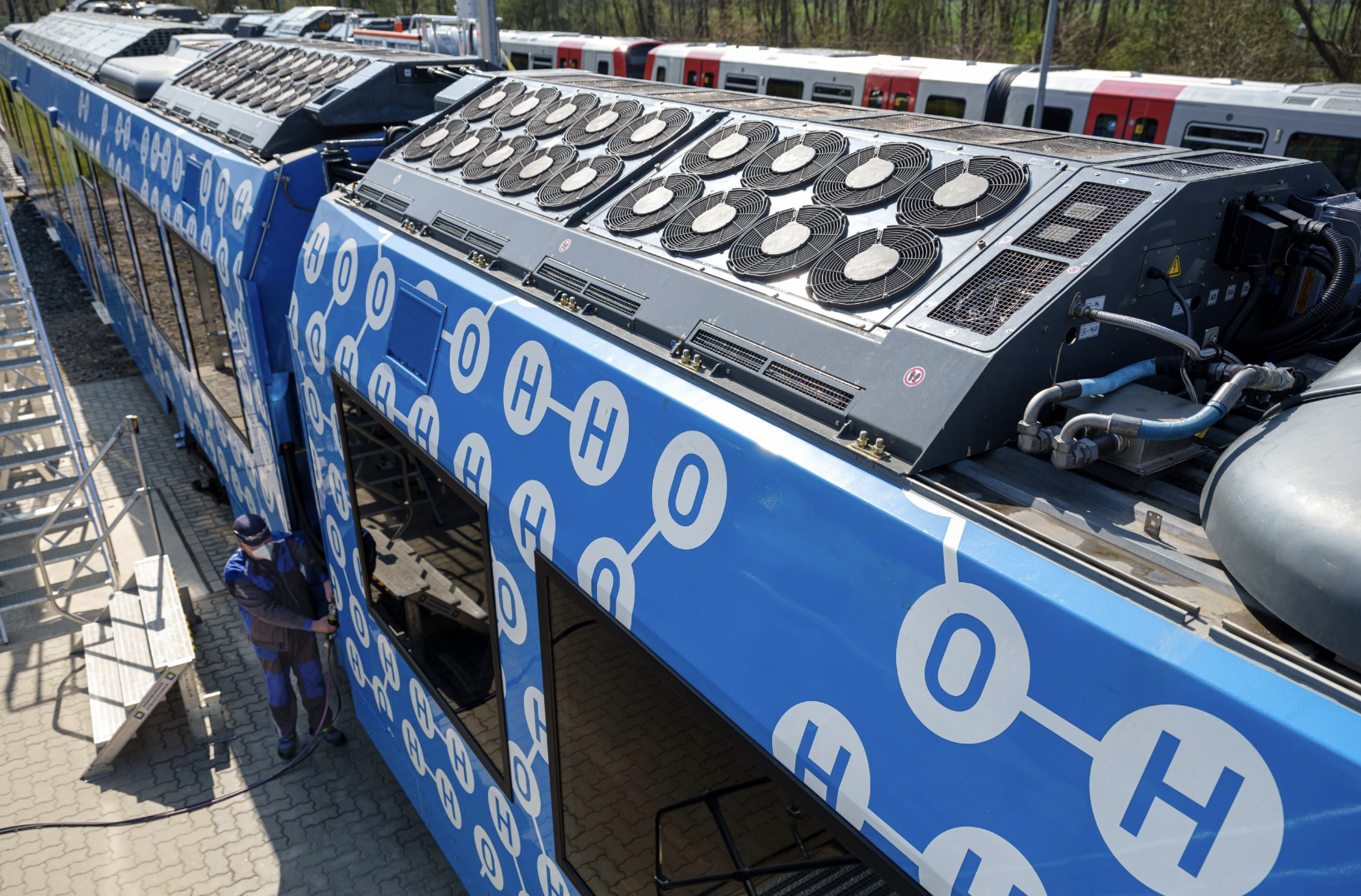
Alstom hydrogen trains in Germany. Source: Christoph Busse, Alstom
Hydrogen is plentiful as an energy source. If you’ve seen BMW’s bet on hydrogen cars leaving a trail of only water emissions behind, you might be very excited. But extracting energy from hydrogen, until recently, has been very hard. And processes along the way, like containing leaks, cannot be overlooked because if they are, hydrogen is not a better source of power than oil or gas, it could be worse.
So as important as rallying for the cause and jumping into investments and spreading the good news of new projects in America and Oman, it’s important for investors, governments and energy stakeholders to be educated about the challenges of hydrogen along with the promise and potential.
A short train ride from Cologne or Dusseldorf, the first international NRW HY Summit 2022 will take place in Duisburg and Essen in the North Rhine-Westphalia state of Germany from November 8th to 10th. Attendants can immerse themselves in the world of hydrogen onsite as well as virtually and learn everything about the future of the planet’s smallest element.
Hydrogen can be used to power vehicles, generate electricity, power the industry and heat our homes and businesses. It could make a huge difference in our carbon emissions and will be critical to achieving net zero. With climate leaders meeting around the same time for COP27 in Egypt, show your company’s commitment to a CO2-free future. This event is for you if you are living the startup dream in shades of hydrogen.
So how do you start building new companies, investment portfolios and projects? Making it real in the investment heart of Europe, in the NRW province of Germany, is the aim for its November energy summit and startup conference.
Business and investment arms of the NRW government and its partners are organizing a 3-day conference on hydrogen as a business opportunity and a way for our planet to achieve net-zero goals facing a climate in crisis. Consider that NRW is home to the entire hydrogen chain: plants that generate green hydrogen from green electricity, and pipelines that transport the gas across the country. The event will include networking with the state prime minister and key investment leaders.
Taking NRW’s experiences into account, attendants can be expected to meet high-level participants who can share real-world experiences in infrastructure, production and R&D. The state will include tips on how young companies can get started in NRW, with incentives and investments in hydrogen and new energy ventures.
Meet H2UB, the European platform for hydrogen start-ups and innovative Projects of start-ups, corporates and science.
Why Hydrogen and Germany’s NRW wants you!
Everyone knows Germany is the world’s most serious country regarding meeting and exceeding renewable energy goals. Germany’s words matched with its ambitious and reliable workforce make it a great country in Europe to partner with. Hydrogen will help Germany’s ambitious goal of a CO2-neutral future. If it works, this will be an example to the world.
Particularly in the industrial state of NRW, the need for alternatives to fossil fuels is great. Hydrogen is becoming important for the region and therefore offers investors and companies enormous growth potential in a stable economy, with the Euro now on par with the USD.
NRW is already a top location for hydrogen and fuel technologies. Experts estimate that up to 130,000 new jobs could be created in connection with hydrogen. And this is happening in all areas of the value chain: research, production, mobility and application.
To ramp up the market for hydrogen products and applications, innovation is needed at every stage of the value chain, a team from NRW’s business unit tells me. NRW.Global Business says that NRW, as a state supports start-ups from the hydrogen economy, so they will play a significant part in the hydrogen market.
Who should attend the HY summit?
International hydrogen companies
Government stakeholders
Startups looking for operations and ecosystems
Who to meet?
Meet 50 speakers, including Hendrik Wüst, the Prime Minister of the State of North Rhine-Westphalia, and Mona Neubaur, the Deputy Prime Minister and Minister for Economics, Industry, Climate Protection and Energy of the State of North Rhine-Westphalia
Panel discussions, high-ranking representatives from business and research discuss the value chain of the hydrogen economy.
More about NRW.Global Business, event partner
NRW.Global Business conducts international location marketing for Germany’s No. 1 investment location, North Rhine-Westphalia, and promotes foreign direct investment worldwide. Some 20,000 foreign companies are already based in Germany’s economically strongest federal state. They analyze investment plans, identify suitable locations and accompany an investment project from the first step to a successful settlement.
Keeping things sanitized, clean and dust-free has been a regular routine for people since Covid hit, and of course if you are an environmentalist like me you are going to cringe before you use a paper towel to wipe up a spill.
A mainstay to an eco-ists home should be cleaning supplies and materials that do no harm. Persik, a microfiber cloth that needs no additional soap to clean should be in your tool kit along with some vinegar and baking soda. It cleans windows, mirrors, bathtubs, glasses and floors. According to material supplied by the company, their Pure Sky cloth can remove 99% of bacteria with no soap or anti-bacterials.
The secret to its magnet-like thirst for dirt is patented, composite ultra micro fibers, consisting of multifilament yarns that are made of more than 1,000 strands per yarn. This technology lets you clean nearly any surface using just water. It picks up large puddles of liquid in the kitchen and a larger size can be used to mop the floor and keep one in your car for the dust around the home.
So buying a cloth that outlasts your kitchen might be a no-brainer, but eventually it will need to be cleaned. Americans can find these cloths at Walmart online, at Better Homes & Gardens and international buyers on Amazon.
Wash, rinse, repeat. No dangerous soaps or chemicals needed, even for the windows. This keeps you and pets safe and happy.
Commonly asked questions about microfiber cloths:
How to clean a microfiber cloth
After you’ve used your microfiber cloth to clean grime and dust bunnies, how can you clean them? Throw them in the washing machine. A microfiber cloth will last as long as you do. Do not wash with water temperature more than 140 F (60C). Do not use bleach. Detergent is enough to get them clean. If stained heavily soak in water before you wash. If you insist on soap, just add a tiny amount to clean. No fabric softener please, This creates a layer that makes the cloths less effective.
Microfiber cloths should be washed alone so they don’t add bacteria to the rest of your load and so they don’t collect lint, rendering them less effective.
If they are musty microfiber cloths, add a tablespoon of distilled white vinegar to the water they are soaking in to deodorize.
Unlike one-time cloths for your floor that you throw away you can use this one forever
Can microfiber cloths be used wet or dry?
The answer is both.
Clean dry crevices to remove dust, very fine dust and hair. Great for the car!
Use it wet to clean up stains, and liquids and if you want to clean mirrors or glass, spray water first on the surface and wipe with dry cloth. So both wet and dry together.
Use a tiny bit of eco-soap, baking soda or vinegar for stubborn stains.
Does Pure Sky really remove over 99% of bacteria?
Yes. It’s made with ultra-microfibers that surround each strand of the cloth and catch bacteria as the cloth is wiped over the surface, allowing for a green clean because you do not need to use detergent. The bacteria can then be washed away with warm water. The water washes through the strands, taking the bacteria down the drain with it.
It’s double sided, why?
The blue scrubber side is for multi-use removing dust or stains
The purple smooth side is for cleaning windows, glass, mirrors without leaving any streaks or smudges.
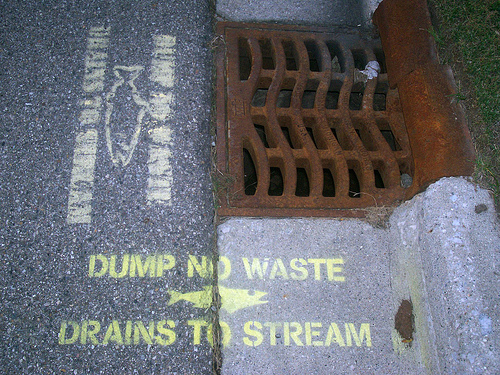
If you live in a city with poor sewage infrastructure, every time it rains, storm sewers dump piles of plastics and oil pollution onto beaches and waterways.. In the case of city storm sewers no-one and everyone is accountable for the pollution that goes into the sewers from the people driving cars, to the small businesses that work on the streets and throw chemicals and plastic bits into the drain.
Matters are compounded when small businesses rely on drains to handle their waste. Small pottery and ceramic studios need special filters to stop the drains and sewers from clogging. Local mechanics need special containers for recycling oil. But imagine what it takes to handle waste and sewage if you are a major energy supplier and one that needs all the help it can get with meeting pollution and containment goals?
Swiftdrain, a New York-based company that has worked on city projects and with clients like John Deere shared a recent project with us how they are helping energy companies meet their drainage challenges in a more ecologically-sound way.
Swiftdrain develops and manufactures trench drain systems for commercial and municipal applications. Their solutions work in concept and practice to help remove, isolate and treat upstream and downstream waste in applications all around the United States.
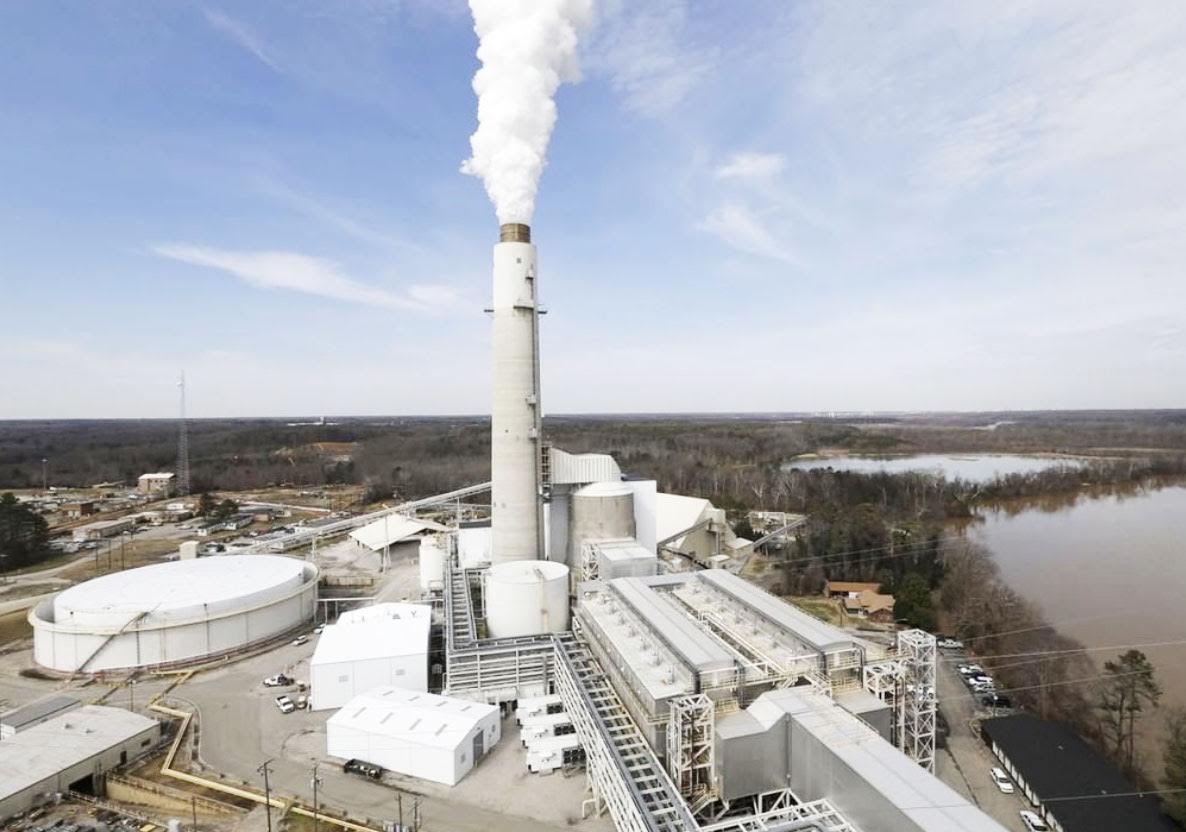
Their recent project is removing coal ash waste from Dominion Energy at the Chesterfield Power Station in Chester, Virginia.
The company provided a special system, called a radius trench drain, so that heavy slurry and drier than usual particulates can flow to where it needs to go for recycling, containment or treatment.
Their drains are designed for fast installation, superior structural integrity and simple maintenance — essential factors for Dominion Energy’s safe, environmentally friendly coal ash removal project.
A dirty job that the right drainage system has got to handle
Earlier this year, the industrial contractor Saiia Construction approached Swiftdrain for help with a large-scale radius trench drain system. The proposed drain is one of the key elements in Saiia’s project with Dominion Energy Virginia, which involves removing 15 million cubic yards of coal ash from the Chesterfield Power Station.
“Saiia Construction approached us early in the design phase for a custom radius drainage system for Dominion Energy,” said Ankit Sehgal, CEO of Swiftdrain. “We are proud to have supported Saiia and Dominion Energy in their coal ash removal efforts at the Chesterfield Power Station and share their commitment to conscious growth and design innovation.”
The project experts expect the removal process to take 13 years; to meet the high-stress industrial project’s demands, Swiftdrain worked closely with Dominion’s engineers to design a strong, durable radius trench drain system.
Considering an industrial coal ash job site’s conditions and traffic levels, Swiftdrain furnished a 6 inch wide radius drain spanning over 140 feet. The drain size can accommodate the expected water flow levels while preventing debris buildup and allowing easy maintenance. Radius couplings, which have a range of up to 3 degrees, provide the necessary design flexibility to fit the site geometry.
Swiftdrain sourced materials and furnished a pre-sloped trench drain that satisfies the project’s environmental goals. The drain components are made from durable, lightweight structural foam HDPE, which features UV inhibitors to prevent deterioration during the extensive coal ash removal project. The entire system can withstand the loads and freeze/thaw cycles at the site.
The project with Saiia Construction and Dominion Energy is only one of Swiftdrain’s recent accomplishments. The company recently furnished fiber-reinforced concrete trench drains for John Deere. It also provided dog kennel drains for the College of Veterinary Medicine at Kansas State University ,furnished drains for Callaway Golf’s manufacturing facility and supplied hangar drainage for Lake Cumberland Airport. Swiftdrain proudly works with commercial, residential and municipal customers across the United States.
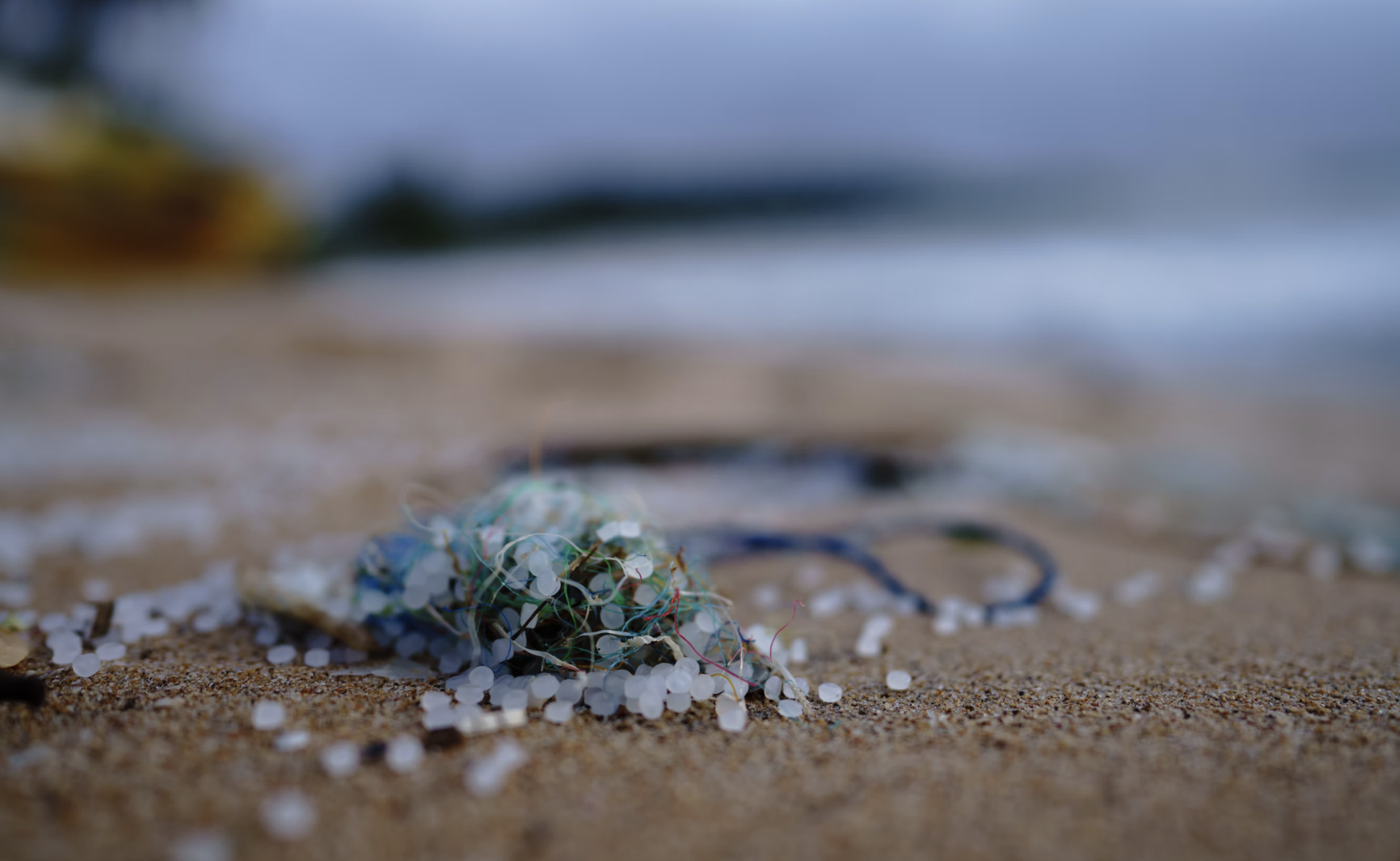
A new study shows that the Israeli part of the Levantine coastline of the Mediterranean Sea is contaminated with over two tons of micro-plastics
Last week the rains started falling in the Eastern Mediterranean, or Western Middle East. One man in Lebanon died because the storm sewers over-flooded from plastic bags and he drowned. The next day storm sewers in Tel Aviv opened to the sea bringing piles of plastic bits and wrappings along the beach. Oily tar and other pollution built up from the summer also joined the party. But just how much plastics is going out to sea from Lebanon, Turkey, Israel, Syria, Gaza, Lebanon or Egypt? Look to this first of its kind study to get an estimate of what’s probably happening in other countries spewing out plastics unchecked.
A new study by Tel Aviv University and the Mediterranean Sea Research Center found that Israel beaches are contaminated by 2 tons of microplastics. The most polluted Israeli beaches are in Tel Aviv and its northerly neighbour Hadera. The study’s findings show that the sources of plastic pollution include food packaging, single-use plastic products, and fishing nets.
The dangers of microplastics
Microplastics pair up with other volatile pollutants, compounding their effects in the human or any animal body. In light of the alarming findings, the researchers warn that given the current situation in Israel, exposure to microplastic waste, which is dangerous to the environment and human health, is inevitable.
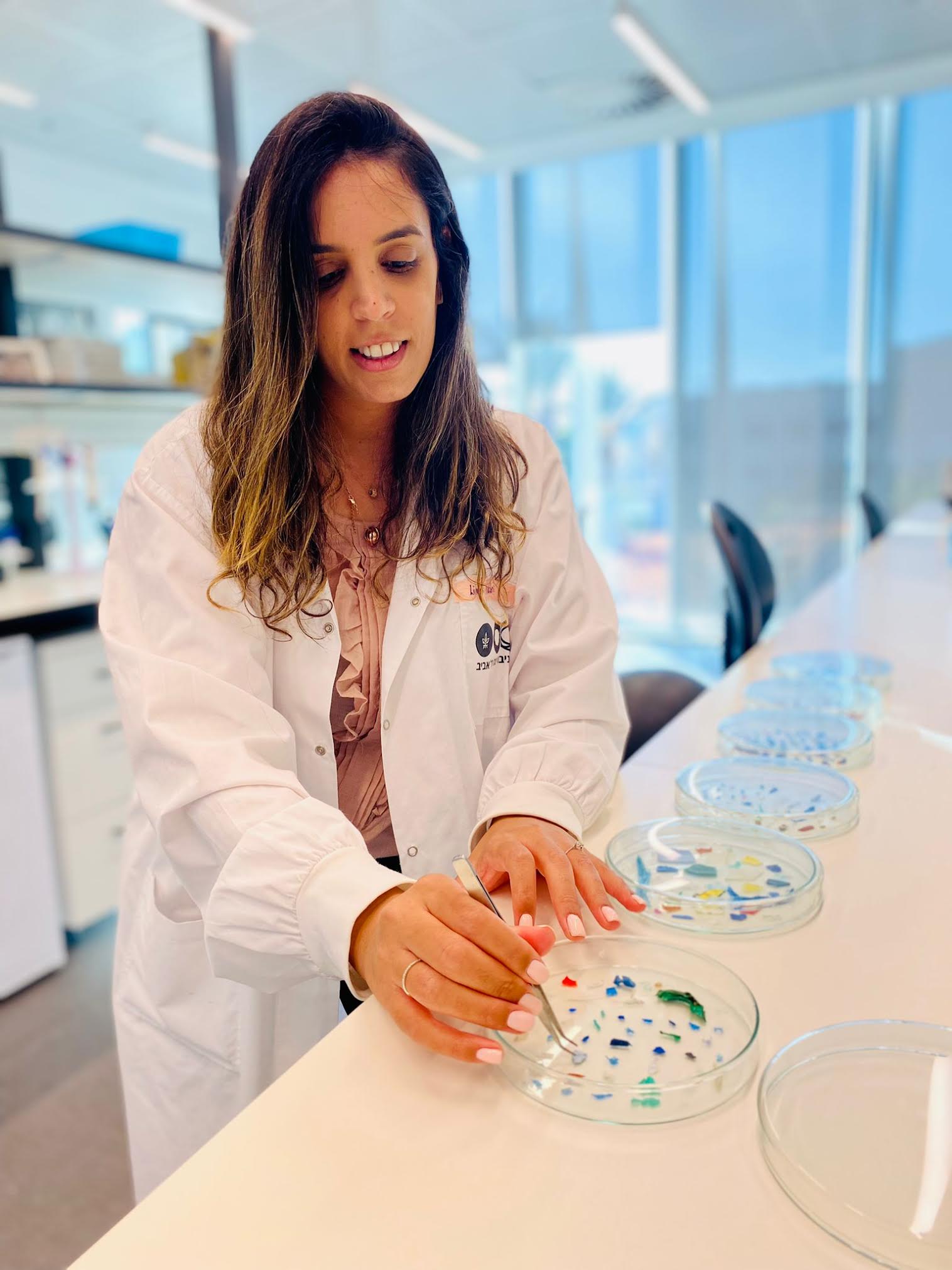
The study was led by doctoral student Andrey Ethan Rubin and master’s student Limor Omeysi from the laboratory of Ines Zucker. The study was published in the scientific journal Marine Pollution Bulletin.
Some people are turning to pink Himalayan salt, mined in the east on mountains, free from microplastics
Rubin explains that over the course of 2021, the researchers collected samples from six areas along the coast: Ashkelon, Rishon LeZion, Tel Aviv, Hadera, Dor Beach and Haifa. The samples were then taken to the laboratory where various analyses were performed, including particle count, mass measurements, image analysis, and chemical analysis to identify the polymer the plastic was made up of, as well as the elements adsorbed onto the microplastic particles.
“It was interesting to see that plastics of terrestrial origin, such as food packaging, were more dominant than plastics of marine origin, such as fishing nets,” says Rubin. “This indicates a need for better regulation of coastal waste.”
The research findings show that the beaches of Tel Aviv and Hadera were the most polluted of the beaches tested. The level of contamination on these beaches, which are located near stream estuaries (the Yarkon in Tel Aviv and Nahal Alexander in Hadera) was four times higher than that of Rishon Lezion and Dor Beach, which were the two beaches with the lowest concentration of microplastic particles. Still, even in the Dor Beach nature reserve, which is cleaned frequently, a considerable amount of microplastic particles were found.
Where do the microplastics come from?
Where do microplastics come from? Probably streams, rivers, storm sewers. The researchers’ assessment is that the high level of pollution on the beaches of Tel Aviv and Hadera and the fact that they are in close proximity to streams indicates that the stream’s waters carry microplastic particles with them into the sea, thereby intensifying the level of contamination on the beach.
For example, the researchers say that Nahal Alexander collects leachate from untreated sewage from the West Bank, as well as waste from agricultural and industrial areas located near the riverbeds. Similarly, microplastics accumulate at the Yarkon River from the industrial centers in Tel Aviv.
“Our research reveals that the Israeli coastline likely contains over two tons of microplastic waste,” says Rubin. “Environmental conditions slowly break this plastic down into even smaller particles. The smaller the plastic particles, the harder it is to remove them from the environment, and the more dangerous they are to the environment and to our health. The microplastic particles that drift into the sea are swallowed by fish, and their remains eventually reach humans.”
Zucker adds: “Plastic monitoring research in Israel is still lacking, and we must monitor the smaller plastic particles and additional environmental samples, such as sea water and streams, in order to better understand environmental patterns with regards to the presence of microplastics.
“In a practical perspective, regulatory steps are required in order to reduce Israel’s contribution to microplastic pollution in the Mediterranean.”
Websites made with the environment in mind are minimal like this page
Web 1.0 has brought us the opportunity to learn and know about everything in this world. For that reason, human possibilities widened, and technology evolved so much in a few years that now we can have everything at a simple touch on our devices. But along with this huge benefit, when Web 2.0 and Web 3.0 emerged, we found that these high-tech solutions were causing issues regarding sustainability.
In other words, the devices used worldwide are using enormous quantities of energy that are not regenerative, contributing to the current climate issues. On top of that, websites, too, are responsible for 3.7% of global greenhouse emissions. Knowing this, is there something to be done to decrease this percentage?
What are sustainable websites?
A sustainable website is nothing more than a clean, efficient and resilient page. Sounds simple and easy to do, but that’s not the case because websites need constant maintenance in order to function well. Contrarily, a wasteful web design includes too many photos, the file formats are all over the place, the files are too big, and even the written code on the website can create unnecessary file duplicates.
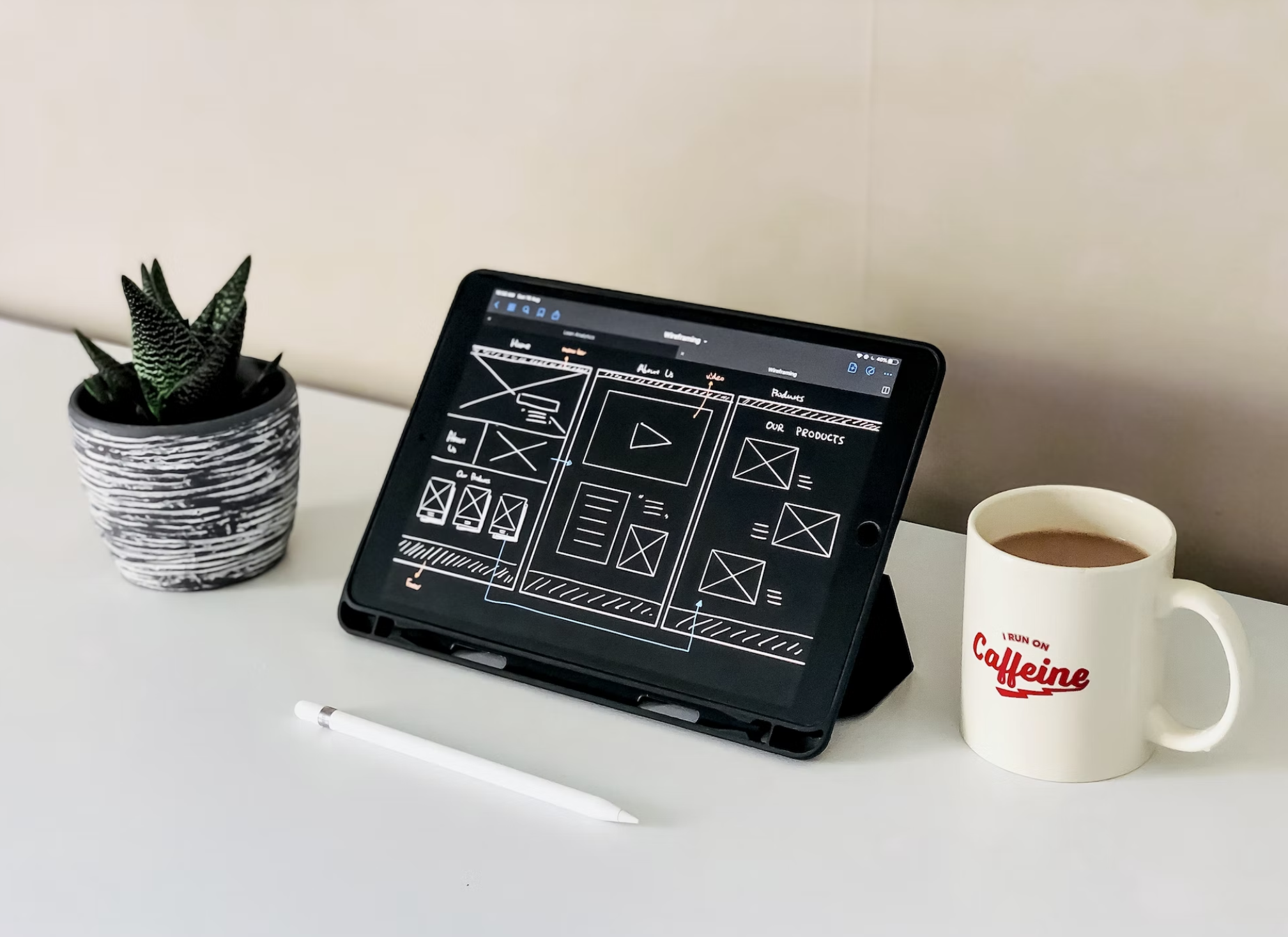
Websites should be optimized for search engines to function at their best, most efficiently. This is a wireframe mockup before the design process goes into effect.
So, a sustainable website has the following features:
It’s powered by renewable energy; wind farms, solar energy. It’s services are considered net zero.
It uses the least amount of energy and resources possible; or it replenishes what it uses by enhancing ecological projects, like rewilding.
It’s accessible and allows users to control their data;
It doesn’t exploit users;
It helps support an economy that respects the planet;
The consequences of poor website design
If a website isn’t constantly maintained, it can reach rock bottom in a matter of months. But what happens when a page is unsuccessfully launched? Well, such a website can:
Load too slow, resulting in a high bounce rate;
Lack the mobile-friendly design;
Make it difficult for users to understand or navigate;
All these elements will make users doubt the website’s reliability and immediately exit it because odd-looking websites are linked to malware. And it can be true since malicious sites are known to be designed in the same manner as trusted ones, but they’re often messy and easily distinguishable from the original ones. If you’re not aware of the malicious elements of such a website, you may experience a security outbreak. In that case, you can claim for data breach compensation in the UK to cover your financial losses or to recover from any psychological results.
The benefits of sustainable web design
While wasteful design can lead to data breaches and a lack of customer trust, sustainable web design does more than fix those issues. It can benefit any business to:
Reduce monthly bills due to less energy consumed;
Reduce carbon footprint since there’s less searching time;
Improve business efficiency and productivity because the workflow streamline is improved;
Comply with energy use regulations since many countries have started to constrain enterprises to adopt greener practices
Set apart from the competition since green companies are drawing more attention than regular ones;
Boost public image and brand recognition because the business fights for a cause;
By providing fast load times, superior image resolutions and simultaneous website use worldwide, businesses can become reliable regarding the use of customer data and contribute to a safer and greener internet environment. But how can you make your website more sustainable?
How to create a sustainable website, sustainably
Before starting your green journey, it’s essential to audit your website and clarify where improvements are needed. Start by recalling when the latest content and design update. If it was a long time ago and the designs seem outdated, people might have the impression you’re out of business. Then, take the time to analyse how easy your website is to navigate and how long it takes to load. Finally, evaluate your website’s readability and organising. If your customers are having a hard time understanding what you’re selling, they’ll rapidly exit the site.
Then, if you decide your website needs a change, try to improve these elements:
Optimise images to reduce file size. High-resolution files consume too much energy and take time to load, so you can try to reduce them through software tools that can maintain their quality;
Limit the videos on your website and use the low resolution to avoid slow website loading;
Improve the website performance by setting up catching (JavaScript or CSS) to increase speed;
Change the site navigation and make sure people can find the information they require when entering your page;
Choose a green web host that employs renewable energy. However, be aware that this sector is still developing, so finding such a reliable company can be challenging so take your time to find a green hosting provider;
Going the extra mile on SEO sustainability
However, after performing the audit and concluding your website is working decently, you may want to have a different approach and change your SEO strategy. An excellent SEO strategy will help people find relevant information quickly, which translates into less time surfing the internet’s pages forever. Which means more time finding you and what they need. When search engines are able to return the best results, the number of pages loaded reduces the energy required for this action, which can significantly make a difference.
Adopting a SEO strategy must be done according to your company’s characteristics. However, some tips can be easily applied to any type of business. Here are some aspects to consider changing for good SEO:
Write and use clean codes to make your website more efficient and to ensure it works on any device format or platform. WordPress is a good and low-cost, even free platform to build on. It’s open source so ongoing fees you will pay will be just server costs.
Mind the fonts you use because larger files demand more energy for storing, delivering and loading. Image sizes should be reduced because what’s great for print is too much to handle in web format, taking up server space and increasing load times.
Improve user experience (UX) design to provide high accessibility and valuable content delivery;
Optimise your content by paying attention to the URL of your website, titles, meta descriptions and headers;
If you are selling products and services, make real deal claims. Don’t pollute this planet. Think about plastics and that according to this Greenpeace report sent to us, plastics aren’t really recyclable. Help people make it better.
Wrapping it all up
The urgency of slowing down climate change has helped us discover issues in everything we use, especially the websites we browse. Since internet surfing is causing greenhouse gas emissions to increase, website optimisation is crucial to minimise the energy consumed on slow-loading pages and poor web design. What do you think about this strategy?
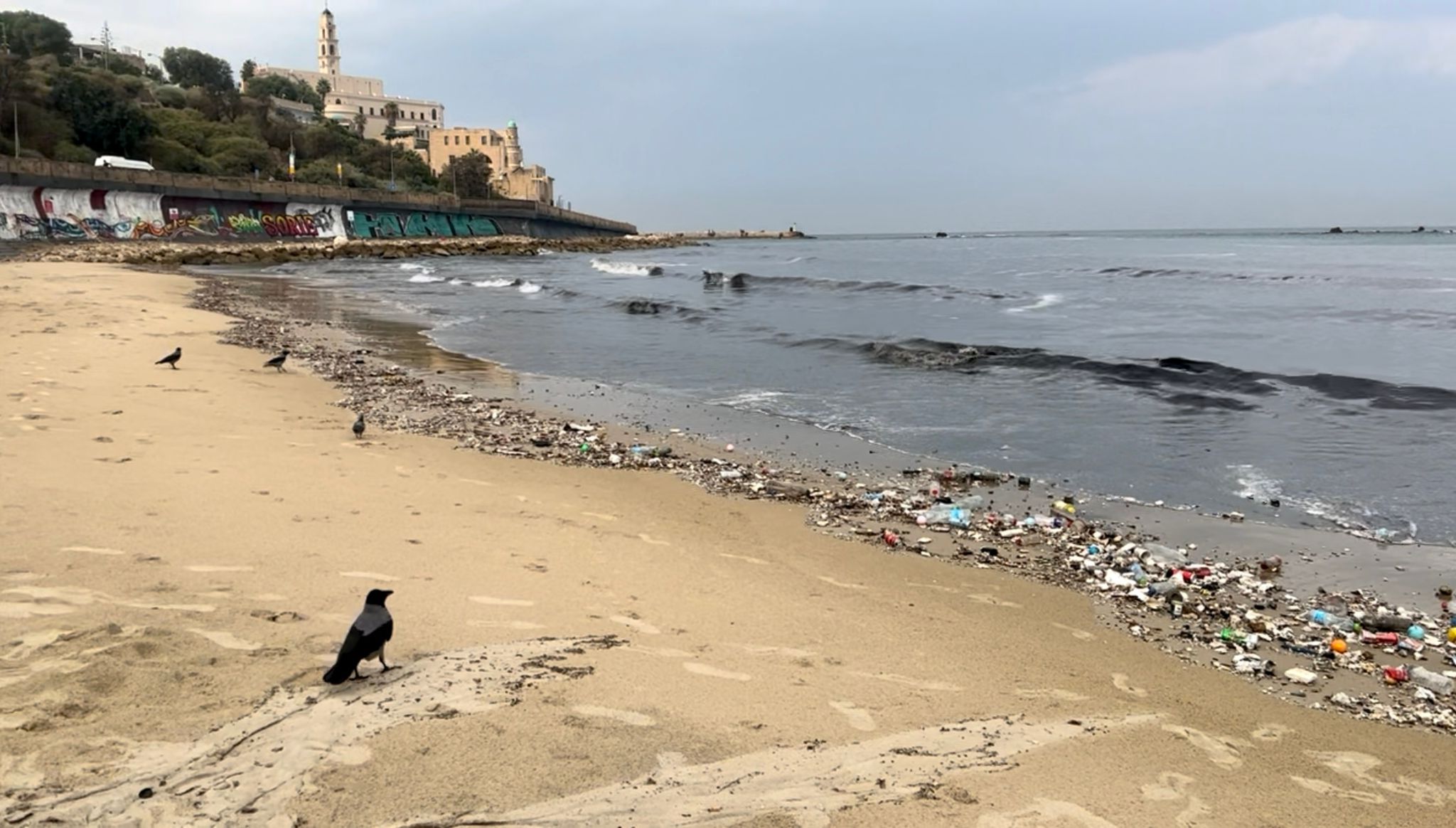
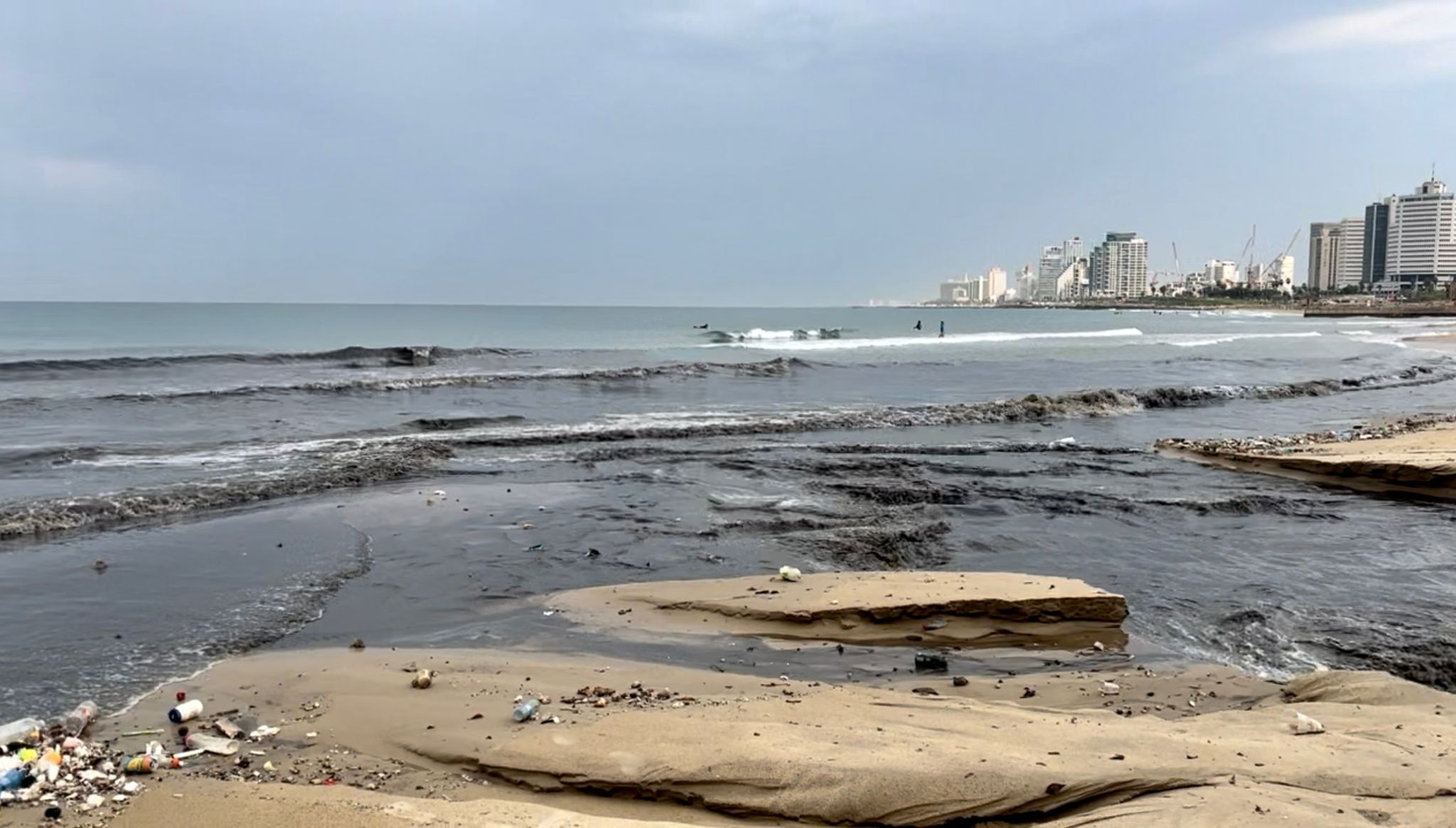
After the rains in Tel Aviv, storm sewers drain to the sea bringing piles of plastic trash with them.
It’s where kids surf, puppies play, people meditate and the best place in Tel Aviv for a morning walk. But Wednesday afternoon, after the rains, a Jaffa resident took a photo of plastics washing up on a Jaffa shore. The storm sewer was openly washing onto the sea bringing with it a mass of oily pollution and plastic bits that have built up over the city during the last 6 months or more since it last rained.
Photos and videos are courtesy of the surfer Mark Cook.
Karmi Soder, Cook’s wife, a resident of Jaffa sent us these images and the video Cook took. She did update us that a day after complaints were made the city had come to clean up the sea. “The municipality came yesterday and picked up all of the trash on the beach and we went paddling this morning and picked up more in the sea!” Karmi tells us.
What kind of plastic pollution is in the ocean
But what about the toxic oils and pollution? Who is monitoring whether it’s safe or not for residents to swim, surf or even paddle?
Storm sewers carry piles of plastic and what looks like oil after the rains, Jaffa, Israel
And the bigger question – How can we solve the plastics problem? was a question that came up in a Jaffa chatgroup called Friends of Jaffa.
Some thought about putting a strainer on the storm sewers to collect the plastic before it goes to shore. Another mentioned upgrading the pipes and sewage system.
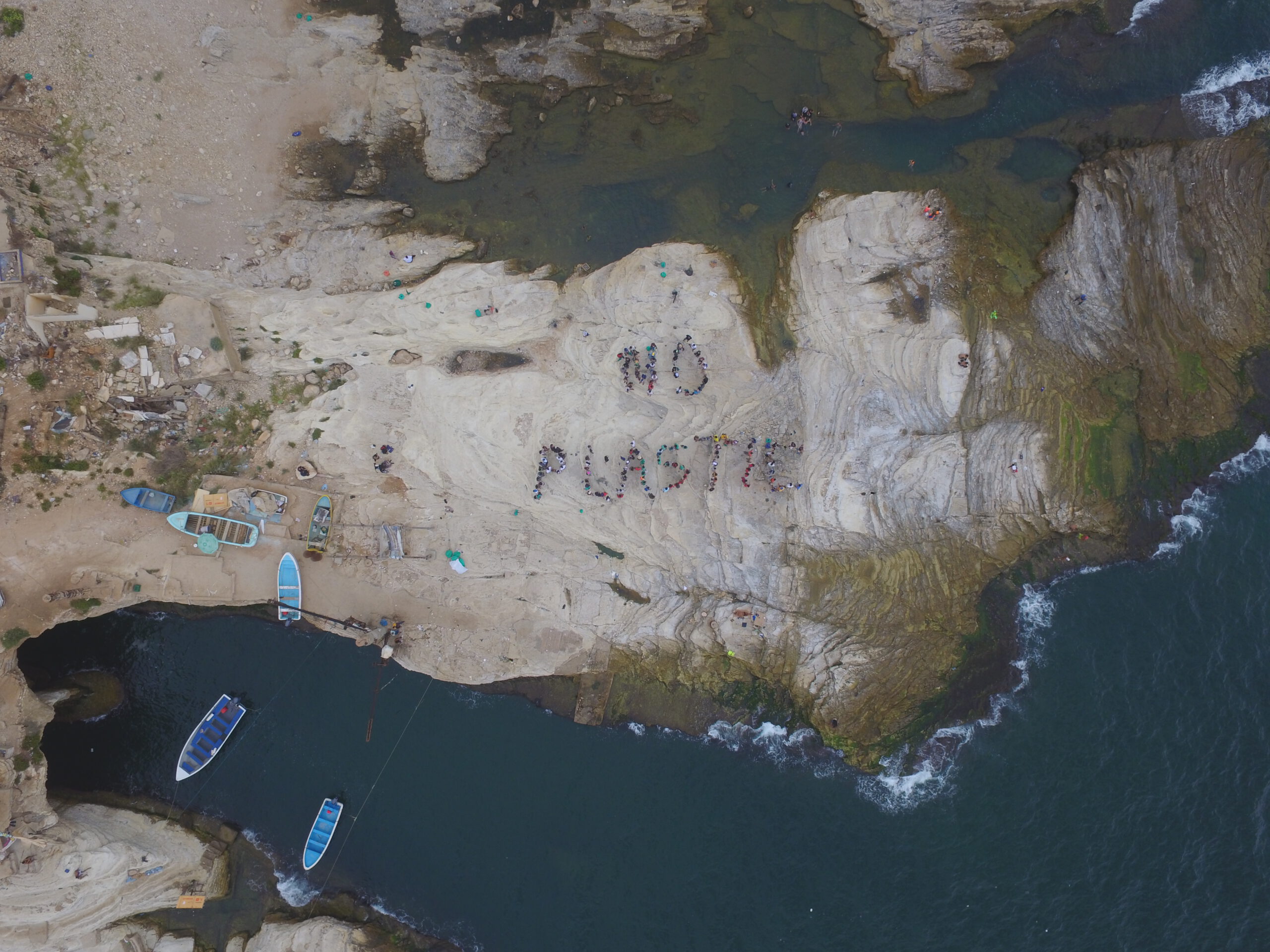
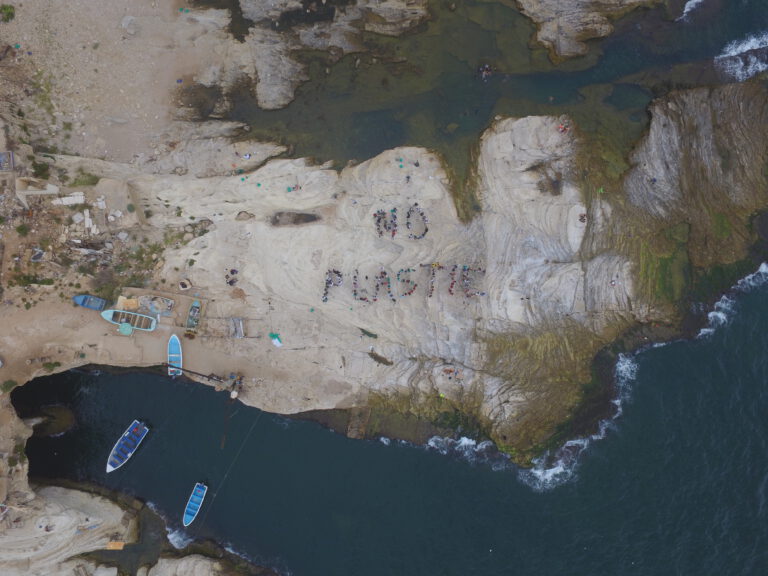
No plastics, drone image, Lebanon above the sea
Some mentioned the problems with recycling (most plastics in the US aren’t actually recycled) and others talked about simply reducing plastic use from the source. Lastly another mentioned the problems with buying fast fashion like clothes from Shein.
If we buy less plastic bottles and plastic packaging in food. If we don’t support fast fashion. All these add up to less plastic in mother’s breast milk, less plastic in our lungs and less people dying at the mercy of plastic. Read the story about the man who died in Lebanon because of a plastic bag?
Want to get involved in the Mediterranean? Contact EcoOcean. They are the leading environmental group working to save our seas. Their website is here.
Is this Iranian floating city The Line before Saudi Arabia announced building a 150-mile vertical city?
Humans – since they could – terraformed and transformed our land. We rerouted rivers, we cut chucks of granite from mountains, some of us grew roots of trees into footbridges. And today we see terraforming – outside the scope of humanscale and naturescale. Like the boondoggling, preposterous 150-mile city strip of mirrored city (or Hadrian’s Wall) called The Line in Saudi Arabia. The Line looks like it was “borrowed” from the playbook of Iranian architect Kamran Heirati of Kamran Heirati Architects.
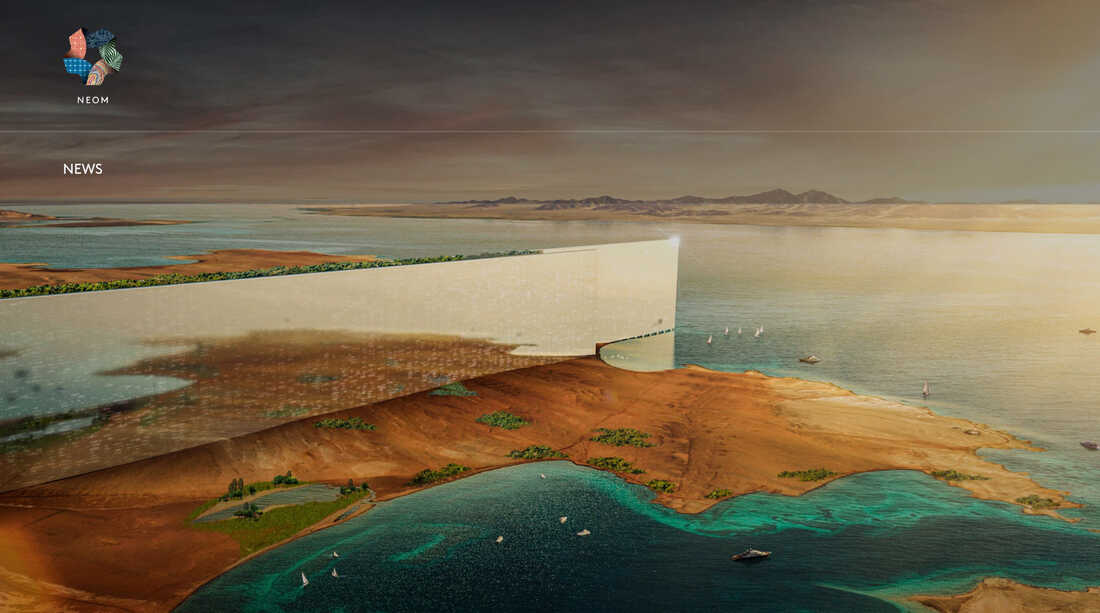
The Line, a 150-mile mirrored vertical, linear city, planned for the Red Sea, Saudi Arabia. Construction has started.This Iranian floating concept city is linear and long and juts out into the sea bearing a striking resemblance to Neom’s The Line
Back in 2018 Heirati envisioned a floating city for Iran and unlike Saudi Arabia’s project Neom, which is building the future for unknown tourism and rich people, Heirati considered the needs of the locals in his design and approach.
Green Prophet reached out to Heirati and while he was not familiar with The Line who said, “Actually despite the resemblance of the general idea to our project I am not sure they would have copied it.”
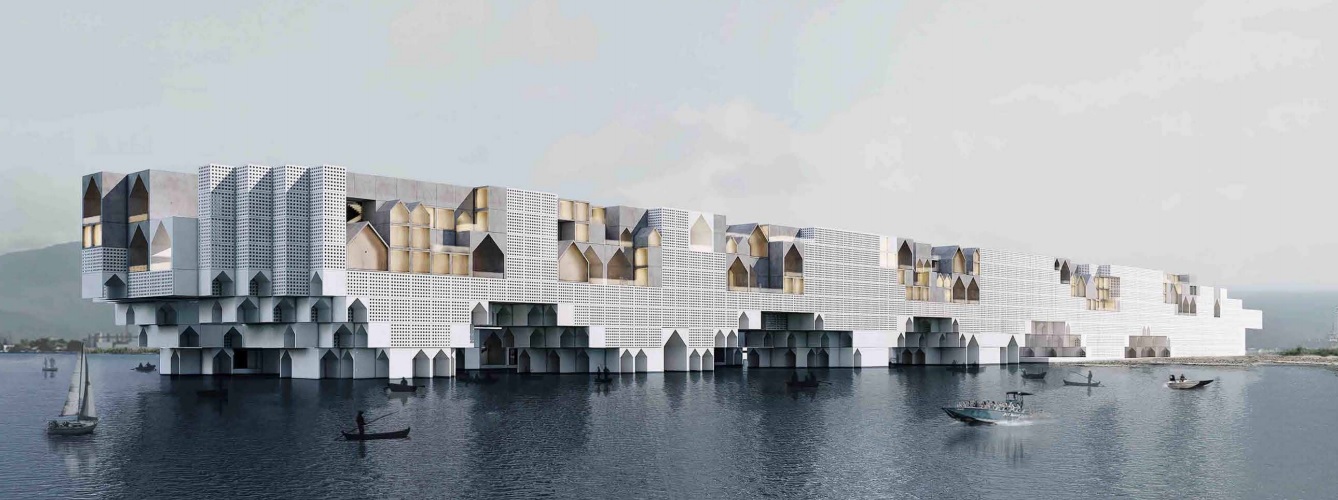
Kamran Heirati Architects has developed their own version of a futuristic city with locals in mind. Reforming our relationship with land and the sea.
What’s the floating city concept?
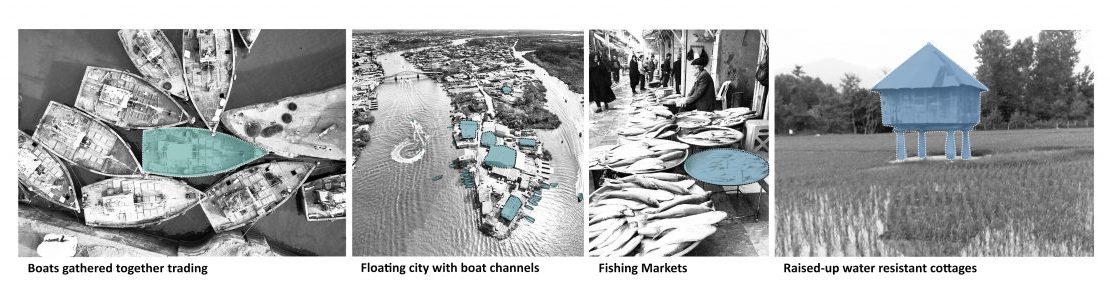
The floating city project is located on a beach town, Salmanshahr, in the north of Iran. Surrounded by the Alborz mountains and the Caspian sea, filled with jungles in between, northern Iran has a unique local culture where people lives relies on the green lands and the blue sea.
Poor economic conditions has led the locals to sell their lands with the idea of leaving the business and livelihood of agriculture and fishing to achieve a better plan life, which was a great mistake, says Heirati in his manifesto.
Now the municipality only promotes only the projects which can bring back the local lives while adding to the value of the region.
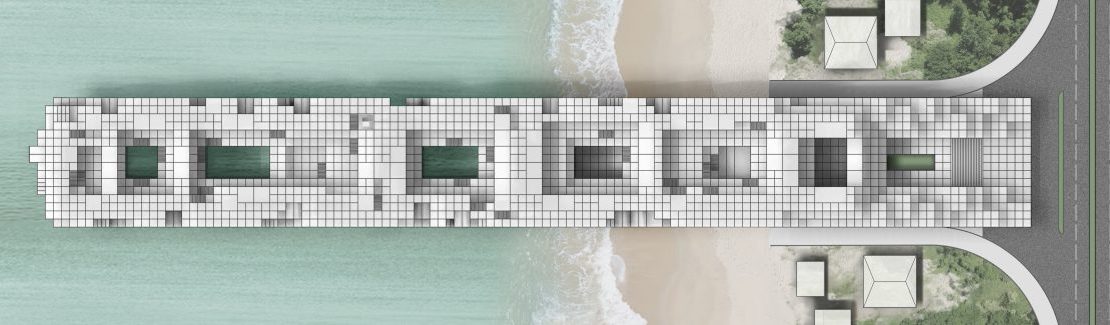
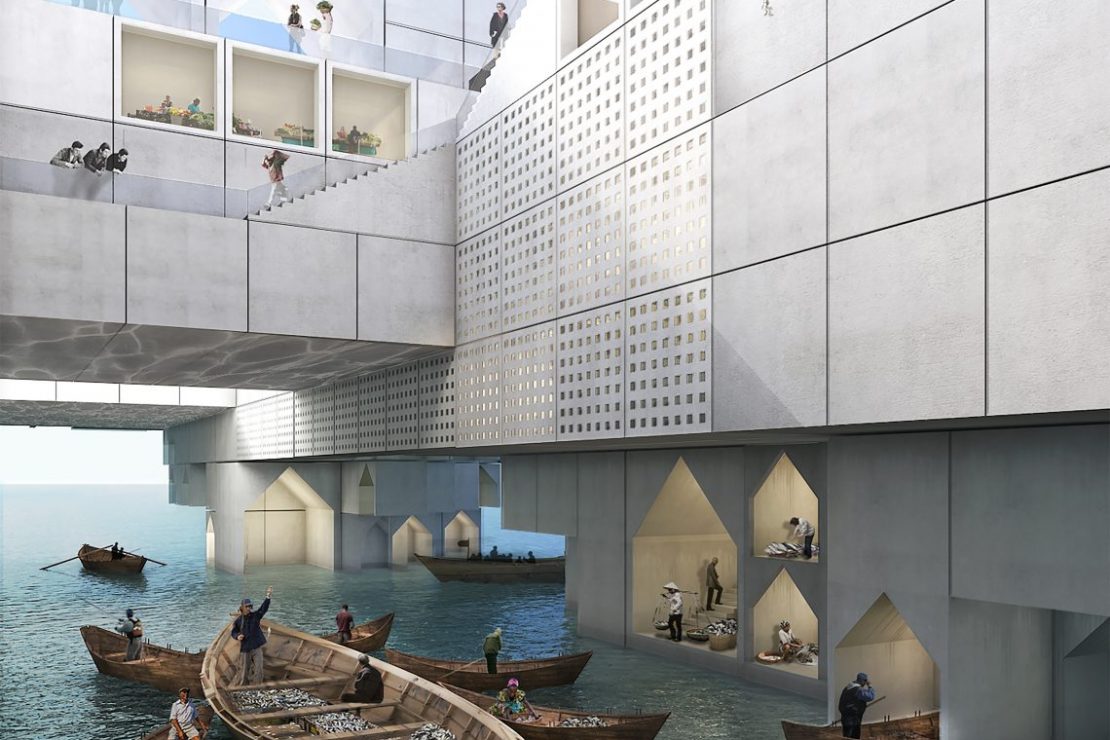
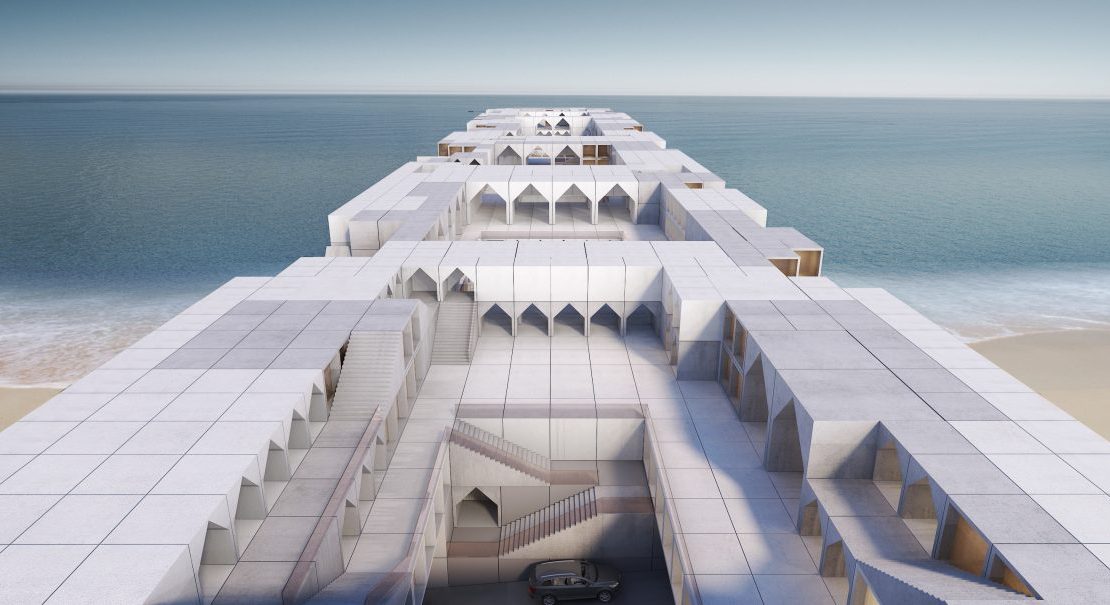
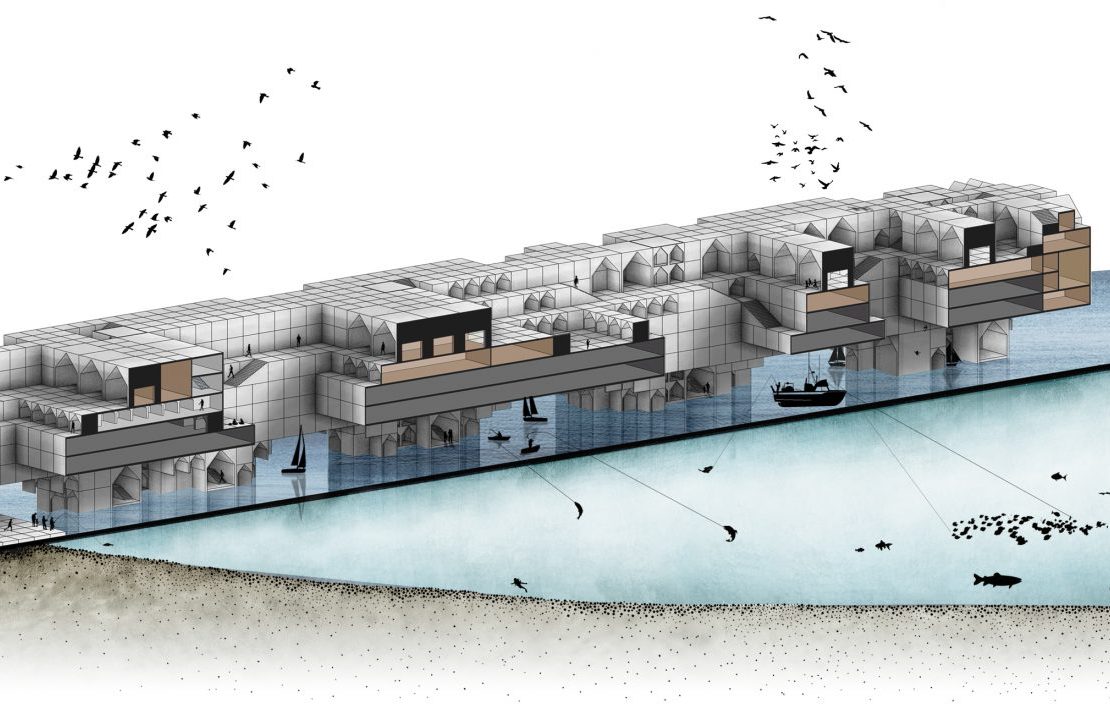
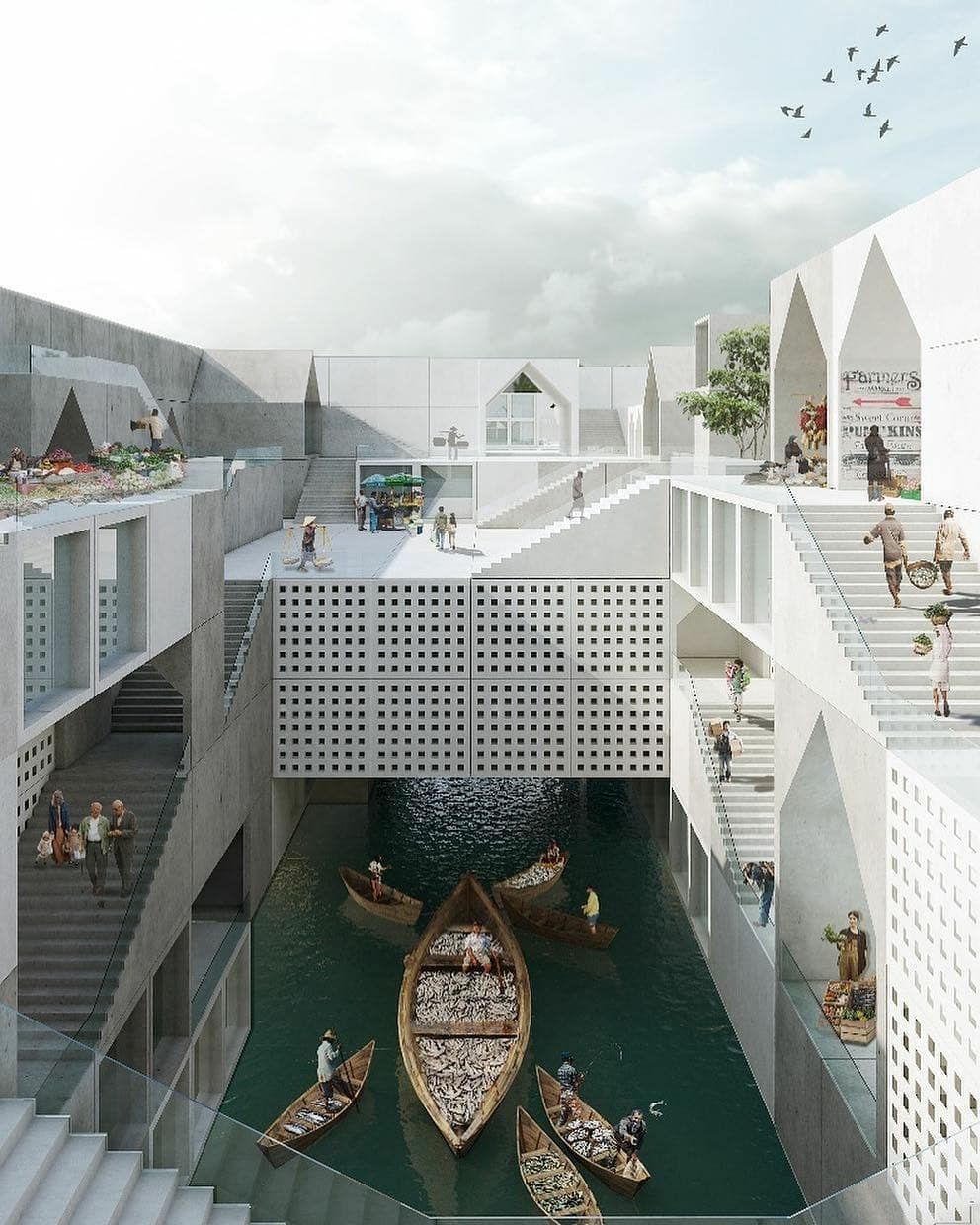
The floating city is a mixed-use complex, lying on the beach growing into the sea. It has combined all sorts of events in one place and gives the locals the opportunity of regaining their income through local markets which can attract many tourists and buyers to the complex. A hybrid city that gathers fishermen and farmers, to encourage the locals to preserve their lands and their livelihood.
And why a floating city?
In north of Iran, water has a deep reflection on local’s lives. A region with rice fields, boat channels, suspended buildings, in other words the whole area is somehow floated on water, people who rely on water, fish that live in the water, rice that grow in water, lands thoroughly irrigated with rainfalls and green jungles breathing through water; this is indeed a floating city, a station for fishermen and farmers who no longer need intermediaries to sell their products.
How the floating city is built
A shaved down version of The Line? Notice any similarities?
The floating city has a modular design with a corrosion shaped body which is due to the touch of the sea water. Three basic modules were extracted by studying and observing the local architecture of the region. A context where traditionally, most building have sloped roofs due to the climate of the region with heavy rainfalls, and lifted houses due to the wet grounds.
The modules are defined in 3.3.3 meters cubes, combined in all directions, creating a deck on water where all sort of lives meet (sort of like a Moshe Safdie concept at Habitat ’67). The complex is equipped with all sorts of accesses including pedestrians, car and bicycle roads and of course boat channels which allow the users experience the old local experience of transportation in the north of Iran through water.
The floating city enables one to interact with sea in so many different ways. This complex has different varieties of openings towards the sea. You may see the water through looking down the voids, from your private window, while standing under the covered terraces at the end of the local markets, while you’re on the top of the project, standing on the deck wide open around you, when you are in a boat passing through, going down the stairs of the courtyards and even waiting in the elevator going up or down. Thousands of images of the sea are captured in this city; and they are not just images since people are living throughout this deck.
Passive cooling elements
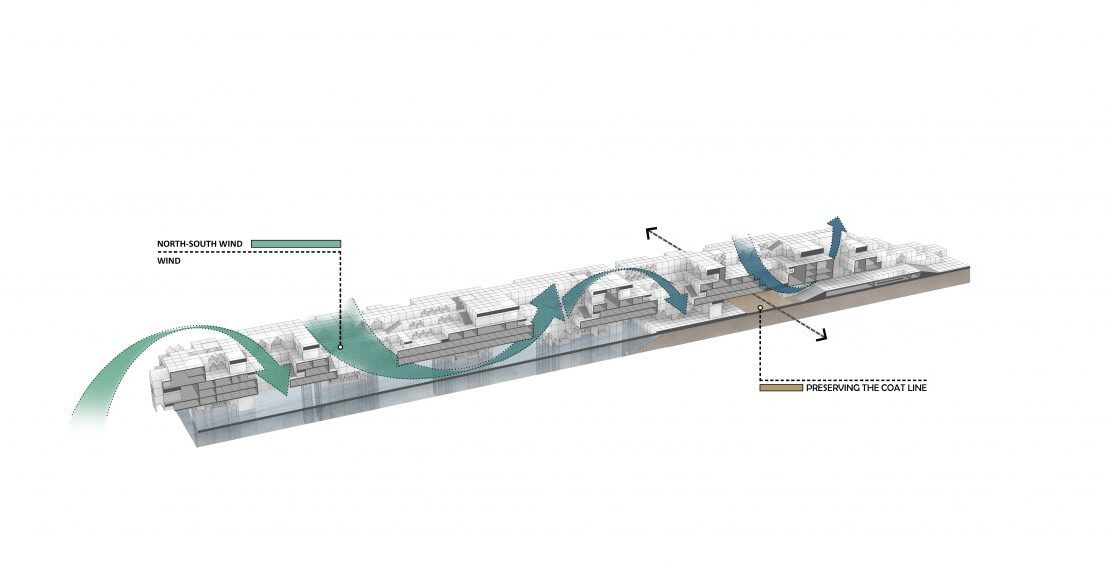
Iranians can be credited for inventing passive cooling. Check out the windcatchers of Yazd. Due to the high humidity, natural ventilation (in north-south direction) is a must which happens easily throughout the deck as shown in the diagrams. To preserve the coast line, the project pulls itself up to let the coast line pass through it. As a heterogeneous city all functions are located in all sections of the project, but yet organized around main voids, designed as courtyards.
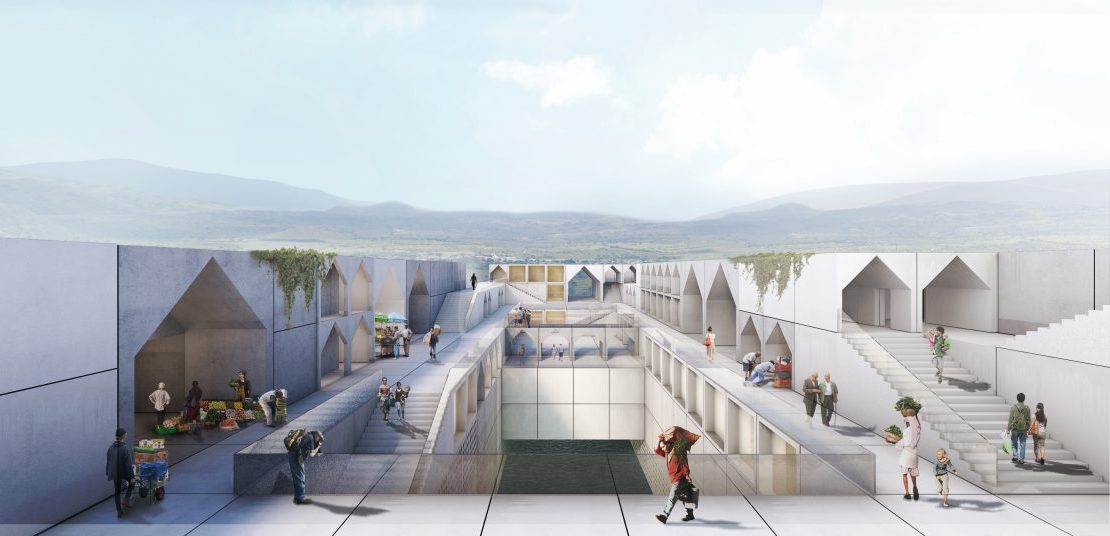
Just like old Iranian heterogeneous cities one may pass through the local bazaars and experience narrow paths with sheltered walkways which lead to wide vast open spaces, then again enter a closed square full of people selling, buying, passing and living. One must walk throughout this deck to realize how diversely and yet unified this city is holding locals, tourists, buyers, producers, distributors all next to each other.
“Sitting in your private room with sea view towards you, meanwhile you can simply exit your house to reach the local markets or to get on a boat for a trip, only in 5 minutes. In this complex, local markets are organized in two levels. Fishermen and floating fishing markets are located in the lower levels touching the water and local markets (open and semi-open) and handicraft shops are settled in the upper levels. All local sellers can interact with one another through vertical shafts.
“Meanwhile visitors, buyers, tourists etc., are as well involved in all scenarios.
“A fisherman sitting in his boat selling his fish just caught from the sea brought here down the floating city, raises up his head says hi to his farmer neighbor upstairs in local markets selling crops.”
Who proposed the first linear city?
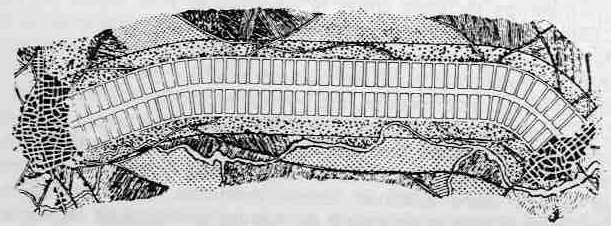
A linear city sketch by Arturo Soria
While First Nations people of North America lived in Long Houses fit for a few families or more, the modern concept of linear cities started in the late 19th century by Spanish engineer and philosopher Arturo Soria y Mata also known as Arturo Soria. The heart of his idea was building a light rail line, which was supposed to link Madrid with several settlements in the surrounding area.
Soria was an internationally important Spanish urban planner whose work remains highly inspirational today. He is most well known for his concept of the Linear City.
This video shows the design for The Line, a 550 yard-tall, mirror-clad skyscraper designed to house nine million desert-dwellers in Saudi Arabia.
The linear city, which will be 150 miles and about 200 yards wide, was launched by Saudia Arabia’s crown prince Mohammed bin Salman and is described as “a revolution in civilization” and its part of Vision 2030 for Saudi Arabia.
With a footprint of about 25 square miles, it will house people from all walks of life who will be able to walk to amenities within a five-minute walk. But other infrastructure will make it easy to travel from one end to the other in twenty minutes, according to its designers, taking cars out of the city.
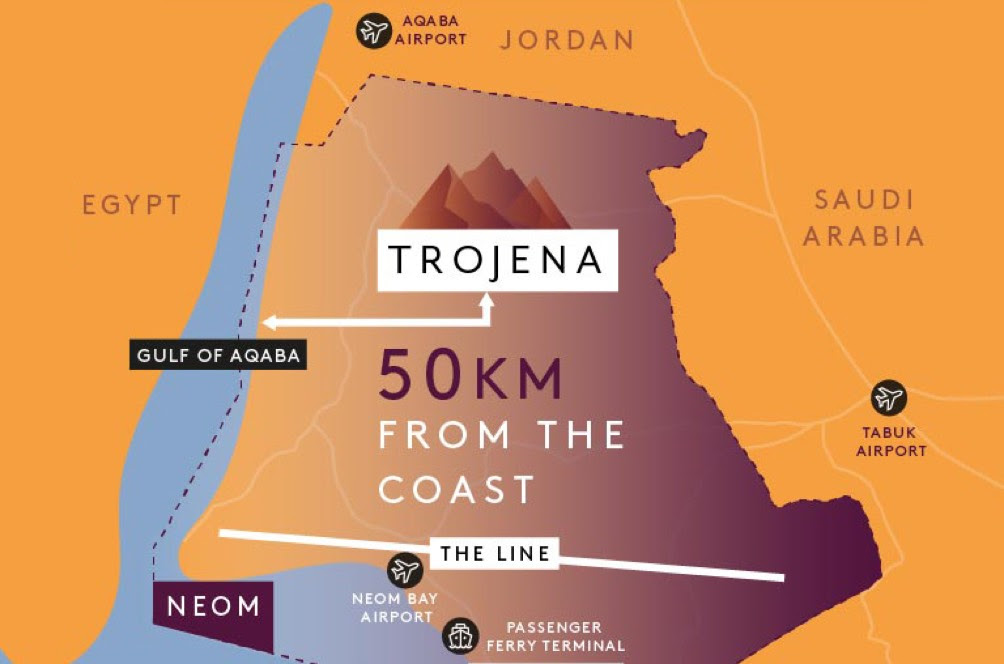
The Line is part of the Neom initiative, along with Trojena and and Saudi Arabia’s Vision 2030 to diversify its economy away from oil.
All-women Aliph Capital secures $125 million USD investment from ADQ
Aliph Capital, an all women venture fund announced that it has secured a US$125 million investment for its maiden fund, Aliph Fund I (LP), from ADQ, an Abu Dhabi-based investment and holding company. No portfolio companies have been announced yet.
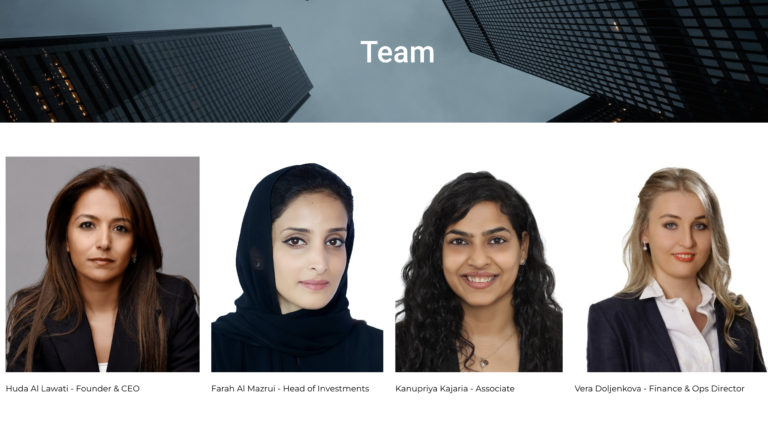
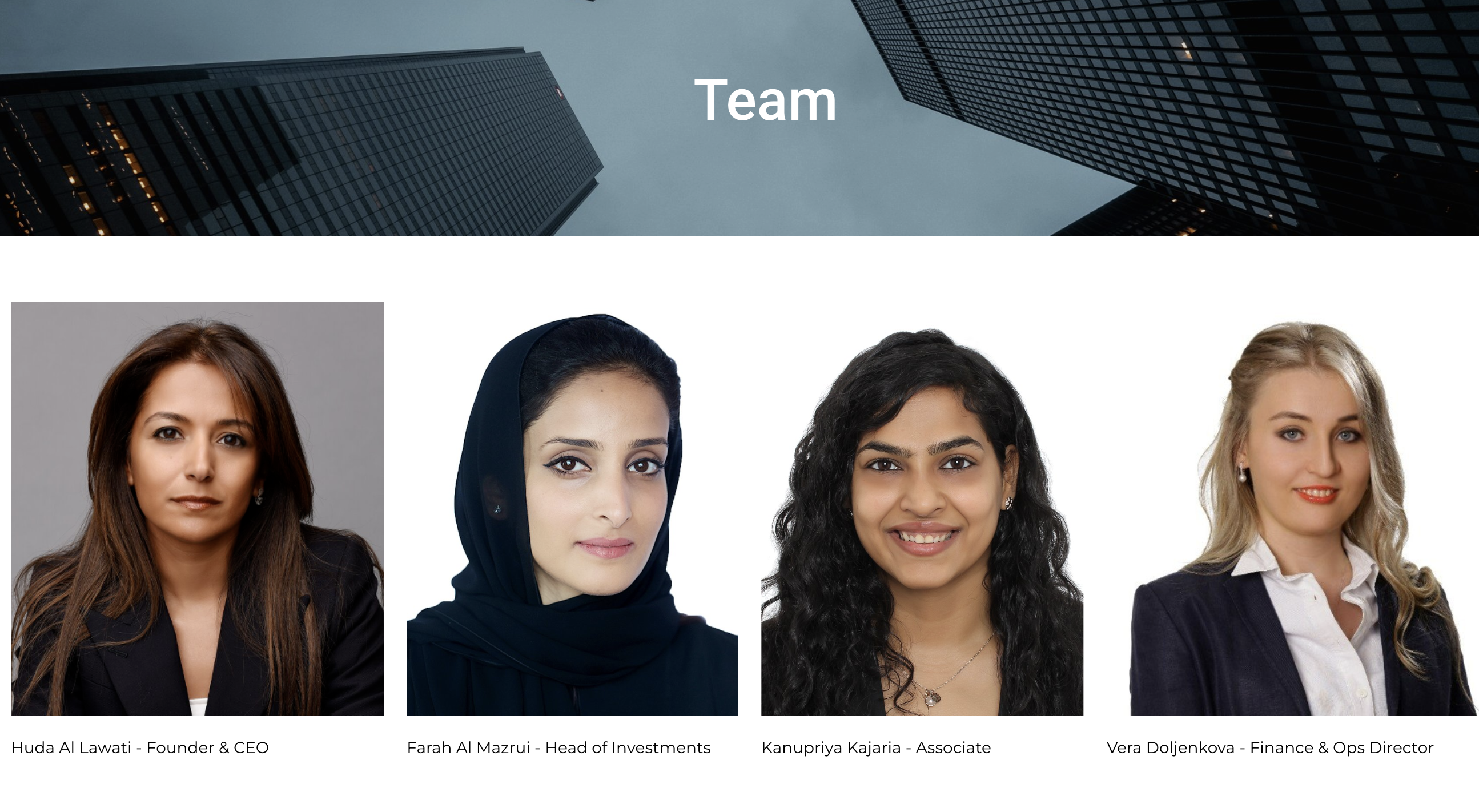
Based in Abu Dhabi Global Market (ADGM), Aliph Capital is an alternative investment manager founded by Huda Al-Lawati, a leading private equity professional with over 20 years of experience in emerging markets. Aliph Fund I (LP) is a US$250 million target private equity fund domiciled in ADGM aiming to invest in high quality mid-sized companies in the UAE and across the GCC to accelerate their expansion and growth trajectory.
Huda Al-Lawati, Founder and CEO of Aliph Capital, says “The timing is perfect for GCC-based private equity to invest in the region’s midmarket growth stars, who – when fully equipped with digital and tech enablement levers – will generate significant returns and power the ongoing diversification and transformation of the GCC economy.”
Head of Investments, Farah Al-Mazrui enjoyed presenting the masterclass on private equity at Davos in the Desert, #FII6 #ImpactonHumanity
Aliph Capital will seek to acquire sizeable, active positions in privately owned mid-market companies across the GCC that possess robust business fundamentals to realize attractive returns, through active ownership combined with strong value creation opportunities, institutional governance standards and digitalization.
Aliph has the investment and operational expertise to accelerate growth and scale up in companies by helping founders adopt technology platforms and tools to grow revenues, optimize operations, and cut costs to ensure the long term sustainability of its portfolio companies to generate attractive returns.
In short, we like women because they are good at cooperating and see the long-term value in sustainable businesses.
Murtaza Hussain, Chief Investment Officer from ADQ, commented: “Our investment in Aliph Capital underlines our commitment to delivering on a financially driven mandate that creates long term value for Abu Dhabi. Building a strategic partnership with an Abu Dhabi based private equity fund dedicated to serve SMEs further supports our aim to accelerate sustainable economic development and growth within the UAE and region. Together, we will work in partnership to capture growth opportunities, which complements our core portfolio and enable us to generate attractive, risk-adjusted returns.”
About Aliph Capital
Established in 2021, Aliph Capital is a private equity fund manager focused on midmarket and emerging high-growth enterprises in the Gulf region. Aliph aims to provide growth capital to attractive companies across the Gulf region with an active ownership model focused on growth, sustainability and bridging the old and new economy gap through digitization and tech enablement.
Aliph invests in businesses which create positive economic, social and environmental impact for GCC nations, while generating attractive returns.
About ADQ
Established in 2018, ADQ is an Abu Dhabi-based investment and holding company with a broad portfolio of major enterprises. Its investments span key sectors of the UAE’s diversified economy, including energy and utilities, food and agriculture, healthcare and life sciences, and transport and logistics, amongst others.
As a strategic partner of Abu Dhabi’s government, ADQ is committed to accelerating the transformation of the Emirate into a globally competitive and knowledge-based economy.
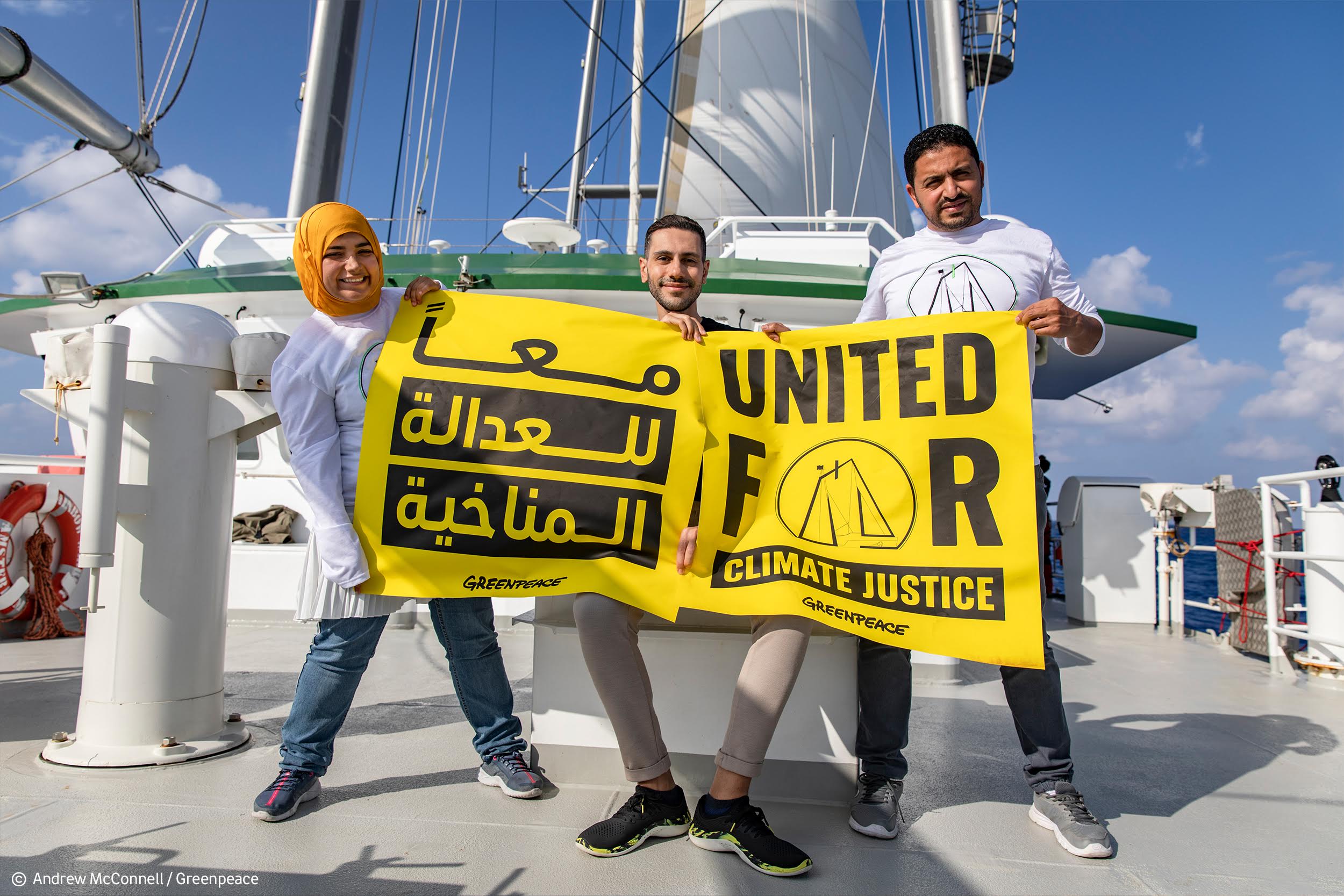
Youth climate representatives from the Middle East and North Africa have arrived at the port of Alexandria, Egypt onboard a Greenpeace ship to put climate justice high on the agenda at the 27th UN climate summit taking place in Sharm el-Sheikh in November.
As part of the United for Climate Justice ship tour they will journey the country’s shorelines and visit communities and green leaders in the lead up to COP27.
Youth climate representatives from the Middle East and North Africa have arrived at the port of Alexandria onboard a Greenpeace ship to put climate justice high on the agenda at the 27th UN climate summit taking place in Sharm el-Sheikh in November. As part of the United for Climate Justice ship tour they will journey the country’s shorelines and visit communities and green leaders in the lead up to COP27. Ghiwa Nakat, Executive Director of Greenpeace MENA:
“This is a critical moment in the history of the fight for climate justice, especially since this year’s COP27 conference is being organised in Africa and hosted by Egypt – giving a key role to countries from the Global South that have been least responsible for emissions but are suffering the most from the impact of climate change.”
The young people on board have recently taken part in a week-long climate justice camp in Tunisia that brought together nearly 400 youth and climate champions from the Global South. The United for Climate Justice ship tour is providing a platform to elevate the voices and ambitions of these climate champions who are living in some of the world’s most affected regions.
These young climate leaders are looking to promote systemic change around climate adaptation, justice, access to energy, and loss and damage associated with the disproportionate impacts of the climate crisis.
Tariq Al-Olaimy, social entrepreneur and youth leader from Bahrain: “At COP27 we need to raise the volume in the call for climate justice in small island states, the Middle East, Africa, and beyond – enabling a global just transformation towards a post-growth, post-crisis, and wellbeing centered economy.”
What is Cop27
The 2022 United Nations Climate Change Conference, more commonly referred to as COP27, will be the 27th United Nations Climate Change conference, to be held from 6 to 18 November 2022 in Sharm El Sheikh, Egypt.
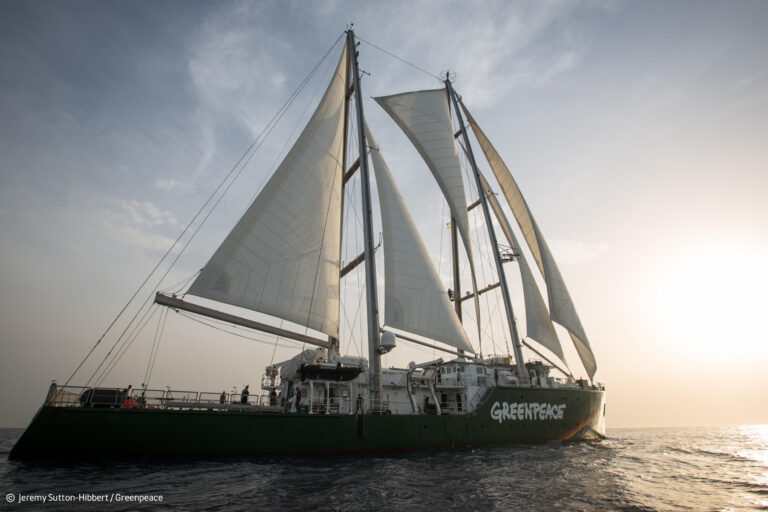
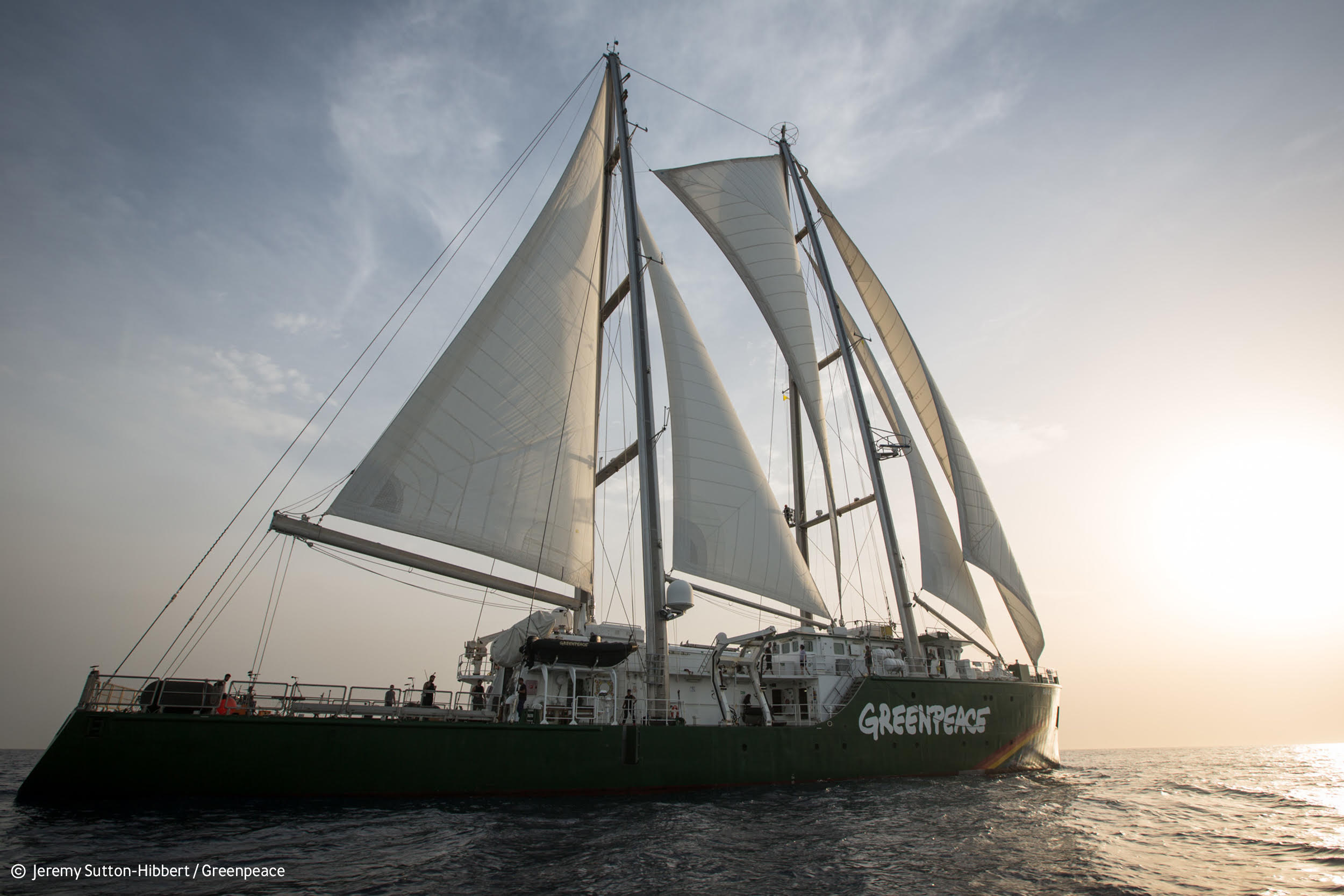
And Greenpeace plans to represent! As Greenpeace sailed in front of the historic city of Alexandria, the wind-powered Greenpeace ship Rainbow Warrior and the youth leaders on board came with a message calling for climate justice.
The United for Climate Justice ship tour will continue its journey through the Suez Canal and is planned to stop for community activities and join green initiatives in the city of Hurghada on the northern coast of the Red Sea. All in the lead up to COP27 that starts in Sharm el-Sheikh in early November, when the youth leaders will take part in the activities of the climate conference.
Nouhad Awwad, Greenpeace MENA campaigner on board the United for Climate Justice ship tour:“We have a responsibility to speak up for those who are on the frontline of the climate crisis. And it is the responsibility of rich countries and historical emitters to provide the needed finance for our adaptation efforts in the global south, as well as compensation for loss and damage resulting from climate change”
As part of its campaigning activities ahead of COP27, Greenpeace MENA will also be publishing a report highlighting the impacts of climate change on communities and ecosystems in the Middle East and North Africa region.
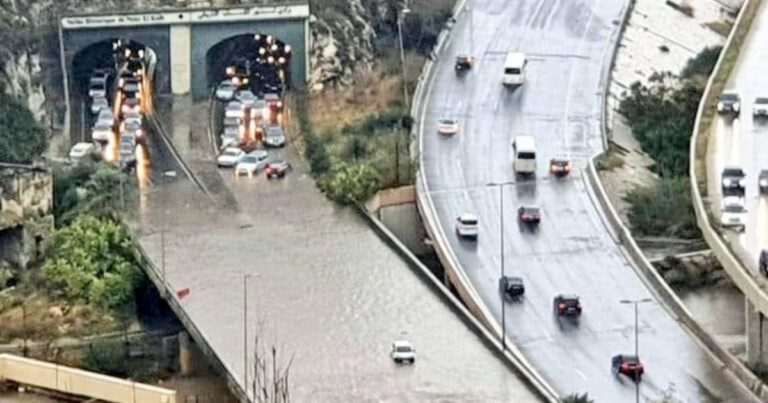
This week was a sneak peak into what the rainy season will be like in Lebanon. In some cities floods engulfed cars up their windows, while in others the roofs barely poked through. And this is just the start of the season and a taste of the weather effects from climate change. A latest tragedy is that a man died in his car, and members of the acting government are blaming plastic bags for choking the storm sewers:
A man just died from the flooding and the acting government officials, the Minister of Public Works in the caretaker government, Ali Hamiyeh, retorted that it happened because the drain sewers were clogged with plastic bags.
Lebanon is not functioning without a government. And each unit is blaming the other.
Corruption leading downfall in Lebanon
In an interview with Voice of the People, Hamiyeh said, “Our teams have turned into waste removal teams, and the ministry and its teams cannot play the role of others.” He added: “We, as the Ministry of Works, cannot turn to a waste removal company while the waste removal companies receive their money.”
The power is only on an hour or two a day, storm drains are clogged with trash leading to rainwater flooding, munitions stockpiled explode with no warning and people are basically holding up their own banks at gunpoint to withdraw money from their own accounts.
Lebanon, in short, is a country with so much potential to lead the Arab world and the Middle East in the middle ground (look at their art and craft movement) but citizens are hardly holding on to the basic needs of life. Lebanon is enduring a humanitarian catastrophe created by a financial meltdown. It is in bad times like these where terror groups and infidels can jump in.
If the Lebanese got it bad, Syrian refugees in Lebanon have it worse. They now face a cholera epidemic. Transmitted through contaminated water, the diarrhoea, vomiting and rapid dehydration caused by cholera can be fatal without treatment.
Easy solutions for solving the plastics problem?
It’s important that Lebanon or anywhere has an election free of corruption and that the right leaders get into power, stay in power and that these leaders work hard to not be assassinated. No one can think about climate goals if they are running a generator to keep their fridge cold or the lights on.
Invest in better journalism
No Middle East countries except for Israel have free and open speech. Whistleblowers over pollution in Turkey, Iran and Syria get threatened by jail, they killed or they are isolated from their society. Let’s see some Go Fund Me campaigns to help the Lebanese invest in better journalism. Or parachute in and try it yourself. It’s a dangerous job though.
It’s pretty impossible but you can try. Stop buying bottled water and soft drinks. Make your own natural juices instead. Drink more bottled beer. LOL. Take reusable sacs and fill up your own dry goods at the nuts and seeds vendor near you. Middle East markets are full of your local spice guys. Find your favorite. On that vein, don’t buy plastic-covered fast food or frozen food. Make your own and avoid buying baked goods that come in those hard plastic cases. Tell your favorite bakery you will come back to shop when they start serving their sweet things in a paper box.
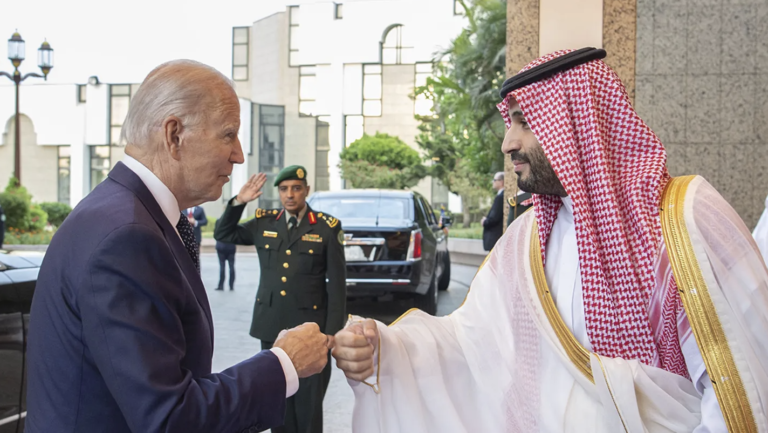
Saudi Arabian Crown Prince Mohammed bin Salman and Joe Biden at Alsalam Royal Palace in Jeddah, Saudi Arabia on July 15
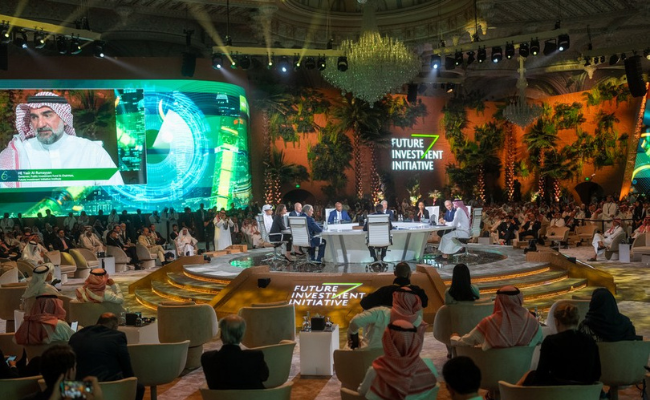
America’s President Biden is sending a message to corporate America by not sending high profile US government officials to Saudi Arabia’s business conference this week, the Future Investment Initiative. The 3-day event, nicknamed Davos of the Desert, is opening Tuesday today, but US officials will be absent.
As we speak, protestors against The Line, Bedouins who belong to the land, are in jail facing a life sentence or the death penalty. A Bedouin brother was killed in 2020 protesting the construction of the boondoggle that’s supposed to bring “sustainability” and a renewable future to the world, care of Saudi Arabia –– known for its carbon impacts from oil, environmental destruction and gross violations of human rights.
What is Davos in the Desert?
Hob-nobbing at Davos in the Desert
Saudi Arabia and the US have some disagreements on energy, and Saudi Arabia and its oil cartel OPEC Plus, led by Russia and Saudi Arabia, has cut oil and gas exports to America, benefitting Russia. This decision will hurt Americans even more, as prices rise at the pumps and the invasion of the Ukraine by Russia continues. Biden has said to the Saudis that there will be “consequences”.
Meanwhile, where US officials fear to tread, investment banks Chase, JPMorgan, Goldman Sachs and Wells Fargo will be there along with Blackstone Group and Bridgewater. Former Trump officials like Jared Kushner is expected to be there too.
If your mother, father or grandparents are attending the event, send them this link about The Line and the Bedouin who live there. Associating with regimes and taking their oil money makes you complicit in their crimes.
Drone footage shows construction of the The Line is underway. Meanwhile Bedouin who live there are sentenced to death.
White House press secretary Karine Jean-Pierre told American companies to consider “reputational concerns that can arise from public policy choices made by host countries” when investing.
She says, “the decisions that OPEC+ made just last week is — was, we believe, sided with the Russians and was against the interests of the American people and the families around the world. We believe that decision is going to hurt and harm low- — you know, low- — lower-income economies. And it is a — it was a misguided — and it was a mistake and a short-sighted decision.”
Meanwhile, I highlight the problems with large and multinational corporations and research groups. The head does not know what the tail is doing, or does, and doesn’t care: HEC Paris (claiming solidarity with the Ukraine people on its website), Springer/Nature and Stanford University, California are partners at the event. Why? Saudi Arabians are freaking wealthy and people, universities and companies want their money as we continue living a carbonised life on oil.
The same idea rings true for American companies who invest in or do business with companies that pollute or damage the climate. Social media has showed how easily reputations can be compromised.
Saudis also respect and listen to western advice.
The Trump administration meanwhile set a different tone with Saudi Arabia: it encouraged business between the superpowers and it led peace efforts among Middle East countries.
Meanwhile conference organizer Richard Attias told the press that he was turning down American businesses eager to attend due to lack of space.
Also on the Biden Administration’s mind: tensions are still flaring from the 2018 killing of Saudi journalist Jamal Khashoggi, an American resident at the time of his death. Jamal Ahmad Khashoggi was a Saudi journalist, dissident, author, columnist for Middle East Eye and The Washington Post, and a general manager and editor-in-chief of Al-Arab News Channel who was assassinated in Turkey. Khashoggi had been sharply critical of the Saudi rulers, King Salman and Crown Prince Mohammed bin Salman.
Not all money is the same. The people that come with it and who are behind it matter. That has always been the case and remains the case and we are reminded of it from time to time. Like right now.
Want to be part of Saudi Arabia’s growth while not damaging the planet future? It’s an in-depth study, and difficult to read but this Nature study’s author Haider Mahmood and associates invested much time and research on how Saudi Arabia can achieve its sustainability goals, sustainably.
Also globetrotting investment bank executives: a couple of weeks from now superpowers will be meeting across the Red Sea to the UN Sharm el Sheik Climate Change Conference in Egypt. Consider bringing your investment bank there to see how money can drive the world in a positive way for people and climate.
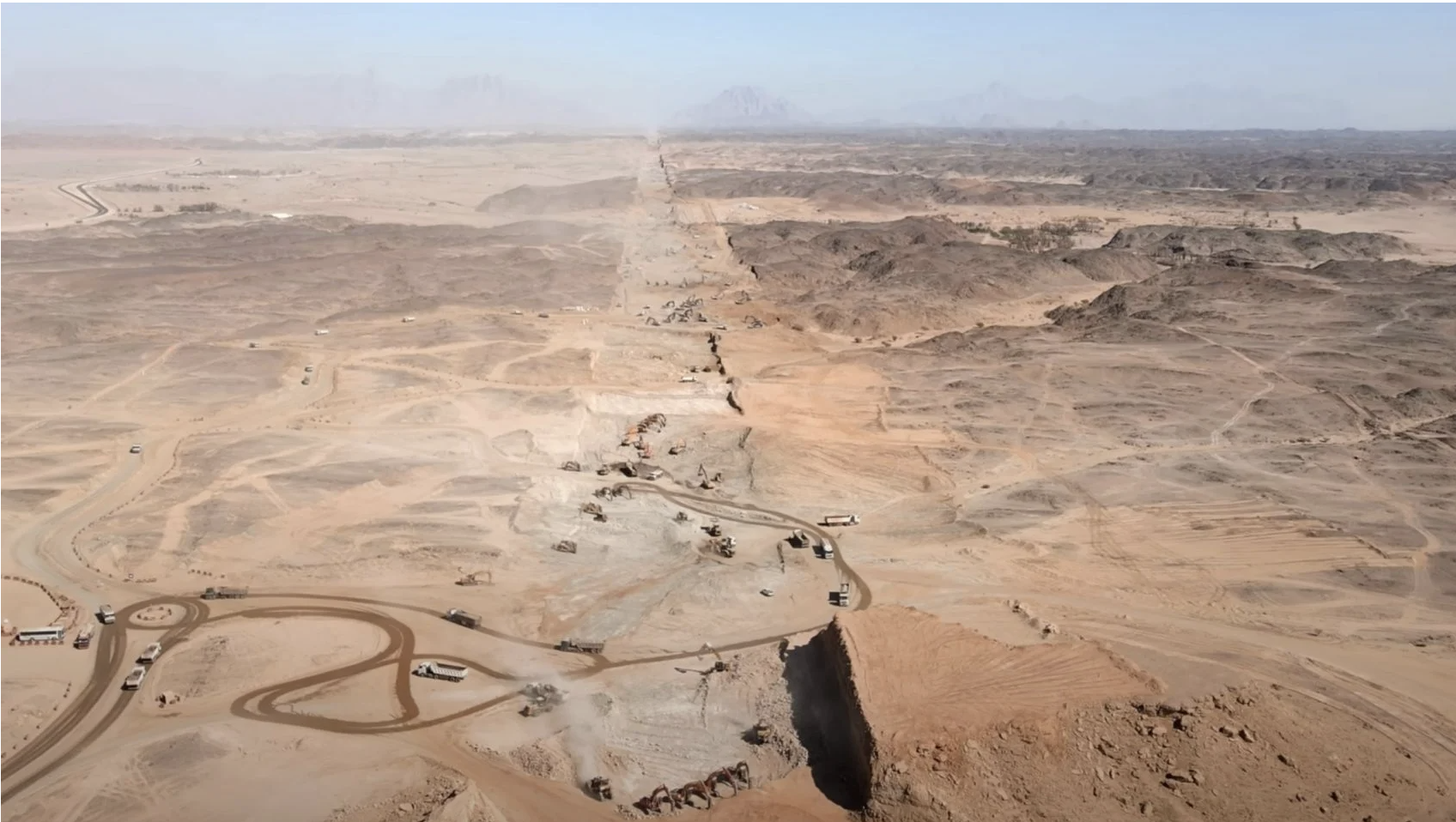
Drone footage of The Line underway. Meanwhile Bedouin who live there are sentenced to death.
Drone footage shows that Saudi Arabia’s multi-billion dollar project, The Line is underway. The vertical mega city will jut out from the Red Sea, against criticisms of Saudi Arabia being short-sighted about environmental goals, human rights abuses and sustainable housing for people who already live there.
But the Saudi Crown Prince is adamant about being in favor with the west. A recent announcement that the Saudi Government-owned Lucent Motors (NASDAQ:LCNT) will start a manufacturing plant in Saudi Arabia said exactly that. They want favor with the West. This is not how you do it.
Drone footage by aerial photography company Ot Sky showed that work has begun on the construction of The Line in Saudi Arabia, which is part of Neom development. Excavators at work are seen digging trenches for the linear city, which is set to be 150 miles long (170km), 550 yards tall (500 meters) with a heavily mirrored facade.
Neom has hired great copywriters, probably the best that money can buy. But great copy won’t whitewash human rights abuses that have been at the core of developing Neom where Bedouin tribes already live.
The Bedouin, Beduin, or Bedu are nomadic Arab tribes who have historically inhabited the desert regions in the Arabian Peninsula, North Africa, the Levant, and Mesopotamia. The Bedouin originated in the Arabian Desert but spread across the rest of the Arab world in West Asia and North Africa after the spread of Islam (Wikipedia).
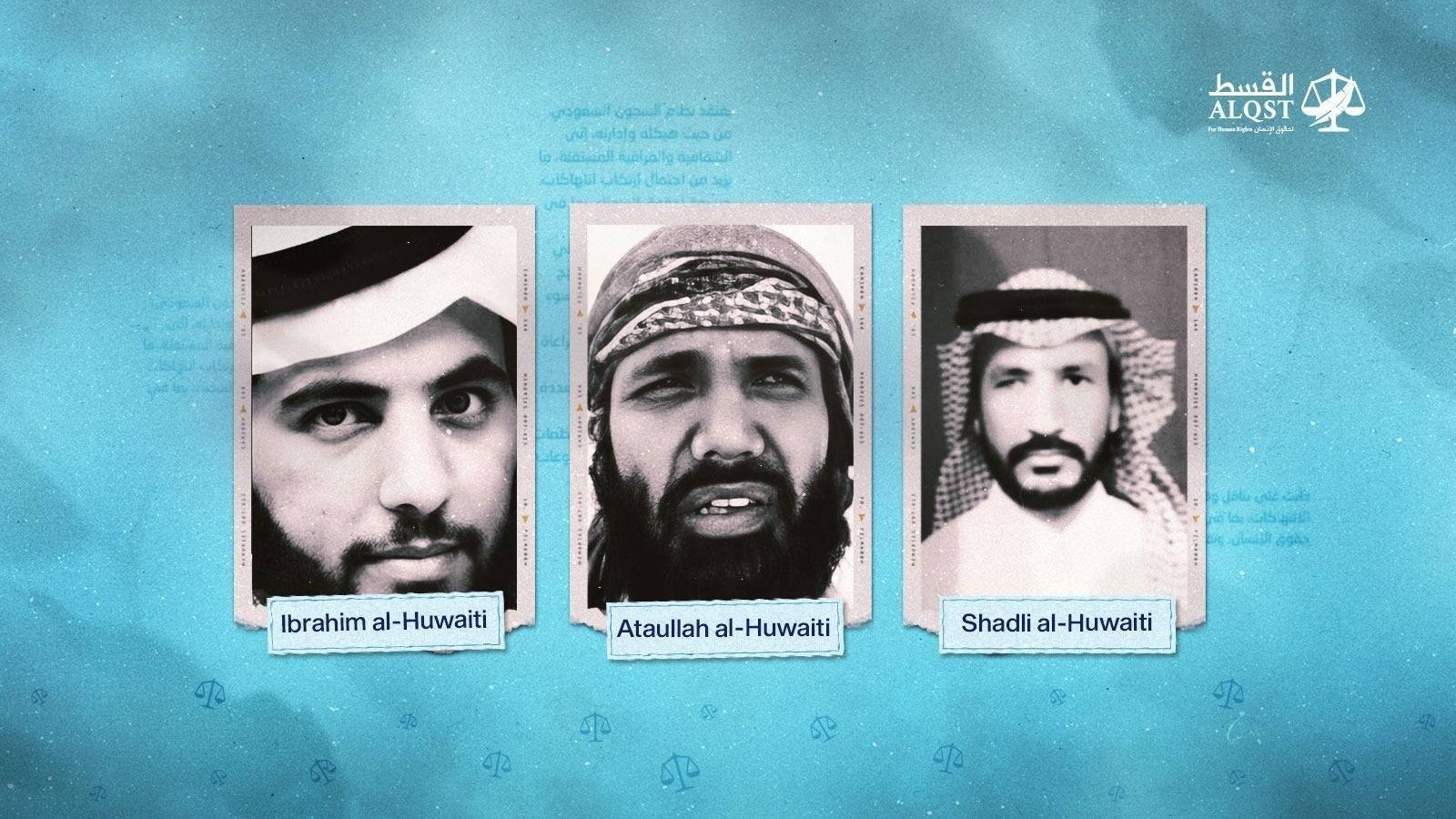
Shadli al-Huwaiti, Ibrahim al-Huwaiti and Ataullah al-Huwaiti, who are members of the Huwaitat Bedouin tribe, were sentenced to death after being “forcibly evicted and displaced to make way for the Neom megaproject”, according to a human rights organization ALQST, based in London and founded by Yahya Assiri.
Shadli al-Huwaiti, Ibrahim al-Huwaiti and Ataullah al-Huwaiti sentenced to death for protesting their eviction.
In May this year Shadli went on hunger strike in protest against ill-treatment and being placed in solitary confinement, and after two weeks the Dhahban Prison administration inserted a tube into his stomach to force-feed him, also a form of torture, according to ALQST.
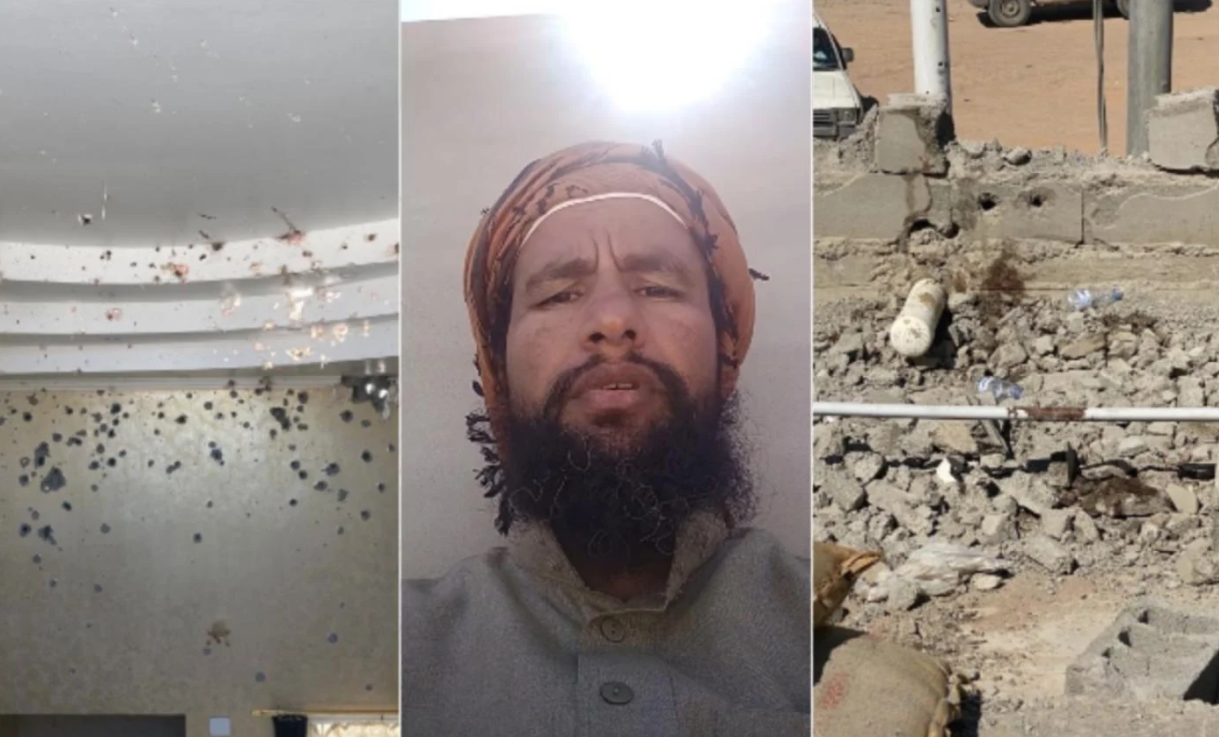
Even before the April 2020 killing of Abdul Rahim al-Huwaiti, other members of the Huwaitat tribe had been arrested for refusing to be evicted from their homes, and others have been arrested since. Some have been sentenced to extraordinary prison terms: Abdullah and Abdulilah al-Huwaiti were each sentenced in August 2022 to 50 years.
Abdul Rahim al-Huwaiti murdered while protesting the development of Neom
After killing Abdul Rahim al-Huwaiti and arresting several others who opposed eviction, the authorities set about trying to force other members of the tribe to endorse the authorities’ actions and to disown Abdul Rahim, by promising to pay them 100,000 rials ($26,000 USD) each, or 300,000 for those they appointed as tribal sheikhs, to take part in a propaganda pageant dissociating themselves from Abdul Rahim and the others, and “renewing their allegiance”, as the authorities put it.
If you visit or work for NEOM, you are complicit
The Saudi authorities have repeatedly resorted to forced evictions to clear areas of their residents, according to ALQST, in operations characterised by a lack of transparency and abuses such as failure to pay adequate compensation.
The authorities even employed armed force in the case of the Huwaitat in Tabuk in 2020, and in the bulldozing of the historic Al-Musawwara district of Awamiya in the eastern part of the country in 2017.
Saudi Arabia resorts to despotic methods to pursue their plans, with no respect for peoples’ rights to decent housing, and without those who wish to raise complaints having any recourse to justice.
Anyone who visits, works for, or publicises positive feedback about The Line, Trojena, or any of the Neom projects are complicit in the pursuit of Saudi’s terrible actions against its own people.
Saudi Arabia has a criminal justice system based on a form of Shari’ah reflecting a particular state-sanctioned interpretation of Islam. Execution is usually carried out by beheading with a sword but may occasionally be performed by shooting.
Saudi Arabia performs public executions.
According to ALQST Saudi authorities have carried out 122 executions in 2022. In March alone they executed 104 prisoners including 81 on a single day, roughly half of whom were from al-Qatif and al-Ahsa in eastern Saudi Arabia, areas that had seen widespread demonstrations calling for reform during the previous decade.
Saudi Arabia may desperately want to be accepted by the west in business and leisure, and to be a green and eco super hero, spearheading renewable energy and EVs. But its ruler’s behavior of disappearing protestors and journalists shows that it’s still about 2400 years in the past.
We sent an email from Neom and are waiting for some answers.
Rowan Moore at The Guardian calls on architects to answer to the abuses. Neom, he writes, “is aided and abetted by western consultancies such as the once-hip Californian practice of Morphosis (which is designing The Line) and the London-based Zaha Hadid Architects (at work in Trojena), both of them winners of the biggest prize in architecture, the Pritzker. How might they square what’s left of their progressive reputations with a real estate endeavour where objectors get killed?”
Is The Line a knock-off from an Iranian Architect’s floating city?


















 .
.