
Lebanon’s Broom Makers Swept Out of Business

crafts, cottage industry, Lebanon, broom-makers, plastic-ChinaThe perpetual pursuit of cheap stuff stuck together by underpaid workers in China has put a great deal of stress on “mom and pop” artisans across the globe – including Lebanon.

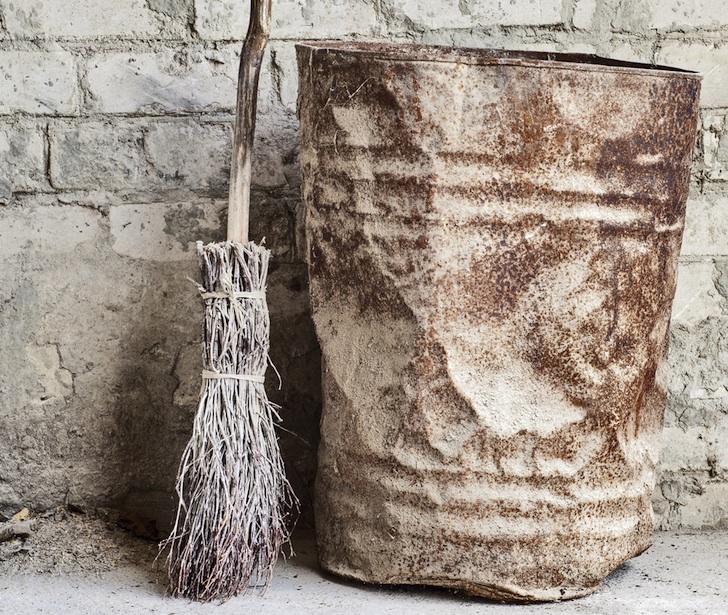
Traditional broom makers from Ghassaniyeh in the southern district of Zahrani told Lebanon’s Daily Star that they once made a decent living making straw brooms using materials sourced from the local region. But now straw itself has become prohibitively expensive and the community is turning to cheap nylon or plastic brooms that don’t work as well, putting yet another cottage industry at risk of obscurity.

Armenian-style broom-making was first introduced to southern Lebanon 75 years ago, according to the Daily Star.

Hajj Abbas Atweh taught men living in Ghassaniyeh how to source straw, soak it, and then bundle up to 500 pieces into a cohesive unit. Once assembled, the pieces are cut to give it a polished, finished look.

The craft soon became a tradition that the entire family could take part in, including children and grandparents.

Mohammad Hodroj, who was among Atweh’s original students, told the paper that at one time his family produced as many as 15,000 brooms annually. The soft straw was sourced from Egypt, Iraq and Syria while hard straw, which is harder to cut and manipulate and used for cleaning brooms, came from Bulgaria and Hungary.

But now it costs $2,000 a pound to purchase the straw for a product that sells for little more than $2 and artisans are struggling to cope – so much so that they have appealed to the Ministry of Industry and Tourism to help protect their craft.

And in order to generate awareness and interest in what they do, artisans have begun to invite children from various schools in Lebanon to come and visit them.

It’s hard to be competitive when a Chinese factory can process lesser quality plastic or nylon brooms for a fraction of the cost, but Abu Khater claims that these products are much inferior to the traditional straw brooms.

In addition to being less effective, “synthetic materials can also damage the carpets and other home textiles, whereas the straw broom cleans the carpet gently,” Hussein Abu Khater told the paper.

With approximately 80 brooms under his belt each day, Abu Khater is not completely out of business, but he fears that he and other villagers dependent on the trade might soon become completely swept out of business by the cheaper competition and less robust design model.

Somehow we have to ensure that doesn’t happen.

:: Daily Star
Tafline Laylin
Tafline Laylinhttp://www.greenprophet.com
As a tour leader who led “eco-friendly” camping trips throughout North America, Tafline soon realized that she was instead leaving behind a trail of gas fumes, plastic bottles and Pringles. In fact, wherever she traveled – whether it was Viet Nam or South Africa or England – it became clear how inefficiently the mandate to re-think our consumer culture is reaching the general public. Born in Iran, raised in South Africa and the United States, she currently splits her time between Africa and the Middle East. Tafline can be reached at tafline (at) greenprophet (dot) com.

Hot this week

How Renewable Energy is Revolutionizing the Way We Power Our World

Solar has become the star of the transition thanks to modular hardware and straightforward installation. It fits dense cities and remote towns alike. Many companies are turning to rooftop arrays and carport systems - and exploring commercial solar installation as a practical way to lock in future savings.

How does one start prepping?

Faced with an extreme winter storm this year, Americans wonder how to be prepared for catastrophe. Miriam has lived through wars in the Middle East - so she's prepared on giving you a guide to prepping.

Fishermen sue tire manufacturers on behalf of the salmon

A federal trial in San Francisco has brought US tire manufacturers, fishing groups, and environmental scientists into court over a chemical most drivers have never heard of — but which scientists say may be silently reshaping aquatic ecosystems.

Listening to Water: Tarek Atoui’s Next Work for Tate Modern

Born in Beirut, Lebanon in 1980 and now living in Paris, Atoui has spent years building instruments that don’t sit comfortably in concert halls. Many of them involve water, glass, and ceramics — materials that react to sound instead of simply producing it.

Leading Through a Dual-Energy Transition: Balancing Decarbonisation with Energy Security

Experience in one area of the energy industry isn't enough to guarantee readiness across all the others. That's where a structured program like an MBA in energy can come in. Today's advanced curricula explore energy economics, finance, policy, and strategic management alongside the technical subjects. And when pursuing an energy MBA online, professionals can skill up and retrain without having to step out of the labor market -- an important perk at a time when skilled professionals are already in short supply.

Topics

How Renewable Energy is Revolutionizing the Way We Power Our World

Solar has become the star of the transition thanks to modular hardware and straightforward installation. It fits dense cities and remote towns alike. Many companies are turning to rooftop arrays and carport systems - and exploring commercial solar installation as a practical way to lock in future savings.

How does one start prepping?

Faced with an extreme winter storm this year, Americans wonder how to be prepared for catastrophe. Miriam has lived through wars in the Middle East - so she's prepared on giving you a guide to prepping.

Fishermen sue tire manufacturers on behalf of the salmon

A federal trial in San Francisco has brought US tire manufacturers, fishing groups, and environmental scientists into court over a chemical most drivers have never heard of — but which scientists say may be silently reshaping aquatic ecosystems.

Listening to Water: Tarek Atoui’s Next Work for Tate Modern

Born in Beirut, Lebanon in 1980 and now living in Paris, Atoui has spent years building instruments that don’t sit comfortably in concert halls. Many of them involve water, glass, and ceramics — materials that react to sound instead of simply producing it.

Leading Through a Dual-Energy Transition: Balancing Decarbonisation with Energy Security

Experience in one area of the energy industry isn't enough to guarantee readiness across all the others. That's where a structured program like an MBA in energy can come in. Today's advanced curricula explore energy economics, finance, policy, and strategic management alongside the technical subjects. And when pursuing an energy MBA online, professionals can skill up and retrain without having to step out of the labor market -- an important perk at a time when skilled professionals are already in short supply.

From Green Energy to Healthy Societies: Why old systems thinking is becoming relevant again

Across the Middle East and North Africa, large investments are being made in green hydrogen, renewable energy, water infrastructure and sustainability. Most of these efforts are discussed in the context of climate change, decarbonization and economic diversification. That framing is important, but it may not capture their full value.

We saw peace – an interreligious encounter deep in our eyes

They came from Israel, Palestine, Jordan, Iraq, Yemen, Morocco, Tunisia, Lebanon, Egypt… There are Sunni Muslims, Shiite Muslims, Jews (Orthodox and Reform), Orthodox Christians, Coptic Christians, Protestant Christians, Druze, Baha'is, a Scientologist.

Can biochar reduce ‘Forever Chemicals’ in food if it’s used in farms?

Biochar is produced by heating organic material in a low-oxygen environment so it does not burn. This process, known as pyrolysis, transforms plant matter into a stable, carbon-rich material.

Related Articles

Popular Categories