
Lebanon’s Broom Makers Swept Out of Business

crafts, cottage industry, Lebanon, broom-makers, plastic-ChinaThe perpetual pursuit of cheap stuff stuck together by underpaid workers in China has put a great deal of stress on “mom and pop” artisans across the globe – including Lebanon.

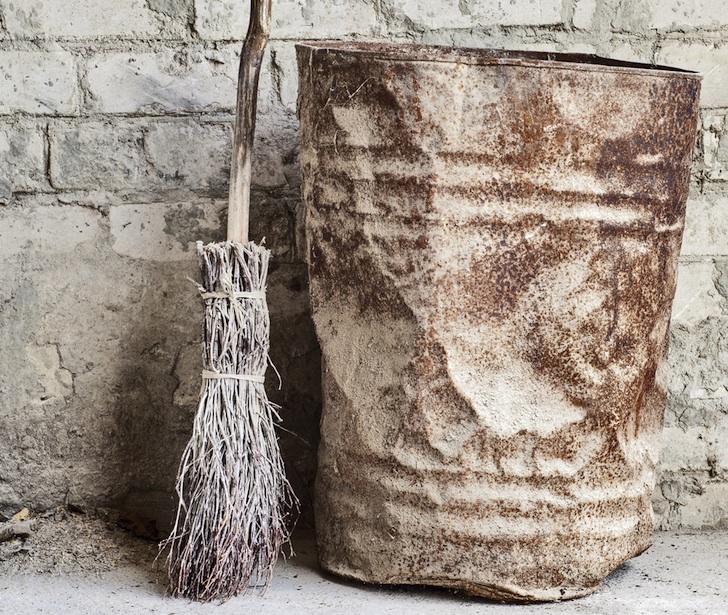
Traditional broom makers from Ghassaniyeh in the southern district of Zahrani told Lebanon’s Daily Star that they once made a decent living making straw brooms using materials sourced from the local region. But now straw itself has become prohibitively expensive and the community is turning to cheap nylon or plastic brooms that don’t work as well, putting yet another cottage industry at risk of obscurity.

Armenian-style broom-making was first introduced to southern Lebanon 75 years ago, according to the Daily Star.

Hajj Abbas Atweh taught men living in Ghassaniyeh how to source straw, soak it, and then bundle up to 500 pieces into a cohesive unit. Once assembled, the pieces are cut to give it a polished, finished look.

The craft soon became a tradition that the entire family could take part in, including children and grandparents.

Mohammad Hodroj, who was among Atweh’s original students, told the paper that at one time his family produced as many as 15,000 brooms annually. The soft straw was sourced from Egypt, Iraq and Syria while hard straw, which is harder to cut and manipulate and used for cleaning brooms, came from Bulgaria and Hungary.

But now it costs $2,000 a pound to purchase the straw for a product that sells for little more than $2 and artisans are struggling to cope – so much so that they have appealed to the Ministry of Industry and Tourism to help protect their craft.

And in order to generate awareness and interest in what they do, artisans have begun to invite children from various schools in Lebanon to come and visit them.

It’s hard to be competitive when a Chinese factory can process lesser quality plastic or nylon brooms for a fraction of the cost, but Abu Khater claims that these products are much inferior to the traditional straw brooms.

In addition to being less effective, “synthetic materials can also damage the carpets and other home textiles, whereas the straw broom cleans the carpet gently,” Hussein Abu Khater told the paper.

With approximately 80 brooms under his belt each day, Abu Khater is not completely out of business, but he fears that he and other villagers dependent on the trade might soon become completely swept out of business by the cheaper competition and less robust design model.

Somehow we have to ensure that doesn’t happen.

:: Daily Star

Tafline Laylin
Tafline Laylinhttp://www.greenprophet.com
As a tour leader who led “eco-friendly” camping trips throughout North America, Tafline soon realized that she was instead leaving behind a trail of gas fumes, plastic bottles and Pringles. In fact, wherever she traveled – whether it was Viet Nam or South Africa or England – it became clear how inefficiently the mandate to re-think our consumer culture is reaching the general public. Born in Iran, raised in South Africa and the United States, she currently splits her time between Africa and the Middle East. Tafline can be reached at tafline (at) greenprophet (dot) com.

Read More

TRENDING

How to make mushroom paper

Learn how to make sustainable paper from mushrooms using tough, fibrous fungi like artist’s conk, turkey tail, and birch polypore. This eco-friendly craft transforms woody polypores into strong, chitin-based sheets perfect for art projects, greeting cards, or handmade journals. Our step-by-step guide to mushroom papermaking covers soaking, pulping, forming sheets with a mould and deckle, and drying methods—showing how fungi can replace traditional wood pulp for unique, natural paper.

Japanese factory lets you knit your own socks with a bicycle

The workshop on socks provides an immersive experience, guiding participants through the complete process of sock-making. After the knitting phase, SOUKI’s skilled staff steps in to sew the toes and apply a press-finish, ensuring the socks are ready for wear.

More than half of Dollar Store products contain toxins that can hurt you

new report finds that 54% of all the products tested at Dollar Stores contain hazardous chemicals linked to cancer, learning disabilities and serious illnesses.

Car Detailing: Everything You Should Know About It

Maybe you want to start a coffee van or a mobile business that is also eco. Car detailing is important for your brand.

Tips and Tricks to Increase Sales Through Free Shipping

Maybe you are makers like these guys from Havie. You spend so much time in your craft and money too - should you offer free shipping through platforms like Etsy? 

How to quiet noise from construction in your office

Streets need to be resurfaced in New York but the humming and grinding noise is unsettling. Noise is environmental pollution. 

EarthX and a blueprint for sustainable investing

Trammell S. Crow, a Dallas-based businessman and father of four, is focusing his efforts on impact investing, and media that focuses on saving the planet through EarthX.

Mining Afghanistan’s Mineral Discoveries Similar to Avatar

Now that American forces in Afghanistan are commemorating the longest period of any war that America has been involved in, including the 1965-73 Vietnam War, the recent discoveries of large and extremely valuable mineral and metal deposits may finally bring to light a reason to continue the presence of US fighting forces in this war torn and backward country.

From Pilot Plant to Global Stage: How Aduro Clean Technologies’ 2026 Expansion Signals a Turning Point for Chemical Recycling Investors Like Yazan Al Homsi

The company's Next Generation Process (NGP) Pilot Plant in London, Ontario, has officially moved into initial operating campaigns, generating the kind of structured, repeatable data that separates laboratory promise from commercial viability.

Nobul’s Regan McGee on Shareholder Value: “Complacency Is the Silent Killer” 

Why the governance framework designed to protect shareholders so...

Should You Invest in the Private Market?

startustartup Unlike public stock exchanges, which offer daily trading, strict...

How to build a 100-year-company

Kongō Gumi is a Japanese construction company, purportedly founded in 578 A.D., making it the world's oldest documented company. What can we learn about building sustainable businesses from them?

How AI Helps SaaS Companies Reduce Repetitive Customer Support Work

SaaS products are designed for large numbers of users with different levels of experience, and also in renewable energy.

Popular Categories