
Can Flow Industries Make Oil Fracking Greener?

flow industries, airshock gun, fracking, oil and gas
Can green and fracking ever be used in the same sentence?

Hydraulic fracturing – fracking — is one way to extract valuable shale oil and gases from deep underground by injecting a highly pressurized fluid into rock to pull out the fossil fuel. Those in favor of fracking say that it will help America become energy independent, while growing numbers against it are highly critical of the risks such as groundwater contamination, surface spills and even mini-earthquakes.

An established industrial plumbing company from Israel has a technology that may help bridge the divide between industry and environmentalism when it comes to the fracking debate. With a decade of sales and a clean and green track record in the industrial plumbing business, Flow Industries is looking to help make fracking greener and more efficient.

The company’s CEO Oded Rose says that the company is starting to work with fossil fuel companies to test the feasibility of its pressured air system. While the technology has been proven in multiple industries, it is not yet clear how it will perform in wells and channels that are up to five kilometers underground.

“To get at natural gas one needs to fracture the bedrock so the gas can flow to the wells,” says Rose. “Fracturing is a huge deal because it uses water and acids. Our technology could be applied to reduce environmental impact and to increase production of gas and oil.”

Flowing across the globe

“At the moment we have not done a lot with oil,” says Rose. “But with our leading technology in water, where we can go 100 to 300 meters deep, we are looking to apply in beta testing for oil companies drilling 1,000 to 5,000 meters underground.”

With major names in the water business such as Layne Christensen in the United States, and Veolia in France as clients, Flow Industries is already a game-changer in water. The business was created in 1987 to offer water flow solutions, but multiple industries have discovered that using highly pressurized air can be a green and safe way to address blockages of all sorts of materials — solid or liquid, hot or cold, says Rose.

Flow Industries works with industrial cement silos throughout the Middle East region, power plants and chemical companies of all kinds in Israel, India, Korea, Europe, and North and South America.

Its featured product is the Airshock “gun” developed more than a decade ago. It was invented by an Israeli hydrologist whose father and grandfather had both worked as well diggers.

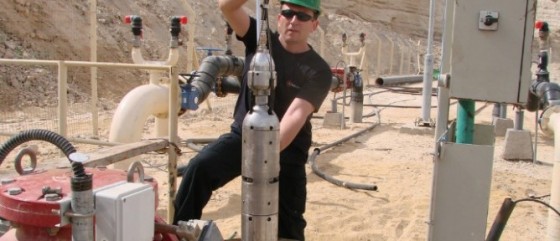
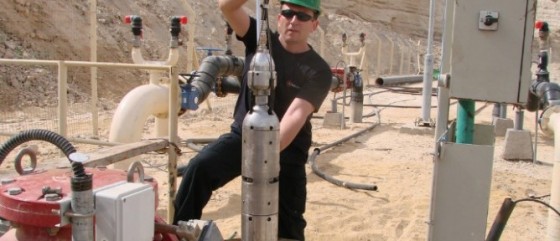
Flow Industries’ Airshock system is a green alternative in hydrofracking.
The founder thought that there must be better ways to unplug blocked water pipes than using harsh chemicals or explosions. Hydrochloric acid was often used for this purpose, but it can leak into water sources and is toxic to workers handling the material.

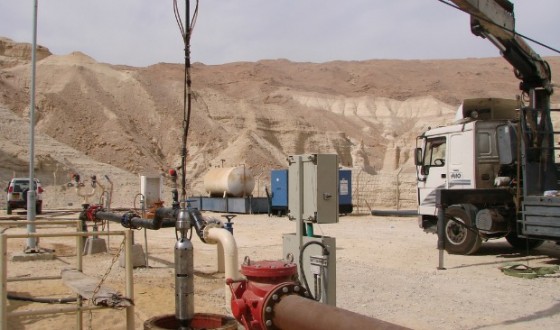
Airshock doesn’t create explosions or require chemicals. It builds pressure using oxygen or nitrogen, depending on the application, producing a shock of air to break up an internal blockage that cannot be removed manually.

Blows like an air cannon
flow industries, airshock gun, fracking, oil and gas

The patented device operates in several phases. In the first stage it blasts a gas release down a channel, creating a small shock wave lasting five to 15 milliseconds. The rapidly expanding gas bubble creates a surge, breaking up scale and debris in wells and pipes. In the next phase, which lasts about one minute, the gas bubble contracts and washes out the debris that was causing the blockage.

While not extremely high-tech to operate — it does not include electronics or software – its approach is an innovative, unique technology, says Rose. Each Airshock model is priced for industrial maintenance companies and can cost tens of thousands of dollars up to $100,000 depending on the scale of the project.

Based in Omer, near Beersheba, Flow Industries employs 12 people, and outsources its production in Israel where the Airshock gun is assembled. The company is looking to establish business through partnerships and pilot plants in the gas and oil industry in the United States.

The company is also expanding its business with a patented technology to help companies working in the Alberta, Canada, tar sands deal with flow issues.

::Flow Industries


Karin Kloosterman
Karin Kloostermanhttp://www.greenprophet.com
Karin Kloosterman is an award-winning journalist, innovation strategist, and founder of Green Prophet, one of the Middle East’s pioneering sustainability platforms. She has ranked in the Top 10 of Verizon innovation competitions, participated in NASA-linked challenges, and spoken worldwide on climate, food security, and future resilience. With an IoT technology patent, features in Canada’s National Post, and leadership inside teams building next-generation agricultural and planetary systems — including Mars-farming concepts — Karin operates at the intersection of storytelling, science, and systems change. She doesn’t report on the future – she helps design it. Reach out directly to [email protected]

TRENDING

Eco organization offices destroyed by Iran missile

Tel Aviv's eco organization, the Heschel Center, was impacted by an Iranian missile.

What are AWG air-water generators, and why they aren’t a golden-bullet solution (yet)

Atmospheric water generators (AWGs) sound like magic: machines that can pull drinking water out of air. The idea is mentioned in the Bible, where the elders would pray for water collected as dew on plants and the catch on turning this into a machine is in the physics. To turn invisible vapor into liquid, you must remove heat, especially the latent heat of condensation.

Jordan’s $6 Billion Aqaba–Amman Desalination Project from the Red Sea Moves Forward

In 2025, the Jordanian government signed agreements with a consortium led by Meridiam and SUEZ, alongside VINCI Construction and Orascom Construction. Under a 30-year concession agreement, the consortium will design, build, finance, operate, and maintain the system before transferring it back to the Jordanian government. The total investment is estimated at approximately $6 billion USD.

The Saudi Startup Turning Desalination’s Toxic Waste Into Its Own Disinfectant

For millennia, the Middle East's water crisis seemed an immutable fact of geography — a region defined as much by what it lacked as by what lay beneath its sands. Today, a convergence of plummeting solar costs, advancing membrane technology, and hard-won engineering expertise is rewriting that story.

Earth building with Dead Sea salt bricks

Researchers develop a brick made largely from recycled Dead Sea salt—offering a potential alternative to carbon-intensive cement.

How AI Helps SaaS Companies Reduce Repetitive Customer Support Work

SaaS products are designed for large numbers of users with different levels of experience, and also in renewable energy.

Pulling Water from the Air

Faced with water shortage in Amman, Laurie digs up...

Turning Your Energy Consultancy into an LLC: 4 Legal Steps for Founders in Texas

If you are starting a renewable energy business in Texas, learn how to start an LLC by the books.

Tracking the Impacts of a Hydroelectric Dam Along the Tigris River

For the next two months, I'll be taking a break from my usual Green Prophet posts to report on a transnational environmental issue: the Ilısu Dam currently under construction in Turkey, and the ways it will transform life along the Tigris River.

6 Payment Processors With the Fastest Onboarding for SMBs

Get your SMB up and running fast with these 6 payment processors. Compare the quickest onboarding options to start accepting customer payments without delay.

Qatar’s climate hypocrisy rides the London Underground

Qatar remains a master of doublethink—burning gas by the megaton while selling “sustainability” to a world desperate for clean air. Wake up from your slumber people.

How Quality of Hire Shapes Modern Recruitment

A 2024 survey by Deloitte found that 76% of talent leaders now consider long-term retention and workforce contribution among their most important hiring success metrics—far surpassing time-to-fill or cost-per-hire. As the expectations for new hires deepen, companies must also confront the inherent challenges in redefining and accurately measuring hiring quality.

8 Team-Building Exercises to Start the Week Off 

Team building to change the world! The best renewable energy companies are ones that function.

Related Articles

Popular Categories