
Interview With Green Hajj Expert Husna Ahmed

green-hajj husna ahmedmuslims We speak to Dr Husna Ahmed, the co-author of the newly launched Green Guide to Hajj about the role Muslims can play in protecting nature

As part of its work to encourage green religious pilgrimages worldwide, the Alliance of Religions and Conservation have just launched a ‘Green Guide to Hajj’. Co-authored by Dr Husna Ahmed OBE, the guide looks at practical ways that Muslims can embrace a green Hajj and adopt more environmentally friendly habits. We caught up Dr Husna Ahmed, who is an international speaker on climate change with a PhD in Environmental Law, to discuss the harmful aspects of religious pilgrimage and what can be done about them.

Husna Ahmed green hajjGetting The Green Message To Muslims

“What we want to do is use a theological grounding- the Qur’an and hadith– to encourage people to think more carefully about protecting their environment,” says Dr Husna over the phone. It’s officially her day off and although she’s busy shopping with her daughter who is off to college she’s decided to have a quick chat with me anyway. “I mean people are now more and more aware of their carbon footprint and what they can do to limit their impact but Muslims are not really hearing it. So this guide is about encouraging them to do their bit.”

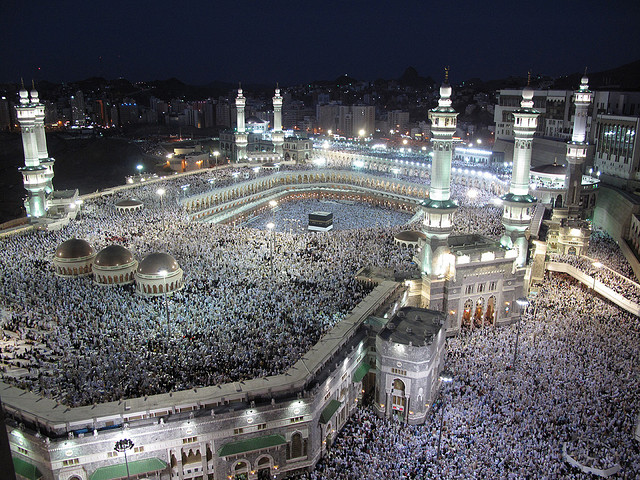
It is estimated that around 2.5 million Muslims go to hajj each year and whilst the impact of this mass religious pilgrimage is hard to measure, it is believed that 10 million plastic bottles get left behind every year. What’s more, according to my calculations, a pilgrimage to Mecca from the UK releases more tonnes of carbon than the average French person does in a year. So given the fact that many Muslims aspire to go on Hajj, which is the fifth pillar of Islam, it makes perfect sense to try and make it more environmentally friendly.

Hajj As A Time of Eco-Awareness

During the research into the Green Guide, Dr Husna states that the main issues that emerged were transport, waste and consumption. A lot of the pilgrims fly to Mecca, travel by private transport and are careless about the energy they use and the waste they create. “We want people to be cutting their waste, re-using items like water bottles and also thinking about what they can do beyond their hajj,” says Dr Husna.

“Hajj is a time for embracing good habits and reconsidering moral behaviours, so it’s the ideal time to change our outlook on the environment,” she added. Dr Husna is also keen to point out that Hajj is meant to be a once in a lifetime experience and states that those who have been on the pilgrimage several times need to think carefully about the impact of their travel.

Also Available In Arabic

The Guide is full of tips and bits of information to help the Muslim pilgrim plan their hajj with care. And in a bid to spread these green words of wisdom, the guide will also be translated into Indonesian, Urdu, Malay, Hausa (for Nigeria) and Arabic. So keep an eye out for them and I will post the Arabic guide for the Muslim community in the Middle East and North Africa when it’s available.

For more on Green Hajj:

Faith Network Promotes Sustainable Religious Pilgrimages
Middle East Leaders To Launch Green Hajj Guide

Four Steps To A Greener Hajj

Arwa Aburawa
Arwa Aburawahttp://www.greenprophet.com
Arwa is a Muslim freelance writer who is interested in everything climate change related and how Islam can inspire more people to care for their planet and take active steps to save it while we can. She is endlessly suspicious of all politicians and their ceaseless meetings, especially as they make normal people believe that they are not part of the solution when they are the ONLY solution. Her Indian auntie is her model eco-warrier, and when Arwa is not busy helping out in the neighborhood alleyway garden, swap shopping or attempting fusion vegetarian dishes- with mixed success, she’d like to add- she can be found sipping on foraged nettle tea.
4 COMMENTS
  1. As-salam`alaykum, greetings of peace,

    This is an AWESOME interview. I’ve been waiting for the release of the green Hajj guide and am even more excited that a Muslim woman was a major part of the process.

    Great to hear from you Husna and great post Arwa.

Comments are closed.

Hot this week

How Renewable Energy is Revolutionizing the Way We Power Our World

Solar has become the star of the transition thanks to modular hardware and straightforward installation. It fits dense cities and remote towns alike. Many companies are turning to rooftop arrays and carport systems - and exploring commercial solar installation as a practical way to lock in future savings.

How does one start prepping?

Faced with an extreme winter storm this year, Americans wonder how to be prepared for catastrophe. Miriam has lived through wars in the Middle East - so she's prepared on giving you a guide to prepping.

Fishermen sue tire manufacturers on behalf of the salmon

A federal trial in San Francisco has brought US tire manufacturers, fishing groups, and environmental scientists into court over a chemical most drivers have never heard of — but which scientists say may be silently reshaping aquatic ecosystems.

Listening to Water: Tarek Atoui’s Next Work for Tate Modern

Born in Beirut, Lebanon in 1980 and now living in Paris, Atoui has spent years building instruments that don’t sit comfortably in concert halls. Many of them involve water, glass, and ceramics — materials that react to sound instead of simply producing it.

Leading Through a Dual-Energy Transition: Balancing Decarbonisation with Energy Security

Experience in one area of the energy industry isn't enough to guarantee readiness across all the others. That's where a structured program like an MBA in energy can come in. Today's advanced curricula explore energy economics, finance, policy, and strategic management alongside the technical subjects. And when pursuing an energy MBA online, professionals can skill up and retrain without having to step out of the labor market -- an important perk at a time when skilled professionals are already in short supply.

Topics

How Renewable Energy is Revolutionizing the Way We Power Our World

Solar has become the star of the transition thanks to modular hardware and straightforward installation. It fits dense cities and remote towns alike. Many companies are turning to rooftop arrays and carport systems - and exploring commercial solar installation as a practical way to lock in future savings.

How does one start prepping?

Faced with an extreme winter storm this year, Americans wonder how to be prepared for catastrophe. Miriam has lived through wars in the Middle East - so she's prepared on giving you a guide to prepping.

Fishermen sue tire manufacturers on behalf of the salmon

A federal trial in San Francisco has brought US tire manufacturers, fishing groups, and environmental scientists into court over a chemical most drivers have never heard of — but which scientists say may be silently reshaping aquatic ecosystems.

Listening to Water: Tarek Atoui’s Next Work for Tate Modern

Born in Beirut, Lebanon in 1980 and now living in Paris, Atoui has spent years building instruments that don’t sit comfortably in concert halls. Many of them involve water, glass, and ceramics — materials that react to sound instead of simply producing it.

Leading Through a Dual-Energy Transition: Balancing Decarbonisation with Energy Security

Experience in one area of the energy industry isn't enough to guarantee readiness across all the others. That's where a structured program like an MBA in energy can come in. Today's advanced curricula explore energy economics, finance, policy, and strategic management alongside the technical subjects. And when pursuing an energy MBA online, professionals can skill up and retrain without having to step out of the labor market -- an important perk at a time when skilled professionals are already in short supply.

From Green Energy to Healthy Societies: Why old systems thinking is becoming relevant again

Across the Middle East and North Africa, large investments are being made in green hydrogen, renewable energy, water infrastructure and sustainability. Most of these efforts are discussed in the context of climate change, decarbonization and economic diversification. That framing is important, but it may not capture their full value.

We saw peace – an interreligious encounter deep in our eyes

They came from Israel, Palestine, Jordan, Iraq, Yemen, Morocco, Tunisia, Lebanon, Egypt… There are Sunni Muslims, Shiite Muslims, Jews (Orthodox and Reform), Orthodox Christians, Coptic Christians, Protestant Christians, Druze, Baha'is, a Scientologist.

Can biochar reduce ‘Forever Chemicals’ in food if it’s used in farms?

Biochar is produced by heating organic material in a low-oxygen environment so it does not burn. This process, known as pyrolysis, transforms plant matter into a stable, carbon-rich material.

Related Articles

Popular Categories