
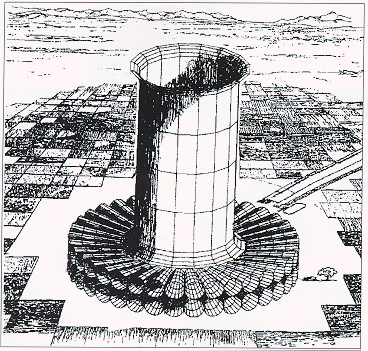
For decades, the Energy Tower by Dan Zaslavsky was one of the most audacious clean-energy ideas never built. And it was the first story we covered when Green Prophet was founded in 2007!

Conceived by Dr. Phillip Carlson and championed by Professor Dan Zaslavsky of the Technion in Israel, the Energy Tower proposed something almost magical: spray seawater into the top of a giant desert tower, cool the hot air, let it plunge downward at high speed, and generate electricity through turbines at the base. The hotter and drier the desert, the better it would work. Zaslavsky envisioned towers over 1,000 metres tall rising from the Negev, Jordan Valley, and Red Sea region, generating power day and night while potentially producing fresh water.
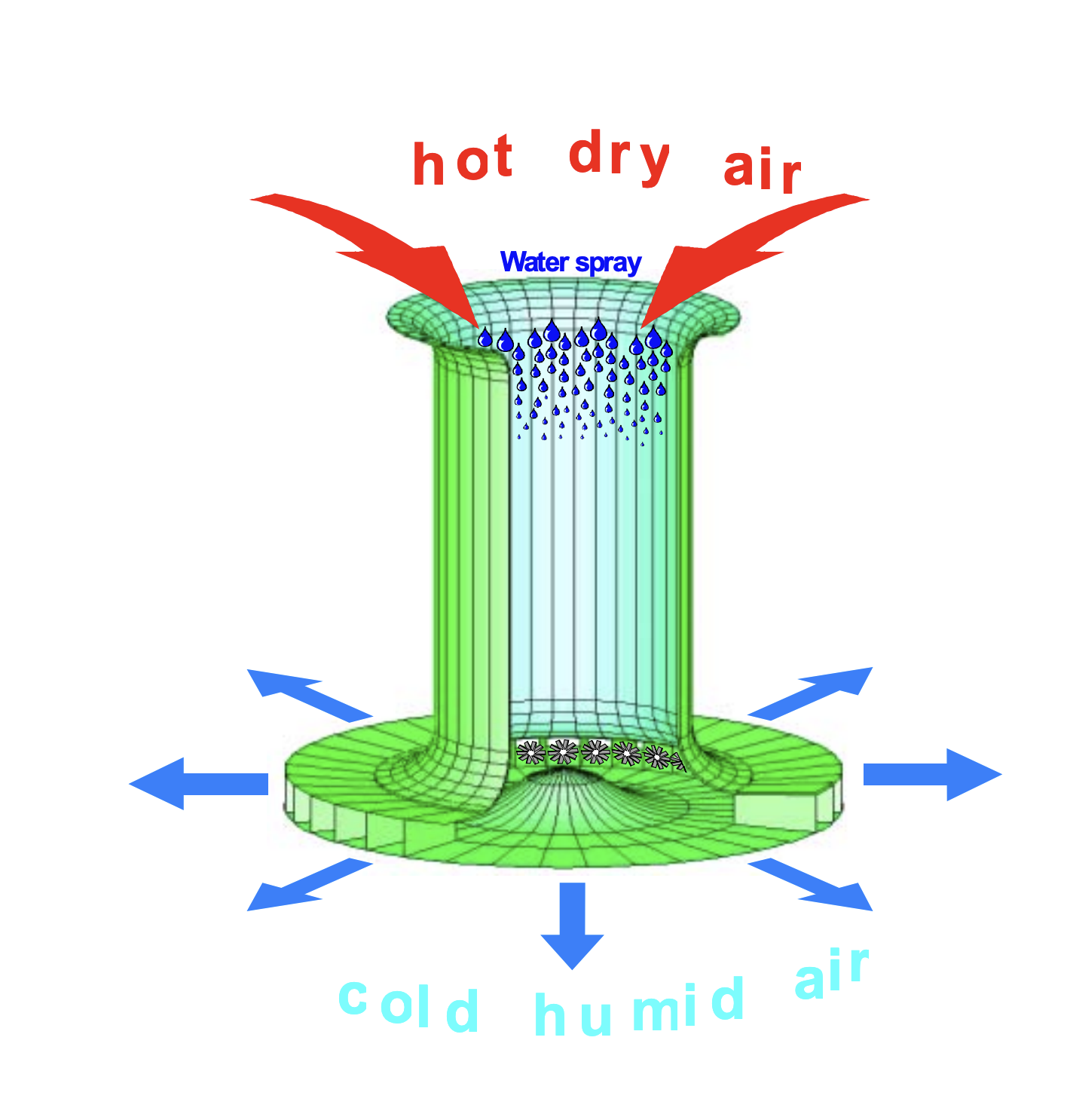
The idea never made the leap from drawings and engineering studies to full-scale construction. We have the original PDF proposal and science —> LINK HERE
The UN advertised its potential in 2001 but noted then that the $20M USD cost to build it was limiting. But nearly two decades after most people stopped talking about it, the concept is quietly evolving in two unexpected places: China and Iran. The concept let dreamers dream and doers do – figuring out more pleasing designs and engineering.
China turns the Energy Tower into a climate machine
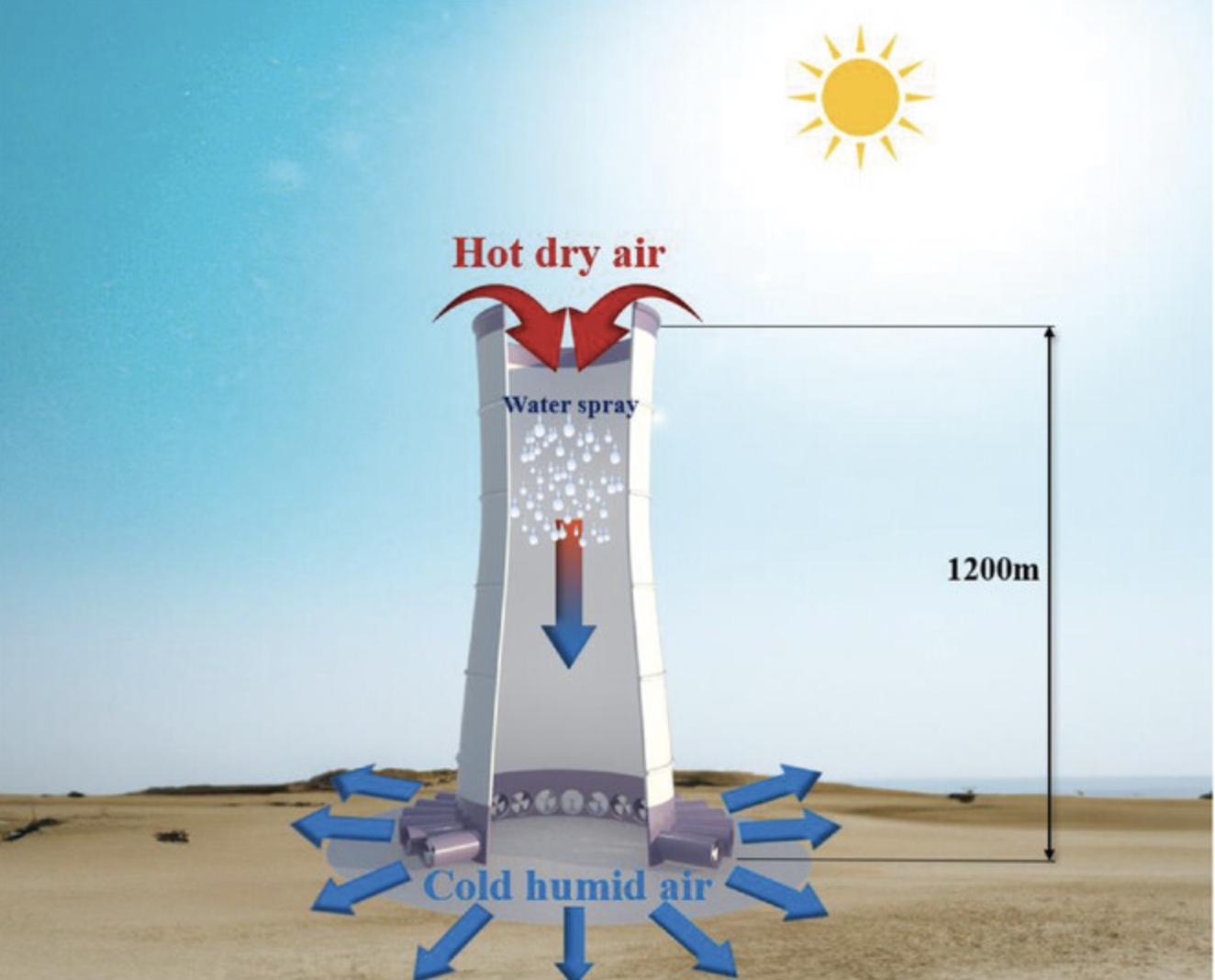
In 2023, researchers from the University of Edinburgh, Wuhan University of Technology and other institutions revisited the downdraft Energy Tower concept with a new purpose: removing methane from the atmosphere. Their study proposed that the humid air released from a downdraft tower could increase the formation of hydroxyl radicals, the atmosphere’s primary cleanser and the main natural sink for methane.
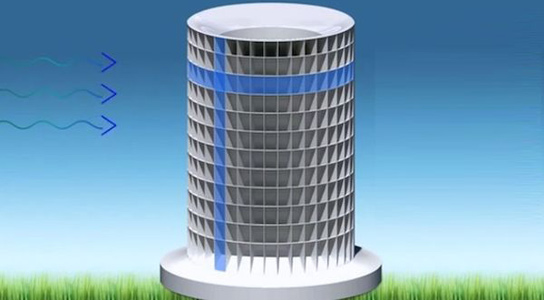
Downdraft Energy Tower (DET)
The researchers estimated that a tower 1,200 metres high and 400 metres in diameter could generate roughly 380 MW of electricity while simultaneously helping remove atmospheric methane. They calculated that a single Jordan-based tower could remove approximately 12.5 tonnes of methane per day under ideal conditions.
Whether those numbers hold up in practice remains to be seen. No commercial-scale downdraft Energy Tower has yet been built. But the research marks a remarkable shift. The tower is no longer viewed merely as a power plant. It is being reimagined as a tool for climate remediation.
Iran transforms the tower into a vertical oasis
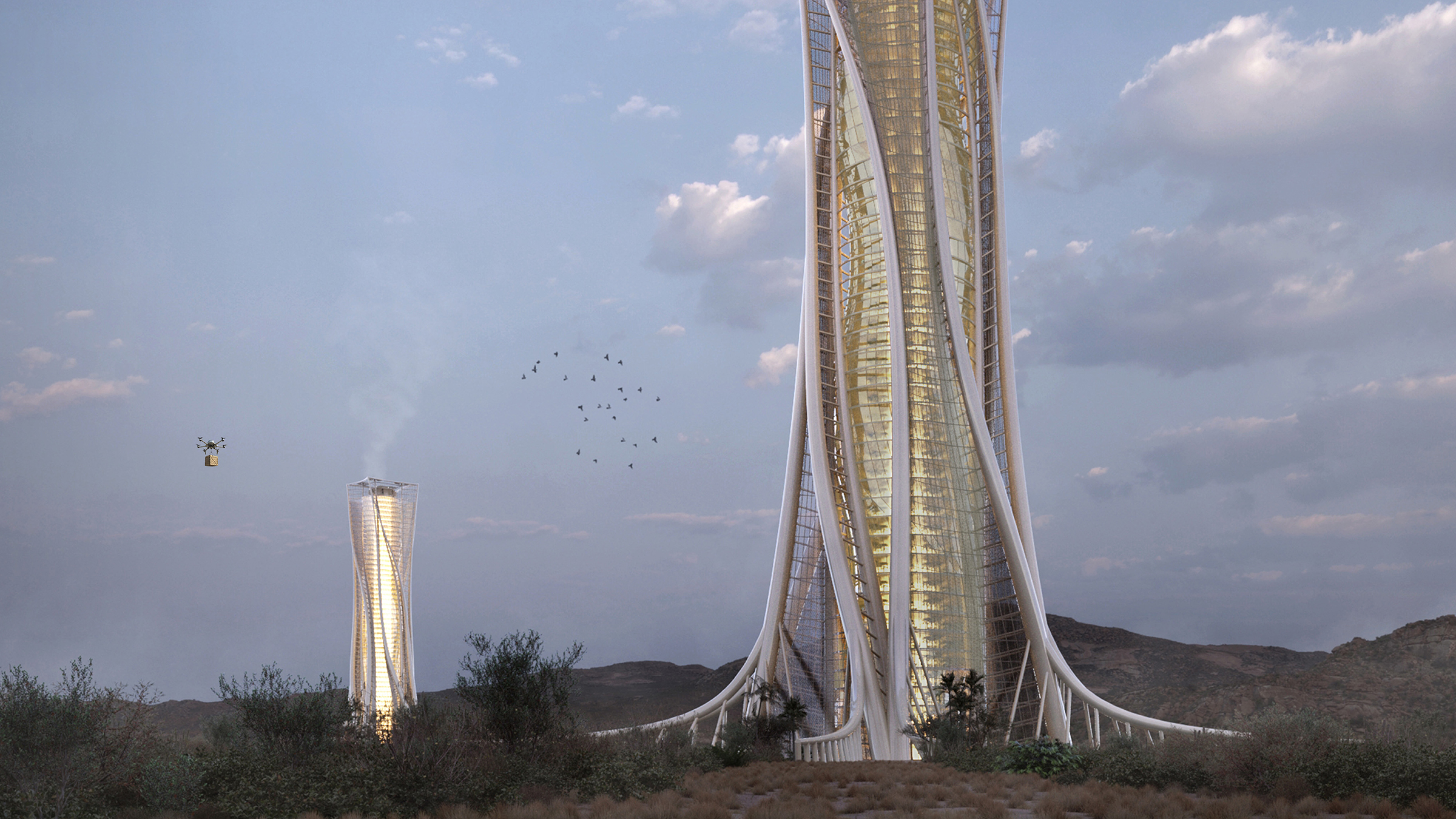
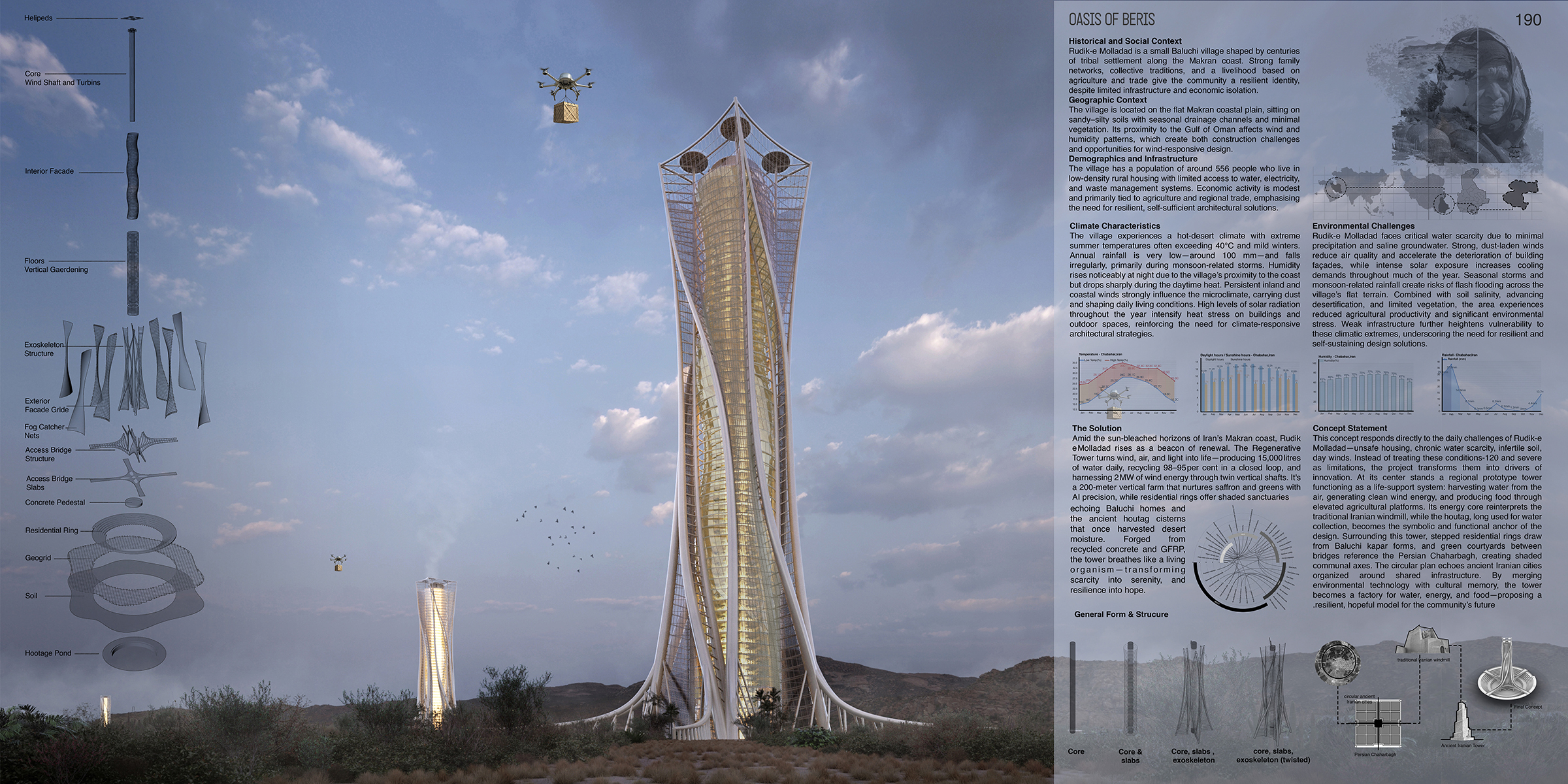
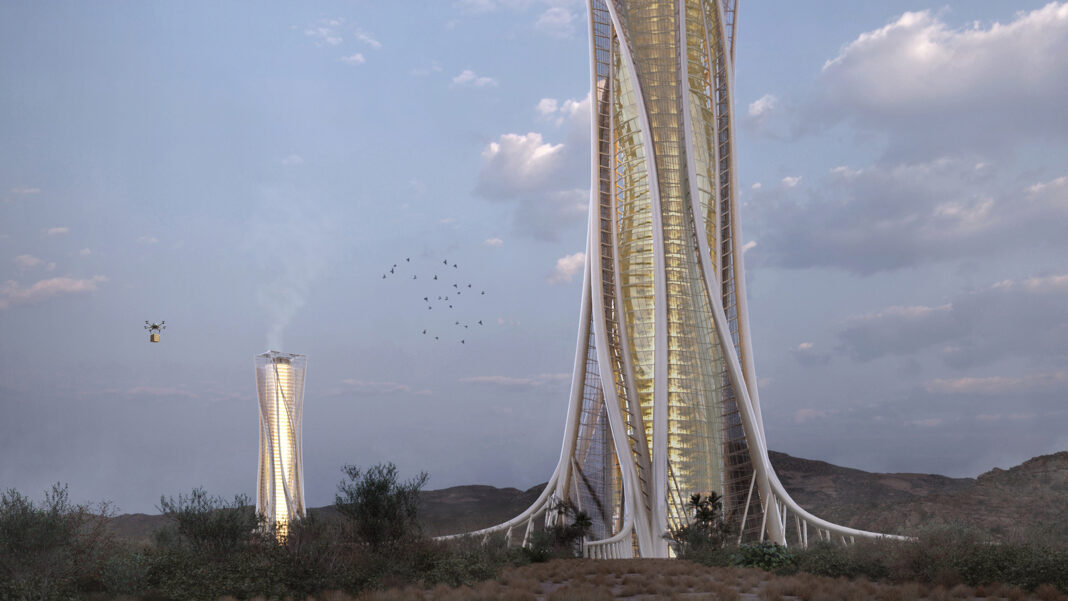
Meanwhile, a team of Iranian architects received an Honorable Mention in the 2025 Skyscraper Competition for their “Regenerative Tower” proposal on Iran’s Makran coast.
Unlike Zaslavsky’s energy-focused concept, the Iranian project imagines the tower as an entire ecosystem. The design combines wind energy generation, atmospheric water harvesting, food production, housing and climate adaptation in a single 200-metre structure.
The tower’s twin wind shafts generate energy. A butterfly-like exoskeleton captures moisture from the air. Vertical farms produce vegetables, fruit and medicinal crops. Residential rings provide shaded housing inspired by traditional Baluchi architecture. The project claims it could generate up to 15,000 litres of water per day while recycling nearly all of its water in a closed-loop system.
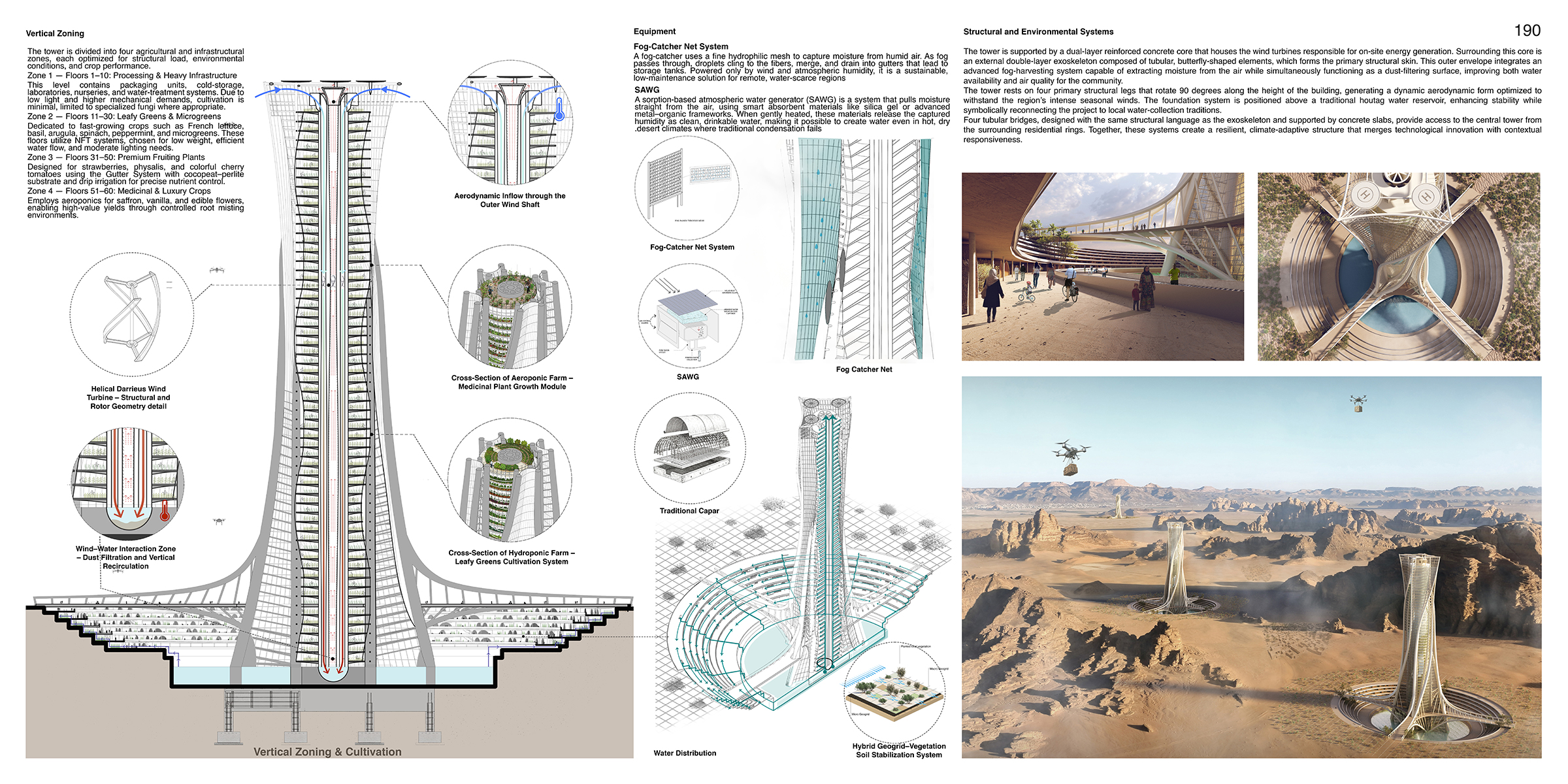
Although the project does not explicitly employ the classic evaporative downdraft system developed by Carlson and Zaslavsky, its philosophy is strikingly similar: use desert heat, wind and humidity not as obstacles but as resources.
What links these projects is not simply a tower. It is a way of thinking.
Carlson and Zaslavsky believed deserts should not be viewed as barren landscapes waiting for resources to be imported. They believed deserts themselves contained enormous untapped energy. Heat, dryness, wind and seawater could be transformed into electricity, water and prosperity.
China’s methane-removal research expands the concept into the realm of climate engineering. Iran’s Regenerative Tower expands it into urban design and community resilience.
Neither project has yet delivered a functioning tower. But both suggest that Zaslavsky’s dream may have been ahead of its time. From the engineering literature, Carlson appears to have been an American engineer/inventor, and the concept emerged in the United States before being adopted and extensively studied in Israel during the 1970s–1990s. The Israeli work is much better documented than Carlson’s own biography.
Nearly half a century after its invention, Dan Zaslavsky’s giant Energy Tower may finally be finding its moment.