
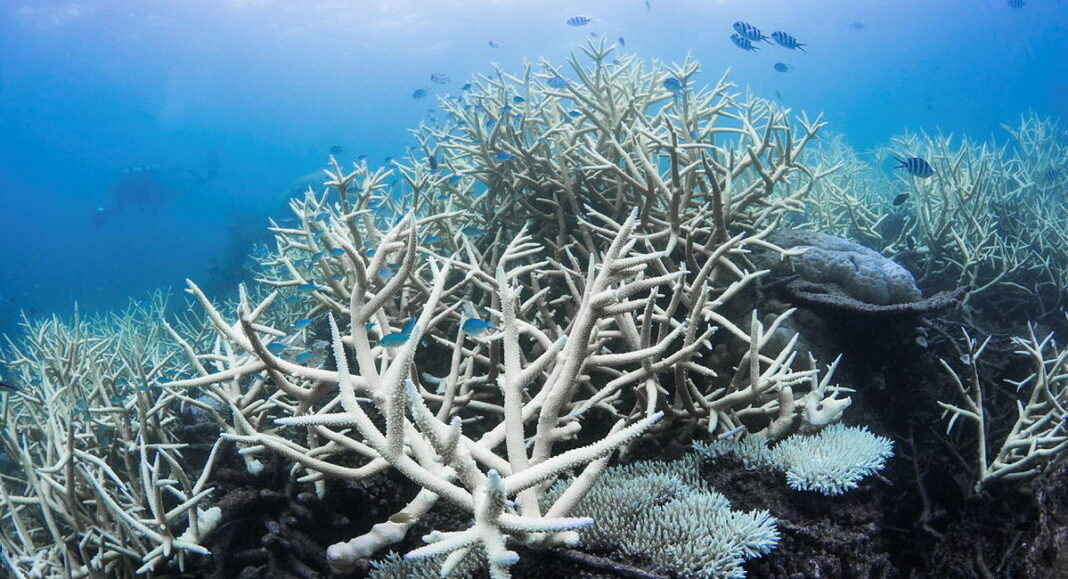

Coral reefs are dying in slow motion, and much of the damage is now visible from space.
From Australia’s Great Barrier Reef to the Red Sea and the Caribbean, marine heatwaves fueled by climate change are pushing corals beyond their limits. Green Prophet has reported on coral bleaching events across the Middle East and worldwide, from warming seas in the Gulf of Aqaba to the growing threat of heat stress on tropical reefs that support fisheries, tourism and coastal protection.
Now researchers at the Woods Hole Oceanographic Institution (WHOI) in the US say they have developed a way to predict coral bleaching five to six months before it occurs, potentially giving reef managers enough time to intervene and save vulnerable corals.
The study, published in Communications Earth and Environment, introduces a new forecasting tool called the Bleaching Event Early Predictor (BEEP), which links coral bleaching on the Caribbean island of Curaçao to the alignment of three major climate patterns in the Atlantic and Pacific oceans.
“Existing bleaching forecasts track heat stress in near-real time, and also rely on generalized thresholds for predicting bleaching risk, which means they often do not provide reef managers and restoration practitioners with enough lead time to prepare and respond effectively, or the predictions are inaccurate,” said Mariya Galochkina, lead author of the study and MIT-WHOI Joint Program doctoral researcher.
“We take a different approach by using large-scale climate patterns that interact to shape regional ocean and atmosphere conditions with a time lag, which lets us identify bleaching risk months in advance.”
Coral bleaching occurs when ocean temperatures become too warm and corals expel the microscopic algae that provide most of their energy and vibrant colors. If temperatures remain elevated for too long, corals can starve and die.
The consequences extend far beyond the reef itself.
Coral ecosystems support approximately 25% of all marine species despite covering less than 1% of the ocean floor. Hundreds of millions of people depend on reefs for food, tourism income and protection from storms and coastal erosion.
In Curaçao, coral reefs contribute hundreds of millions of dollars annually to the local economy through tourism and fisheries. Yet the new research suggests significant bleaching events only began around 1990, after decades of ocean warming had already altered local conditions.
To uncover this history, WHOI researchers examined 44 coral cores collected from Curaçao reefs. Much like tree rings record droughts and fires, coral skeletons preserve evidence of environmental stress. Using CT scans, scientists reconstructed a 72-year bleaching record stretching from 1950 to 2022.
Their analysis revealed that bleaching events consistently occurred when three large climate systems aligned in specific ways: the Atlantic Multidecadal Variability, the El Niño-Southern Oscillation, and the North Atlantic Oscillation.

When these climate patterns combine, they weaken regional winds and suppress cooling ocean currents that normally protect reefs from overheating. The result is a marine heatwave capable of triggering widespread bleaching.
“Existing global observing systems help provide critical data to climate prediction centers to monitor and skillfully predict these climate modes months in advance,” said co-author Caroline Ummenhofer, a climate scientist at WHOI.
“Capitalizing on these efforts, BEEP offers a novel tool to reef managers for risk mitigation.”
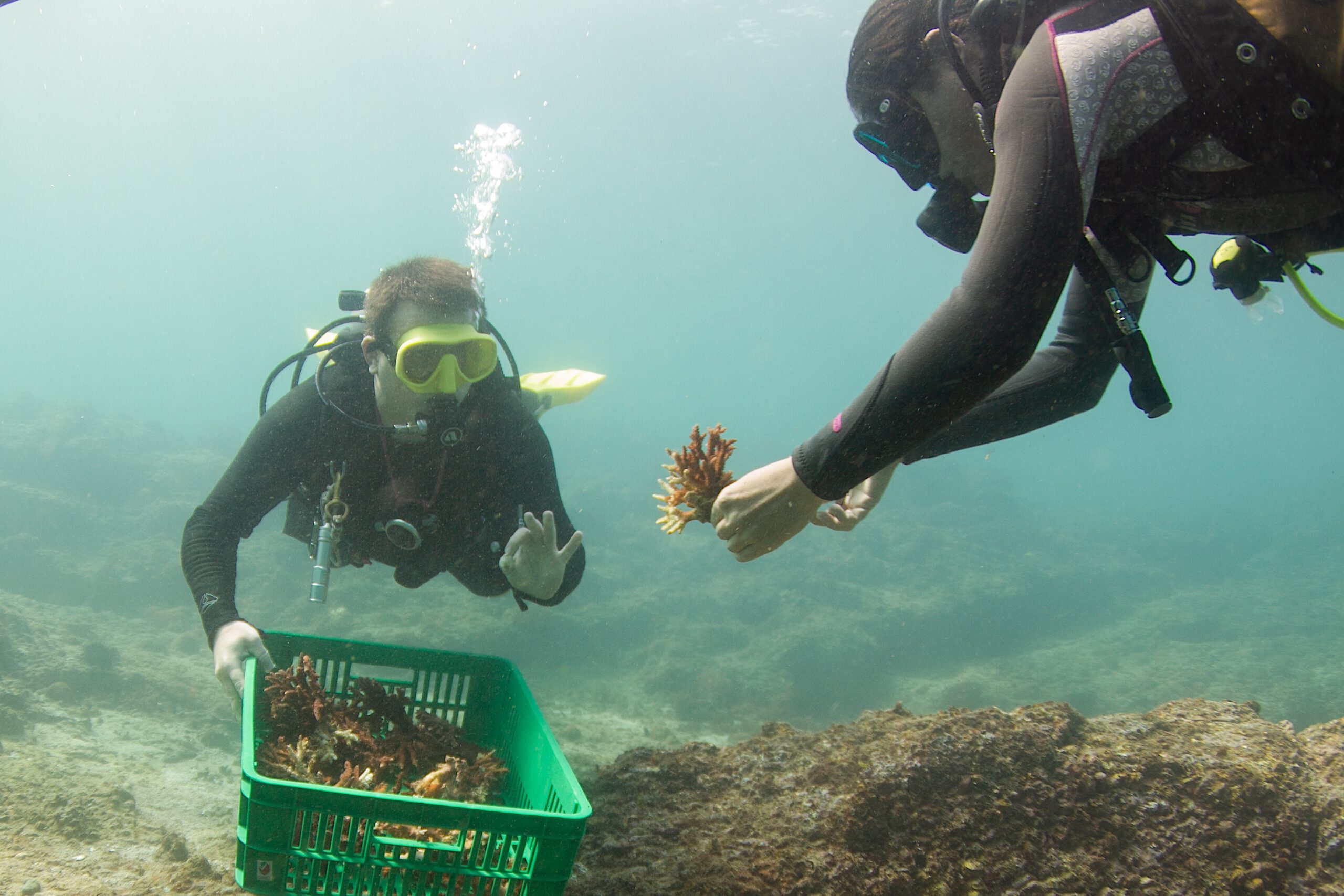
The implications could be significant for coral restoration programs. A five-to-six-month warning could allow conservation groups to relocate coral fragments from vulnerable reef nurseries into cooler waters or temporary land-based facilities before dangerous temperatures arrive.

The researchers say the forecasting framework currently applies to Curaçao but could potentially be expanded to reefs across the Caribbean and eventually other tropical regions.
The study also highlights the value of long-term climate monitoring and publicly available scientific data.
“Our work shows how basic science can be rapidly translated into solutions for real-world challenges, but these breakthroughs don’t come from thin air,” said Anne Cohen, senior scientist at WHOI and co-author of the study.
“They’re built on decades of investment in fundamental research and continuous Earth-system monitoring, including satellites. And BEEP is only possible because the agencies that monitor our planet make that data freely available.”
While early warnings cannot stop climate change, they may help reduce some of its ecological damage.
Scientists estimate that the world has already lost roughly half of its shallow-water coral reefs since the 1950s. Mass bleaching events that once occurred every few decades are becoming more frequent as ocean temperatures continue to rise.
“Coral reefs are among the most vulnerable ecosystems on the planet,” said Cohen. “Advances like this give us a better chance to protect them in a warming ocean.”
The WHOI team hopes to expand BEEP into a broader regional forecasting system that could help governments, conservation organizations and reef restoration programs prepare for bleaching events before they occur.
“Our research and understanding of the global climate system can help lead to practical solutions for one of the ocean’s most urgent challenges,” said Cohen.
For coral reefs facing an increasingly hot future, six months’ warning could make the difference between survival and collapse.


 in the US say they have developed a way to predict coral bleaching five to six months before it occurs, potentially giving reef managers enough time to intervene and save vulnerable corals.)