This furniture isn’t built, it grows from mushrooms

Anomalia transforms waste into furniture

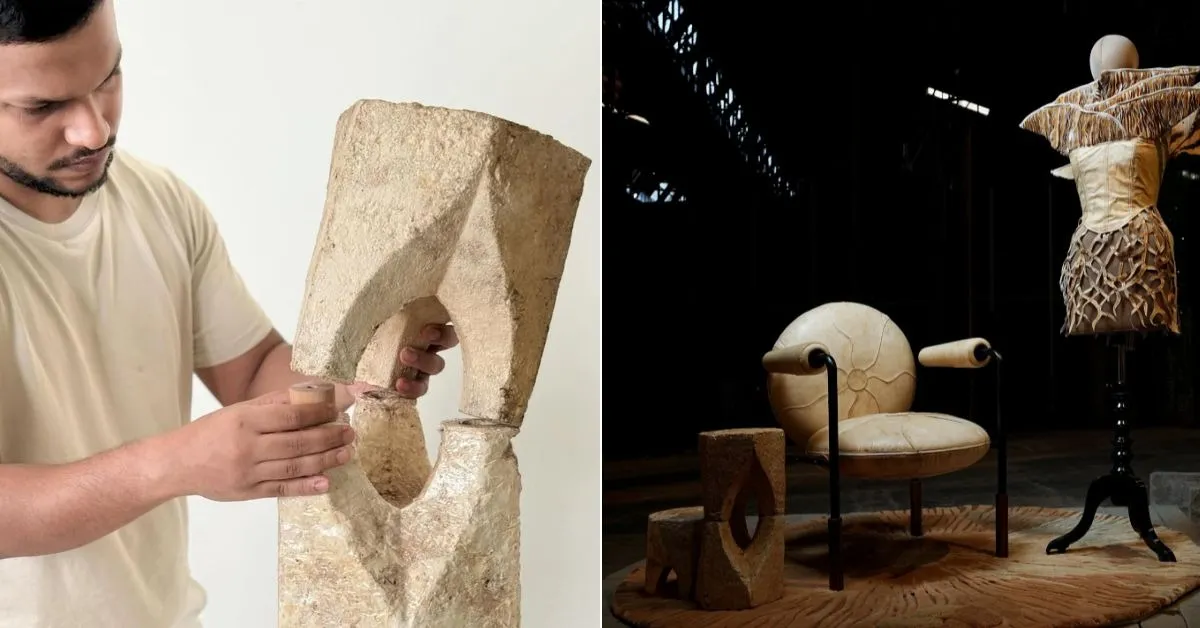
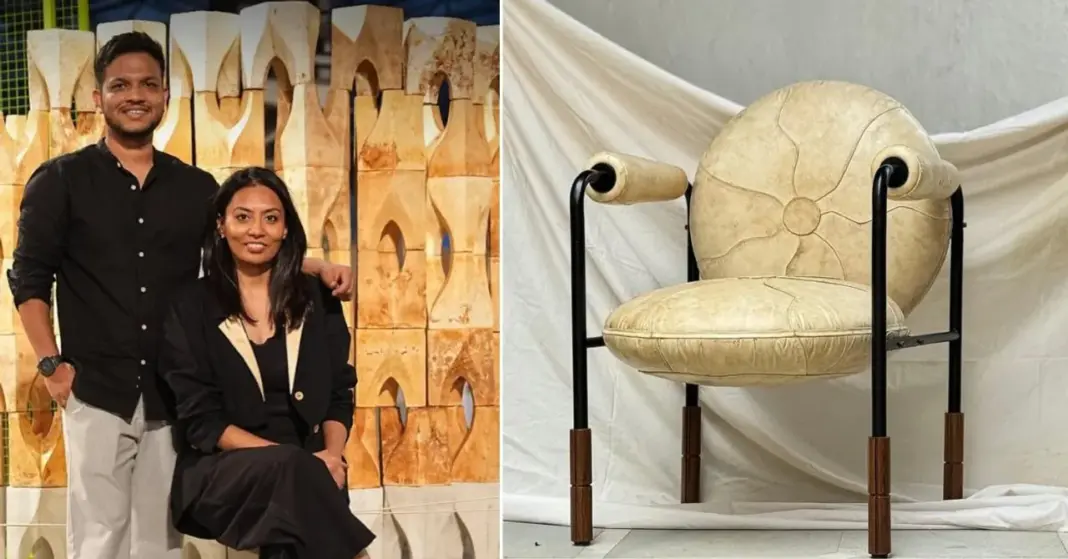
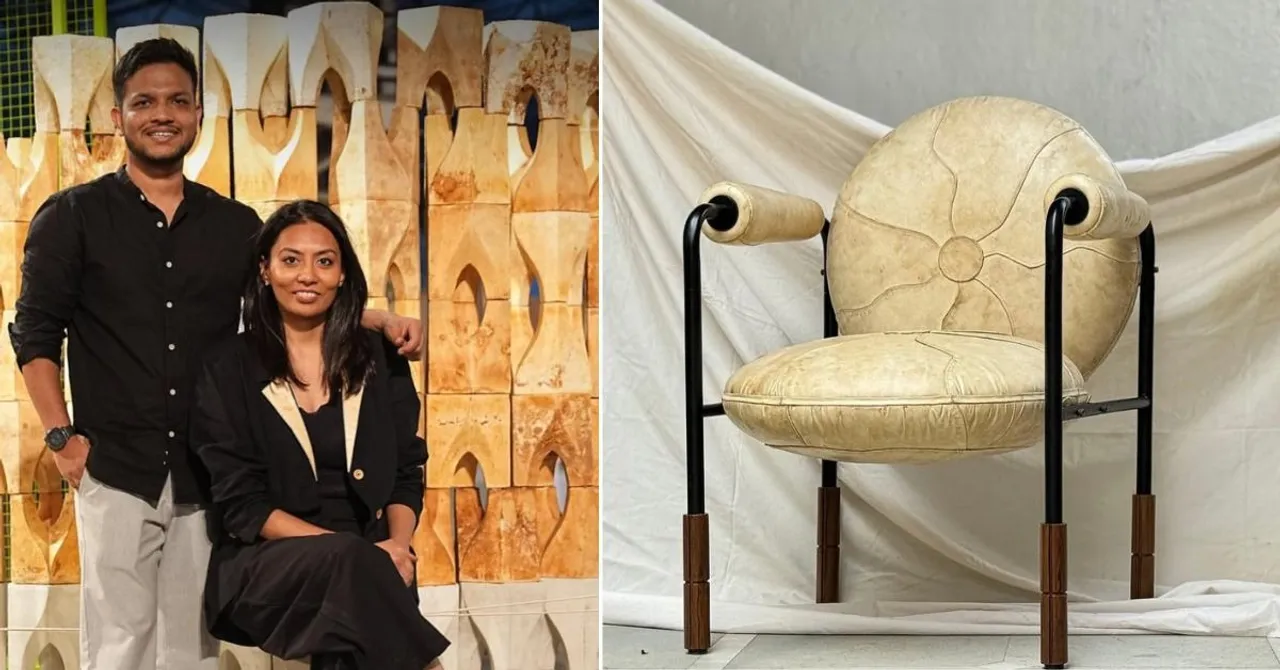
In Mumbai, architects Bhakti Loonawat and Suyash Sawant are proving that furniture doesn’t always have to be cut, nailed, or welded together. Through their design practice Anomalia, the duo is coaxing mushrooms into consoles, blocks, and textiles—lightweight, durable, and fully biodegradable pieces that challenge the way we think about materials.

Step inside a sunlit Mumbai apartment and you’ll find a console table that appears sleek and conventional at first glance. Look closer, though, and its supporting columns are not wood, stone, or steel, but mycelium—the filamentous root network of fungi.
mushroom furniture, mycelium design, sustainable furniture India, circular design materials, eco furniture Mumbai, Bhakti Loonawat, Suyash Sawant, Anomalia architecture, fungi-based materials, biodegradable furniture, Venice Biennale sustainable design, mushroom blocks furniture, mycelium textiles, vegan leather alternatives, crop waste reuse, innovative sustainable materials

Related: a guide to making mushroom paper

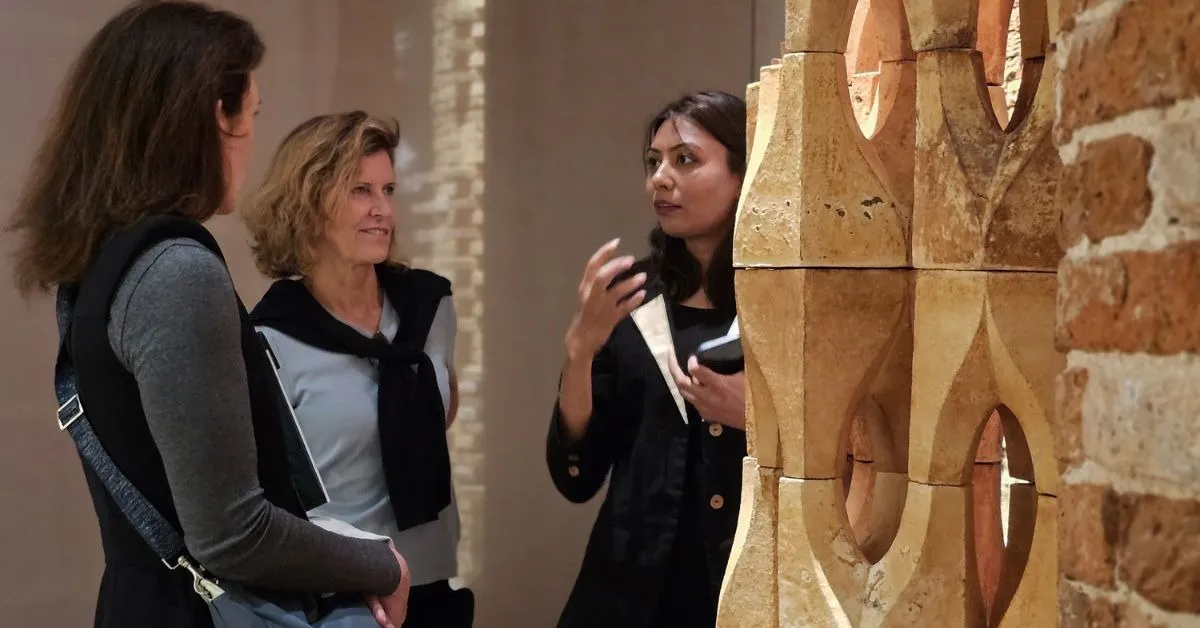
Interior architect Huzefa Rangwala, co-founder of the studio MuseLAB, was among the first to experiment with these pieces. “We bought two consoles for a client project,” he explains. “They’re light, easy to move, and strong enough to hold everyday use, but they don’t dominate the space. The combination of mushroom bases with a wooden top feels familiar yet innovative.”
mushroom furniture, mycelium design, sustainable furniture India, circular design materials, eco furniture Mumbai, Bhakti Loonawat, Suyash Sawant, Anomalia architecture, fungi-based materials, biodegradable furniture, Venice Biennale sustainable design, mushroom blocks furniture, mycelium textiles, vegan leather alternatives, crop waste reuse, innovative sustainable materials

For Rangwala, whose work frequently intersects with sustainability, the appeal lies in supporting material innovation. “Design has to move beyond surface aesthetics,” he adds. “If new materials reduce waste and emissions, we all benefit.”

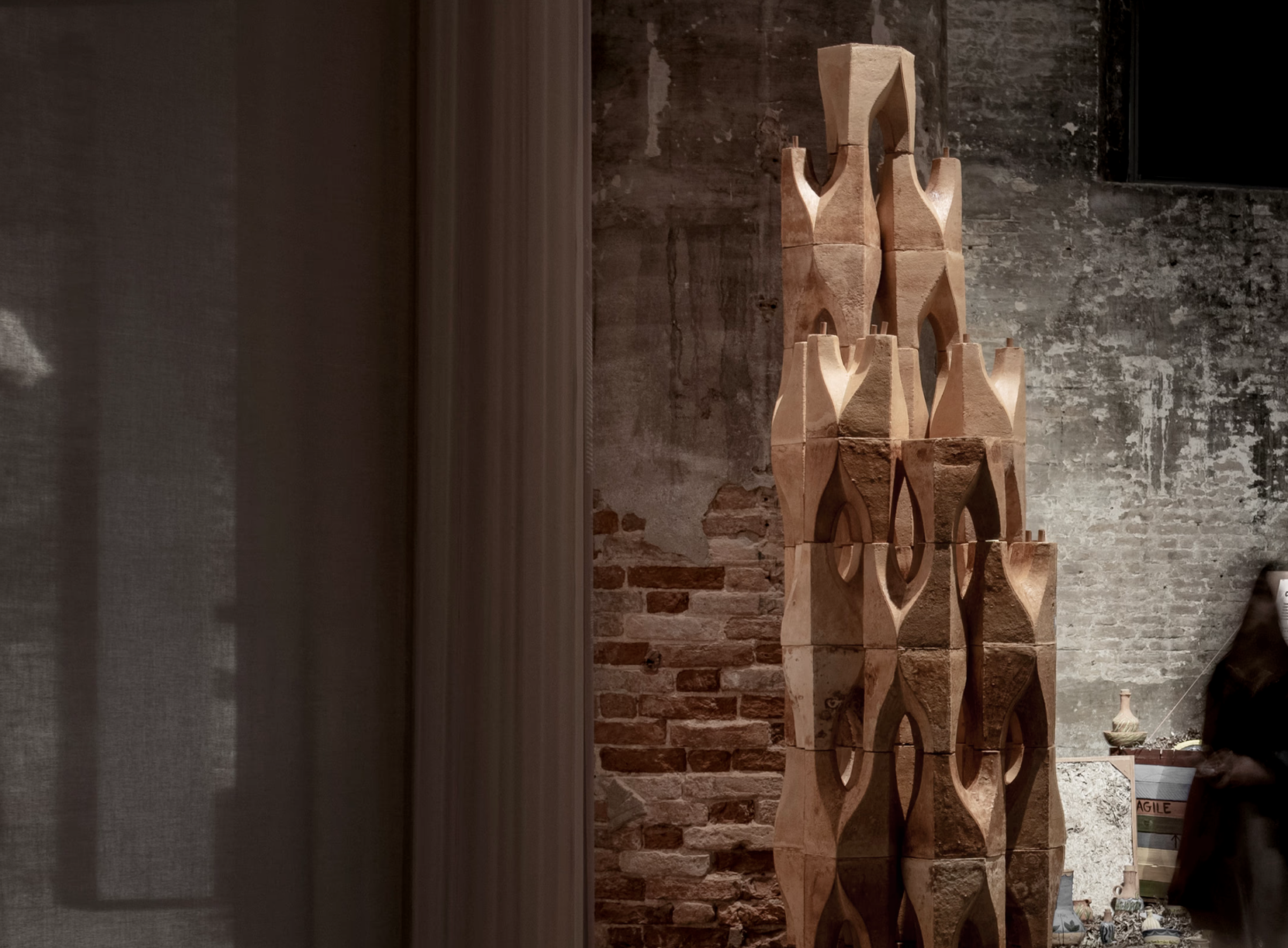
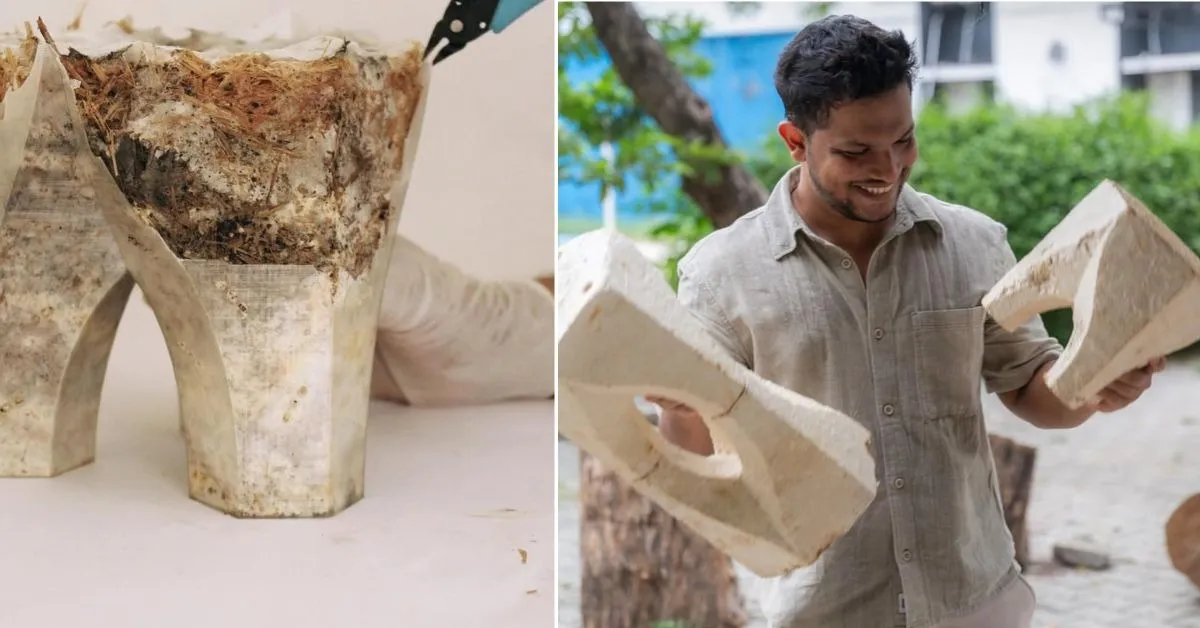
Globally, mycelium has been explored as an alternative for packaging, textiles, and even fashion. In India, however, furniture applications remain rare. Anomalia’s “Grown Not Built” collection changes that by offering modular blocks made from agricultural waste bound with mycelium.
mushroom furniture, mycelium design, sustainable furniture India, circular design materials, eco furniture Mumbai, Bhakti Loonawat, Suyash Sawant, Anomalia architecture, fungi-based materials, biodegradable furniture, Venice Biennale sustainable design, mushroom blocks furniture, mycelium textiles, vegan leather alternatives, crop waste reuse, innovative sustainable materials mushroom furniture, mycelium design, sustainable furniture India, circular design materials, eco furniture Mumbai, Bhakti Loonawat, Suyash Sawant, Anomalia architecture, fungi-based materials, biodegradable furniture, Venice Biennale sustainable design, mushroom blocks furniture, mycelium textiles, vegan leather alternatives, crop waste reuse, innovative sustainable materials mushroom furniture, mycelium design, sustainable furniture India, circular design materials, eco furniture Mumbai, Bhakti Loonawat, Suyash Sawant, Anomalia architecture, fungi-based materials, biodegradable furniture, Venice Biennale sustainable design, mushroom blocks furniture, mycelium textiles, vegan leather alternatives, crop waste reuse, innovative sustainable materials

Each block weighs only 1.5 kilograms, yet can withstand compressive loads of up to 1.5 tons—a tenth the weight of concrete with comparable strength. From these building blocks, Bhakti and Suyash assemble stools, tables, shelves, or partitions. A second line, “MycoLiving”, extends their experiments into textiles, producing pliable sheets of mushroom material as vegan alternatives to leather for seating and upholstery.

“The beauty of mycelium is its circularity,” Bhakti says. “Conventional furniture ends up in landfills. Ours can return safely to the soil within six months.”

The couple first tested mycelium during the pandemic, growing fungi in cupcake trays in their apartment kitchen. Realising its structural potential, they scaled up experiments into bricks, partitions, and eventually furniture. By 2022, they had launched Anomalia.

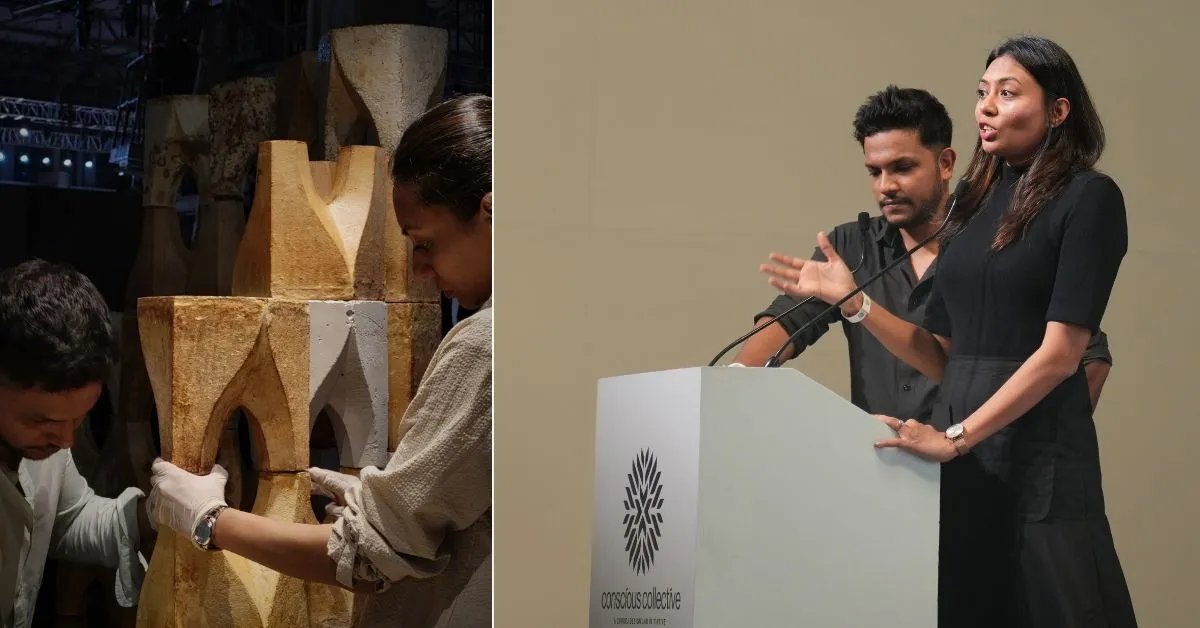
Just three years later, their mushroom furniture was showcased at the Venice Biennale in 2025, and in Seoul they unveiled a 4-meter-wide mycelium façade—evidence that fungi could go beyond interiors into architecture itself.

Sustainability Rooted in Waste

India’s agricultural sector generates vast crop residues, much of which is burned, worsening air pollution. Anomalia diverts this waste stream, binding it with fungi to create new material value.

“It’s biodegradable, strong, and avoids landfill,” says Suyash. “We don’t want our work to look like ‘eco furniture.’ It should feel elegant and timeless while also being regenerative.”

Designing with fungi isn’t like working with cement or timber. Mycelium growth is vulnerable to contamination and moisture, requiring controlled airflow and drying. Untreated, it doesn’t hold up well outdoors. To extend its life, Anomalia uses natural coatings like beeswax or lime plaster and bakes blocks to deactivate growth while preserving strength.

Financially, too, the process is demanding. The pair initially relied on savings and small grants, while running their architectural practice in parallel. “It’s bootstrapped but intentional,” Bhakti notes. “We want to grow responsibly, not mass-produce.”

So far, Anomalia has sold around 100 mycelium blocks and a handful of furniture units in Mumbai and Surat, with plans to set up manufacturing in India while collaborating with larger suppliers abroad. But the ambition stretches further.

“We dream of growing an entire house—walls, partitions, even the roof—out of fungi,” Suyash says. “That would demonstrate its true structural potential.”

For Anomalia, mushroom furniture is not just about creating new products; it’s about re-imagining design as a circular system. Materials, they believe, should serve their purpose and then return gracefully to the earth.

Hot this week

Why Health Systems Are Reaching a Turning Point

Health emerges from a continuous energy and material flow from water through food to human physiology. Technical energy systems support this cycle through water treatment, agriculture, and infrastructure.

Sustainability That Sells: How Profit and Purpose Come Together in the Hive

Whether you are a commercial grower, hobbyist beekeeper or retail equipment supplier, this system opens a new income stream with minimal environmental impact.

The Fitness App Revolution: Building the Future of Wellness Through Strategic Development

In an era where smartphones are ubiquitous and health consciousness is at an all-time high, the fitness industry has undergone a radical digital transformation. Fitness applications have moved far beyond simple pedometers, evolving into comprehensive wellness platforms that serve as personal trainers, nutritionists, and community hubs right in our pockets.

A Brief History of Basil From India to Italy

Beloved, fortunate, sweet, and royal; an herb with a long and storied history in Asia and across the world. Called by many names, basil has featured in previous Green Prophet articles, so enjoy another serving, a brief history of basil.

How Renewable Energy is Revolutionizing the Way We Power Our World

Solar has become the star of the transition thanks to modular hardware and straightforward installation. It fits dense cities and remote towns alike. Many companies are turning to rooftop arrays and carport systems - and exploring commercial solar installation as a practical way to lock in future savings.

Topics

Why Health Systems Are Reaching a Turning Point

Health emerges from a continuous energy and material flow from water through food to human physiology. Technical energy systems support this cycle through water treatment, agriculture, and infrastructure.

Sustainability That Sells: How Profit and Purpose Come Together in the Hive

Whether you are a commercial grower, hobbyist beekeeper or retail equipment supplier, this system opens a new income stream with minimal environmental impact.

The Fitness App Revolution: Building the Future of Wellness Through Strategic Development

In an era where smartphones are ubiquitous and health consciousness is at an all-time high, the fitness industry has undergone a radical digital transformation. Fitness applications have moved far beyond simple pedometers, evolving into comprehensive wellness platforms that serve as personal trainers, nutritionists, and community hubs right in our pockets.

A Brief History of Basil From India to Italy

Beloved, fortunate, sweet, and royal; an herb with a long and storied history in Asia and across the world. Called by many names, basil has featured in previous Green Prophet articles, so enjoy another serving, a brief history of basil.

How Renewable Energy is Revolutionizing the Way We Power Our World

Solar has become the star of the transition thanks to modular hardware and straightforward installation. It fits dense cities and remote towns alike. Many companies are turning to rooftop arrays and carport systems - and exploring commercial solar installation as a practical way to lock in future savings.

How does one start prepping?

Faced with an extreme winter storm this year, Americans wonder how to be prepared for catastrophe. Miriam has lived through wars in the Middle East - so she's prepared on giving you a guide to prepping.

Fishermen sue tire manufacturers on behalf of the salmon

A federal trial in San Francisco has brought US tire manufacturers, fishing groups, and environmental scientists into court over a chemical most drivers have never heard of — but which scientists say may be silently reshaping aquatic ecosystems.

Listening to Water: Tarek Atoui’s Next Work for Tate Modern

Born in Beirut, Lebanon in 1980 and now living in Paris, Atoui has spent years building instruments that don’t sit comfortably in concert halls. Many of them involve water, glass, and ceramics — materials that react to sound instead of simply producing it.

Related Articles

Popular Categories