News the Pope will love: Faith and ecology teachings making world more holy

The Pope has come out, some might argue too late, with his treaty for Climate Change. How can faith leaders, or at least the Church position itself in the face of massive species die-offs, and the change in the way of life as we know it? Can the Pope’s Encyclical, the treaty itself, aims to serve as some manifesto as how the faithful should approach the impending doom humanity faces?

Perhaps. What’s most useful though in what I have siphoned from the report is the advice that the Pope has given and this resonates with eco-faith groups in the Holy Land, who have taken the treaty to heart.

After surveying hundreds of seminaries in North America, Israel, and Italy, a new report by the Jerusalem NGO, The Interfaith Center for Sustainable Development, reveals what they call “an emerging phenomenon” — that over 160 faith and ecology courses taught in recent years.

This is tailwind for the Pope’s hope, as he wrote in Encyclical: “It is my hope that our seminaries and houses of formation will provide an education in responsible simplicity of life, in grateful contemplation of God’s world, and in concern for the needs of the poor and the protection of the environment.”

The Interfaith Center, active years before the Pope took a stance on climate change, published a Report on Faith and Ecology in North American Seminaries, which reveals how seminaries are part of the faith-based ecological transformation for which Pope Francis has called for.

The group also unveiled a searchable online faith and ecology syllabi collection, which makes scores of courses on faith and ecology easily accessible for instructors and administrators.

The Report and syllabi collection were created based on support of the Julia Burke Foundation.
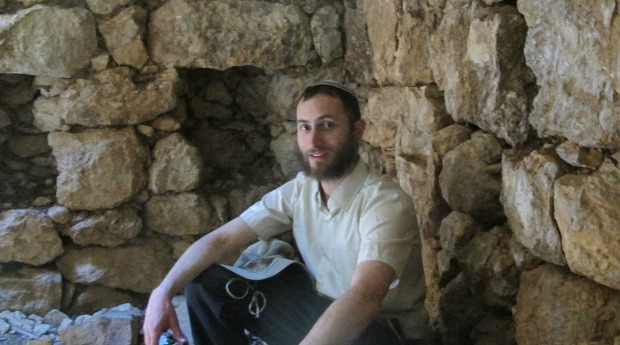
yonathan neril
“We found over 160 courses on faith and ecology at more than 50 seminaries offered in recent years,” says Rabbi Yonatan Neril, ICSD’s founder and director, pictured above.  “While only 22% of the seminaries we surveyed offered such courses, I think Pope Francis’ call will help to move others to follow suit.”

With thousands of seminarians enrolled globally in these courses in recent years, part of the next generation of religious leadership is emerging better equipped to teach on creation care and stewardship.

Scores of Jewish, Christian, and Muslim seminaries exist in the Holy Land, and they can make further efforts to increase their teaching in this area.

Among them, the Schechter Rabbinical Seminary in Jerusalem is the only seminary in Israel to offer a semester-long course on faith and ecology.

The Interfaith Center for Sustainable Development works to catalyze a transition to a sustainable human society through the active leadership of faith communities. Thanks to this group more and more people of the cloth are looking to hold the hand of God as they look to change ecological education for the better.

Karin Kloosterman
Karin Kloostermanhttp://www.greenprophet.com
Karin Kloosterman is an award-winning journalist, innovation strategist, and founder of Green Prophet, one of the Middle East’s pioneering sustainability platforms. She has ranked in the Top 10 of Verizon innovation competitions, participated in NASA-linked challenges, and spoken worldwide on climate, food security, and future resilience. With an IoT technology patent, features in Canada’s National Post, and leadership inside teams building next-generation agricultural and planetary systems — including Mars-farming concepts — Karin operates at the intersection of storytelling, science, and systems change. She doesn’t report on the future – she helps design it. Reach out directly to [email protected]
1 COMMENT

Comments are closed.

Hot this week

How Renewable Energy is Revolutionizing the Way We Power Our World

Solar has become the star of the transition thanks to modular hardware and straightforward installation. It fits dense cities and remote towns alike. Many companies are turning to rooftop arrays and carport systems - and exploring commercial solar installation as a practical way to lock in future savings.

How does one start prepping?

Faced with an extreme winter storm this year, Americans wonder how to be prepared for catastrophe. Miriam has lived through wars in the Middle East - so she's prepared on giving you a guide to prepping.

Fishermen sue tire manufacturers on behalf of the salmon

A federal trial in San Francisco has brought US tire manufacturers, fishing groups, and environmental scientists into court over a chemical most drivers have never heard of — but which scientists say may be silently reshaping aquatic ecosystems.

Listening to Water: Tarek Atoui’s Next Work for Tate Modern

Born in Beirut, Lebanon in 1980 and now living in Paris, Atoui has spent years building instruments that don’t sit comfortably in concert halls. Many of them involve water, glass, and ceramics — materials that react to sound instead of simply producing it.

Leading Through a Dual-Energy Transition: Balancing Decarbonisation with Energy Security

Experience in one area of the energy industry isn't enough to guarantee readiness across all the others. That's where a structured program like an MBA in energy can come in. Today's advanced curricula explore energy economics, finance, policy, and strategic management alongside the technical subjects. And when pursuing an energy MBA online, professionals can skill up and retrain without having to step out of the labor market -- an important perk at a time when skilled professionals are already in short supply.

Topics

How Renewable Energy is Revolutionizing the Way We Power Our World

Solar has become the star of the transition thanks to modular hardware and straightforward installation. It fits dense cities and remote towns alike. Many companies are turning to rooftop arrays and carport systems - and exploring commercial solar installation as a practical way to lock in future savings.

How does one start prepping?

Faced with an extreme winter storm this year, Americans wonder how to be prepared for catastrophe. Miriam has lived through wars in the Middle East - so she's prepared on giving you a guide to prepping.

Fishermen sue tire manufacturers on behalf of the salmon

A federal trial in San Francisco has brought US tire manufacturers, fishing groups, and environmental scientists into court over a chemical most drivers have never heard of — but which scientists say may be silently reshaping aquatic ecosystems.

Listening to Water: Tarek Atoui’s Next Work for Tate Modern

Born in Beirut, Lebanon in 1980 and now living in Paris, Atoui has spent years building instruments that don’t sit comfortably in concert halls. Many of them involve water, glass, and ceramics — materials that react to sound instead of simply producing it.

Leading Through a Dual-Energy Transition: Balancing Decarbonisation with Energy Security

Experience in one area of the energy industry isn't enough to guarantee readiness across all the others. That's where a structured program like an MBA in energy can come in. Today's advanced curricula explore energy economics, finance, policy, and strategic management alongside the technical subjects. And when pursuing an energy MBA online, professionals can skill up and retrain without having to step out of the labor market -- an important perk at a time when skilled professionals are already in short supply.

From Green Energy to Healthy Societies: Why old systems thinking is becoming relevant again

Across the Middle East and North Africa, large investments are being made in green hydrogen, renewable energy, water infrastructure and sustainability. Most of these efforts are discussed in the context of climate change, decarbonization and economic diversification. That framing is important, but it may not capture their full value.

We saw peace – an interreligious encounter deep in our eyes

They came from Israel, Palestine, Jordan, Iraq, Yemen, Morocco, Tunisia, Lebanon, Egypt… There are Sunni Muslims, Shiite Muslims, Jews (Orthodox and Reform), Orthodox Christians, Coptic Christians, Protestant Christians, Druze, Baha'is, a Scientologist.

Can biochar reduce ‘Forever Chemicals’ in food if it’s used in farms?

Biochar is produced by heating organic material in a low-oxygen environment so it does not burn. This process, known as pyrolysis, transforms plant matter into a stable, carbon-rich material.

Related Articles

Popular Categories