

How plastics can increase food poisoning

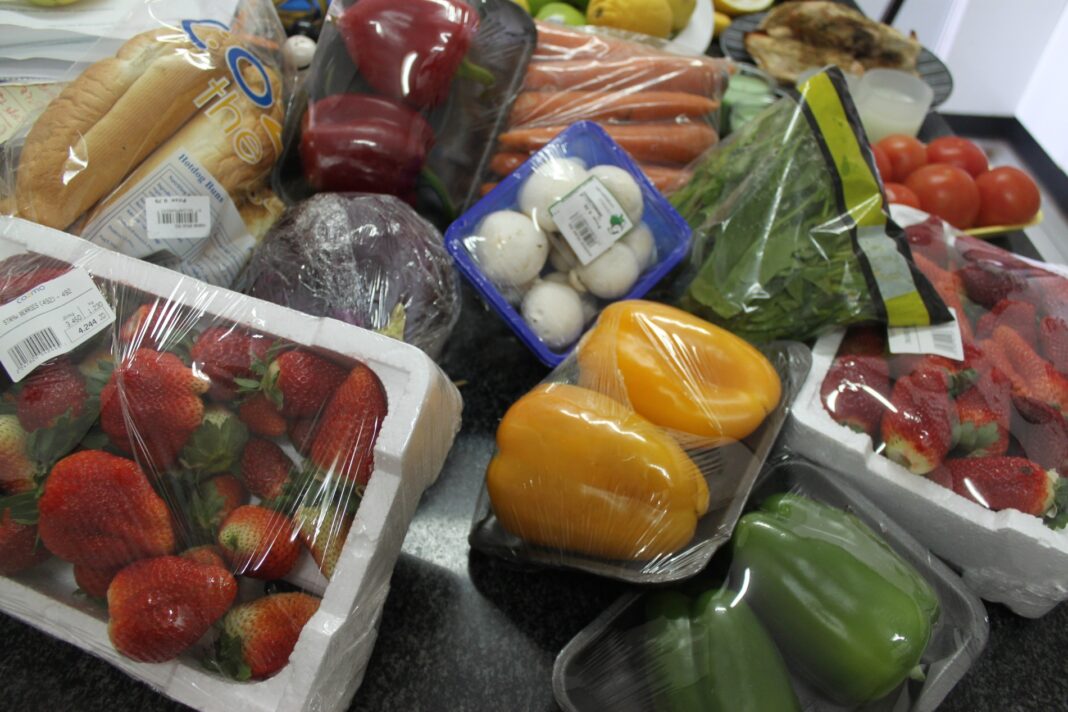
Ground beef comes in a plastic container. How do microplastics react with salmonella and E. coli? A new study

Plastic products are ubiquitous in our food supply chain, shedding microplastics into every part of the human ecosystem. As they degrade, microplastics break down into even smaller fragments called nanoplastics — tiny particles that can affect biological molecules in ways not fully understood.

In a new study, researchers at the University of Illinois Urbana-Champaign examined what happens when nanoplastics interact with Salmonella, potentially affecting food safety and human health.

Salmonella enterica is a major foodborne pathogen that is often found in meat, poultry, and ready-to-eat food. We are testing ground turkey from grocery stores in our lab for a study on food safety, and finding that it is frequently positive for Salmonella.

“If you cook the meat properly, you should not have a problem. However, ground turkey is often packaged in plastic, and we wanted to explore how Salmonella react when they come into contact with plastic polymers,” said senior author Pratik Banerjee.

Banerjee’s team previously studied the interaction of nanoplastics and an E. coli strain responsible for major outbreaks of severe gastroenteritis. In this study, they focused on Salmonella enterica and polystyrene, a commonly used plastic material for food packaging and disposable utensils.

“We examined the physiology of Salmonella in response to nanoplastics, and we found an increased expression of virulence-related genes. The bacteria also formed thicker biofilms, which further indicates they are becoming more virulent,” said Jayita De, a graduate student in Banerjee’s lab and lead author on the paper.

Biofilm is an agglomeration of microorganisms growing together to form a protective layer, increasing survival for pathogenic bacteria under physiological stress. You might see biofilms as a slimy film in your kitchen sink or on your cutting board after handling raw meat.

However, while Salmonella initially showed increased virulence, prolonged exposure to nanoplastics slowed its stress response.

“When the bacteria first encounter nanoplastic particles, they go into offensive mode and become more virulent. But after a while, they start losing their resources and energy, so they switch to defensive mode, which allows them to persist in the environment for a longer time. If the concentration of nanoplastics rises, they can again switch to an offensive mode. It’s a trade-off between offense and defense,” De said.

The overall conclusion is that interaction with nanoplastics induces behavioral changes in Salmonella enterica, but further research is needed to determine the direction and impact of those changes.

Equally concerning is the possibility that nanoplastics can affect antibiotic resistance in Salmonella, Banerjee said.

“Any compound that puts physiological stress on the bacteria can trigger antimicrobial resistance. Nanoplastics are not antimicrobials, but mere exposure to them could convert bacteria that previously were not resistant to a particular antibiotic in a process called cross-resistance,” he explained.

This is the topic of an ongoing study, but initial findings indicate that polystyrene nanoplastics can cause Salmonella to increase the expression of antimicrobial-resistant genes, Banerjee added.

“However, we don’t want to sound the alarm and advocate that people stop using plastics. Plastic packaging provides a lot of benefits, such as reducing food spoilage and waste while keeping expenses low. We don’t know yet whether this is something we should be worried about,” he said.

Banerjee’s research team is among the first to examine the interactions between foodborne pathogens and plastic particles, thereby advancing this emerging field from a food safety perspective. He hopes other researchers around the world will pick up the mantle, because there is a lot more to learn about consequences, risks, and tolerances before any policy recommendations can be made.

Read More

TRENDING

Baby teeth read like tree rings paint a picture of toxins in early life

A new study from the Icahn School of Medicine at Mount Sinai in New York offers a striking insight into how the environments we are born into can quietly shape our brains years later. By analyzing naturally shed baby teeth, the ones tucked under pillows for the tooth fairy, researchers have reconstructed a detailed timeline of exposure to environmental metals during pregnancy and early infancy.

Lululemon pants leech PFAS and plastics into bodies, Texas attorney general claims

Back in late 2025, Green Prophet began asking uncomfortable questions about what’s really inside your yoga pants, from transparency failures (yes, those infamous see-through leggings) to the less visible and scarier issue: Your sweat is unlocking microplastics and chemical coatings sitting in the most absorbent parts of the human body.

Is artificial turf bad for your health?

Artificial turf, the green plastic stuff that is supposed to look like grass, was sold to many home-owners as a clever compromise: a green-looking surface that makes you feel homey, but which needs no mowing. It survives heavy use, and in dry places like Middle East deserts, and in California or Texas, it can replace thirsty lawns. But it is toxic.

From Pilot Plant to Global Stage: How Aduro Clean Technologies’ 2026 Expansion Signals a Turning Point for Chemical Recycling Investors Like Yazan Al Homsi

The company's Next Generation Process (NGP) Pilot Plant in London, Ontario, has officially moved into initial operating campaigns, generating the kind of structured, repeatable data that separates laboratory promise from commercial viability.

erthos uses AI to scale bio-plastics that work in industry

AI and bio-plastics have a formidable crew looking to solve the plastics problem. It uses AI to match opportunities to existing machinery.

How to quiet noise from construction in your office

Streets need to be resurfaced in New York but the humming and grinding noise is unsettling. Noise is environmental pollution. 

EarthX and a blueprint for sustainable investing

Trammell S. Crow, a Dallas-based businessman and father of four, is focusing his efforts on impact investing, and media that focuses on saving the planet through EarthX.

Mining Afghanistan’s Mineral Discoveries Similar to Avatar

Now that American forces in Afghanistan are commemorating the longest period of any war that America has been involved in, including the 1965-73 Vietnam War, the recent discoveries of large and extremely valuable mineral and metal deposits may finally bring to light a reason to continue the presence of US fighting forces in this war torn and backward country.

From Pilot Plant to Global Stage: How Aduro Clean Technologies’ 2026 Expansion Signals a Turning Point for Chemical Recycling Investors Like Yazan Al Homsi

The company's Next Generation Process (NGP) Pilot Plant in London, Ontario, has officially moved into initial operating campaigns, generating the kind of structured, repeatable data that separates laboratory promise from commercial viability.

Nobul’s Regan McGee on Shareholder Value: “Complacency Is the Silent Killer” 

Why the governance framework designed to protect shareholders so...

Should You Invest in the Private Market?

startustartup Unlike public stock exchanges, which offer daily trading, strict...

How to build a 100-year-company

Kongō Gumi is a Japanese construction company, purportedly founded in 578 A.D., making it the world's oldest documented company. What can we learn about building sustainable businesses from them?

How AI Helps SaaS Companies Reduce Repetitive Customer Support Work

SaaS products are designed for large numbers of users with different levels of experience, and also in renewable energy.

Popular Categories