How to make your deck sustainable


deck pallets

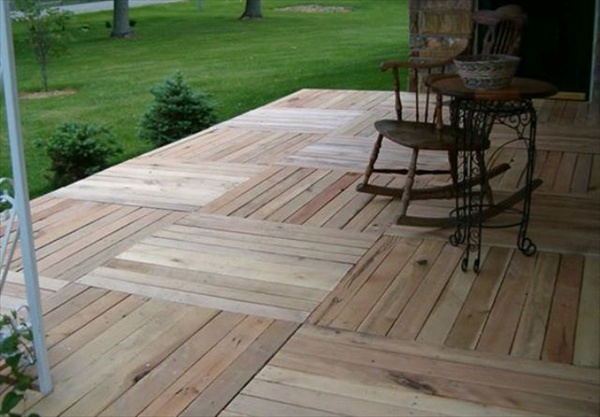
A deck made from pallets. Source: unknown. You can also just use pallets for the frame.

We know that the wood industry is causing deforestation, harm to animals and people and climate change. That affects us all. A new UN project to track illegal timber is now set up, but play your part by making “smart wood” choices when building a new deck this summer, or winter if you are in temperate climates.

Look for the FSC label

Order wood through a trusted source and look for the FSC label that the wood was harvested sustainably. FSC labels are used on products to identify that the product has been verified to come from an FSC-certified source. FSC labels can be found on millions of products around the world: from toilet roll to your favourite book, that milk carton in your fridge, and other food products. I have friends who were part of the founding initiatives of the FSC in Canada. Read about its history here. Lumber can be treated with chemicals that are considered harmful to your health like arsenic and copper so not all “natural” wood is really good for you. 

Work with Trusted Builders

Hiring experienced professionals ensures that your deck is built sustainably and safely. A knowledgeable contractor will help you source eco-friendly materials, minimize waste, and use construction methods that reduce environmental impact. When selecting a builder, look for companies with a commitment to sustainability and transparent sourcing practices. If you’re in Illinois, consider reaching out to deck builders Naperville who specialize in environmentally friendly designs and materials. They can also guide you on maintaining your deck to extend its lifespan, reducing the need for replacements. Choosing the right builder not only enhances durability but also ensures your deck complements the surrounding environment.

Reclaim old wood

Consider using vintage wood if it’s hardwood. The video below shows how you can build a new deck with old wood.

Upcycle pallets

If you don’t mind that it won’t last long, build a deck from pallets. You can also just use them for the frame and add a layer of higher quality wood.

Composite wood

Consider composite wood. It can also be used for decks. But never used it on raised beds for gardens, as it contains plastics and chemicals that can leach into your food.  Composite wood typically offers between 15 to 20 years life span, lasting way more than wood. Invented in the late 1980s, wood-plastic composite decking (also called “composite wood decking”) is made of wood fibers encased in plastic. Composite decking is readily available at big box home improvement stores like The Home Depot and Lowe’s, as well as local lumberyards throughout the US.

As more builders and homeowners learn of wood decking problems, many are turning to high-performance composite decking.

• Resistant to severe weather.

• Very minimal maintenance cost.

• Thanks to its plastic feature, it is highly mould resistant, irrespective of how exposed to moisture it is. 

• It is lightweight and has a lock style, making boards easy to figure out for a successful DIY installation

If you go for “wood” find wood that is harvested local to you. If the wood you buy is forested in Canada, sent to China for treatment and then sold to you in Texas it is not sustainable wood. Find local, just like strawberries.

Avoid treated wood for your health and for the fish:

Chromium copper arsenate, or CCA, according to the Environmental Working Group, was once widely used as a preservative and insecticide in pressure-treated wood. In 2001, tests by the group and the Healthy Building Network showed that wood treated with CCA could expose people to dangerous levels of arsenic, spurring the Environmental Protection Agency to force its removal from the market.

Copper-based chemicals replaced the arsenic preservative, but some of them are also hazardous. For example, alkaline copper quaternary and copper azole are extremely toxic to aquatic life and should never be used in areas where runoff can be carried to surface waters, marshes or coastal areas. Borate-based wood preservatives are also common, but they can leach out of wet wood, leaving the wood vulnerable to decay.

Don’t build a deck

People everywhere are noticing the benefits of grounding. How about just planting yourself in the grass or wild weeds and avoid the deck altogether. More sustainable long lasting options could be ceramic tiles, like the ones used in Mexico and Costa Rica although these tend to break during the freeze and melt in really cold climates. 

Karin Kloosterman
Karin Kloostermanhttp://www.greenprophet.com
Karin Kloosterman is an award-winning journalist, innovation strategist, and founder of Green Prophet, one of the Middle East’s pioneering sustainability platforms. She has ranked in the Top 10 of Verizon innovation competitions, participated in NASA-linked challenges, and spoken worldwide on climate, food security, and future resilience. With an IoT technology patent, features in Canada’s National Post, and leadership inside teams building next-generation agricultural and planetary systems — including Mars-farming concepts — Karin operates at the intersection of storytelling, science, and systems change. She doesn’t report on the future – she helps design it. Reach out directly to [email protected]

Read More

TRENDING

Jaakko Torvinen finds that the next green building revolution is misfit trees

Crooked, forked and curved trees are often treated as second-class timber. They are considered less valuable, and not suitable for load bearing walls or support systems in building. If a tree trunk is not straight enough to become a saw log, it is frequently diverted into pulp production or burned for energy. Now, new research from Aalto University could help change that.

BM Studios is designing systems, not just buildings in the UAE

Balsam Madi is an architect and systems thinker whose work bridges culture, sustainability, and design intelligence across the Middle East and Europe.

How you create green steel on a blockchain

The thing about raw materials is that once they are melted down, you can't prove the source of the material. Same is true with gold, cucumbers and even forged products that look the same as the real thing. When it comes to steel, and how we produce it, it has a massive carbon problem. What's happening in Japan right now could change how we think about heavy industry and climate action.

Top-Quality Building Supplies in Nashville at Decks & Docks

Decks & Docks in Nashville, Tennessee, is a trusted...

Green transportation of paper and wood: a sustainable approach in logistics

Discover how sustainable transportation solutions for wood and paper, combined with FSC certification, reduce environmental impact and optimize logistics.

Yerukim Forms a New Green Economy Where the Money is Really Green

The Yerukim members who pick up the recyclables get to keep the monetary reward, the public earns "green" bills that can be used in shops, and business owners get to be associated with environmentalism.

Choosing Riyadh over Dubai? What Investors Should Know

Saudi Arabia is deploying capital at unmatched scale to catalyze tourism and advanced industry while rewiring its power-and-water backbone. The investable frontier is widening—especially in renewables, grid storage, water efficiency/desal retrofits, and hospitality operating platforms. Prudent investors will insist on phased delivery, enforceable KPIs (energy, water, biodiversity), and RHQ/zone compliance—while pricing political-economy and reputational risks alongside growth upside.

Sell your cooking oil for biodiesel money

Want to make money on old french fry oil? Sell it.

Qatar Alternative Energy Summit Pairs Investors And Innovators

Alternative energy investors and innovators can meet n' greet in Doha, Qatar March 16 and 17.

Here’s How To Implement The Four Pillars Of Employee Engagement

If you throw a party for your work team and they are vegans, don't make it a barbecue. Know the sustainability values of your team to boost moral and retain good people.

Locals From Rishon Fight IKEA

Big Box stores are a pretty new concept in Israel, and thank God that not every Israeli city wants them in their backyard. A word from someone who has see the beautiful farmland around her hometown Newmarket, Ontario stripped and converted into vulgar strip malls of big box shops: they have no place in a healthy and sustainable town or city.

The Jewish National Fund Meets An Inconvenient Truth

According to the JNF, it has transformed thousands of acres of barren land into green forests in Israel. They state that each person emits about 23 tons of carbon per year, estimating that each tree planted can absorb one ton of carbon in its lifetime. That's a whole lot of trees you'd need to be planting. Could so many fit in Israel?

How to quiet noise from construction in your office

Streets need to be resurfaced in New York but the humming and grinding noise is unsettling. Noise is environmental pollution. 

Popular Categories