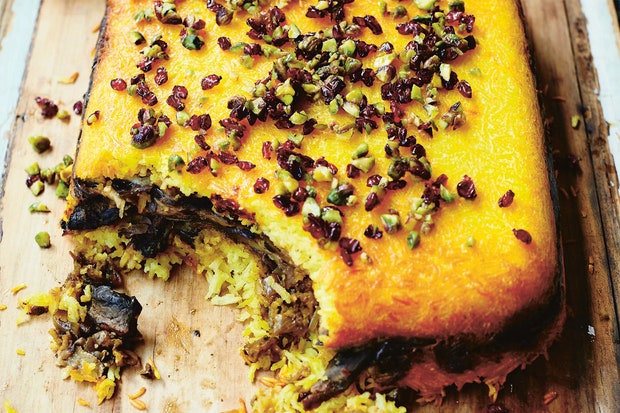

Searching for a vegetarian alternative to traditional chicken-based tahchin, I was pleased to find this recipe by Yasmin Khan, author of The Saffron Tales. Meaty eggplant and Portobello mushrooms give the dish the necessary heft to become a festive main dish.
Eggplant in general serves as a meat substitute in many recipes, but I enjoy the vegetable for its own flavor and character, rather than regarding it as a substitute for anything. The combination of eggplant, mushrooms and saffron-infused rice in this vegetarian version of tahchin is simply delicious. The crunchy bottom part is particularly prized. You’ll see below how to flip the cake over to make that bottom into the alluring top.
This leisurely recipe recalls bygone days in exotic Iran, when sisters, aunts and mothers would gather in the kitchen and cook, cook, cook with all their hearts, chatting and laughing while skillfully recreating traditional foods. And at the end of the afternoon, each would pack generous portions to take home for her own family’s dinner.
Today’s cooks don’t count on cook-ins with extended family anymore. We’re used to recipes that promise food we can whip up and put on the table ASAP. But early in this year of 2020, life changed. Now, we’re enduring periods of isolation at home, or just avoiding going out unless it’s urgent. We have far more time on our hands than we’re used to.
So what better way of using it than perfecting a new version of an old-fashioned dish from exotic Persia? Here’s Tahchin. The recipe instructions are slightly modified from the author’s.
Eggplant and Mushroom Tahchin
Yield: 6 servings
Ingredients
2 1/4 cups white basmati rice
1 1/4 teaspoons saffron strands
A pinch of sugar
3 tablespoons freshly boiled water
3 medium eggplants (around 1 1/4 lb), cut horizontally into 1-inch slices
Sea salt and black pepper
Sunflower oil
3 tablespoons butter
1 medium onion, finely chopped
3 garlic cloves, crushed
4 Portobello mushrooms, sliced into large chunks
1/2 teaspoon turmeric
1/2 teaspoon ground allspice
1/4 teaspoon ground cinnamon
1/4 teaspoon cayenne pepper flakes
1/2 teaspoon cumin seeds
2 egg yolks
Scant cup Greek yogurt
For the topping:
1 tablespoon butter
2 tablespoons barberries or dried cranberries
1/4 cup + 1 tablespoon pistachios, roughly chopped
1 tablespoon sugar
Pre-heat your grill to medium-high, or turn your oven broiler on.
Rinse the rice in several changes of cold water until the water runs clear, then leave to soak in a large bowl of water for 15 minutes. Drain and set aside.
Bring a large pot of water to the boil and add 2 tablespoons of salt. (The author notes: “Don’t worry about the large amount of salt here, the rice has a very short time to absorb the water and the final result won’t be too salty.”)
Add the rice and cook for 4–5 minutes over medium heat. Taste to test; the rice should be soft on the outside but still hard and firm in the middle. Drain, then rinse with tepid water to stop it cooking any further and set aside.
Make a saffron liquid: grind the saffron strands with a pinch of sugar with a mortar and pestle. Add the hot water. Lacking a mortar and pestle, simple put the saffron and sugar in a small bowl with the hot water. Leave to steep.
Dribble sunflower oil over the eggplant slices. Season generously with salt. Grill for 10–15 minutes, turning occasionally, until the eggplants are cooked through. Alternately, broil the slices in the oven for 10-12 minutes.
Heat 2 tablespoons of sunflower oil with 1 tablespoon of the butter in a large saucepan and fry the onion for about 10 minutes, until soft. Add the garlic and fry for a further 2 minutes. Add the mushrooms to the pan along with the turmeric, allspice, cinnamon, cayenne pepper, 1 teaspoon of salt and 1/4 teaspoon of pepper.
Lightly toast the cumin seeds in a small, dry pan for a minute and then crush them with a pestle and mortar or a spice grinder. Lacking mortar or spice grinder, crush the seeds with the bottom of a heavy bottle. Add the cumin seeds to the mushrooms and seasonings.
Cook until the mushrooms are soft, then take off the heat.
Pre-heat the oven to 375°F. – 180°C.
In a large bowl, beat the egg yolks with the yogurt, saffron liquid, 1 1/2 teaspoons of salt, and 1 teaspoon of pepper. Fold the rice in until it is evenly coated with the yogurt and saffron.
Rub 1 tablespoon butter over the base and sides of a 10-cup ovenproof glass dish. Spoon half of the rice into the dish and press it down evenly.
Add a layer of eggplants and mushrooms and finish with a final layer of rice.
Dot with the remaining butter, cover the dish tightly with foil, and bake for 1 1/2–2 hours or until the rice at the bottom of the tahchin is crisp and golden brown.
Remove the tahchin from the oven and leave it to cool slightly while you make your topping.
Melt the butter in a small frying pan and fry the barberries (or cranberries) pistachios, and sugar for 2 minutes, until the sugar has melted and the dried fruit has plumped up.
To serve, run a butter knife around the sides of the tahchin to separate it from the dish. Place a large board or platter over the top and quickly invert the whole thing. Tap the inverted pot all over, wait a few minutes to let gravity help release the rice, tap again, and lift it off. (We learned this tip when we made Makluba with chef Moshe Basson.)
Garnish the tahchin with the topping.
Khan notes that tachnin is a good make-ahead dish. Prepare it up to the stage of baking it. An hour and half before dinner time, pop it into a preheated oven; that’s it.
The Saffron Tales has been listed on Best Cookbooks of the Year by the NY Times, the Wall Street Journal, and the BBC Food Programme. It’s available via Amazon.
Photo of vegetarian tahchin by Matt Russel via Epicurious.