


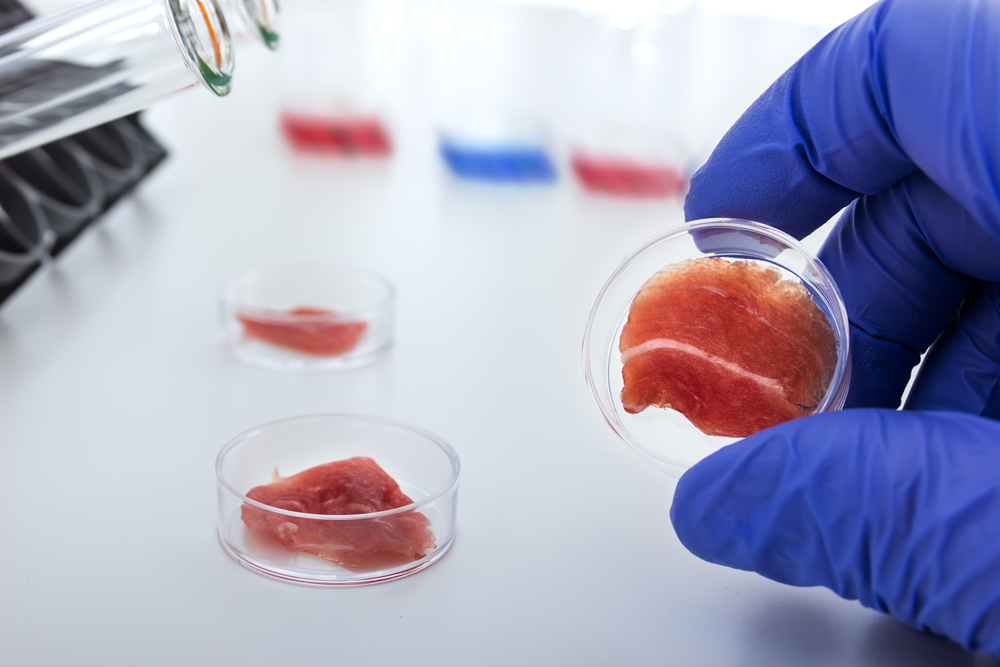
For a while now, Israeli startups and researchers have been among the forerunners in the development of lab-grown meat and meat alternatives. Companies such as Future Meat Technologies, SuperMeat, and Aleph Farms combine cutting-edge technology with innovative new concepts aspiring to transform the future of meat production. Venture capitalists and angel investors within as well as outside of Israel have quickly recognized the economic potential of engineered meat and plant-based substitutes. Last year, Future Meat Technologies and SuperMeat respectively, raised $2.2 million and $3 million in seed funding. In 2017, both companies already struck a $300 million deal with China, over lab-grown meat imports from Israel.
Recently, two Israeli teams were among the 14 winners of a research grant that was awarded by the Good Food Institute (GIF). Each team received $250.000 in funding to support their efforts in plant-based and cell-based meat research.
World’s Vegan Capital
However, it is not just businesses and research that are trying to make a change; Israel as a whole is slowly beginning to cut loose from meat consumption. Tel Aviv is often cited as one of the World’s Vegan Capitals, with a plethora of vegan and vegetarian restaurants serving every possible meat alternative imaginable. In 2015, 8 percent of all Israelis identified as vegans, 5 percent as vegetarians and 13 percent were considering to go either vegan or vegetarian. Nonetheless, despite the clear upward trend of people opting for a meatless diet compared to the years before, for most, meat is still on the menu.
According to OECD data, annual total meat consumption (without poultry) in Israel stands at 19.3 kg per person, ranking the country at number six in the world (Argentina is the country with the highest amount of meat consumed per person, followed by Paraguay, Brazil, the United States, and Australia). Although, if you add poultry, Israel’s meat consumption adds up to an annual 58.6 kg per capita, which puts the country in the first place.
An industry with a long shadow
Since the early 2000s, and especially after the release of the UN’s milestone report “Livestock’s Long Shadow” in 2006, the role of the meat industry in many environmental problems have been well established. Raising livestock emits highly potent greenhouse gases such as carbon dioxide, methane, and nitrogen dioxide, all of which are accelerating global warming. Also, rearing animals for meat production pollutes soil and water sources and produces bacteria resistance due to the excessive use of antibiotics. Moreover, the meat industry contributes significantly to land-use change and deforestation, the practice often used for turning natural forested areas into agricultural land for growing animal feed.
The combination of these factors causes severe damage to biodiversity and the extinction of species, not to mention that clearing forests for livestock reduces the number of trees that could absorb carbon dioxide from the atmosphere, and leads to the release of greenhouse gases (carbon dioxide and methane) from carbon reservoirs in soil and vegetation.
The world’s increasing demand for meat has led to the development of a variety of industrial production, supply, and transportation methods that require, among other things, the use of enormous amounts of energy. While these changes allow the system to satisfy the growing demand for meat, they have made the meat industry one of the primary human-induced drivers of climate change.
Additionally, the suffering of the animals themselves as part of the meat industry, which sometimes includes severe abuse, international transport in adverse conditions, the separation of young calves from their mothers, and more – has raised concerns and public outcries around the world.
Quinoa as foundation for plant-based beef substitute
Now, two Israeli teams are among the winners of a global competition for a $3 million research grant organized by the Good Food Institute (GFI), a non-profit organization that promotes ideas and research on clean meat (also known as cultured meat or cell-based meat) and alternatives to animal protein based on plant sources. The objective is to develop meat substitutes that provide high-quality proteins better for human health, animal welfare, and the environment.
The two winning teams were made up of researchers from various scientific fields. One of the teams was headed by Dr. Ofir Benjamin of the Food Science Department at the Tel-Hai College, in collaboration with Dr. Lior Rabinowitz of the Northern Research and Development Center, and examines the use of quinoa proteins as an optional plant-based substitute for beef. Quinoa is a grain that has its origins in Bolivia and is often referred to as a superfood. It contains essential amino acids (EAA), is rich in fiber and has excellent nutritional values; plus, it is gluten-free.
Due to its resistance to various abiotic pressures (such as water, radiation, temperature, humidity, and soil) quinoa may be grown and thrive in very harsh environmental conditions. “The average yield in the world is between 2.5-3.5 tons per hectare (1 hectare equals ten dunams), and in the past three years, we have conducted experiments aimed at the cultivation of quinoa in the Avnei Eitan farm on the Golan Heights in Israel. We believe that Quinoa may be considered a new sustainable crop of high commercial value in the country.” Dr. Benjamin says.
“As a follow-up experiment, we propose to evaluate quinoa as a raw material for plant-based substitutes to meat due to its natural protein content and rich nutritional value. In the study, we will use varieties with high yields and high protein content and process the seeds through different extraction methods to produce a larger amount of proteins. Regular quinoa seeds have a protein content of roughly 4-15%, and after extracting, the amount goes up to 60-70%. Ultimately, we will want to create the texture, taste, and color that simulate the sensation created when eating meat. It’s an innovative research, and there are only very few other studies dealing with the properties of quinoa as a replacement for meat. Beyond that, finding sustainable substitutes for meat is a crucial undertaking to ensure humanity’s continued existence, reduce our negative impact on the environment and give people the freedom of choice on the matter,” Benjamin concludes.
Building blocks for clean meat
The second team of researchers who received a grant operates under the leadership of Prof. Marcelle Machluf, with Prof. Ayelet Fishman and Dr. Maya Davidovich-Pinhas of the Technion’s Faculty of Biotechnology and Food Engineering. The team is investigating the production of cultured meat – tissues made up of animal cells.
“The problem with the development of cultured meat is that living cells require a lot of energy to survive, it takes them time to develop, and their life span is set,” says Machluf. “Cells of this type in the lab cost a lot of money and take a lot of time to grow. We are trying to make the process more efficient,” she adds.
The researchers in this all-female team are developing an innovative technology infrastructure through a fast and affordable process that will allow the cells to grow in large quantities. If successful, the scientists will be able to produce different types of edible carriers that will serve as a platform for growing the cells. These carriers are partly made of collagen (a very common protein in many animals) and will be cultivated within a protein reactor (a chemical reaction tool), which is another dietary and protein contribution to the meat substitute. “At the end of the process, we will combine the final raw material with ‘fat balls,” which are developed here in the Technion and are a healthy alternative to the fat found in meat. The uniqueness of the research is the focus on the most problematic stage in the development of cultured meat.”
The use of edible carriers replaces the initial cell growth process in laboratory dishes, adding nutritional value to the final product. “Clean meat is considered to be one of the leading solutions to the global food crisis, which offers nutritional values like conventional meat without harming animals or the environment,” says Machluf. “Developing the means to meet the technical challenges facing this pioneering field is crucial.”
$46 billion and climbing
The meat market is estimated to cost the global economy a staggering $1.6 trillion by 2050, partly due to the health implications of meat consumption, which makes revolutionizing the food-sector increasingly urgent.
However, given that processed meat had a market value of $714 billion in 2016, and is expected to rise to over $1.5 trillion by 2022, the alternative industry still has a long way ahead to get anywhere near those numbers. However, according to recent projections the global protein substitute market might already be worth $46 billion, and climbing. By next year, the market is estimated to generate over 6.8 billion in revenue.


[…] ZAVIT article was also published in The Green Prophet on […]