UN adds more agri-history sites to list ‘worth protecting’

Though we might want to add any kind of agriculture performed more than 100 years ago to the list worth protecting, we’ll take what the UN”s FAO is offering: Traditional ginseng farming in the Republic of Korea and olive tree groves in Italy’s Umbria region have been recognized on the register of Globally Important Agricultural Heritage Systems (GIAHS), managed by the UN Food and Agriculture Organization (FAO). The two sites were added during a meeting of the GIAHS Scientific Advisory Group in Rome this week.

It is the first time an Italian site has been recognized, and the third site in the Republic of Korea.

The traditional ginseng agricultural system in Geumsan, South Chungcheong Province has been recognized because it relies on a symbiotic relationship between nature and cultivation, and has been in practice for around 1500 years.
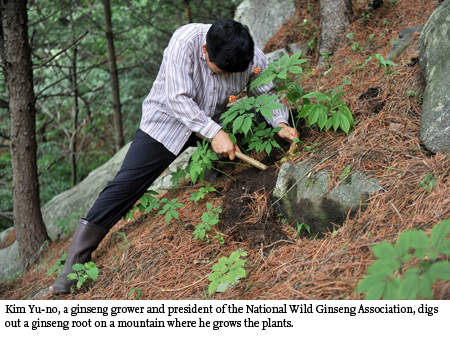
wild ginseng korea
Wild ginseng harvesting in Korea, via the Korea Times

Farmers use a 15 to 20 year rotation system whereby land is left fallow or used for other crops after harvest, to allow the land’s ‘energy’ to restore. Surrounding forests and rivers contribute to micro climate control, and shade structures using natural materials help mimic conditions for wild ginseng cultivation.

“This is not only about the past, but also about the future,” said FAO’s Yoshihide Endo who coordinates the GIAHS programme. “Becoming a GIAHS site encourages the preservation of these long histories of agricultural practice, but it also recognizes the benefits for future generations in keeping these systems sustainable, promoting knowledge sharing and agrotourism potential and encouraging young people to participate in agriculture.”

Olive groves on the slopes in Umbria

Ancient-olive-tree 
The hillsides between the Italian towns of Assisi and Spoleto (including Assisi, Spello, Foligno, Trevi, Campello sull Clitunno and Spoleto), where olives have been grown since the time of the Etruscans, are now one of the main olive production areas in Umbria and Italy. The area has been recognized for the ingenuity through which natural resources and human needs have been combined to create livelihoods and mutually sustainable ecosystems.

Even today, olive groves are cultivated with traditional knowledge and practices including the use of different types of terraces, growing technologies and genetic varieties which have been supported by local communities for many centuries. This area also demonstrates remarkable landscape of olive trees which have been formed by farmers’ long term interaction with nature.

Keeping heritage alive 

The GIAHS register highlights unique ways that rural communities have over generations farmed in harmony with nature to create mutually sustainable livelihoods and ecosystems, and often produced remarkable landscapes in the process.

FAO’s selection criteria includes that sites be of global importance, have value as a public good in terms of supporting food and livelihood security, agro-biodiversity, knowledge systems, adapted technologies, and culture, and have outstanding landscapes.

Evidence suggests that GIAHS designation can help conserve valuable elements of the sites while boosting demand and prices for the agricultural products, as well as encouraging tourism and jobs growth.

The two new additions bring the total number of sites on the list to 52 in 21 countries.

Other remarkable landscapes already recognized include Hani rice terraces in China, the Massai pastoral system in Kenya and Tanzania, the Ghout oasis system in Algeria, wasabi production in Japan, Spain’s salt production in Salinas de Añana, Portugal’s agro-sylvo-pastoral system in Barroso, and farmland in Mexico’s Chinampas that relies on oral transmission of traditional farming techniques dating back to the Aztec civilization.


Bhok Thompson
Bhok Thompsonhttp://www.greenprophet.com
Bhok Thompson is an “eco-tinkerer” who thrives at the intersection of sustainability, business, and cutting-edge technology. With a background in mechanical engineering and a deep fascination with renewable energy, Bhok has dedicated his career to developing innovative solutions that bridge environmental consciousness with profitability. A frequent contributor to Green Prophet, Bhok writes about futuristic green tech, urban sustainability, and the latest trends in eco-friendly startups. His passion for engineering meets his love for business as he mentors young entrepreneurs looking to create scalable, impact-driven companies. Beyond his work, Bhok is an avid collector of vintage mechanical watches, believing they represent an era of precision and craftsmanship that modern technology often overlooks. Reach out: [email protected]

Read More

1 COMMENT

LEAVE A REPLY

Please enter your comment!
Please enter your name here

TRENDING

Operational Integrity and Safety-Oriented Aviation Management in Contemporary Private Aviation: The Hera Flight Framework

The modern private aviation industry has undergone substantial structural...

Robot Monk Gabi Takes Vows in Seoul. What Would the Buddha Have Thought?

  How many of us looked twice when we saw...

8 Questions Families Should Ask Before Choosing Assisted Living

Few family decisions carry as much weight as choosing...

The fossil fuel problem hiding in your wardrobe

The fuel pumps don't lie. When oil prices spike,...

Australia’s $25 Billion AI Moment: Infrastructure Is the Easy Part

  Microsoft's record investment in Australia will build data centres....

How to quiet noise from construction in your office

Streets need to be resurfaced in New York but the humming and grinding noise is unsettling. Noise is environmental pollution. 

EarthX and a blueprint for sustainable investing

Trammell S. Crow, a Dallas-based businessman and father of four, is focusing his efforts on impact investing, and media that focuses on saving the planet through EarthX.

Mining Afghanistan’s Mineral Discoveries Similar to Avatar

Now that American forces in Afghanistan are commemorating the longest period of any war that America has been involved in, including the 1965-73 Vietnam War, the recent discoveries of large and extremely valuable mineral and metal deposits may finally bring to light a reason to continue the presence of US fighting forces in this war torn and backward country.

From Pilot Plant to Global Stage: How Aduro Clean Technologies’ 2026 Expansion Signals a Turning Point for Chemical Recycling Investors Like Yazan Al Homsi

The company's Next Generation Process (NGP) Pilot Plant in London, Ontario, has officially moved into initial operating campaigns, generating the kind of structured, repeatable data that separates laboratory promise from commercial viability.

Nobul’s Regan McGee on Shareholder Value: “Complacency Is the Silent Killer” 

Why the governance framework designed to protect shareholders so...

Should You Invest in the Private Market?

startustartup Unlike public stock exchanges, which offer daily trading, strict...

How to build a 100-year-company

Kongō Gumi is a Japanese construction company, purportedly founded in 578 A.D., making it the world's oldest documented company. What can we learn about building sustainable businesses from them?

How AI Helps SaaS Companies Reduce Repetitive Customer Support Work

SaaS products are designed for large numbers of users with different levels of experience, and also in renewable energy.

Popular Categories