


 Clothing swap and resale businesses allow you to shed formerly favorite clothes and accessories and – in exchange – refill your wardrobe with affordable “new” treasures. They offer an environmentally responsible alternative to dumping old duds into a charity box or trash can. Want to change up your wardrobe without damaging your wallet and the world? Check out Swap Society, an online clothing exchange for women and kids.
The Los Angeles-based startup is loosely based on bartering. Users earn credit for their old clothes, then use points to get new pre-loved clothes of equal value. Keep your purchases forever, or swap them again. It’s a brilliant loop of recycling that offers unlimited renewal of your wardrobe while significantly reducing the environmental impact of new clothes.
Cofounders Nicole and Edward Robertson have developed a user-friendly website (link here) with an array of sorting filters to help you locate your size, color, typology, and condition of the garment. Simply sign up for a membership (there are three different payment programs, from $12 to $19 a month). Receive a welcome kit that includes a pre-paid bag for you to send in good-condition clothes (they accept women’s and kids’ clothes). You’ll then receive points for each garment you have sent, based on its style and quality. Then, when you see an item you want to own, use your accumulated points to buy from their website. You will pay a small shipping and handling fee ($3.99) for each purchase. Membership can be cancelled anytime.
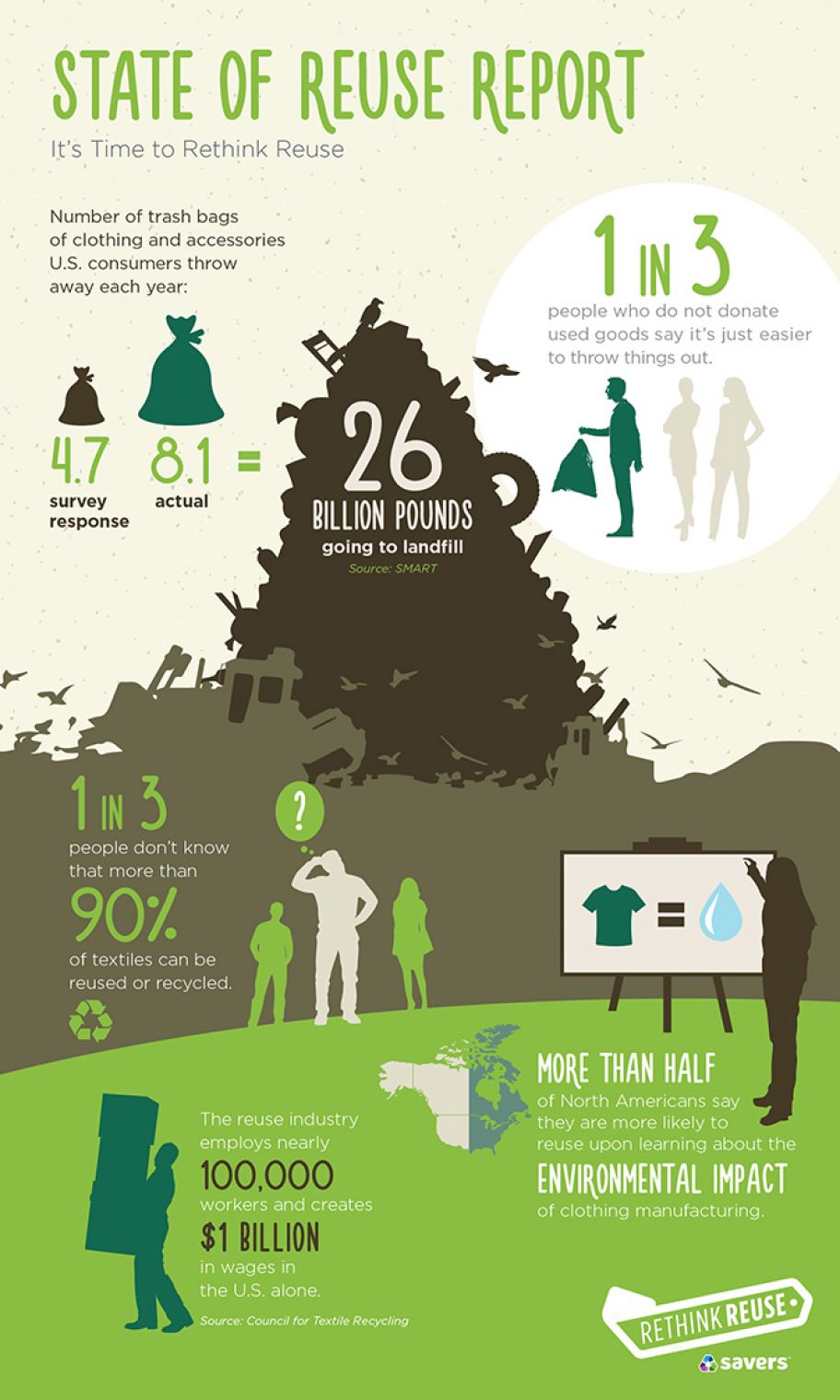
Some of us are motivated to haul old clothes to a donation center when faced with a move, or inspired by a charity drive, but – be it laziness or uncertainty as to what exactly is “donation-worthy” – we generally toss tired togs in the garbage. The average North American will trash 81 pounds of unwanted garments this year, which equals 26 billion pounds of textiles annually added to landfills, according to research commissioned by for-profit, global thrift retailer Savers.
- the apparel industry accounts for 10% of global carbon emissions
- it can take more than 700 gallons of water to produce a T-shirt
- fashion is the 2nd largest industrial polluter, after big oil
- less than 20% of what gets donated to charities gets resold
Clothes swap parties are nothing new; I’ve participated in them for over a decade in New York, Dublin, and Amman. Usually prompted by unhappiness with overstuffed closets, or incited by apartment moves, they involve a group of friends gathering in one place to pick through each other’s cast-offs. You bring your old clothes and you leave with someone else’s. A cool, social way to “shop” that’s both environmental and economical. But the downside is that your options are limited to the tastes and sizes of your local friends. Swap Society lets you switch up wardrobes with people everywhere!
Check out Swap Society. Save money, reduce your carbon footprint, and enjoy fashion without guilt.
Images: Top from Swap Society, bottom from Savers


