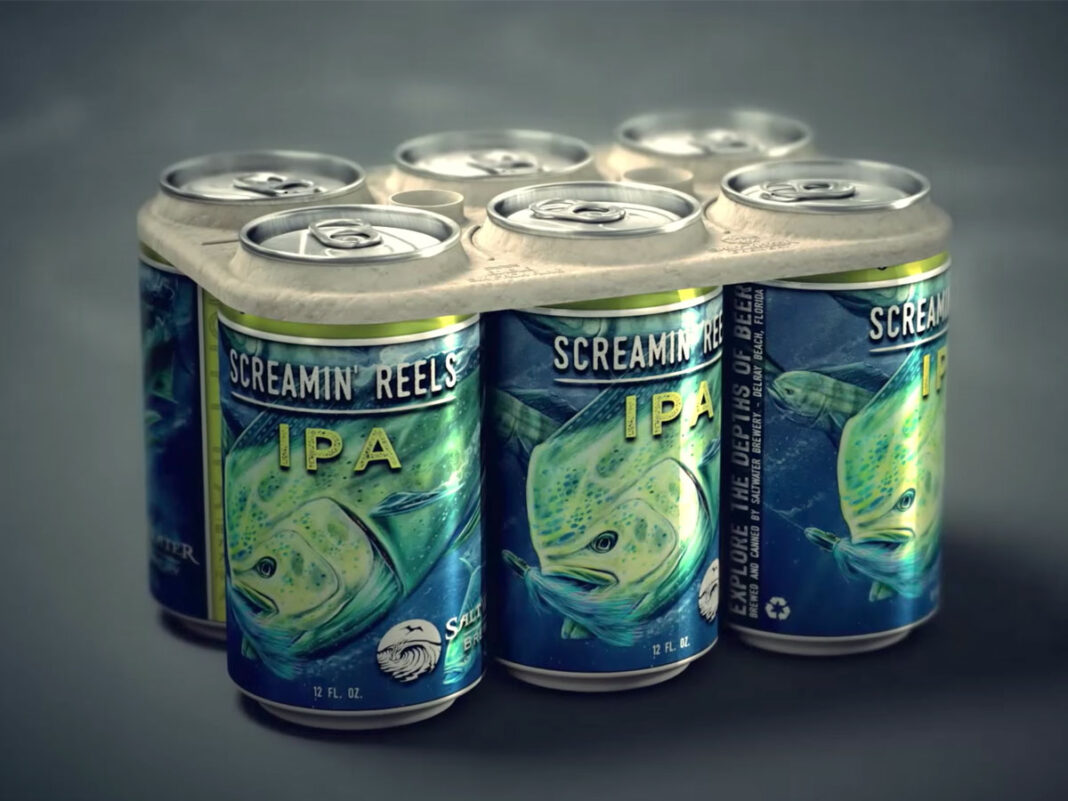

 A small Florida microbrewery has developed a biodegradable and edible six-pack ring, a new approach to sustainable packaging aimed at protecting marine species vulnerable to plastic pollution. The decision to go green was an easy one for Saltwater Brewery. The company was founded in 2013 by fisherman, surfers and people who love the sea.
Americans consume about 67 billion cans of beer every year. Factor in canned juices, teas, fizzy drinks, and a trend towards canned wines, amplify those figures globally, and the number of single-use plastic six-pack rings tossed into the world’s waste stream quadruples. Most of these end up in our oceans, posing a serious threat to waterways and the wildlife within.
“Our focus is reducing the marine debris in the ocean. We know we can’t take on the whole world’s plastic problem, but if we help spread the knowledge we’ve learned, that’s the fastest way to reduce it,” brewery president Chris Gove told SouthFlorida.com. “It is how we are reducing our carbon footprint, not just on working on cleanup but focusing upstream. We’re trying to educate the world that cleanups are good but they’re not going to stop the problem.”
 The brewery makes the rings using leftover barley and wheat ribbons from the beer-making process. That grain is bound with biopolymer, a protein occurring in living organisms, and pressed into ring shapes which are 100 percent biodegradable and edible. Now, instead of getting entangled in – or choking on – the rings, marine life can safely eat them.
“We have to get rid of our waste every time we brew,” Gove said. “You start with a thousand pounds and after wetting it through the process, you end up with 3,000 pounds. It’s a cost to the brewery and a hassle, and we’ve been giving it to farmers for cattle. Now we have something better to do with it.” The brewery produces about 45,000 pounds of spent grain per week, which is repurposed by local farmers as compost or animal feed picked up by local farmers.
While the spent-grain compound isn’t an ideal meal for marine species, it’s not harmful. Gove compared it to candy for children, “It’s a comparison of a Lego to a Sour Patch Kid. It’s not giving them their 100% nutritional value, but they’re not going to the hospital.”
Saltwater Brewery developed the project with New York ad agency We Believers. They aspire to have the wider industry move towards eco-friendly packaging, and are now exploring how the idea might be expanded to other biodegradable products. The brewery also plans to sell the biopolymer technology blueprint so that other beverage companies can stop using plastic rings, too. Watch We Believers’ video on the project below:
”We’ve known for decades that our fondness for Ziploc bags, food wrappers and other plastics is hurting the environment — particularly sea life. But both consumers and businesses have proven largely unwilling to give up the convenience of single-use plastics. We’re now focused on the network and infrastructure to create a real company that can provide packaging solutions to different industries,” Gove said.
The switch to biodegradable rings was initially costly for Saltwater Brewery. Currently, consumers have to pay about 10 cents more per beer for the technology. But Gove says they haven’t gotten complaints, and in time, the brewery hopes to get the price of the eco-friendly rings below the cost of plastic ones. The cans, being aluminium, are 100% recyclable.
“Not only are they using up their own waste in a positive way, they’re helping save animals by feeding them instead of killing them with plastic particles,” said PETA spokesperson Laura Castada. “They’ve gotten good publicity and sales out of the deal, too. There is no downside to going environmentally friendly.”
Said Gove, “Our whole brewery is based on the ocean. Anything we can do to help out the ocean, we’re going to do.”