

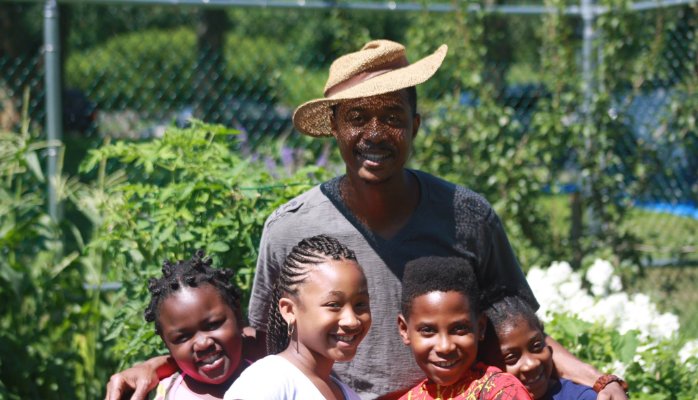
Leigh Ofer and her company Seed Street in Harlem gives new meaning to the term circular economy:
We meet over the Internet and find a mutual passion for urban farming in New York City –– we’re kindred souls who see cities as our future food production engines. I am interested in technology for improving urban food and social welfare. She’s interested in kids and education and how fresh, hyper-local food produced in the right framework can grow bodies, minds and spirits.
Ofer, 26, 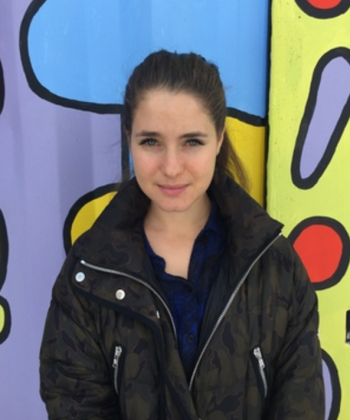 is an international citizen of the world. She was born in Hong Kong and grew up in Singapore, Switzerland, New York, and Tel Aviv.
She is devoted to her mission of creating better access to healthy food and improving food and health education through the shipping container farms she is building at Seed Street.
Starting at the Children’s Aid Society in Harlem, where the flagship farm is installed, the youth’s lives she touches are people who grow up in food deserts –– with virtually no access to fresh food. Forget about organic.
DJ Hannah Bronfman (pictured below), a young NYC lifestyle and fitness icon and DJ, is Ofer’s partner ad co-founder at Seed Street.
The aim is to show kids how to grow their own food in the middle of the city using hydroponics and vertical farming, with the aim of replicating what they do at the Children’s Aid Society in Harlem to every single city in the United States and beyond.
While Harlem appears to be well beyond the violence and tough inner-city life portrayed on television and films, there are still big social problems there: lack of access to fresh, local food, and how lack of education on food affects more than just expanding waistlines and insane rates of obesity.

Ofer and Bronfman are building the stage to make big changes in the United States which is battling rising obesity rates, and struggling to get more kids interested in STEM – science, technology, engineering and math. For both of woman, growing food in shipping containers is the answer to helping youth get involved in their own food destinies.
On one level the kids are starting to engage food directly by growing it in upcycled shipping containers.
The beauty of the shipping crates is that when insulated they can provide possibilities for low-cost year-round climate control. Meaning: you can grow organic tomatoes and strawberries in the middle of a Manhattan winter. Seed Street shows kids how to be self-sufficient. No weeding and no pesticides required. When done right an acre of food can be grown in a shipping container.
The two women are also turning to their other passions, Ofer in art, and Bronfman in fitness and beauty education. Bronfman creates community and speaks to young women through her personal site HBFIT.
A number of American companies are taking shipping containers (like Freight Farms or Podponics), outfitting them with sensors and software and turning them into franchised businesses that grow food.

Or like Ofer, turning them into non-profit green machines that help grow more health-conscious human beings.
Using shipping crates as farms in an elegant story for Ofer whose family owns ZIM, one of the world’s largest shipping businesses. Her family’s empire extends to other diverse businesses such as semi-conductors. It’s a noble business for her to take on urban farming so passionately, but if we look at surveys done by organizations like the National Gardening Association, it is exactly people in her age bracket that are now gardening for food faster than any other group in the United States.
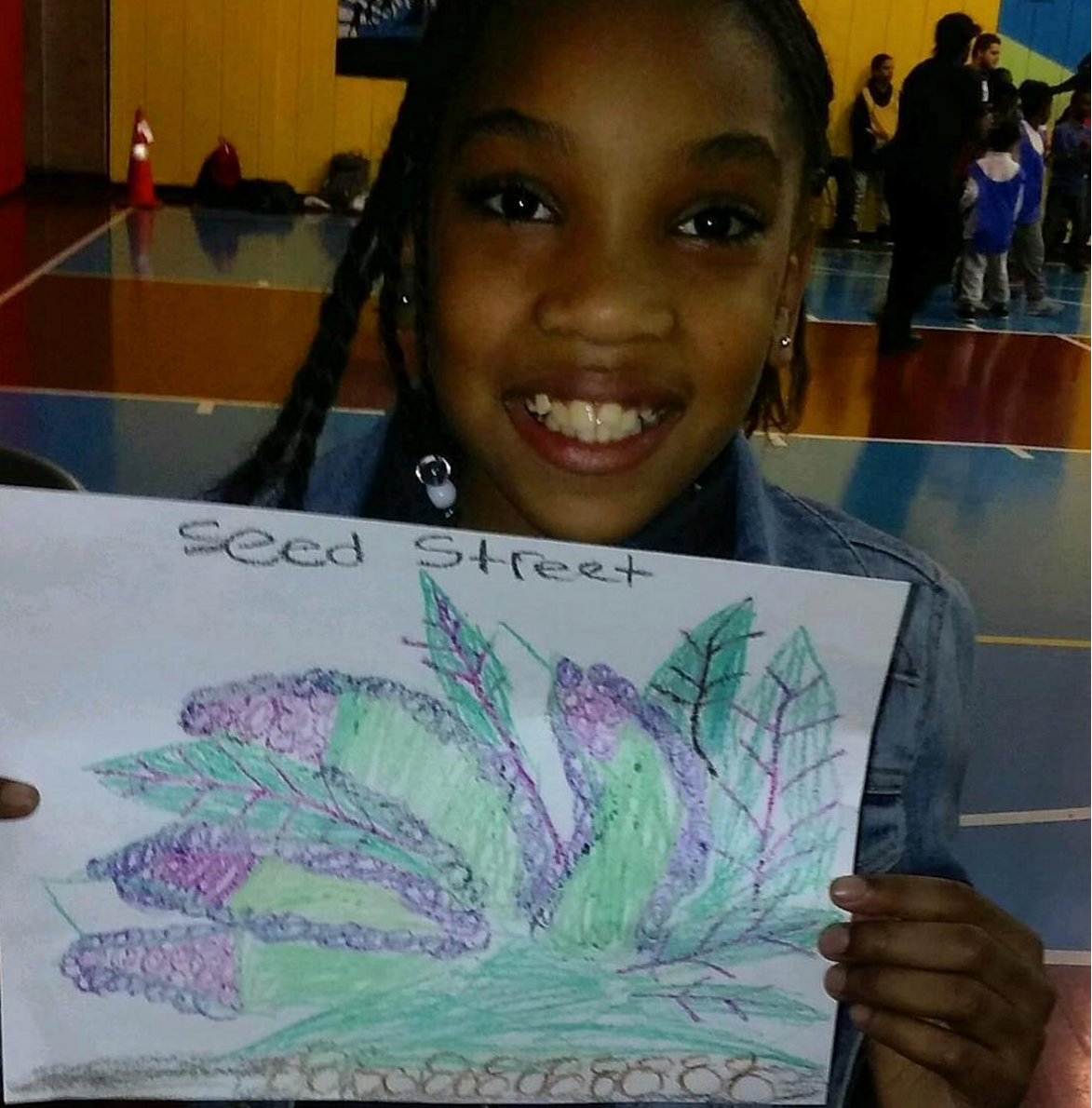
I visit the first roots of her vision in Harlem where an eloquent and passionate Farmer Randy Cameron (below), the Head Farmer in charge, is putting the paint on the first shipping crate farming. He’s setting up the various hydroponic systems and is nurturing some seedlings. Randy used to farm in the Bronx using a kind of hydroponics called aquaponics), or water based medium to grow food that includes fish in the tank. He’s seen violence; he’s seen massive societal problems in the Bronx. He saw a kid die in his mother’s arms. He believes that getting kids into food gets them out of trouble. Showing them how to grow food is his mission.
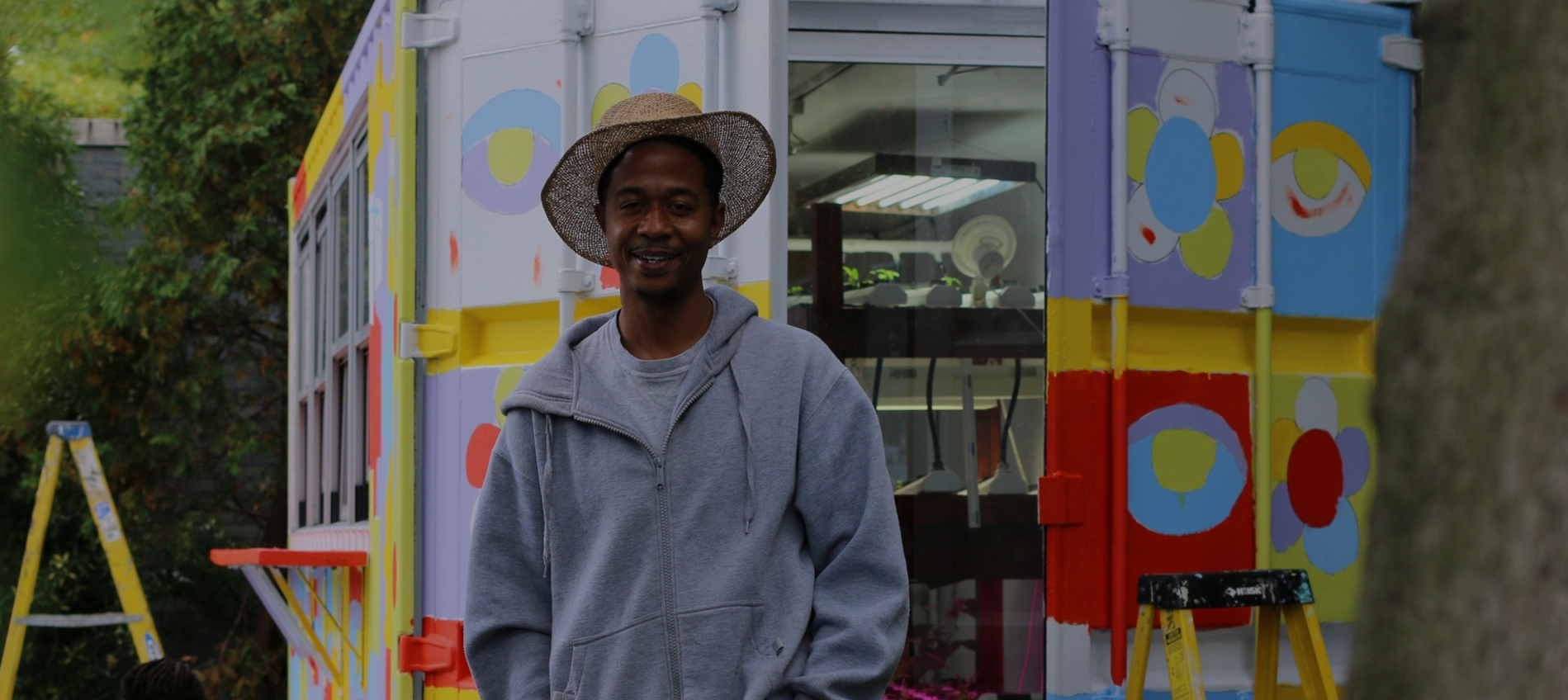
One seedling at a time Seed Street is working to fix the broken way that kids grow up in marginalized communities. I’ve met mothers farming in Harlem who have told me that their kids once ate chocolate bars for breakfast, and now they want fresh mustard greens picked from the source in their hydroponic garden.
There is a lot of wisdom in teaching the simple things in life to kids who live in cities: How a root sprouts, how and why a small green of leaf stretches for light, and how good things that go inside of our bodies make us better, more productive human beings.
At a later date Ofer and I get a chance to take a walk along the Highline Park in Manhattan. We chat about her life and how it connects to Israel, where she completed army service. About how she can take a legacy from her family business, the old shipping containers, and up-cycle them into something with a deeper meaning.
She’s hasn’t yet used a ZIM container for a farm, but that’s the future dream she’ll take to the family.
At the end of the park and down the elevators we say our goodbyes, but not before popping into an art gallery on the corner. Ofer likes art. She’s stopped at a couple places from where we started. And at this last stop I see her lingering: she spots some prints of a shipping yard that she might like to buy.




[…] DJ Hannah Bronfman (above) is Leigh Ofer’s business partner and co-founder at Seed Street and a keen DJ in her spare time. Picture above courtesy of Green Prophet. […]