Your sunscreen is killing baby coral reefs

We’ve read reports that sunscreen can cause cancer (and that sunscreen doesn’t really work to prevent skin cancer), but yet –  doctors say you need sunscreen in the sun.

While the daily use of sunscreen with an SPF of 15 or higher is widely acknowledged as essential to skin cancer prevention, it is hurting the sea. The clincher is that you don’t need to swim for it to be damaging because it’s damaging the reefs through coastal sewage systems and runoff.

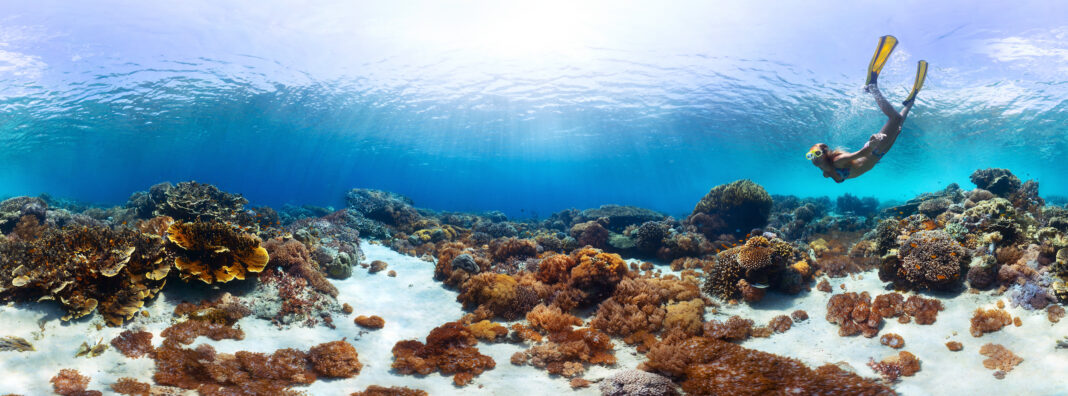
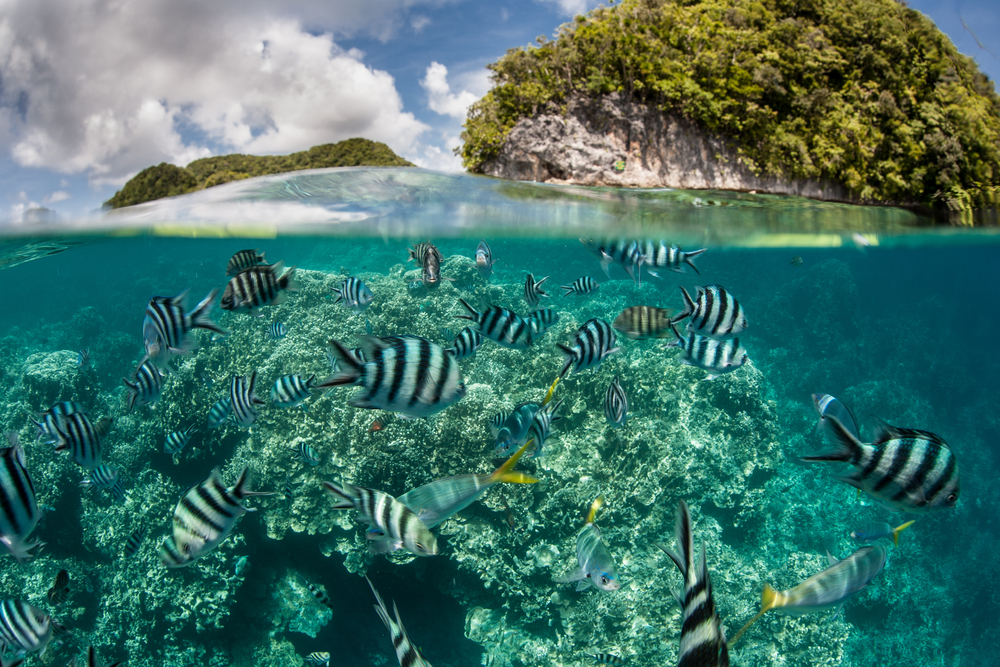
New research published in Archives of Environmental Contamination and Toxicology finds that a common chemical in sunscreen lotions and other cosmetic products poses an existential threat — even in miniscule concentrations — to the planet’s corals and coral reefs.

“The chemical, oxybenzone (benzophenone-3), is found in more than 3,500 sunscreen products worldwide. It pollutes coral reefs via swimmers who wear sunscreen or wastewater discharges from municipal sewage outfalls and coastal septic systems,” said Omri Bronstein from Tel Aviv University, one of the principal researchers.

cora-reef-sunscreen

The study was conducted by a team of marine scientists from Tel Aviv including the eminent Prof. Yossi Loya, from the Department of Zoology and the US National Oceanic & Atmospheric Administration.

Gets deadlier at the beach

A person spending the day at the beach might use between two to four ounces of sunblock if reapplied every two hours after swimming, towelling off, or sweating a significant amount. Multiply this by the number of swimmers in the water, and a serious risk to the environment emerges, the study authors report.

“Oxybenzone pollution predominantly occurs in swimming areas, but it also occurs on reefs 5 to 20 miles from the coastline as a result of submarine freshwater seeps that can be contaminated with sewage,” said Dr. Bronstein, who conducted exposure experiments on coral embryos at the Inter University Institute in Eilat together with Dr. Craig Downs of the Heretics Environmental Laboratories.

“The chemical is highly toxic to juvenile corals. We found four major forms of toxicity associated with exposure of baby corals to this chemical.”

Forms of toxicity include coral bleaching, a phenomenon associated with high sea-surface temperature events like El Niño — and with global mass mortalities of coral reefs. The researchers found oxybenzone made the corals more susceptible to this bleaching at lower temperatures, rendering them less resilient to climate change.

They also found that oxybenzone damaged the DNA of the corals, neutering their ability to reproduce and setting off a widespread decline in coral populations.

The study also pointed to oxybenzone as an “endocrine disruptor,” causing young coral to encase itself in its own skeleton, causing death. Lastly, the researchers saw evidence of gross deformities caused by oxybenzone — such as coral mouths that expand to five times their healthy, normal size.

It only takes one application

“We found the lowest concentration to see a toxicity effect was 62 parts per trillion — equivalent to a drop of water in six and a half Olympic-sized swimming pools,” said Dr. Bronstein.
Iraq, first coral reef, war, pollution, Euphrates, Tigris, Shatt al-Arab River, Persian Gulf, global warming, climate change, nature conservation, marsh arabs

The researchers found concentrations of oxybenzone in the US Virgin Islands to be 23 times higher than the minimum considered toxic to corals.

“Current concentrations of oxybenzone in these coral reef areas pose a significant ecological threat,” said Dr. Bronstein. “Although the use of sunscreen is recognized as important for protection from the harmful effects of sunlight, there are alternatives — including other chemical sunscreens, as well as wearing sun clothing on the beach and in the water.”

Here – we show you how to make your own non-toxic sunscreen from tea

Natural tea and beeswax sunscreen recipe


The researchers hope their study will draw awareness of the dangers posed by sunscreen to the marine environment and promote the alternative: use of sun-protective swimwear.

Karin Kloosterman
Karin Kloostermanhttp://www.greenprophet.com
Karin Kloosterman is an award-winning journalist, innovation strategist, and founder of Green Prophet, one of the Middle East’s pioneering sustainability platforms. She has ranked in the Top 10 of Verizon innovation competitions, participated in NASA-linked challenges, and spoken worldwide on climate, food security, and future resilience. With an IoT technology patent, features in Canada’s National Post, and leadership inside teams building next-generation agricultural and planetary systems — including Mars-farming concepts — Karin operates at the intersection of storytelling, science, and systems change. She doesn’t report on the future – she helps design it. Reach out directly to [email protected]

Read More

TRENDING

Make paper mache with flowers to create stunning vase

There’s something quietly beautiful about what Rebloom Studio is doing, and it starts with waste. At wholesale flower markets, mountains of unsold blooms are tossed out at the end of each cycle. Perfect flowers, just not sold in time. Most of them are burned or dumped. Rebloom takes that moment and turns it into something else.

Plants can eat dust and grow – should we stop dusting them?

Dusty plants? Let them eat their hearts out.

Billie Eilish’s Mom Maggie Baird Launches “Climate Kitchen” on Public TV

Maggie Baird, best known as the mother of Billie Eilish and Finneas O’Connell, is stepping into a much larger spotlight, this time as a climate storyteller.

Fix your Ozempec face with alloClae fat from a human cadaver?

How do you feel about you afterlife being a...

Carrot Waste Could Be Your Next Oyster Substrate –– Mycelium Protein Beats Soy in Taste Tests

Researchers investigated whether carrot side streams, generated during the production of natural food colorants, could support edible fungi growth. After screening 106 fungal strains, they identified Pleurotus djamor (pink oyster mushroom) as the most efficient, producing strong biomass growth and high protein content when cultivated on carrot residues.

How to quiet noise from construction in your office

Streets need to be resurfaced in New York but the humming and grinding noise is unsettling. Noise is environmental pollution. 

EarthX and a blueprint for sustainable investing

Trammell S. Crow, a Dallas-based businessman and father of four, is focusing his efforts on impact investing, and media that focuses on saving the planet through EarthX.

Mining Afghanistan’s Mineral Discoveries Similar to Avatar

Now that American forces in Afghanistan are commemorating the longest period of any war that America has been involved in, including the 1965-73 Vietnam War, the recent discoveries of large and extremely valuable mineral and metal deposits may finally bring to light a reason to continue the presence of US fighting forces in this war torn and backward country.

From Pilot Plant to Global Stage: How Aduro Clean Technologies’ 2026 Expansion Signals a Turning Point for Chemical Recycling Investors Like Yazan Al Homsi

The company's Next Generation Process (NGP) Pilot Plant in London, Ontario, has officially moved into initial operating campaigns, generating the kind of structured, repeatable data that separates laboratory promise from commercial viability.

Nobul’s Regan McGee on Shareholder Value: “Complacency Is the Silent Killer” 

Why the governance framework designed to protect shareholders so...

Should You Invest in the Private Market?

startustartup Unlike public stock exchanges, which offer daily trading, strict...

How to build a 100-year-company

Kongō Gumi is a Japanese construction company, purportedly founded in 578 A.D., making it the world's oldest documented company. What can we learn about building sustainable businesses from them?

How AI Helps SaaS Companies Reduce Repetitive Customer Support Work

SaaS products are designed for large numbers of users with different levels of experience, and also in renewable energy.

Popular Categories