Lebanon’s drowning in its own waste!

Lebanese garbage crisis

Want a peek into a dystopian future? This is an update on the garbage crisis in Lebanon, which is largely attributed to a corrupted political system, but it’s also a cautionary tale about uncontrolled consumerism and environmental arrogance that could happen in nearly every free market zip code.

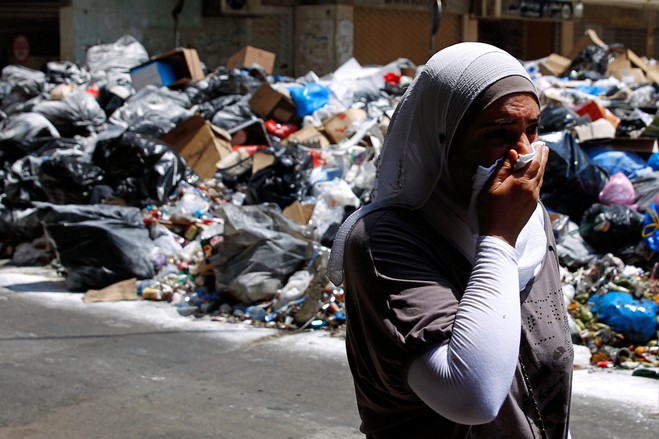
Since the nation’s largest landfill closed in July, Lebanon has been drowning in its own garbage. The waste crisis escalated last weekend when angry demonstrators tried to storm the parliament in Beirut. Riot police responded with tear gas and water cannon, and according to some reports, rubber bullets and live ammunition. An unspecified number of demonstrators and more than 35 Internal Security Forces (ISF) members were wounded, according to an ISF online statement.
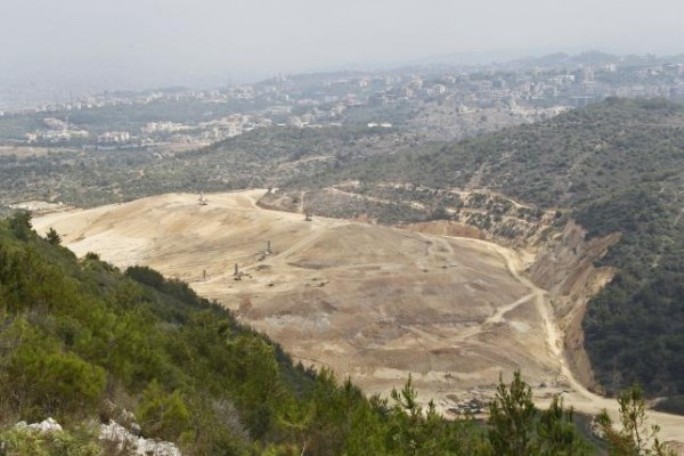
lebanon's largest landfill

The Naameh dump site in the mountains southeast of Beirut (shown above) had been the endpoint for waste generated by half of Lebanon’s four million people. This summer,  when authorities failed to find an alternate landfill, Naameh residents blocked trucks from dropping new garbage, which triggered a waste collection shutdown across wider Beirut. So began a domino effect that resulted in the death of one Beirut protester, and as yet undefined environmental fallout.
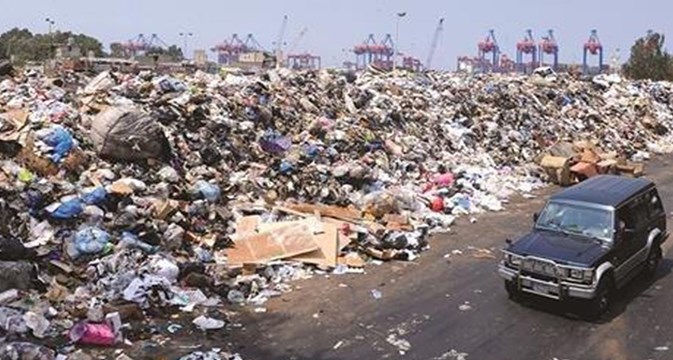
port of beirut

Garbage dropped near the Port of Beirut (shown above) triggered a mid-August work stoppage over mounting health and safety concerns. “We will not accept our port becoming the capital’s dumping ground. The health of all who enter the port is at risk, workers, visitors and customers.” Bchara Asmar, president of the Union of Beirut port employees, told ITF Global. He added that the Lebanese government has not provided a viable long-term waste management solution; forcing municipalities to resort to temporary remedies.
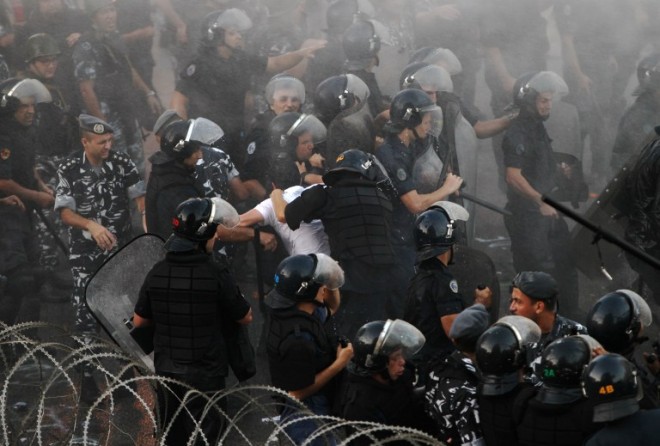
Beirut garbage protests

The situation has prompted protests across Beirut, but also grassroot solutions. Local priests are calling for reduced pollution, citing Pope Francis’ recent criticism of our “throwaway culture”. The mayor of northern town Roumieh organized volunteers and city employees to collect recyclables and biodegradable waste (such as food scraps) on a regular schedule. Recyclables with commercial value will be sold to help underwrite the initiative.
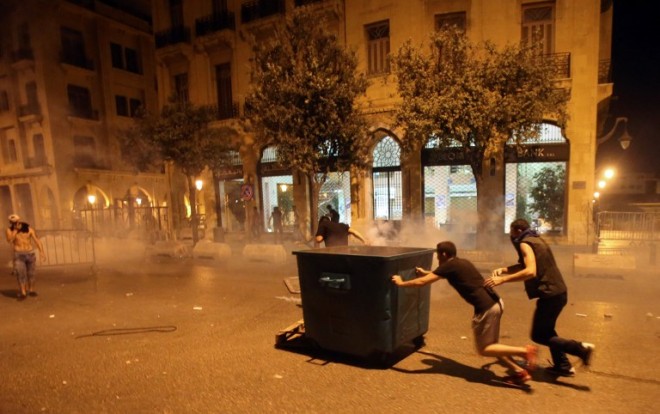
Lebanese demonstraters take shelter behind a rubbish container during clashes with security forces following a demonstration, organised by the "You Stink" campaign, against the ongoing trash crisis in the capital Beirut on August 22, 2015. Thousands of protesters, including children, gathered to protest the Lebanese government's inability to find a lasting solution to the country's worsening waste problem. AFP PHOTO / STR

Beirut business owner and environmental engineer Ziad Abichaker told the Wall Street Journal, “I think it is a golden opportunity now to start saying to people that you need a paradigm shift. You need to stop looking at waste as a problem and start looking at it as a resource.”

These efforts – quietly pursued before the protests – are garnering increased attention by a public desperate to dig out of the stinking debris. (Reports state some 20 tons of rubbish have been dumped in the capital’s streets).

Lebanon has been without a president for 15 months.  Its government is viewed as paralyzed and ineffective, a reputation underscored when Environment Minister Mohammed el-Mashnouq posted a statement saying his office was “working silently” to resolve what he called “a tragic situation”.

Reduce, reuse, recycle. Those actions won’t fix a broken bureaucracy, but will lessen the pain when civil services collapse.

Read More

2 COMMENTS

TRENDING

Self-repairing contact lenses and desalination membranes that fix themselves?

Could the humble contact lens become a sustainability breakthrough? Researchers in Korea have developed a self-healing hydrogel lens that repairs scratches with just one hour of UV light exposure. Beyond reducing waste from disposable contacts, the technology could one day help extend the life of solar panels, water filtration systems, and other plastic-based products.

Are the Great Lakes polluted?

The Great Lakes may look pristine, but a new cleanup report reveals a growing tide of plastic pollution beneath the surface. From cigarette butts and food wrappers to tiny plastic fragments and discarded nicotine pouches, researchers are finding evidence that everyday consumer waste is making its way into North America's largest freshwater ecosystem. New technologies, including Canada's first BeBot beach-cleaning robot, are helping scientists understand how plastic travels through lakes, shorelines and stormwater systems before breaking down into microplastics.

From Pilot Plant to Global Stage: How Aduro Clean Technologies’ 2026 Expansion Signals a Turning Point for Chemical Recycling Investors Like Yazan Al Homsi

The company's Next Generation Process (NGP) Pilot Plant in London, Ontario, has officially moved into initial operating campaigns, generating the kind of structured, repeatable data that separates laboratory promise from commercial viability.

Urban miner Sortera raises $45 million USD to pull aluminum from the scrap pile

Sortera Technologies, founded in 2020 by Nalin Kumar and Manuel Garcia, is emerging as a major U.S. circular-industry player. Led by CEO Michael Siemer, the company uses AI and advanced sensors to turn scrap metal into high-value aluminum alloys. Its new ~$45 million funding round signals investor appetite for industrial decarbonisation—where emissions cuts come not from PR-friendly solar installs, but from upgrading the materials that power EVs, solar frames, and construction.

Waste Reform from the Ground Up: How Trash Balers Are Helping Cities Rethink Sustainability

If you’ve ever watched a recycling truck weaving through city streets, you’ve seen the problem firsthand. Most of what we call “recycling” still depends on long-distance transportation and centralized sorting facilities. Those systems are energy-intensive and prone to contamination — the dreaded mix of wet food, plastic wrap, and paper that renders recyclables useless.

Yerukim Forms a New Green Economy Where the Money is Really Green

The Yerukim members who pick up the recyclables get to keep the monetary reward, the public earns "green" bills that can be used in shops, and business owners get to be associated with environmentalism.

Choosing Riyadh over Dubai? What Investors Should Know

Saudi Arabia is deploying capital at unmatched scale to catalyze tourism and advanced industry while rewiring its power-and-water backbone. The investable frontier is widening—especially in renewables, grid storage, water efficiency/desal retrofits, and hospitality operating platforms. Prudent investors will insist on phased delivery, enforceable KPIs (energy, water, biodiversity), and RHQ/zone compliance—while pricing political-economy and reputational risks alongside growth upside.

Sell your cooking oil for biodiesel money

Want to make money on old french fry oil? Sell it.

Qatar Alternative Energy Summit Pairs Investors And Innovators

Alternative energy investors and innovators can meet n' greet in Doha, Qatar March 16 and 17.

Here’s How To Implement The Four Pillars Of Employee Engagement

If you throw a party for your work team and they are vegans, don't make it a barbecue. Know the sustainability values of your team to boost moral and retain good people.

Locals From Rishon Fight IKEA

Big Box stores are a pretty new concept in Israel, and thank God that not every Israeli city wants them in their backyard. A word from someone who has see the beautiful farmland around her hometown Newmarket, Ontario stripped and converted into vulgar strip malls of big box shops: they have no place in a healthy and sustainable town or city.

The Jewish National Fund Meets An Inconvenient Truth

According to the JNF, it has transformed thousands of acres of barren land into green forests in Israel. They state that each person emits about 23 tons of carbon per year, estimating that each tree planted can absorb one ton of carbon in its lifetime. That's a whole lot of trees you'd need to be planting. Could so many fit in Israel?

How to quiet noise from construction in your office

Streets need to be resurfaced in New York but the humming and grinding noise is unsettling. Noise is environmental pollution. 

Popular Categories