

Measuring acid in our oceans using the bodies of small marine animals

acid-seas-israel
The world is warming. Glaciers are melting. Added carbon dioxide gas is causing our seas to become acidic. This in turn melts corals, and causes a host of environmental problems scientists are just beginning to quantify. But measuring the effect of acidification on oceans and seas is tricky because water moves and it can be deep. Different species are affected by acidification in different ways. Scientists from Israel have found a new way to make sense of the unknowns.

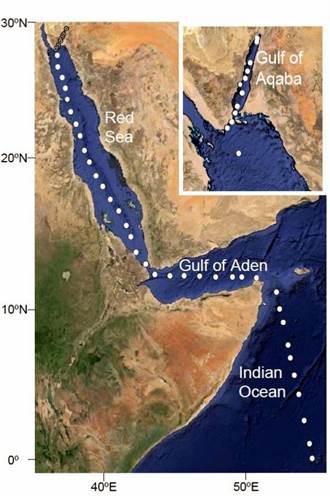
To get a clearer picture of how ocean acidification is affecting large marine areas, the group of Israeli researchers from Hebrew University studied a 5,000 km long strip of ocean from Eilat to the Seychelles crossing the Red Sea, the Gulf of Aden and the Western Indian Ocean.
acid-ocean
A Google Earth image of the research cruise showing the sampling stations along the ~5,000 Km oceanographic transect described in the PNAS paper.

The researchers developed a new method to simultaneously assess the overall calcification rates of coral reefs and pelagic (open sea) plankton over a whole oceanic basin, based on variations in surface water chemistry.

Getting a baseline down for science

These variations result from the tendency of organisms that precipitate calcium carbonate skeletons to replace some of the calcium in their skeletons with other elements (e.g. the element strontium).

These replacements depend on growth conditions and are typical for each group of organisms. Owing to this characteristic, corals produce calcium carbonate with a different chemistry than calcareous (composed largely of calcium carbonate) plankton, and their overall effect alters the chemistry of the ocean water.

This is the first study that demonstrates the feasibility of quantifying this type of information on an oceanic basin scale.

The group estimated that pelagic plankton precipitate 80% of the Red Sea calcium carbonate, and coral reefs precipitate about 20%.

This data they say is a crucial milestone if we wish to track the effect of human-caused activity since it is not possible to quantify change without having objective baseline conditions.

Monitoring the variations in coral and plankton growth rates every few years can provide essential information regarding rates of environmental change in tropical and subtropical seas like the Red Sea, Caribbean and South China Sea.
sea plankton
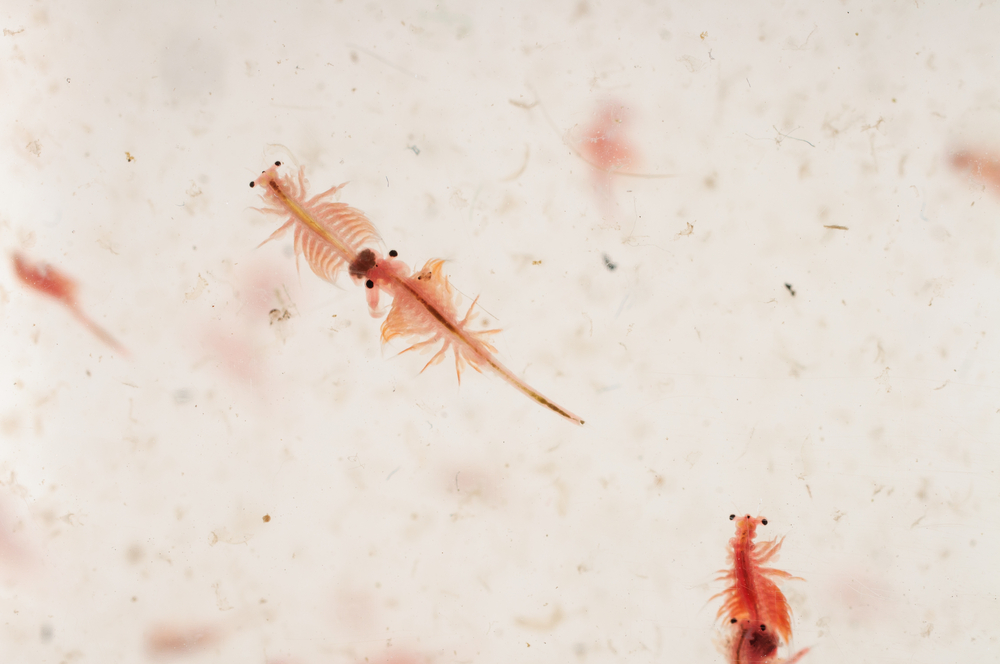
Cute and cuddly sea plankton are affected by ocean acidification caused by global warming.

The research was published in PNAS (Proceedings of the National Academy of Sciences of the United States of America) and was supported by the Israel Science Foundation, the Bill and Melinda Gates Foundation and the Israeli Ministry of Science and Technology.

Top photo: An aerial photo of a coral reef. Researchers developed a new tool to quantify the effect of ocean acidification on calcifying organisms. (Photo: Boaz Lazar, Hebrew University); Plankton photo from Shutterstock


Karin Kloosterman
Karin Kloostermanhttp://www.greenprophet.com
Karin Kloosterman is an award-winning journalist, innovation strategist, and founder of Green Prophet, one of the Middle East’s pioneering sustainability platforms. She has ranked in the Top 10 of Verizon innovation competitions, participated in NASA-linked challenges, and spoken worldwide on climate, food security, and future resilience. With an IoT technology patent, features in Canada’s National Post, and leadership inside teams building next-generation agricultural and planetary systems — including Mars-farming concepts — Karin operates at the intersection of storytelling, science, and systems change. She doesn’t report on the future – she helps design it. Reach out directly to [email protected]

Read More

2 COMMENTS

LEAVE A REPLY

Please enter your comment!
Please enter your name here

TRENDING

Desalination experts debunk Aqua Solaire, the floating desalination barge

AI makes it easy to dream, develop, and create images of what could be world-changing ideas, until the reality sets in. A new project making the rounds is Aqua Solaire, an allged French concept for a solar-powered desalination vessel designed to bring drinking water to coastal communities facing drought, storms, and infrastructure failures.

Hydrophilis Rebreather: After the Penis Jokes and Shark Bait Memes, Oliver Isler Says His Underwater Dream Is Serious

The Hydrophilis rebreather is a new scuba system that could make diving safer and more fun.

Shebara hotel Saudi Arabia – is it eco-luxury dream or desert illusion?

A new breed of luxury has landed on the Red Sea, mirrored pods floating above coral reefs, reflecting sky and sea like something not entirely of this Earth. Energy powered by solar powers, drinking water pulled from the sea using desalination. 

Hydrophilis SCUBA gear could make us one with the sea

Hydrophilis, Oliver Isler’s experimental rebreather suit, reimagines diving by reducing drag, eliminating bubbles, and bringing humans closer to the natural movement of marine life.

Eco organization offices destroyed by Iran missile

Tel Aviv's eco organization, the Heschel Center, was impacted by an Iranian missile.

How to quiet noise from construction in your office

Streets need to be resurfaced in New York but the humming and grinding noise is unsettling. Noise is environmental pollution. 

EarthX and a blueprint for sustainable investing

Trammell S. Crow, a Dallas-based businessman and father of four, is focusing his efforts on impact investing, and media that focuses on saving the planet through EarthX.

Mining Afghanistan’s Mineral Discoveries Similar to Avatar

Now that American forces in Afghanistan are commemorating the longest period of any war that America has been involved in, including the 1965-73 Vietnam War, the recent discoveries of large and extremely valuable mineral and metal deposits may finally bring to light a reason to continue the presence of US fighting forces in this war torn and backward country.

From Pilot Plant to Global Stage: How Aduro Clean Technologies’ 2026 Expansion Signals a Turning Point for Chemical Recycling Investors Like Yazan Al Homsi

The company's Next Generation Process (NGP) Pilot Plant in London, Ontario, has officially moved into initial operating campaigns, generating the kind of structured, repeatable data that separates laboratory promise from commercial viability.

Nobul’s Regan McGee on Shareholder Value: “Complacency Is the Silent Killer” 

Why the governance framework designed to protect shareholders so...

Should You Invest in the Private Market?

startustartup Unlike public stock exchanges, which offer daily trading, strict...

How to build a 100-year-company

Kongō Gumi is a Japanese construction company, purportedly founded in 578 A.D., making it the world's oldest documented company. What can we learn about building sustainable businesses from them?

How AI Helps SaaS Companies Reduce Repetitive Customer Support Work

SaaS products are designed for large numbers of users with different levels of experience, and also in renewable energy.

Popular Categories