Setsuden Helped Japan Conserve 75 Nuclear Reactors Worth of Energy

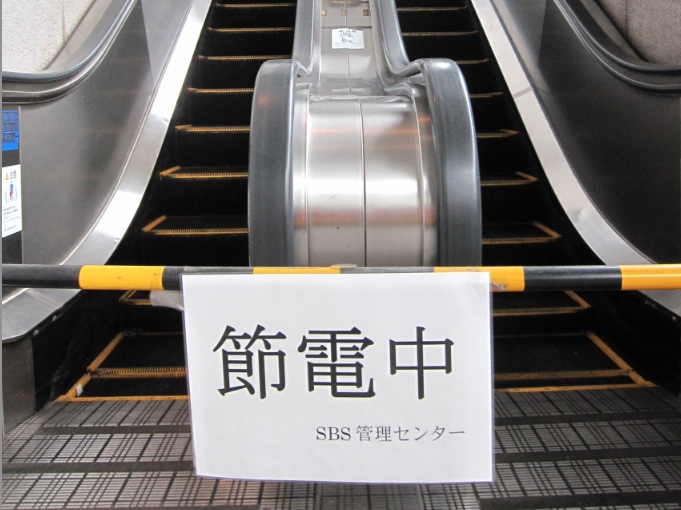
tokyo elevator setsudenThe Middle East can learn about energy savings from the Japanese, and the Japanese concept of setsuden. 

Sometime during the mid 1990s a series of heat waves coincided with a refueling shut-down at one of my home state’s nuclear power plants. Citizens were asked to voluntarily cut usage.  Somehow we managed to conserve the equivalent of the nuclear power plant’s generating capacity. Now, one year after Japan’s earthquake and tsunami caused partial meltdowns at Fukushima Daiichi, fifty-four Japanese nuclear power plants have been shut down.   How did the people of Japan make up for a 30% shortfall in their electric generating capacity?

Some coal and oil power plants were ramped up to help meet the demand, but even this wouldn’t have been enough. Setsuden, the Japanese word for “saving electricity”, was the key. In the year following the tsunami, Japanese citizens cut as much as 60 Gigawatts from their peak usage, roughly equivalent to the output of 75 nuclear reactors the size of the five which failed at Fukushima Daiichi. How did they do this?

Setsuden was in the Japanese vocabulary long before the 2011 tsunami. I first encountered a tankless water heater while visiting my cousin and her husband in the mountains of Japan. Here was a simple idea, heat only the water I use as it is used.

Why didn’t I think of that? Japan must import nearly all of its fossil fuels, so oil has always been expensive there. This gives Japan an advantage over the Mideast and US when it comes to thinking in terms of efficiency. Even during Japan’s property bubble, cities didn’t sprawl out quite as much as they did in other parts of the world.

japanese power savingThe tragic tsunami and nuclear disasters gave new focus to the importance of setsuden. The government started awareness campaigns and mandated that businesses which used more than 500 kilowatts must reduce their consumption by 15%.

People switched to LED and CFL lights, the lights of Tokyo’s trendy Ginza were dimmed. Paper fans and shade took the place of air conditioners. People unplugged transformers and made sure appliances were off and not just on standby. Even the normally strict Japanese businessman dress code was relaxed to allow people to be more comfortable in workplaces even when air conditioners were set to a higher temperature.

When a tragedy of the magnitude of the 2011 earthquake and tsunami hits, it is impossible to fully understand the impact to people in the region and people in unaffected parts of Japan must have felt helpless to do anything for the victims. Setsuden was one way of uniting people towards a common goal and it was quite a success.

Setsuden prevented blackouts during the summer of 2011. There are no plans to make setsuden mandatory for 2012. This isn’t because capacity has been fully restored, it is because the people of Japan have learned new habits. If the rest of the world looks carefully, we can learn from this success story.

If it’s possible for an efficient society to cut their electricity consumption by 30%, imagine what is possible in other parts of the world, if only we set our minds to it.

Above image by Tokyo Tom Baker
Lower image remix by Brian Nitz via openclipart.org

Brian Nitz
Brian Nitzhttp://www.greenprophet.com
Brian remembers when a single tear dredged up a nation's guilt. The tear belonged to an Italian-American actor known as Iron-Eyes Cody, the guilt was displaced from centuries of Native American mistreatment and redirected into a new environmental awareness. A 10-year-old Brian wondered, 'What are they... No, what are we doing to this country?' From a family of engineers, farmers and tinkerers Brian's father was a physics teacher. He remembers the day his father drove up to watch a coal power plant's new scrubbers turn smoke from dirty grey-back to steamy white. Surely technology would solve every problem. But then he noticed that breathing was difficult when the wind blew a certain way. While sailing, he often saw a yellow-brown line on the horizon. The stars were beginning to disappear. Gas mileage peaked when Reagan was still president. Solar panels installed in the 1970s were torn from roofs as they were no longer cost-effective to maintain. Racism, public policy and low oil prices transformed suburban life and cities began to sprawl out and absorb farmland. Brian only began to understand the root causes of "doughnut cities" when he moved to Ireland in 2001 and watched history repeat itself. Brian doesn't think environmentalism is 'rocket science', but understanding how to apply it within a society requires wisdom and education. In his travels through Europe, North America, Asia and the Middle East, Brian has learned that great ideas come from everywhere and that sharing mistakes is just as important as sharing ideas.

Read More

TRENDING

Weston Higginbotham’s Funeral Set for June 17 as Family and Friends Honor Environmentalist

The family of environmentalist and eco-engineer in training, James "Weston" Higginbotham will gather with friends, classmates, and supporters on June 17 in Birmingham, Alabama, to celebrate the life of the Auburn University student whose death in a Kyoto forest in Japan touched people around the world.

Before Funeral, Auburn University Creates Environmental Scholarship in Memory of Weston Higginbotham

The James "Weston" Higginbotham Endowed Scholarship will support Auburn students pursuing ecological engineering, ensuring that the work Weston cared about so deeply continues long after his passing.

Weston Higginbotham’s Family Declines to Release Cause of Death in Kyoto Forest

The family of Weston Higginbotham,an Auburn University student whose disappearance and death in the mountains near Kyoto, Japan, drew international attention, has declined to publicly release the cause of his death.

5 Reasons Why You Should Save Seeds (and plant them)

Saving seeds from tomatoes, peppers, herbs and flowers helps preserve biodiversity, strengthen food security, and keep heirloom varieties alive. Even a small balcony garden can make a difference.

Weston Higginbotham found dead in a Kyoto forest: is climate anxiety part of the story?

In some ways, Weston has become a symbol of a generation wrestling with environmental and technological anxiety. Friends and family described him as deeply concerned about environmental issues. Reports also noted that he questioned the growing role of artificial intelligence in daily life, even reportedly disagreeing with his mother about her use of AI.

Yerukim Forms a New Green Economy Where the Money is Really Green

The Yerukim members who pick up the recyclables get to keep the monetary reward, the public earns "green" bills that can be used in shops, and business owners get to be associated with environmentalism.

Choosing Riyadh over Dubai? What Investors Should Know

Saudi Arabia is deploying capital at unmatched scale to catalyze tourism and advanced industry while rewiring its power-and-water backbone. The investable frontier is widening—especially in renewables, grid storage, water efficiency/desal retrofits, and hospitality operating platforms. Prudent investors will insist on phased delivery, enforceable KPIs (energy, water, biodiversity), and RHQ/zone compliance—while pricing political-economy and reputational risks alongside growth upside.

Sell your cooking oil for biodiesel money

Want to make money on old french fry oil? Sell it.

Qatar Alternative Energy Summit Pairs Investors And Innovators

Alternative energy investors and innovators can meet n' greet in Doha, Qatar March 16 and 17.

Here’s How To Implement The Four Pillars Of Employee Engagement

If you throw a party for your work team and they are vegans, don't make it a barbecue. Know the sustainability values of your team to boost moral and retain good people.

Locals From Rishon Fight IKEA

Big Box stores are a pretty new concept in Israel, and thank God that not every Israeli city wants them in their backyard. A word from someone who has see the beautiful farmland around her hometown Newmarket, Ontario stripped and converted into vulgar strip malls of big box shops: they have no place in a healthy and sustainable town or city.

The Jewish National Fund Meets An Inconvenient Truth

According to the JNF, it has transformed thousands of acres of barren land into green forests in Israel. They state that each person emits about 23 tons of carbon per year, estimating that each tree planted can absorb one ton of carbon in its lifetime. That's a whole lot of trees you'd need to be planting. Could so many fit in Israel?

How to quiet noise from construction in your office

Streets need to be resurfaced in New York but the humming and grinding noise is unsettling. Noise is environmental pollution. 

Popular Categories