
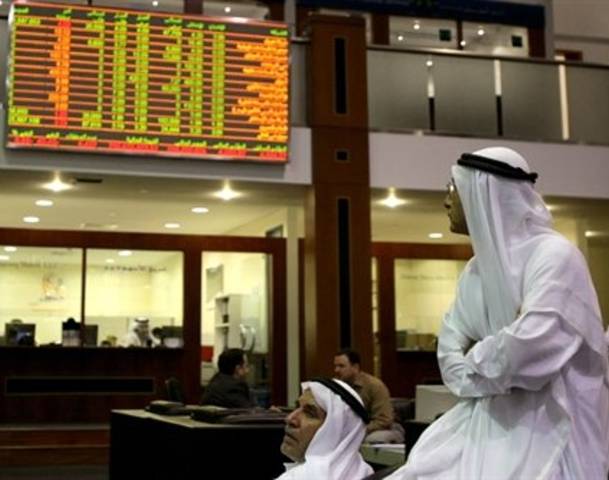

 The people promoting bond sales to fund climate change turn to Islamic investors.
Gulf nations may prove to be a prime market for Climate Bonds as they diversify beyond fossil fuels into long-term green energy projects. To spur investment, financial vehicles that support a low-carbon economy are being developed to align with Islamic Sharia law. It’s a simple concept: expand Middle East renewables for home use, and maximize oil surplus for foreign trade. It begins with raising funds.
“There’s a realization that rather than burning (oil) at subsidized rates in their own region, they should probably sell more of it abroad”, said Indraj Mangat, a partner at Eversheds LLP, “Building a renewable industry (in the Middle East) allows more crude to be exported.”
Climate Bonds: increasing credibility in uncertain times
The Climate Bonds Initiative is a non-governmental organization (NGO) working to create a global standard for green investment: a screening tool to help evaluate bonds’ credibility, create demand, and serve the ambitious goal of creating solid long-term investments that also tackle climate change. Bonds compliant with the standard will be certified as Climate Bonds.
Climate Bonds are debt securities which raise funds for specific investment in climate change solutions; new technologies, mitigation, or research and development. Bonds can be issued by corporations, banks and governments and function as conventional debt instruments, with similar credit risks and returns as standard bonds. These products offer governments, pension funds, and banks an option to to “green up” their portfoilios while maintaining conservative financial growth.
Last November, Britain’s Minister of State for Energy and Climate Change, Greg Barker, launched the Climate Bond Standard prototype. “The capital market has a vital role to play in climate change by meeting the financial challenge”, said Barker. The standard makes no claims as to financial viability of any particular bond; investors are obligated to perform due diligence just as for other investments. The standard simply provides assurance that a particular bond delivers on a low carbon action. Oversight will be provided by an international Climate Bond Standards Board made up of leading environmental NGOs and institutional investors.
Where is the green ecomony’s Warren Buffet?
Masdar’s 100 megawatt Shams 1 solar thermal plant was underwritten by $600 million in loans from international banks. That level of mega-lending is hard to score in the wake of the economic meltdown. The potential to pull funding from the carbon credit market has also dropped: that arena unstabilized by uncertain geopolitical policies and legal battles. The Green Climate Fund, born from Kyoto, was to pump $100 billion a year into climate change projects in third world countries by 2030. But there’s no agreement on how to structure that fund, fill its pockets, and administer the program.
Absent similarly green fiscal alternatives, the Climate Bonds program has the interest of institutional investors around the world. California State Treasurer Bill Lockyer describes opportunities in growing green debt markets (in the least entertaining video on YouTube):
watch?v=beZ_CxoyvmE&feature=player_detailpage
Green Sukuk: digging into Islamic deep pockets.
Working with Abu-Dhabi-based trade group Clean Energy Business Council, the Initiative is developing financial products that comply with Islamic shariah law. “We’re looking closely at a couple of prospective bond issuances,” said Initiative Chairman and co-founder Sean Kidney. Marketing will focus on the Middle East, North Africa and Muslim countries in Asia.
“If you look at current projects across the region, and if a fraction of those were to be financed with green sukuks, then you’re talking about $10 to $15 billion,” said Nasser Saidi, CEBC chairman. “The time is right for a green sukuk.”
Sukuk is a financial certificate, similar to a bond, that complies with Islamic religious law. Sharia does not allow Western-style interest payments. Instead, the issuer of a sukuk sells the certificate to the investor, who then rents it back to the issuer for a predetermined fee. The issuer also enters into a contract to buy back the bonds at par value at an agreed future date.
James Cameron, vice chair of Climate Change Capital, predicts Climate Bonds could play a major role in driving investment in the low carbon economy. “Bond finance built America’s highways, Europe’s drains and funded the Allies through two World Wars,” he said. “Perhaps now we can raise Climate Bonds to deliver the quick, global transition required to head off runaway climate change,” he said.
The Climate Bonds Initiative receives its funding on a per-project basis, from foundations and banks, and has yet to obtain financing for the green sukuk plan.
Image via allvoices


