
Hanukkah Chocolate Coins Recipe

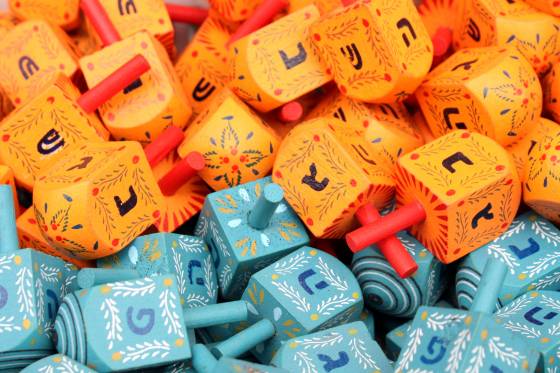
chanukkah dreidel A Jewish “spin” on gambling?  Who cares? It’s fun!

I confess: every Hanukkah, I have to look up the rules for the dreidel game again. It’s not complicated, but I only play it a few times a year, and usually with rowdy small children  To keep the tradition alive and make memories for my family, I bring out the chocolate coins and spinning top out right after we eat our latkehs or sufganyot. While the Hanukkah candles burn brightly in the living room window, we sit down on the floor and groan to lose our chocolate money or clap our hands on winning.

This year, I made my own Hanukkah money from organic fair-trade chocolate. (Read our post on why fair-trade chocolate is important.) I thought my grandchildren might snub it, as the store-bought coins are more glamorous, but they said my home-minted money was more exciting. Here’s the recipe, and following it are the dreidel game rules.

Home-Made Hanukkah Coins

Ingredients:

1 cup of fair-trade chocolate chips or grated chocolate

1 teaspoon sunflower oil

1/2 teaspoon vanilla

Candy sprinkles

Line a tray with baking (parchment) paper.

Soften the chocolate in a double boiler  or a pan set over hot water. Add oil and vanilla while the chocolate is still not entirely melted; stir. Cook till all is melted and incorporated.

Scrape the chocolate mixture out of the pan with a spatula, and allow it to cool for 15 minutes.

Oil your hands lightly to keep chocolate from sticking. Shape balls of two or three sizes, using a teaspoon, a half-tablespoon, and a tablespoon as measures.

Place the balls on the baking paper, and carefully flatten each one with your palm.

Refrigerate for an hour.

Garnish with sprinkles or wrap the “coins” in squares of gold or silver foil.

Rules of the Dreidel Game (via Wikipedia):

Each player begins with an equal number of game pieces (usually 10–15). The game pieces can be any object, such as chocolate gelt, pennies, raisins, or hundred dollar bricks.

At the beginning of each round, every participant puts one game piece into the center “pot”. In addition, every time the pot is empty and sometimes if it has one game piece left, every player puts one in the pot.

Each player spins the dreidel once during their turn. Depending on which player side is facing up when it stops spinning, they give or take game pieces from the pot:

1) If נ (nun) is facing up, the player does nothing.

2) If ג (gimel) is facing up, the player gets everything in the pot.

3) If ה (hei) is facing up, the player gets half of the pieces in the pot. (If there is an odd number of pieces in the pot, the player takes the half the pot rounded up to the nearest whole number)

4) If ש (shin) or פ (pei) is facing up, the player adds a game piece to the pot.

If the player is out of pieces, they are either “out” or may ask another player for a “loan”.

Have Fun!

Chocolate on Green Prophet:

Photo of dreidels by Adiel Io via Wikipedia.

Miriam also blogs at Israeli Kitchen.



Miriam Kresh
Miriam Kreshhttps://www.greenprophet.com/
Miriam Kresh is an American ex-pat living in Israel. Her love of Middle Eastern food evolved from close friendships with enthusiastic Moroccan, Tunisian and Turkish home cooks. She owns too many cookbooks and is always planning the next meal. Miriam can be reached at miriam (at) greenprophet (dot) com.

Read More

TRENDING

Baby teeth read like tree rings paint a picture of toxins in early life

A new study from the Icahn School of Medicine at Mount Sinai in New York offers a striking insight into how the environments we are born into can quietly shape our brains years later. By analyzing naturally shed baby teeth, the ones tucked under pillows for the tooth fairy, researchers have reconstructed a detailed timeline of exposure to environmental metals during pregnancy and early infancy.

Poop in the East River shows the city’s rat problem and what people like to eat

New York ecology and health can be monitored by a jug of water a week.

Saving Gourmet Wild Plants For The Future

Think of truffles, a gourmet wild food. The European...

Fresh Fava Bean Soup, A Vegan Springtime Recipe

Somehow vegetables with short seasons excite the imagination and appetite more sharply than produce that’s available all year around. Good Middle Eastern cooks have many recipes for delicate fava beans, and this turmeric-fragrant soup is one.

Haman’s Fingers, A Moroccan Purim Specialty

There’s feasting at home on the night and the next day, and to make sure everyone gets good things to eat, families send out packages of treats to friends and neighbors. Traditional goodies are hamentaschen, and other treats like our chocolate nut clusters .

How to quiet noise from construction in your office

Streets need to be resurfaced in New York but the humming and grinding noise is unsettling. Noise is environmental pollution. 

EarthX and a blueprint for sustainable investing

Trammell S. Crow, a Dallas-based businessman and father of four, is focusing his efforts on impact investing, and media that focuses on saving the planet through EarthX.

Mining Afghanistan’s Mineral Discoveries Similar to Avatar

Now that American forces in Afghanistan are commemorating the longest period of any war that America has been involved in, including the 1965-73 Vietnam War, the recent discoveries of large and extremely valuable mineral and metal deposits may finally bring to light a reason to continue the presence of US fighting forces in this war torn and backward country.

From Pilot Plant to Global Stage: How Aduro Clean Technologies’ 2026 Expansion Signals a Turning Point for Chemical Recycling Investors Like Yazan Al Homsi

The company's Next Generation Process (NGP) Pilot Plant in London, Ontario, has officially moved into initial operating campaigns, generating the kind of structured, repeatable data that separates laboratory promise from commercial viability.

Nobul’s Regan McGee on Shareholder Value: “Complacency Is the Silent Killer” 

Why the governance framework designed to protect shareholders so...

Should You Invest in the Private Market?

startustartup Unlike public stock exchanges, which offer daily trading, strict...

How to build a 100-year-company

Kongō Gumi is a Japanese construction company, purportedly founded in 578 A.D., making it the world's oldest documented company. What can we learn about building sustainable businesses from them?

How AI Helps SaaS Companies Reduce Repetitive Customer Support Work

SaaS products are designed for large numbers of users with different levels of experience, and also in renewable energy.

Popular Categories