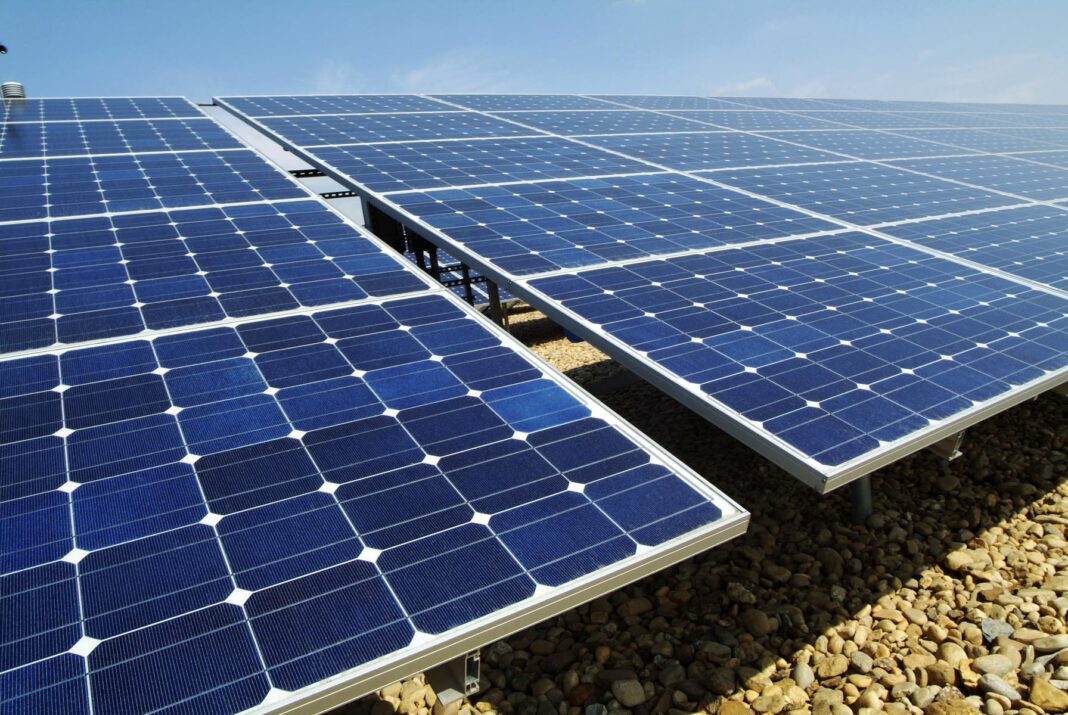

Abu Dhabi Prince Shames White House by Crowning Court Roof with Solar Panels

solar energy, abu dhabi, renewable energy, fossil fuels, oilWhen an oil-rich Sheikdom crowns an official building with grid-connected solar panels, it’s time for the U.S. to wake up!

After Obama’s failure to return Jimmy Carter’s solar panels to the White House roof, the court of HH Mohammed bin Zayed bin Sultan Al Nahyan – the ruler of one of the world’s most oil-rich nations – was recently crowned with an array of active photovoltaic panels. Technically, the U.S. was ahead of the game. In 1979, after the Arab oil embargo, Jimmy Carter added solar panels to the White House roof and developed an impressive renewable energy research program in order to secure the country’s energy future.

By 1986, however, Ronald Reagan undid Carter’s vision by removing the panels and slashing funding to the Department of Energy’s R&D program. Instead of supporting green alternatives, the former president put America’s full weight behind fossil fuels.

In order to redeem Reagan’s faux pas, environmental activists led by Bill McKibben (who was since arrested for his green activism) returned the original panels to the White House in September last year. But Obama – despite his campaign promises to advance environmental initiatives – turned down the opportunity to put them back up on the roof. And now oil-rich Abu Dhabi has surpassed the United States’ symbolic support for renewable energy programs with the court’s new grid-connected solar panels – a slap in the face for the “world’s most powerful country.”

Construction Week Online reports that the Gulf International Trading Group was commissioned to undertake the Crown Prince’s photovoltaic installation. That task was completed in record time, and the panels have been connected to Abu Dhabi’s Department of Electricity and Water Authority’s main generator.

Not only did Al Nahyan install solar panels on the court’s roof as a symbolic gesture, but the array is already feeding energy back into the grid. This move is just one step the Emirate has taken to fulfill its 2030 plan to become “THE sustainable capital of the world.

Eventually, even more municipal buildings throughout Abu Dhabi will be fitted with solar panels that can harvest energy from the sun, which burns year-round in this desert country.

Connecting the court’s solar energy supply to Abu Dhabi’s grid falls under the Masdar and ADEWA umbrella.

If oil sheikdoms are advancing their renewable energy programs at breakneck pace, then surely that should be a wakeup call for the United States? Instead of messing around with the Keystone Pipeline, which scientists believe will sign humanity’s collective death sentence, and kowtowing to big oil, just put the panels back on the roof and get on with it. For everybody’s sake.

:: Construction Week Online

More on Abu Dhabi’s renewable vision:

Abu Dhabi will be more Livable than Dubai

EXCLUSIVE: Masdar City Open House Photos

500 Solar-Powered Recycling Units Promote Abu Dhabi’s Conservation Culture



Tafline Laylin
Tafline Laylinhttp://www.greenprophet.com
As a tour leader who led “eco-friendly” camping trips throughout North America, Tafline soon realized that she was instead leaving behind a trail of gas fumes, plastic bottles and Pringles. In fact, wherever she traveled – whether it was Viet Nam or South Africa or England – it became clear how inefficiently the mandate to re-think our consumer culture is reaching the general public. Born in Iran, raised in South Africa and the United States, she currently splits her time between Africa and the Middle East. Tafline can be reached at tafline (at) greenprophet (dot) com.

Read More

TRENDING

AI data centers are triggering panic, instead of cleantech opportunities

AI may unintentionally become the economic engine that finally modernizes America’s aging grid. California is experiencing a massive AI data center boom, ranking 3rd in the U.S. with 227 operating centers and 54 more in development as of April 2026, according to Stanford.

24 7 renewable energy: how solar, wind, batteries and AI SaaS replace fossil fuels

A new report from the International Renewable Energy Agency based in Abu Dhabi makes something clear that many in the industry already suspected. When solar and wind are paired with battery storage, they can deliver reliable, round the clock electricity at costs that compete with, and often beat, fossil fuels.

Japan wants to build a solar panel ring around the moon

Unlike solar power on Earth, which is limited by night cycles, weather, and seasons, the Moon offers something close to uninterrupted exposure to the Sun. By placing solar infrastructure in orbit or along the lunar surface, engineers could generate continuous clean energy at a scale that may exceed global electricity demand,  the Japanese scientists say.

Korean researchers create battery from greenhouse gases

Professor Ji-Soo Jang, in collaboration with Professor Taekwang Yoon of Ajou University and Professor Hansel Kim of Chungbuk National University, has developed a novel energy device that generates electricity during the process of capturing greenhouse gases.

Should You Invest in the Private Market?

startustartup Unlike public stock exchanges, which offer daily trading, strict...

How to quiet noise from construction in your office

Streets need to be resurfaced in New York but the humming and grinding noise is unsettling. Noise is environmental pollution. 

EarthX and a blueprint for sustainable investing

Trammell S. Crow, a Dallas-based businessman and father of four, is focusing his efforts on impact investing, and media that focuses on saving the planet through EarthX.

Mining Afghanistan’s Mineral Discoveries Similar to Avatar

Now that American forces in Afghanistan are commemorating the longest period of any war that America has been involved in, including the 1965-73 Vietnam War, the recent discoveries of large and extremely valuable mineral and metal deposits may finally bring to light a reason to continue the presence of US fighting forces in this war torn and backward country.

From Pilot Plant to Global Stage: How Aduro Clean Technologies’ 2026 Expansion Signals a Turning Point for Chemical Recycling Investors Like Yazan Al Homsi

The company's Next Generation Process (NGP) Pilot Plant in London, Ontario, has officially moved into initial operating campaigns, generating the kind of structured, repeatable data that separates laboratory promise from commercial viability.

Nobul’s Regan McGee on Shareholder Value: “Complacency Is the Silent Killer” 

Why the governance framework designed to protect shareholders so...

Should You Invest in the Private Market?

startustartup Unlike public stock exchanges, which offer daily trading, strict...

How to build a 100-year-company

Kongō Gumi is a Japanese construction company, purportedly founded in 578 A.D., making it the world's oldest documented company. What can we learn about building sustainable businesses from them?

How AI Helps SaaS Companies Reduce Repetitive Customer Support Work

SaaS products are designed for large numbers of users with different levels of experience, and also in renewable energy.

Popular Categories