Landmines and Eco-Tourism Protect Lebanon’s Vulnerable Cedar Forests

conservation, biodiversity, eco-tourism, climate change, LebanonThe Shouf Cedar Reserve is working tirelessly to protect Lebanon’s cedar forests from climate change.

Fifteen years ago, civil war posed the greatest threat to Lebanon’s majestic cedar forests, but today climate change is their most prominent foe. The largest of Lebanon’s natural reserves and home to one quarter of the nation’s almost mythological cedar trees, Shouf Ceder Reserve has become a magnet for both local and foreign tourists. While such an influx of traffic could easily be detrimental to the reserve’s health, its manager Nizar Hani explained to CNN that they now have what it takes to achieve what even the most ardent activism in the region has been unable to: educate visitors and decision-makers about the importance of biodiversity while simultaneously improving the lot of people who live there. 

Established as a UNESCO biosphere in 2005, the Shouf Cedar Reserve plays a crucial role in Lebanon’s natural history and present, a history that is in jeopardy.

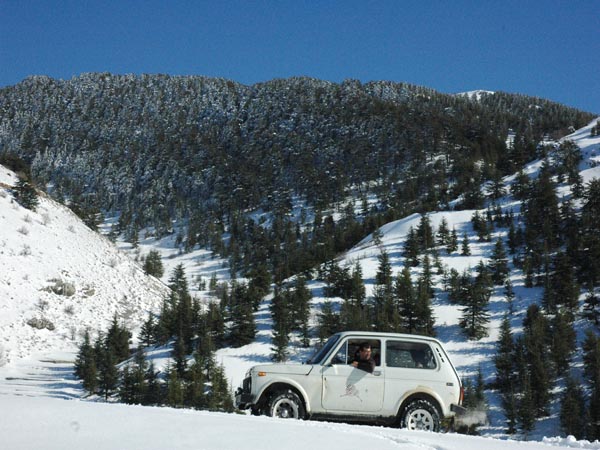
Located at high altitudes, the country’s cedar trees have evolved to both withstand and depend on long bouts of wet weather and their seeds won’t come to fruition unless they have been buried beneath snow for at least two months. As climate change raises temperatures throughout the Middle East, snow falls less regularly, and melts sooner.

At the moment, Nizar Hani tells CNN that the effects of climate change are under control, and that eco-tourism activities are helping to spread awareness among people who have the capacity to ensure that the proper steps are taken to ensure continued protection. The increased tourism traffic also creates business opportunities for roughly 40 seasonal workers who live in and around the nature reserve.

Up to 42 products such as jam, olive oil, and herbs are grown and sold at Shouf, providing much-needed work opportunities, and locals invite tourists into their home as part of an authentic travel experience. These measures go a long way to create a sustainable tourism industry, but the forest are not yet in the clear.

At the end of last year, the forest fires that spread throughout dry Middle Eastern countries reached Lebanon as well. At one point, fire-fighters were so ill-equipped to handle 120 simultaneous fires that authorities urged people to step up their prayers. Warmer temperatures also encourage an increase in bark beetles and other insects.

During the civil war, Walid Jumblat planted land mines around the circumference of the reserve to protect it from encroaching loggers and rival militias. No amount of fire power can keep climate change at bay, but we can take other measures to ensure that less carbon is emitted into the atmosphere, and workers at the Shouf Reserve are doing their part to spread that ever-important message.

:: CNN

More on the Cedar Forests of Lebanon:

Lebanon is Working on Smokey the Bear to Protect Forests

World Watches Israel as Prayers Douse 120 Unsung Fires in Lebanon

Making Magestic (and Biblical) Cedars of Lebanon Sustainable in our Times
Tafline Laylin
Tafline Laylinhttp://www.greenprophet.com
As a tour leader who led “eco-friendly” camping trips throughout North America, Tafline soon realized that she was instead leaving behind a trail of gas fumes, plastic bottles and Pringles. In fact, wherever she traveled – whether it was Viet Nam or South Africa or England – it became clear how inefficiently the mandate to re-think our consumer culture is reaching the general public. Born in Iran, raised in South Africa and the United States, she currently splits her time between Africa and the Middle East. Tafline can be reached at tafline (at) greenprophet (dot) com.

Read More

TRENDING

Weston Higginbotham’s Family Declines to Release Cause of Death in Kyoto Forest

The family of Weston Higginbotham,an Auburn University student whose disappearance and death in the mountains near Kyoto, Japan, drew international attention, has declined to publicly release the cause of his death.

5 Reasons Why You Should Save Seeds (and plant them)

Saving seeds from tomatoes, peppers, herbs and flowers helps preserve biodiversity, strengthen food security, and keep heirloom varieties alive. Even a small balcony garden can make a difference.

A visit to Amirim, Israel’s first all-vegetarian village in the Galilee

Just 15 kilometers from Tzfat there is a moshav that was founded in the late 50s that was ideologically influenced by organic, vegetarian and vegan principles. My hostess at Ohn-Bar, the tzimmer where I stayed, explained that the people of Amirim were among the pioneers of Israel’s strong vegetarian movement.

Koh Phangan’s angels for the dogs and the cats

Koh Phangan may be known for yoga, detox retreats, and full moon parties, but beyond the curated paradise lies a different reality—one of injured stray animals and the quiet work of rescue. This story explores PACS (Phangan Animal Care for Strays), a grassroots animal shelter tackling overpopulation, disease, and neglect on the island. Through firsthand experience with teens, it reveals how meaningful travel, volunteerism, and compassion offer a deeper kind of healing—far from the Instagram version of paradise.

Nearly the half the world’s migratory species are declining, in new UN report for COP15

With larger, land-bound animals human encroachment and Middle East warns make it more troubling for the survival of migratory animals on land, air and at sea. A new United Nations report released this week warns that the situation is getting worse, not better.

Yerukim Forms a New Green Economy Where the Money is Really Green

The Yerukim members who pick up the recyclables get to keep the monetary reward, the public earns "green" bills that can be used in shops, and business owners get to be associated with environmentalism.

Choosing Riyadh over Dubai? What Investors Should Know

Saudi Arabia is deploying capital at unmatched scale to catalyze tourism and advanced industry while rewiring its power-and-water backbone. The investable frontier is widening—especially in renewables, grid storage, water efficiency/desal retrofits, and hospitality operating platforms. Prudent investors will insist on phased delivery, enforceable KPIs (energy, water, biodiversity), and RHQ/zone compliance—while pricing political-economy and reputational risks alongside growth upside.

Sell your cooking oil for biodiesel money

Want to make money on old french fry oil? Sell it.

Qatar Alternative Energy Summit Pairs Investors And Innovators

Alternative energy investors and innovators can meet n' greet in Doha, Qatar March 16 and 17.

Here’s How To Implement The Four Pillars Of Employee Engagement

If you throw a party for your work team and they are vegans, don't make it a barbecue. Know the sustainability values of your team to boost moral and retain good people.

Locals From Rishon Fight IKEA

Big Box stores are a pretty new concept in Israel, and thank God that not every Israeli city wants them in their backyard. A word from someone who has see the beautiful farmland around her hometown Newmarket, Ontario stripped and converted into vulgar strip malls of big box shops: they have no place in a healthy and sustainable town or city.

The Jewish National Fund Meets An Inconvenient Truth

According to the JNF, it has transformed thousands of acres of barren land into green forests in Israel. They state that each person emits about 23 tons of carbon per year, estimating that each tree planted can absorb one ton of carbon in its lifetime. That's a whole lot of trees you'd need to be planting. Could so many fit in Israel?

How to quiet noise from construction in your office

Streets need to be resurfaced in New York but the humming and grinding noise is unsettling. Noise is environmental pollution. 

Popular Categories