Chevy Volt Hybrids Made From BP Spill Oil Booms

Oil booms and other rubber and plastic wastes are now becoming car parts

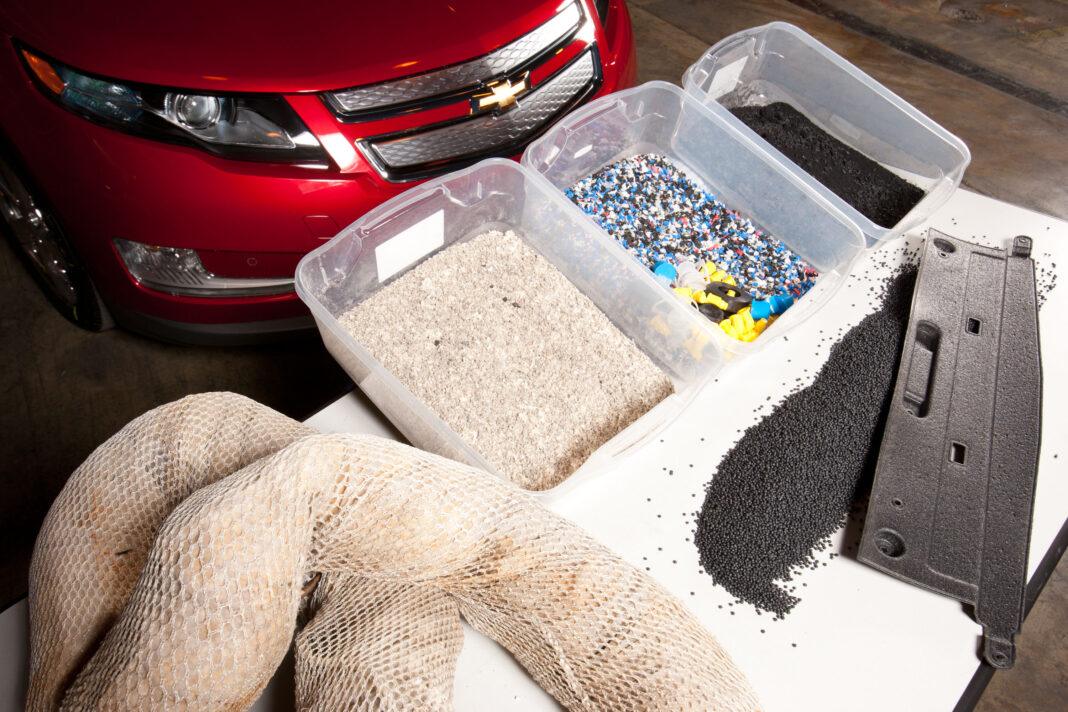
The recent 5 month oil spill disaster in the Gulf of Mexico has created a “by product” in the form of oil soaked plastic booms that will be recycled to make plastic components in General Motor’s  new Chevrolet Volt hybrid car. The idea to recycle the tons of plastic material, and the crude oil it soaked up, is a project being developed by GM’s R & D laboratories, according to a GM news release. Approximately 100,000 pounds (45,455 kg) of plastic resin for Volt vehicle components can be made from this material, which will prevent from being permanently buried in landfills, with all the environmental implications this can have, especially pollution of both soil and groundwater.

According to Mike Robinson, GM’s VP of Environment, Energy and Safety policy:

“Creative recycling is one extension of GM’s overall strategy to reduce its environmental impact. We reuse and recycle material by-products at our 76 landfill-free facilities every day. This is a good example of using this expertise and applying it to a greater magnitude.”

GM’s John Bradburn shows car parts made from oil booms

In addition using the now discarded plastic boom material, GM will also used recycles tires and other rubber and plastic materials to make parts of the car, which will be enough plastic under the hood parts to supply the first year’s production of the  Volt “extended-range” electric vehicle.

This policy to recycle such waste products as the oil booms at least helps to indicate a bit of optimism to the aftermath of what may go down in history as America’s worst environmental disaster, of which British Petroleum (BP) is now catching much of the blame for.

GM’s novel recycling idea may wind up having positive repercussions in other parts of the world, especially in parts of the Middle East, where discarded tires and other materials from automobiles could wind up being recycled and made into a variety of plastic resin components for making plastic items, just like recycled plastic bottles are presently being used.

The sports shoe company Nike is also involved in introducing a program into Israel to use rubber and other materials from discarded sport shoes for making new footwear products.

The amount of plastic and synthetic rubber wastes in Middle Eastern countries like Abu Dhabi and Saudi Arabia must be enormous, including all types of plastic food and beverage containers and that of entire automobiles which are simply discarded when no longer wanted. And consider that people in Abu Dhabi just abandon their cars in parking lots when they are no longer needed.

GM ‘s idea of using the boom material to make parts for a car that will be much more environmentally friendly than ordinary gasoline driven ones is a fitting sequel to the oil spill disaster from which the waters of the Gulf of Mexico may never fully recover.

::General Motors

Read more on recycling plastic waste material in the Middle East:

Nike to Introduce Shoe Recycling Program in Israel

Abu Dhabi May Get New Trash Dump (And it’s Not the Sea)

Zonzoo Gives Old Phones New Life in the UAE

Maurice Picow
Maurice Picowhttps://www.greenprophet.com/
Maurice Picow grew up in Oklahoma City, U.S.A., where he received a B.S. Degree in Business Administration. Following graduation, Maurice embarked on a career as a real estate broker before making the decision to move to Israel. After arriving in Israel, he came involved in the insurance agency business and later in the moving and international relocation fields. Maurice became interested in writing news and commentary articles in the late 1990’s, and now writes feature articles for the The Jerusalem Post as well as being a regular contributor to Green Prophet. He has also written a non-fiction study on Islam, a two volume adventure novel, and is completing a romance novel about a forbidden love affair. Writing topics of particular interest for Green Prophet are those dealing with global warming and climate change, as well as clean technology - particularly electric cars.

Read More

TRENDING

Prologium files for IPO as solid-state battery race heats up beyond Tesla

The challenge has always been scaling production: Laboratory success does not automatically translate into mass manufacturing. Materials that perform well in testing often behave differently when produced in millions of cells. This has been one of the biggest obstacles facing the entire industry.

Ferrari’s new electric Luce could change luxury EVs forever

Ferrari has finally done what many fans thought it never would: build a fully electric car. The new Ferrari Luce is not a quiet compromise or a small city EV. It is a massive, futuristic, high-performance machine with more than 1,000 horsepower, a price tag around $640,000, and styling that has already divided the internet.

Saving Gourmet Wild Plants For The Future

Think of truffles, a gourmet wild food. The European...

Middle-Eastern spices and natural medicine (A through C)

In the Middle East, aromatic traditional foods are regarded...

Kia’s bootcamp trains car mechanics on EVs and the future 

During Bootcamp 1.0 in 2025, their pilot program, Kia trained 87 professional mechanics, and 34 have already secured jobs at local dealerships. Another 50 trainees are currently in training in Morocco.

Yerukim Forms a New Green Economy Where the Money is Really Green

The Yerukim members who pick up the recyclables get to keep the monetary reward, the public earns "green" bills that can be used in shops, and business owners get to be associated with environmentalism.

Choosing Riyadh over Dubai? What Investors Should Know

Saudi Arabia is deploying capital at unmatched scale to catalyze tourism and advanced industry while rewiring its power-and-water backbone. The investable frontier is widening—especially in renewables, grid storage, water efficiency/desal retrofits, and hospitality operating platforms. Prudent investors will insist on phased delivery, enforceable KPIs (energy, water, biodiversity), and RHQ/zone compliance—while pricing political-economy and reputational risks alongside growth upside.

Sell your cooking oil for biodiesel money

Want to make money on old french fry oil? Sell it.

Qatar Alternative Energy Summit Pairs Investors And Innovators

Alternative energy investors and innovators can meet n' greet in Doha, Qatar March 16 and 17.

Here’s How To Implement The Four Pillars Of Employee Engagement

If you throw a party for your work team and they are vegans, don't make it a barbecue. Know the sustainability values of your team to boost moral and retain good people.

Locals From Rishon Fight IKEA

Big Box stores are a pretty new concept in Israel, and thank God that not every Israeli city wants them in their backyard. A word from someone who has see the beautiful farmland around her hometown Newmarket, Ontario stripped and converted into vulgar strip malls of big box shops: they have no place in a healthy and sustainable town or city.

The Jewish National Fund Meets An Inconvenient Truth

According to the JNF, it has transformed thousands of acres of barren land into green forests in Israel. They state that each person emits about 23 tons of carbon per year, estimating that each tree planted can absorb one ton of carbon in its lifetime. That's a whole lot of trees you'd need to be planting. Could so many fit in Israel?

How to quiet noise from construction in your office

Streets need to be resurfaced in New York but the humming and grinding noise is unsettling. Noise is environmental pollution. 

Popular Categories