5 Countries To Save the Caspian Sea’s Caviar

sturgeon-fish-caviarCaspian Day in 5 countries draws attention to the sea’s environmental woes, including a plunging sturgeon population

What better way to start the weekend than with a delicious new recipe and a slice of geological perspective? The Tethys ocean, that ancient hydrological bridge that connected the Pacific and Atlantic oceans 50 million years ago, receded. When it did, it left behind whale fossils in what is now Egypt’s desert, as well as the 1000km long Caspian Sea – the world’s largest enclosed body of water. Yesterday was Caspian Day, a day for 5 nations, including Iran, whose polluted capital city Tehran kills 27 people a day, to reflect on their compromised lifeline.

A familiar tail

It’s a familiar tale: 400 endemic species that rely on the Caspian Sea are threatened by man’s activities: agriculture, oil and gas exploration, and industrial waste.

What is perhaps less familiar is the willingness of Azerbaijan, the Islamic Republic of Iran, Kazakhstan, the Russian Federation and Turkmenistan to work together to protect their combined interest. This will was made concrete yesterday with “beach-cleaning activities, conferences, thematic workshops, and concerts held throughout the day,” according to a United Nations Environmental Program (UNEP) press release.

Dare to be aware

These activities were designed to raise awareness and engagement among the public, to draw attention to the importance of conserving biodiversity, and to encourage pollution reduction. Though this was a community endeavor, the hard, legal work goes on behind the scenes.

Established in November 2003, the Tehran Convention is the only legally binding agreement between the five states. Its aim is “to introduce cooperation on preparation and response measures for oil spills, as well as common rules for dealing with the environmental impact of activities with potential trans-boundary effects,” writes UNEP.

The stuff of sturgeon

UNEP also reports that “cooperation between the environment community and the fisheries sector will address declining fish stocks and promote ecosystem resilience as a way to sustain the 140 species of fish living in the sea, sturgeon being one of the most important.”

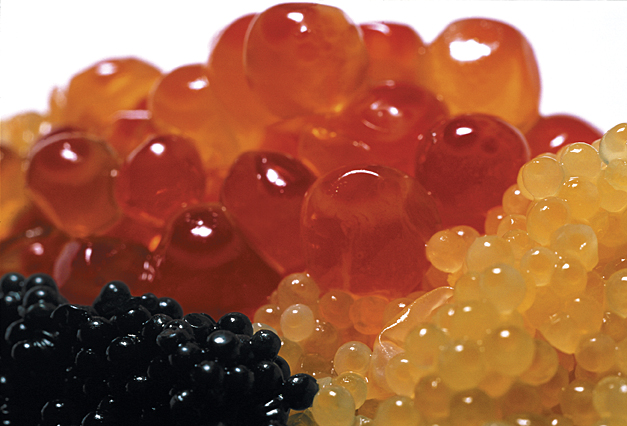
Caviar is an illustrious ingredient for the wealthy person’s dinner table even though the process used to obtain the eggs from sturgeon, some of which can grow to 18 feet, is fairly unpleasant.

Meredith Gordon from the University of Harvard explains:

The sturgeon are caught in large nets, and guided to shore by boats and winches. Mature, female sturgeon are stunned by a blow to the head with a wooden club, taken on shore, and stunned again. An incision is made in the belly of the sturgeon, and the whole egg sack is removed. In Russia, the sack is removed before the fish dies; in Iran, the fish is killed before the sack is removed.

Pesky poachers

Sturgeon populations are threatened not only by the factors described above, but the World Wildlife Fund (WWF) claims that “poaching activity in the Volga-Caspian basin alone is estimated to be 10-12 times over the legal limits,” and that some populations have declined by roughly 70%.

In 2002, Iran’s caviar trade amounted to 39.6% of the legal level of 193.6 tonnes, which was established by the Convention on International Trade in Endangered Species of Flora and Fauna (CITES). However, WWF suggests that illegal trade still continues.

Hopefully, as more Caspian Days take place, awareness of the importance of protecting both the sea and the fish that ply them will mature.

:: image via calacademy.org and story via UNEP

More News From Iran:
The Epitome Of Sustainable Architecture: 700 Year-Old Iranian Cave Homes

Record Hot Summer Ignites Forest Fires in Iran

How Iran’s Ancient Zoroastrianism Funerals and Burials are Green

Tafline Laylin
Tafline Laylinhttp://www.greenprophet.com
As a tour leader who led “eco-friendly” camping trips throughout North America, Tafline soon realized that she was instead leaving behind a trail of gas fumes, plastic bottles and Pringles. In fact, wherever she traveled – whether it was Viet Nam or South Africa or England – it became clear how inefficiently the mandate to re-think our consumer culture is reaching the general public. Born in Iran, raised in South Africa and the United States, she currently splits her time between Africa and the Middle East. Tafline can be reached at tafline (at) greenprophet (dot) com.

Read More

TRENDING

Health Canada approves lab grown milk

Canada's approval of animal-free dairy proteins marks a milestone for precision fermentation and the growing alternative-protein industry. Will consumers embrace milk made without cows?

How to make camel burgers at home

Where camels are as much a part of the landscape as native trees, people know how tender and tasty camel flesh is.

Artichokes and Oranges: December’s Seasonal Produce

It's officially winter in the Middle East. We'd hoped...

January’s seasonal produce celebrates nettles and sage

Rainy, muddy winter brings out the best of January produce in the Middle East.

Almond Milk And The Destruction of Bees

Almond milk was so promising an alternative to cruelty-free cow milk, or hormone mimicking soy milk, but with the take on bees, maybe it's time to kick the creamy liquid habit?

Yerukim Forms a New Green Economy Where the Money is Really Green

The Yerukim members who pick up the recyclables get to keep the monetary reward, the public earns "green" bills that can be used in shops, and business owners get to be associated with environmentalism.

Choosing Riyadh over Dubai? What Investors Should Know

Saudi Arabia is deploying capital at unmatched scale to catalyze tourism and advanced industry while rewiring its power-and-water backbone. The investable frontier is widening—especially in renewables, grid storage, water efficiency/desal retrofits, and hospitality operating platforms. Prudent investors will insist on phased delivery, enforceable KPIs (energy, water, biodiversity), and RHQ/zone compliance—while pricing political-economy and reputational risks alongside growth upside.

Sell your cooking oil for biodiesel money

Want to make money on old french fry oil? Sell it.

Qatar Alternative Energy Summit Pairs Investors And Innovators

Alternative energy investors and innovators can meet n' greet in Doha, Qatar March 16 and 17.

Here’s How To Implement The Four Pillars Of Employee Engagement

If you throw a party for your work team and they are vegans, don't make it a barbecue. Know the sustainability values of your team to boost moral and retain good people.

Locals From Rishon Fight IKEA

Big Box stores are a pretty new concept in Israel, and thank God that not every Israeli city wants them in their backyard. A word from someone who has see the beautiful farmland around her hometown Newmarket, Ontario stripped and converted into vulgar strip malls of big box shops: they have no place in a healthy and sustainable town or city.

The Jewish National Fund Meets An Inconvenient Truth

According to the JNF, it has transformed thousands of acres of barren land into green forests in Israel. They state that each person emits about 23 tons of carbon per year, estimating that each tree planted can absorb one ton of carbon in its lifetime. That's a whole lot of trees you'd need to be planting. Could so many fit in Israel?

How to quiet noise from construction in your office

Streets need to be resurfaced in New York but the humming and grinding noise is unsettling. Noise is environmental pollution. 

Popular Categories