

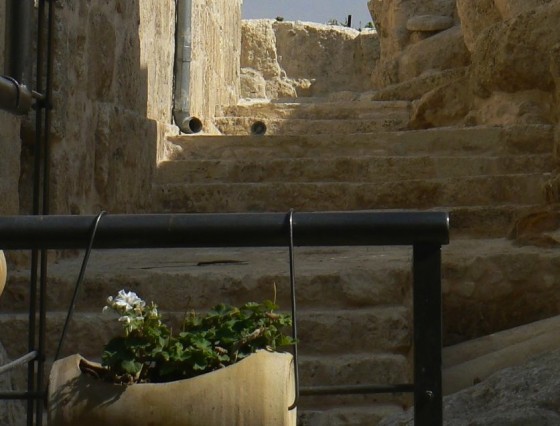
 Wander off the beaten trail in the West Bank, and find a treasure of a guesthouse in Sebastia, near Nablus
The little town of Sebastia, near Nablus in the northern West Bank, was one a major city. Home to successive civilisations from its Canaanite founders to its modern-day Palestinian inhabitants (via Israelites, Crusaders and Alexander the Great, the name but a few) both the major archaeological site above the village and the historic centre of the town itself should be major cultural tourism resources.
But few visitors stay long in Sebastia. For many tourists, it’s a morning’s halt on a whistle-stop tour. Coaches pull into the parking lot at the archaeological site and disgorge their cargo of visitors, who pile back on again a few hours later after a quick tramp round the main ruins – the amphitheatre, Hellenic watchtowers, chapel of St John the Baptist and Israelite palaces.
Very few visitors stop off in the inhabited centre of Sebastia. That means they miss the picturesque houses of the village, the town square where the old men sit and play shesh-besh and drink coffee, and the imposing Crusader Church, turned centuries ago into the Mosque of Nabi Yahya, the Muslim name for St John the Baptist.
But a new community tourism project is hoping to change all that.
A joint project has brought together Italian aid funders with Sebastia Municipality and the Mosaic Centre, a Palestinian community tourism organisation. They aim to persuade visitors to stay for a longer look at Sebastia, giving them the opportunity to meet local people and find out about the town’s contemporary life as well as its ancient history.
 Sebastia archeology. People come to see it, then leave.
The project began with a series of excavations in the heart of Sebastia, clearing centuries of occupation deposits from run-down buildings, some of which date back over a thousand years. According to Wala, one of the project workers, the excavations have brought to light major Byzantine, early Muslim and Crusader finds, including an important new mosaic.
But the project hasn’t stopped with uncovering old remains. The excavated buildings have been lovingly restored. One now serves as a community centre, with meeting rooms, a small library and computers which can all be used to train local people in new skills.
Another, on the main square itself, has become a tourist information centre, providing maps and books on Sebastia’s history and selling local products such as jam and soap. It’s also a mosaic workshop, producing individual hand-made designs for sale as souvenirs and offering mosaic-making lessons to visitors.
Travel to Sebastia’s new guesthouse
Perhaps the most significant development for Sebastia’s tourism is the new guesthouse. Formed of several small, ancient houses, beautifully restored and with modern fittings added, this is the first time that tourists have been able to stay overnight in Sebastia.
While a building boom has brought Ramallah it’s first 5 Star hotel from the international Movenpick chain and the Intercontinentals in Jericho and Bethlehem are reporting increased trade, small guesthouses which deliver local jobs and social benefits are on the up too.
In Beit Sahour the Arab Women’s Union guesthouse has been renovated and renamed El Beit, while new locally-run hostels and ’boutique hotels’ have also opened in Bethlehem and Jenin and another is planned for Hebron.
In Sebastia, some real ‘joined-up thinking’ has gone into the running of the new pension. The employees are all from Sebastia village. The soap in the bathrooms is made by local women from olive oil grown in Sebastia’s groves. And breakfast, served on a sunny terrace lined with flowers in terracotta pots, might include taboun bread still smoky from the nearby oven, zeit (olive oil) and za’atar (thyme) from the surrounding hills, jam made from figs or cherries from the village’s orchards, and fresh fruit grown only yards away.
Visitors wanting dinner might be directed to one of the local restaurants near the archaeological site at the top of the village, or traditional Palestinian meals can be brought down to the guesthouse.
“We want people who come here to see the best of what Sebastia has to offer,” says Ramsi, one of the staff at the guesthouse. He smiles broadly as he serves breakfast, obviously thrilled to be able to show off the riches his village produces.
Hike Around Sebastia
And, says Wala back at the information centre, the project won’t stop here. More rooms are being added to the guesthouse so that it can accommodate groups of up to 14 people and a new hiking trail around the village is planned.
It will, she says, allow guided tours or independent hikers following specially-prepared maps to discover sites in the hills around Sebastia, including several maqams (small tombs or shrines to Muslim saints) and the disused Ottoman railway station which once served the area, and to join in with village activities such as making traditional bread.
“We want to promote a wider appreciation of Sebastia’s history,” says Wala. “People should come to see the Roman and Samaritan ruins, but there are lots of other things to see as well, and opportunities to meet local people as well as looking at ruins.”
Read more green news from the West Bank:
The Golden Sheep West Bank Cheese Incident
EcoBaladi Sprouts Organic Vegetables From the West Bank
The Organic Food Debate Rages On
Palestinian Farmers Look to Export Fair Trade Grapes


I’m visiting nablus at the moment and am interested in possibly staying at the guesthouse in sebastia – could i have the website and price details?
Thankyou,
Jan
Great piece Sarah. Great to have you on board 🙂
Arwa XX